
Legendary: Davis Knight leaves lasting legacy at American Fork
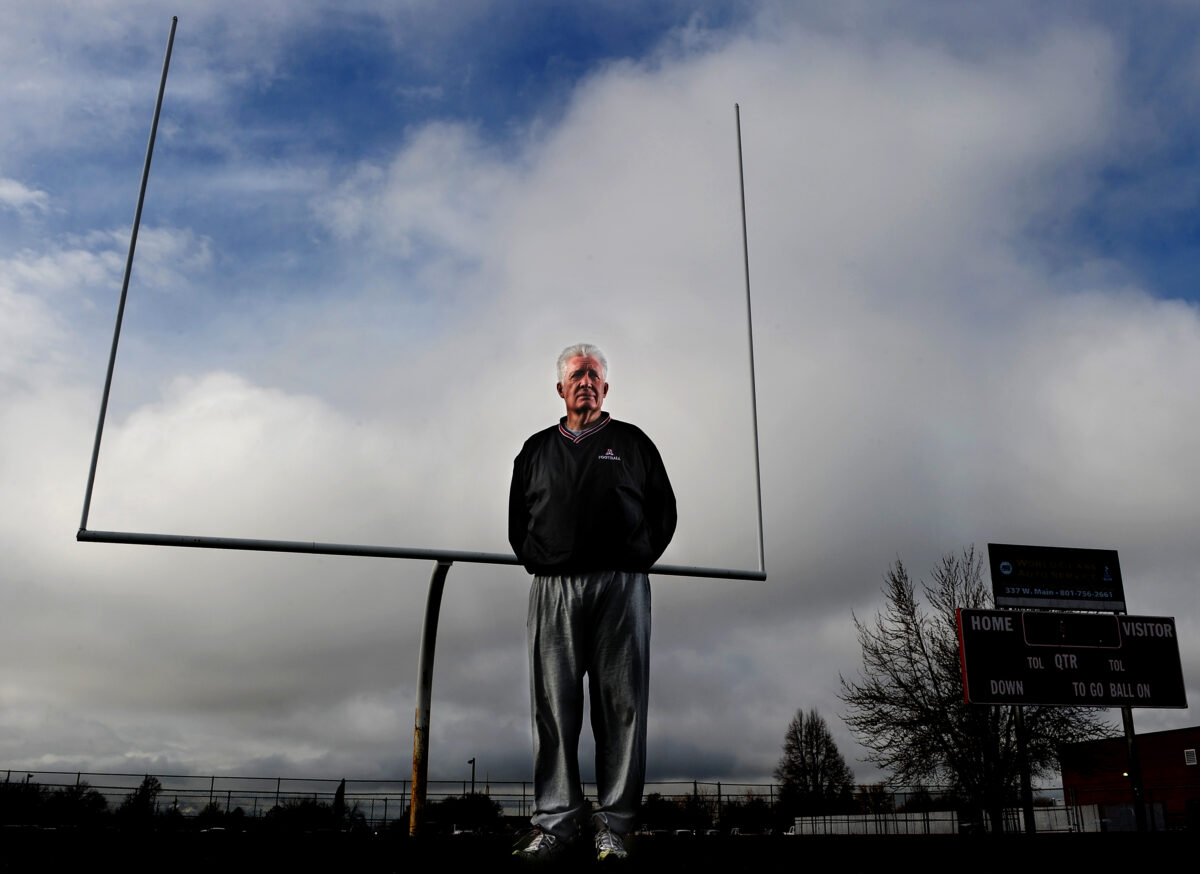
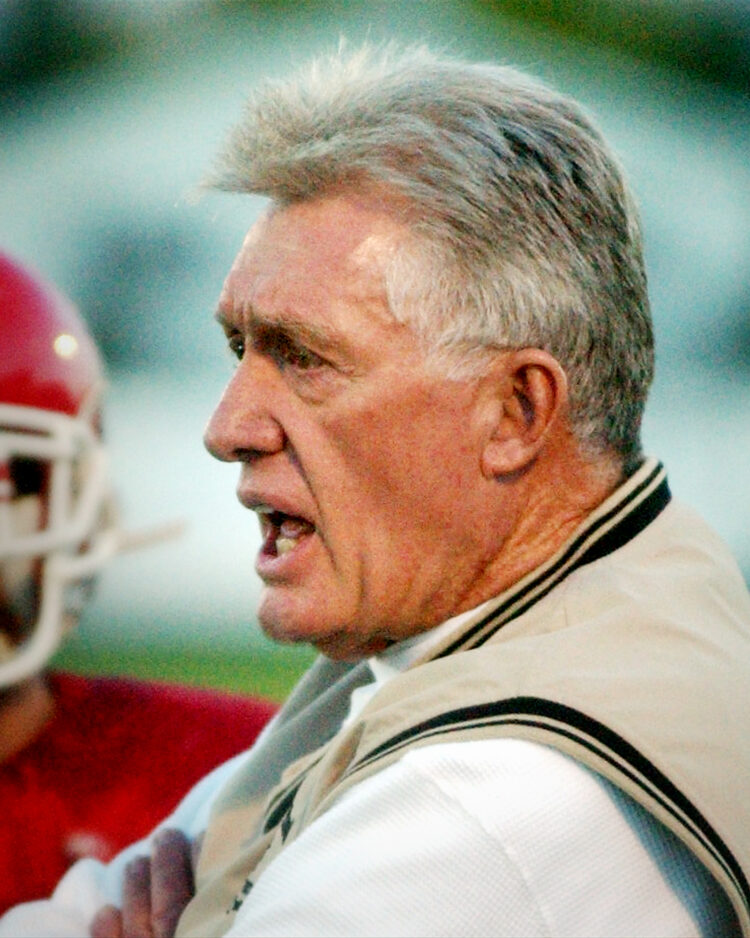
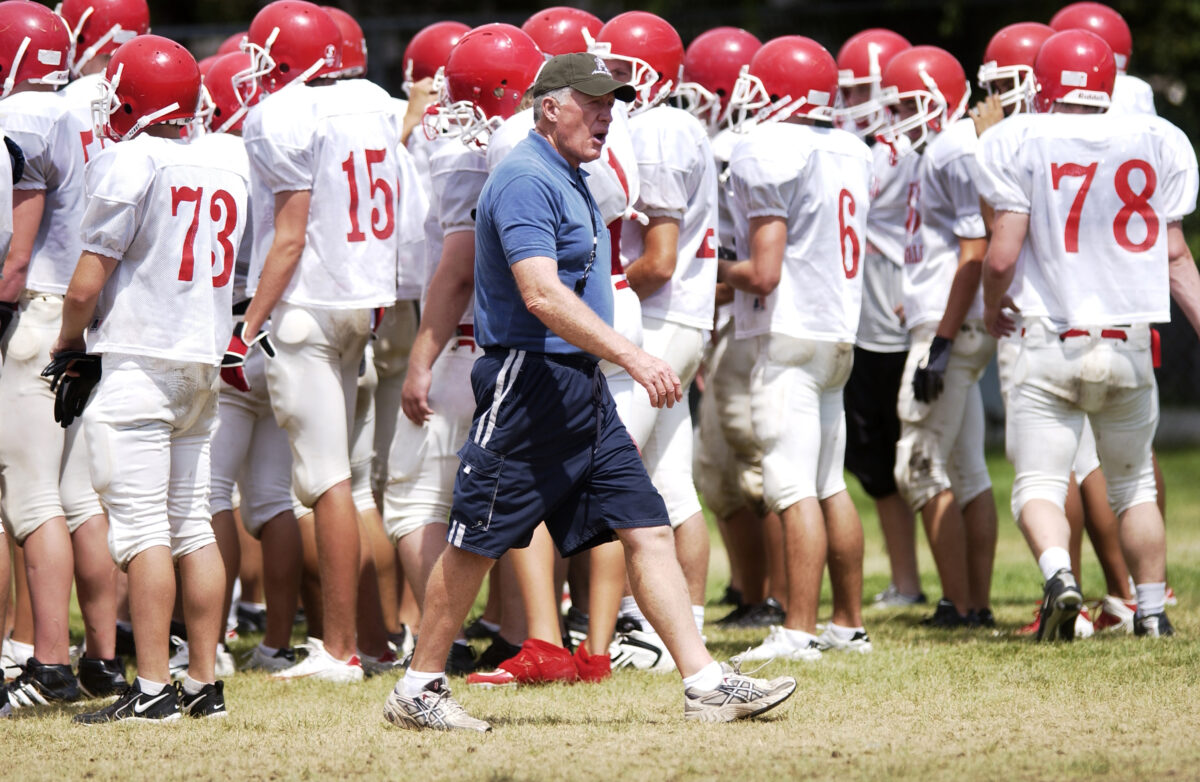
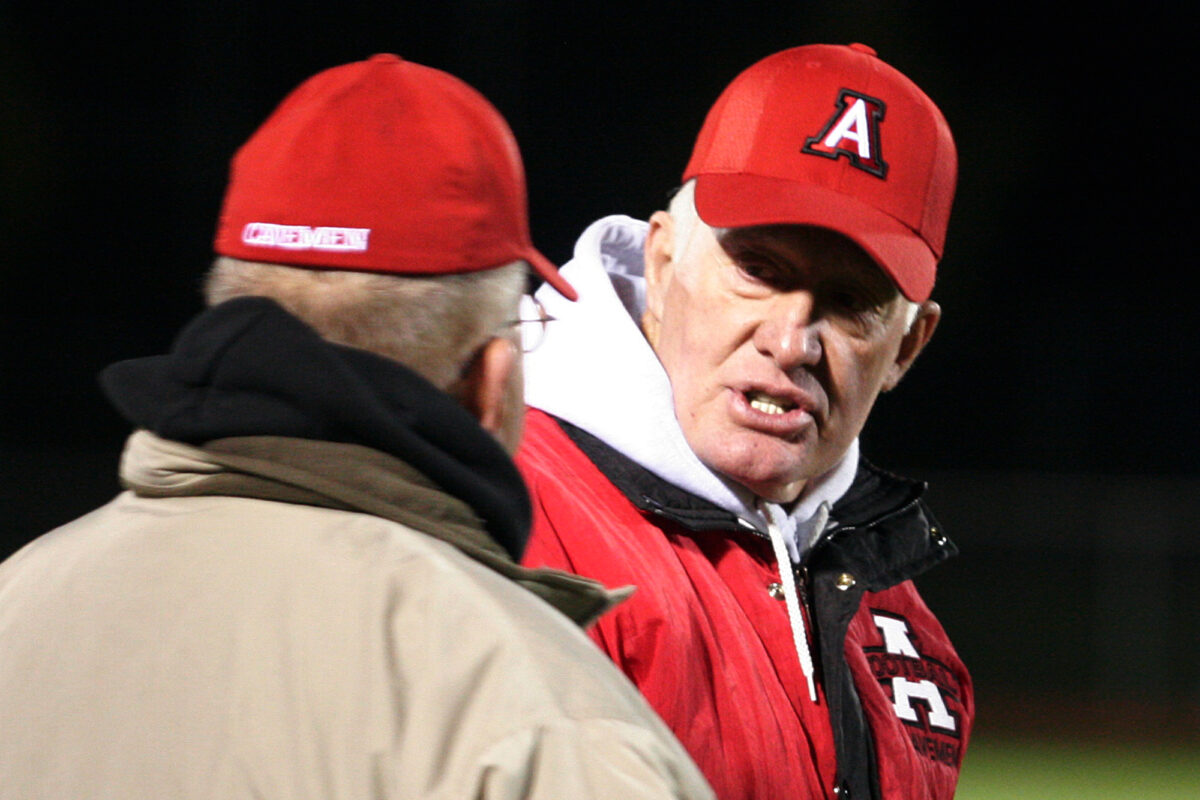
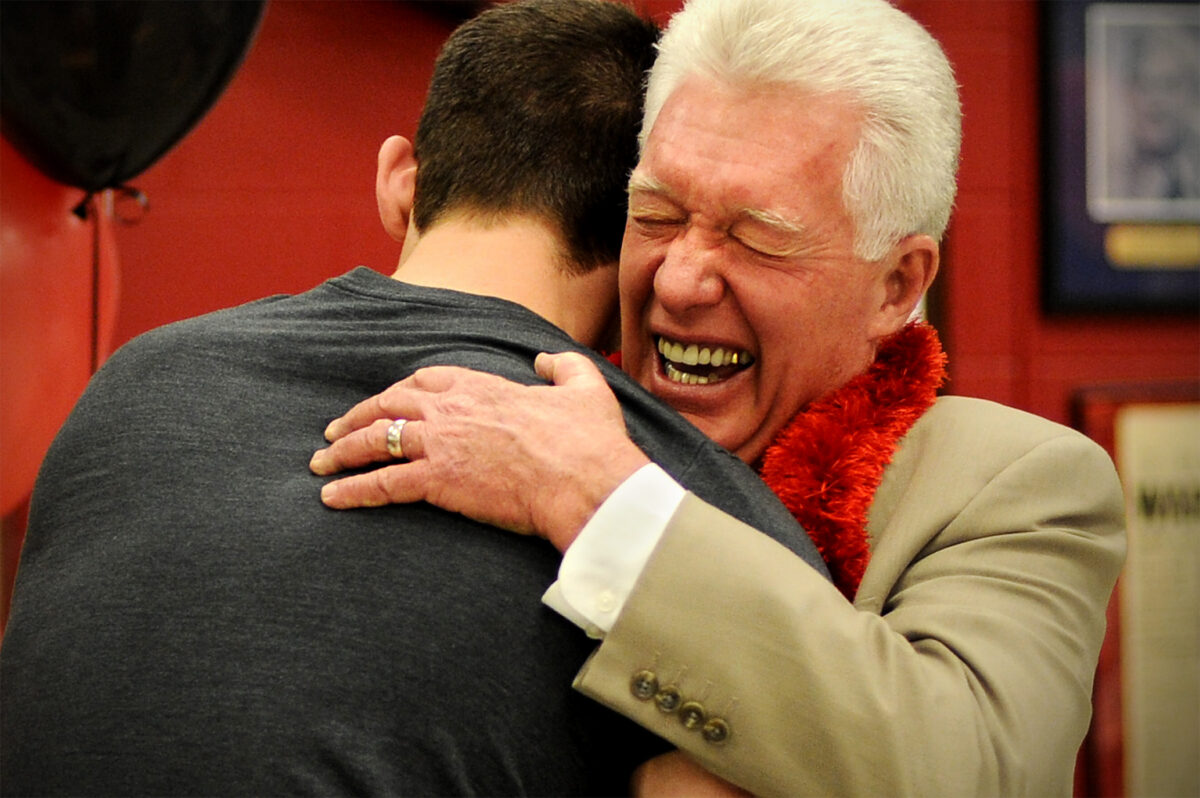
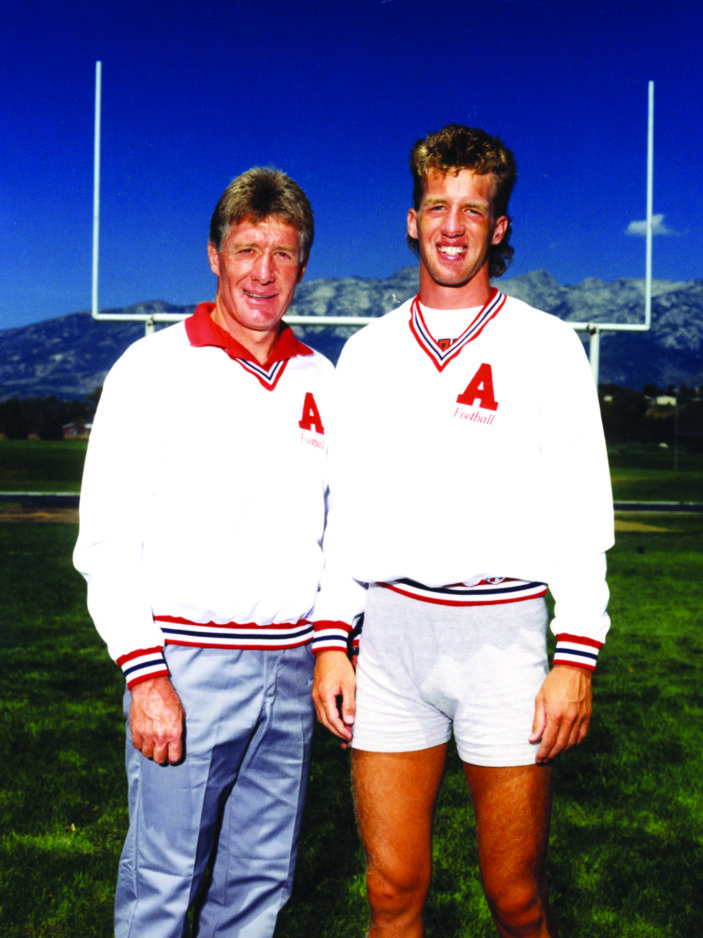
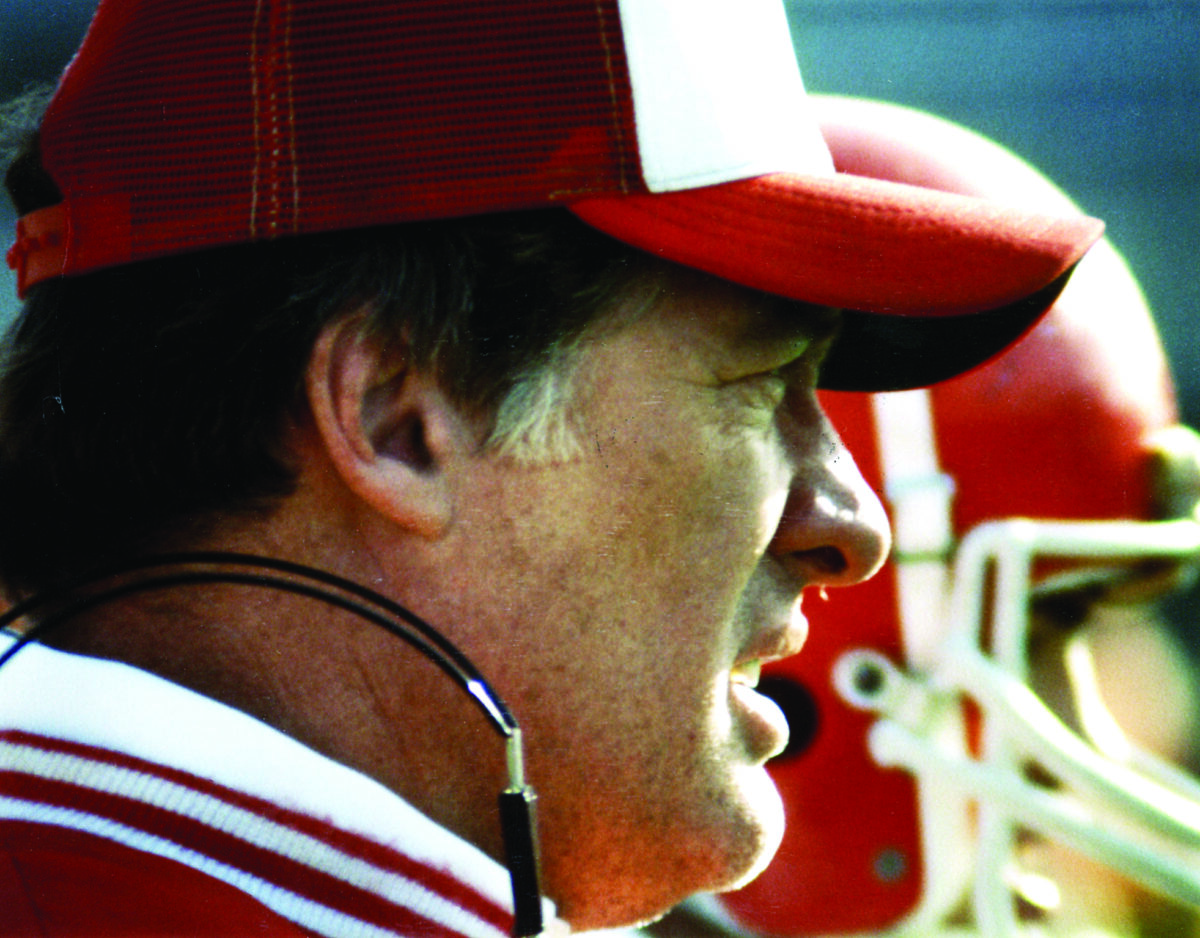
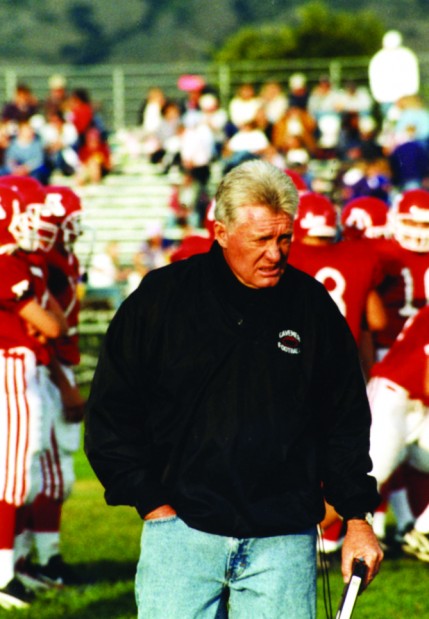
How do you summarize a career that’s spanned more than 40 years?
The simple, and profoundly truthful, answer is — you don’t.
In fact, that’s a task that not even a set of books could accomplish, let alone a single newspaper story.
But, it isn’t hard to get American Fork’s Davis Knight talking about some of his favorite memories.
A graduate of the very school where he has served so long as a football coach, Knight returned to AFHS as a teacher in 1965. The first two years, he was the debate coach as a natural extension of his responsibility as an English and communications instructor.
In 1967 and 1968, he also directed the school play. He never did that again, but he did continue as debate coach for 15 years.
“We had 100-120 students on the debate team during those years,” he said. “It was a big part of the school back then. A number of those boys and girls went on to become lawyers.”
Knight eventually switched to teaching social studies.
It wasn’t long after his arrival that he was drawn into the football program, which he joined as an assistant in 1967 under coach Don Mower.
He later coached with Tom Crittenden during Crittenden’s two-year tenure, then remained on Mower’s staff until Knight became the head coach in 1982.
“Don asked me to serve in the sophomore program,” Knight recalled. “I worked with Paul Kitchen and Carl Ingersoll, and along with Don, those are three of the great names in high school football around here. There were my mentors and taught me so much.”
The coach said that the thing that’s kept him around so long is what drew him to the profession in the first place.
“It’s the association you have with kids,” he said. “There’s something about high school football that makes it so real to a boy who’s 15, 16 or 17. It’s such an important time in his life.
“Then, to see him go on to college, an LDS mission and marriage, and then to have his son come back and play for you, that’s something really special,” he added. “It’s rewarding to watch a boy grow from a teenager to manhood as football plays a part.”
Some of the moments that stood out in the coach’s mind were obvious ones; for example, the years they made it to “the turf” — that is, the artificial grass at the University of Utah, where the state Final Four has long been played.
“The kids would talk all year long about wanting to buy turf shoes,” he said. “Those were all special ball games. We had some real battles with Skyline.”
Another was the night he got his 100th victory, when all his family was there and the booster club did some unique things to honor the occasion.
The booster club was also responsible for another of the most memorable nights of the coach’s career — when the team played under the lights for the first time.
“That (getting lights) was all a product of community involvement,” he said.
He readily recalled that the opponent was Bingham.
There are some traditions that have become part of the program too, during his tenure. One is the Caveman Walk, down the hall from the locker room before every game.
Later, when he had some Polynesian players, the team added the Haka to its pregame rituals.
When Bronco Mendenhall was playing at Snow and Knight’s son Brock was in the baseball minor leagues, the two of them came up with an idea they acted upon in 1985.
“They brought a big rock in here and put it in the bomb shelter,” the coach explained. “They painted it red and put an ‘A’ on it. Ever since, every football player who’s come through this school has touched that rock before every game.
“We took our team motto, ‘Like A Rock,’ from the Bob Seeger song. Later, we added ‘We Band of Brothers’ from a recitiation of Shakespeare by Ben Welch.”
The Thursday night meetings before games have now evolved into full-blown team dinners put on by the parents, and Knight said some of the most memorable teaching moments have come in those settings.
Aside from the lasting influence he’s had on his players, Knight takes some other personal associations away from his long career.
“There’s the close relationship you develop with your staff, the interdependence of the coaches,” he enumerated. “I’ve been very fortunate to have great assistant coaches.”
He also has fond memories of all his years in the state football coaches associations, which included terms as president-elect and president.
“I have a great appreciation for the caliber of men who are football coaches in this state,” Knight said. “It’s not just a friendship; it’s more than that with these fellows who have the same responsibility I had to build a winning program.”
The coach also noted that football was a family affair in his household.
“All seven of our children graduated from here and have been some of the program’s biggest supporters,” Knight said.
“I couldn’t possibly have had the longevity I’ve had without my wife Michelle,” he added.
All three of the Knight sons have also coached, with their father and on their own.
In a telling moment of the interview, neither the coach nor his long-time assistant could recall how many region championships their teams won.
“One of the beauties of coaching is that you don’t spend time on what you’ve done, but what you’re going to do,” Knight said with a shrug.
In the final analysis, though, he just projected a reverence for the position he’s occupied for more than four decades.
“The title of coach has some real significance, especially in high school,” he explained. “To have the opportunity to be a coach brings with it a great responsibility. You owe it to the community and the school to treat it with great respect.”
This is something that Knight has always been conscious of, and how he’s showed it in the way he’s conducted his program throughout his career may well be the most lasting legacy that the coach himself will leave.
• Beky Beaton can be reached at bbeaton@heraldextra.com.