
Legendary American Fork coach influenced generations for good
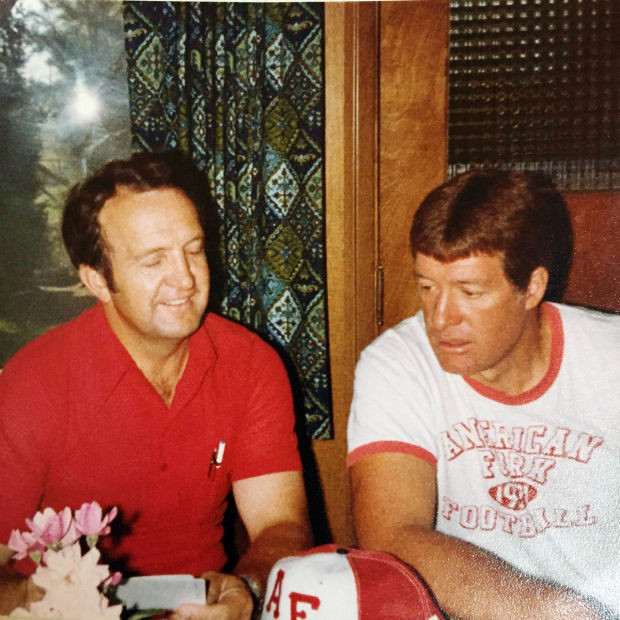
Coach Don Mower with his defensive coordinator, Davis Knight.
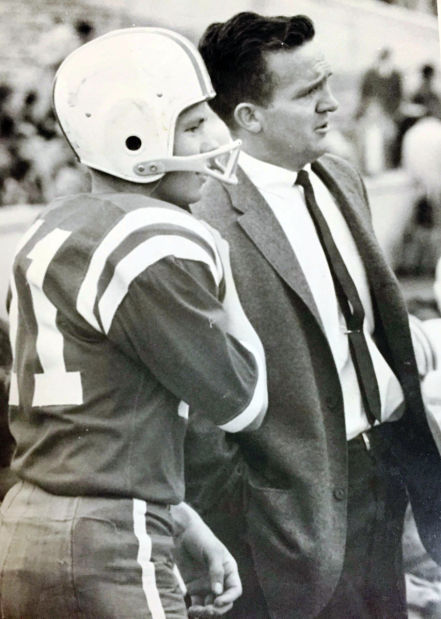
Don Mower was the head football coach at American Fork High School for 20 years.
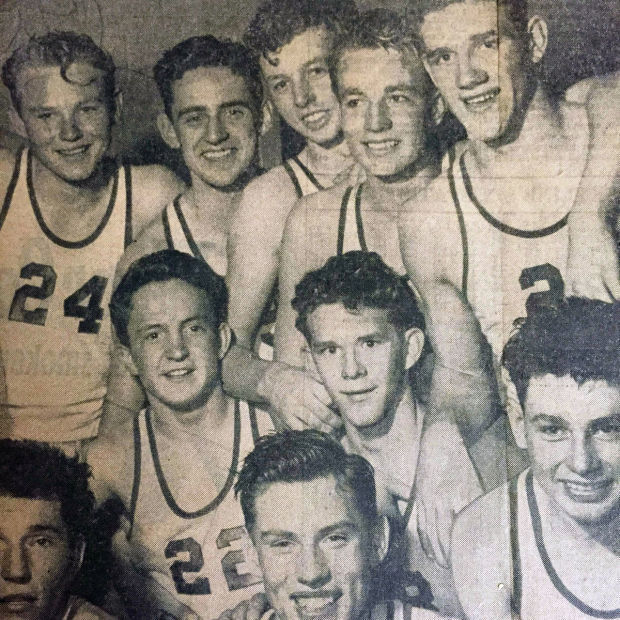
Don Mower celebrates the 1950 state basketball championship with his teammates.
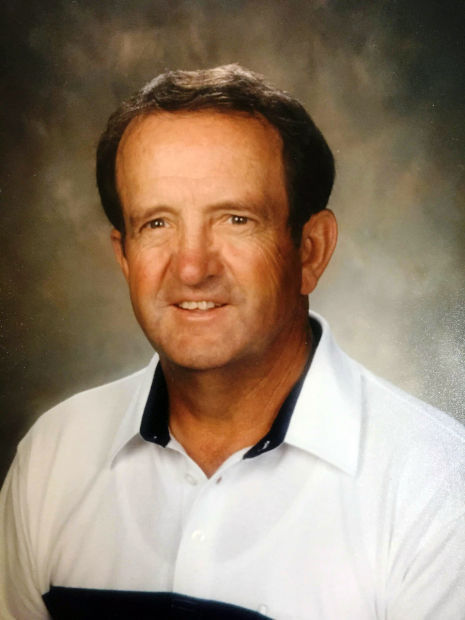
Don Mower
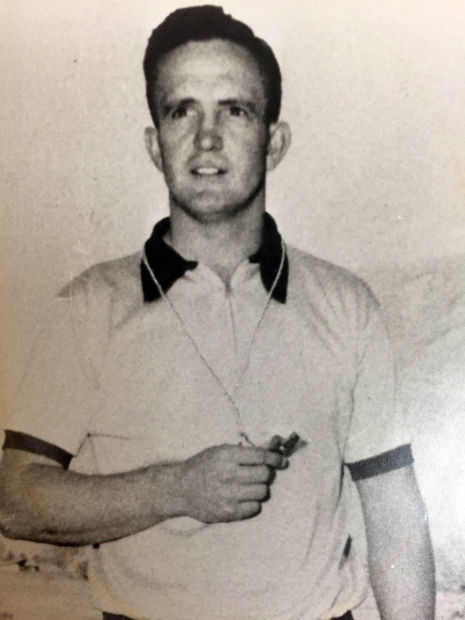
Don Mower
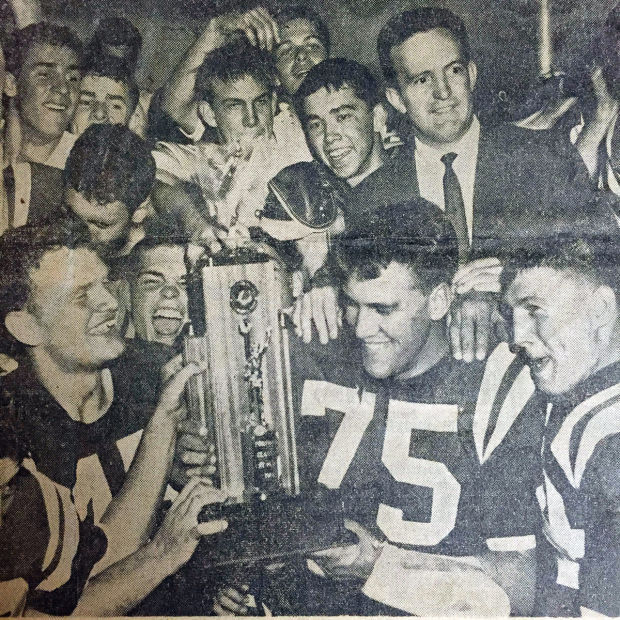
Coach Don Mower celebrates winning the state football championship with some of his players.
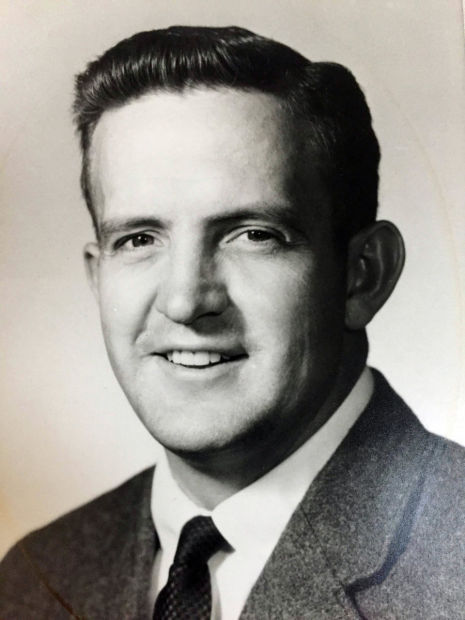
Don Mower
He never set out to make a name for himself.
According to those who knew him best, that was one of the key reasons why Don Mower, a highly successful athlete, coach, teacher and mentor at American Fork High School, had such a positive impact in the community.
Surrounded by his family, Donald Lee Mower passed away on Saturday after a long illness at the age of 82, but the legacy he left after decades of leadership and service is still a force today and will continue to influence future generations.
Mower was born in Spring Canyon and lived his early life in Springville, moving to American Fork before he finished elementary school.
Though not exactly an imposing physical specimen at 150 pounds, Mower played lineman on the American Fork football team and earned All-State honors as a senior. He was also a pole-vaulter on the track team and a member of American Fork’s first-ever state championship basketball team in 1950.
Ingersoll remembers
Carl Ingersoll was his lifetime best friend, beginning in elementary school, and the pair not only grew up together, but went in the Army together and spent decades teaching and coaching together for the Cavemen.
Ingersoll called himself a “little shaver” in high school and wasn’t considered a suitable candidate for the school teams. He said he was allowed to be the manager for the football team during Mower’s junior year, so the two could be around each other. He was cut from the basketball team.
Ingersoll said Mower had a prominent role even while in high school.
“He was a good all-around athlete,” his friend remembered. “He was senior class president and captain of the football team our last year. He also finished second in the pole vault at the state meet.”
After the duo graduated, they went to BYU and enrolled in ROTC. Mower played a year of freshman football there in a program that was later eliminated.
The Korean War had broken out, and at the end of their second year in college, the two were ordered to report for selective service physicals. Ingersoll failed his.
“At that time, only one person in each ward was allowed to serve a mission,” Ingersoll said. “When my bishop heard I flunked my physical, he started the process of submitting my name for a mission call.”
However, Ingersoll was required to get another physical before his departure, and this time, free of the hay fever and asthma that ailed him in the spring, he passed, and thus became eligible for the draft again.
“We were both struggling to work and trying to get through school,” Ingersoll said. “We decided to volunteer together so we could get the help of the G.I. Bill, and entered the Army on January 20th, 1953.”
Two other young men from American Fork also joined with them.
However, the pair was soon separated. Ingersoll ended up as a paratrooper at Fort Bragg, while the other three were sent to training at Fort Lewis, Wash.
The other two men were married, and their wives came and lived near the post. Ingersoll said Mower took their places in weekend KP shifts (kitchen helper duties) so his friends could go see their wives.
“He was a good guy and that kind of thing was typical for him,” Ingersoll said.
Eventually Mower ended up at Fort Sill in Oklahoma. While he was there, he had the opportunity to attend several football games at the University of Oklahoma. This was when the legendary Bud Wilkinson was the coach of the Sooners and won three national championships in the 1950s.
After completing their enlistments, the duo returned to BYU and graduated with degrees in physical education. Mower found a job at Orem High School, and Ingersoll ended up at Bingham.
A year later, they were both back at American Fork. Mower ended up teaching primarily math, but also driver’s education and world geography during his 38 years as an educator, while Ingersoll taught biology and related sciences.
“I think he enjoyed his career in the classroom as much as he did on the field,” said Lone Peak football coach Mike Mower, one of Don’s four sons, all of whom played football for him.
“He told me several times that I should always remember that my teaching responsibilities should always be paramount. He believed that the best coaches were also great teachers as well,” Mike said.
Don Mower became an assistant on the football staff, and then the head coach in 1959 when Leo Nelson retired, whom he admired and respected.
Coaching at the alma mater
“It was Don’s dream to teach and coach at his alma mater,” Mike said.
The school moved to its new campus in 1960.
“When my dad became the coach at AFHS, he incorporated elements of Oklahoma football that he had observed into his offense and defense,” Mike said.
The Cavemen won the state football championship in 1960 and 1961. Jerry Edwards was the quarterback both of those years and tells the story this way.
“The previous year, Coach Mower’s first, American Fork reached the quarterfinals,” Edwards said. “The whole coaching staff was very young. I don’t think any of them were over 30. They were not screamers and yellers. Our communication and association were very good.”
The player said that Mower had a very creative offensive mind.
“We threw a lot of passes, 30-to-40 percent of the time, even though we had a good running attack,” Edwards said. “That was almost unheard of back then, and made it very hard for teams to scout and defend us.”
“He was a very meticulous innovator,” said Davis Knight, his longtime assistant who later became head coach at the school and just finished his own lengthy career a few years ago. “He was very careful teaching the offense; everyone had a role.”
Knight said it was a simple offense with just a few basic plays but a lot of variations. He brought the “belly series” from his Oklahoma observations.
“You put the ball in somebody’s tummy and tried to keep the other team from figuring out where it was,” Knight said.
Later, he added the “fly series,” plays based around a quick toss to the outside.
“Boys were chosen for particular positions for a reason, size or speed or something else,” Knight said.
After adding the “fly” wrinkle to the offense, the Cavemen were immediately successful, with their back-to-back titles.
“He believed that success came with repetition,” Knight said. “He was known by other coaches as a hard one to go against.”
Edwards said each of the series allowed several options, and he was permitted to call his own plays most of the time.
“I loved that,” the former QB said. “We passed so much because I liked it. Our blocking was always good too.”
Coaching philosophies
Another thing that characterized Mower’s teams was preparation. Mike has fond memories of sitting in the basement while his father and Knight went through reel after reel of Super 8 film.
“We were always really well prepared for our games,” Edwards said. “He would scout other teams and make a defense specifically for their offense, so we almost had a new defensive scheme every week. He was just terrific at that.”
In addition, if Mower wasn’t getting quite what he wanted out of the team in practice, he would make the players part of the solution.
“He had a lot of faith in his players,” Edwards said. “He would call a few of us in and ask, ‘What can we do?’ He wasn’t overly aggressive with the team in practice. He had a very good understanding of young men our age.”
Edwards added that all of the coaches were what he termed the “character-builder” type. The players were not subjected to offensive language and got to play in an atmosphere that was always positive.
“He influenced for good a lot of young men,” Edwards said, and used his own experience as an example of the kinds of things that Mower routinely did.
“I was pretty small, only 5-9 and around 160 pounds,” Edwards said. “I played football, baseball and basketball.”
He accepted a scholarship offer to play both football and baseball at Utah State.”
“He was very worried about my size,” Edwards said. “He invited me into his office several times and tried to explain that everything in life comes to an end and college ball was a whole different thing. He thought my mindset needed to be different.”
Edwards admitted he didn’t want to hear it at the time, but Mower’s wise counsel soon became very relevant. In his second freshman game, he got his kidney punched out against Idaho State and spent a month in the hospital. It ended his football career and he never got to play baseball again either.
But, he survived and thrived, in part because of the love and support of Mower, his other coaches and teammates. He said he’s enjoyed a very good life, even if it wasn’t exactly as he originally pictured it.
That story could be told over and over again with hundreds of variations. It’s just who Don was and what he did.
“He loved the boys and they loved him,” Knight said. “He was a real student of the game but never lost sight of the bigger picture.”
Behind the scenes
Mower helped get the bleachers installed at the school, and with Wendell Hansen and some others, he started the little league football program that served American Fork, Lehi, Pleasant Grove and surrounding areas and continues today. He never left the tough jobs to others either.
“When we were coaching together in the summer, we didn’t have laundry service,” Knight said. “We’d go get towels out of the warehouse and we’d wash them between practices on 2-a-days.”
Knight said they used to give players salt pills back then, but that was about the time that Gatorade emerged out of Florida, and Mower quickly embraced this new help for athletes.
“He brought his own extra fridge down to the school, and he and I would mix the Gatorade up and put it in bottles and leave it to get cool overnight so the kids would keep hydrated,” Knight said.
“He was fun to work with,” Knight said. “We worked side-by-side for lots of years. As defensive coordinator I knew what my responsibilities were and he allowed me to do them. He was just great to be around, whether we were hunting and fishing or out on the field.”
Friends forever
The entire group of coaches who were his associates during his decades of football and wrestling service have remained close through the years.
“It was so special,” Knight said. “We worked so well together, but that had a lot to do with his personality. I’ve lost most of all a true friend.
“He was a great competitor and teacher, and in my opinion, an outstanding leader and inspiration to young men,” Knight said. “He’ll be part of the landscape of Utah football forever.”
Mike Mower said his father always maintained a great perspective about the place that athletics played in a balanced life.
“My father recently told me that what he valued most from his career as a football coach was not the wins, scores or championships. He told me that all these things, including individual playing time and even the big plays and games, fade with time.
“What has been and always will be his most valued highlights are the lasting relationships he formed with his players and coaches. He also told me these relationships and valuable lessons learned (loyalty, overcoming adversity, persistence, etc.) are what really make up this great game of football.
“My dad always valued the visits he would receive from former players and coaches, especially these past several months as he became weaker physically,” Mike said. “Those visits represented well the true contributions that he made.”
Viewing: Friday 6-8 p.m.
Anderson Mortuary
49 E. 100 North, American Fork
Viewing: Saturday 9:45-10:45 a.m.
Funeral 11 a.m.
East Stake Center
825 E. 500 North, American Fork