
Former Pleasant Grove star Dallas Lloyd thrives following a different path

Stanford strong safety Dallas Lloyd (29) makes a tackle as The Cardinal defeats the Oregon State Beavers 42-24 at Reser Stadium in Corvallis, Oregon on September 25, 2015.

Dallas Lloyd, quarterback at Pleasant Grove High School. Monday, August 17, 2009. Photo illustration by MARK JOHNSTON/Daily Herald

Pleasant Grove graduate Dallas Lloyd during Stanford's game against Arizona on October 3, 2015. The Cardinal defeated the Wildcats 55-17.
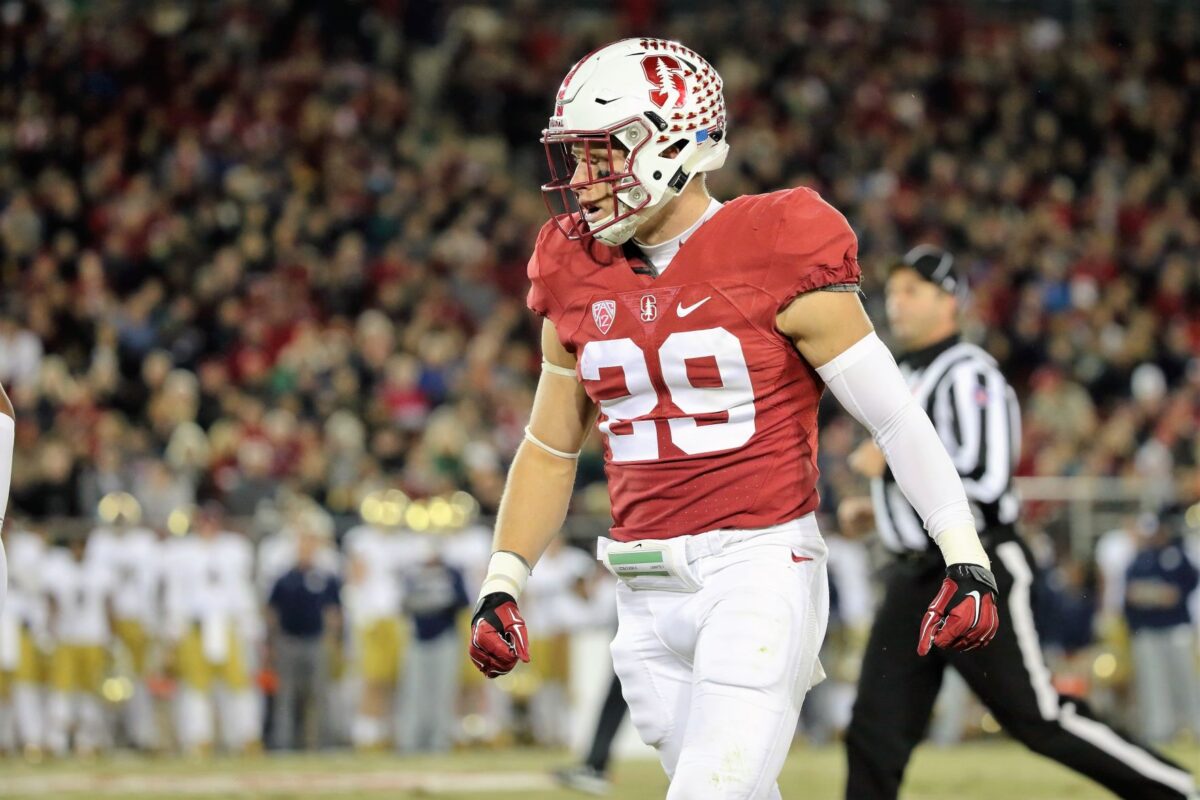
Stanford's Dallas Lloyd keeps an eye on the action as The Cardinal defeats Notre Dame 38-36 at Stanford Stadium on November 28, 2015.
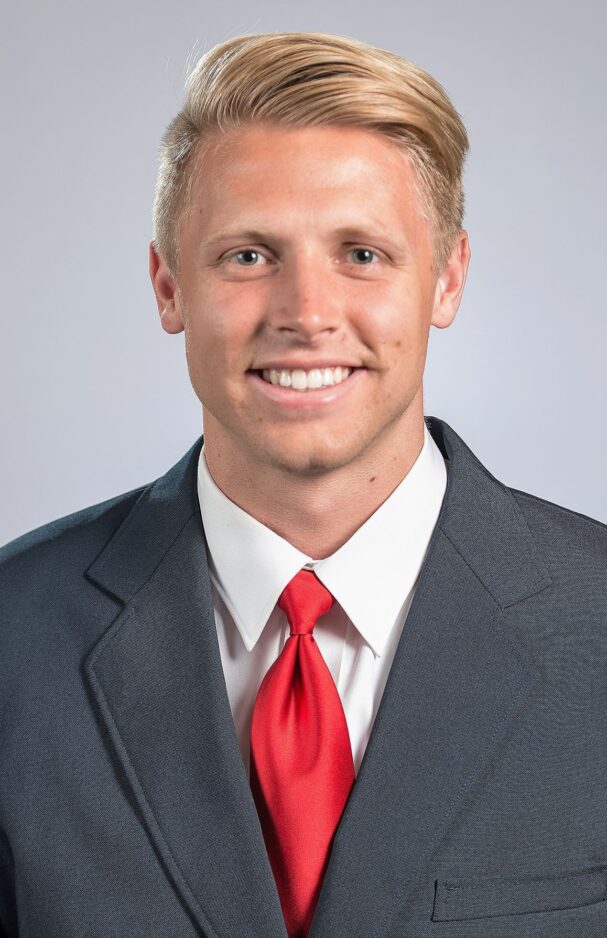
Dallas Lloyd is a fifth-year player for The Stanford Cardinal as he works on his master's degree.
Six years ago, then-Pleasant Grove quarterback Dallas Lloyd took a giant leap of faith and signed to continue his football career at Stanford, an opportunity he earned by paying as much attention to what he did in the classroom as he did to what happened on the field.
Now with a bachelor’s degree in his pocket from one of the nation’s best universities, Lloyd is a defensive starter as a fifth-year player in a top-10 program as he works on completing his master’s degree.
Lloyd, who served an LDS mission before joining the PAC-12 school, said he knows that staying closer to home in more familiar surroundings is a better option for some, but not for him.
“I fasted and prayed before I chose and I felt Stanford was the right place for me and my development,” he said. “I’ve learned a tremendous amount over the past 4 ½ years in an environment that really challenged me morally, academically and spiritually. I’ve really had to be on my toes coming here. It’s been one of the best decisions I’ve ever made.”
But the journey hasn’t been an easy or a smooth one.
As a high school senior, Lloyd was a PrepStar All-American and ranked as the No. 15 quarterback in the nation by Scout as he led a Viking team which sent seven players to NCAA Division I schools. He also earned Academic All-State and a host of other national, regional and state football awards.
The team was undefeated through seven games when Lloyd’s season ended prematurely with an ankle injury, but the Stanford staff tendered an offer anyway, despite that setback. After careful consideration of multiple offers, he chose The Cardinal.
The rehab for his injury was successfully completed before he left on his mission to Chile. When Lloyd finally arrived at Stanford in 2012, he faced becoming acquainted with a new coaching staff as well as the normal readjustments after taking two years away from the game.
He took a redshirt year to give himself the time he needed to get up to speed, but he still got a Rose Bowl ring as Stanford won the bowl game that season.
During his official freshman year, he was inserted in various contests and also received All-Academic conference honors, but he wasn’t satisfied with his production.
“I was used for a few times a game in quarterback option and short pass plays,” Lloyd said. “I loved it and had a great time, but I felt I could contribute in a bigger way.”
He was playing behind Kevin Hogan at the time, who was only a year ahead of him. “I really respected Kevin and knew my role would remain the same,” he said. “I could only have the chance to start one year at quarterback and I was frustrated, not with the team but with myself. I felt deep down inside that I was here to help the team in some other way and had more to give.”
Stanford head coach David Shaw has an open-door policy for his players, so Lloyd decided to approach him as the team was preparing for another Rose Bowl appearance following the completion of the regular season.
“We had a frank and candid conversation,” Lloyd said. “I asked him what he thought about me switching positions and moving to the defensive side. He said the coaches were already thinking about it and we made the decision basically on the spot.”
Stanford decided to make the move in the postseason to get Lloyd extra practice at his new position, though that meant sacrificing any opportunities he might have had to play quarterback in the Rose Bowl loss to Michigan State.
“It was a very difficult transition,” Lloyd said. “I hadn’t backpedalled since my sophomore year of high school and had the mission break too. At first I was really discouraged, being at the bottom of the food chain again. I’d finally mastered a really complex offense and now I was back to square one. Even the special teams drills were an entirely new world.”
Nevertheless, he persevered and played on special teams the next year, also coming off the bench on defense. He appeared in nine games, with the highlight being a blocked punt against Maryland. And he continued to work at getting better.
“I feel really blessed along the way to have many leaders who helped me,” he said. “First, I had the guys in my room to teach me defensive concepts and the playbook.”
Then there was new defensive backs coach Duane Akina.
“He’s brilliant,” Lloyd said. “He spent 13 years at Texas and was at Arizona before that and sent a lot of guys to the NFL.”
In fact, Akina has coached three Thorpe Award winners, six Thorpe finalists and 33 defensive backs who have played in the NFL, including six Pro Bowlers and eight Super Bowl participants.
“He really cares about his players,” Lloyd said. “He talks to us as if to his own children. He wants us to get better. He’s been a quarterback and a QB coach and has helped others to make the transition. We’ve made great strides together.”
In Akina’s first season coaching the secondary in 2014, Stanford finished second nationally in scoring defense and eighth in passing defense. The Cardinal forced the same number of interceptions as passing touchdowns allowed (12).
“I was having the time of my life out there on the field,” Lloyd said. “I love being here at Stanford and one of the great things about it is the really unique people that I get to be around.”
He got additional tutoring that season from two Cardinal alums who had both made the transition from offense to defense during their Stanford playing days: John Lynch and Richard Sherman.
For those who may not know about him, Lynch was drafted in the third round by Tampa Bay in 1993 and played 15 seasons in the NFL. His career included nine Pro Bowl appearances and a Super Bowl ring and he was ranked No. 10 on a list of the NFL’s most feared tacklers just a couple of years ago.
As for Sherman, he’s considered one of the best cornerbacks in the NFL today and won a Super Bowl with Seattle in 2013. He was named to two Pro Bowl rosters and three All-Pro teams in his first four seasons in the NFL.
Lynch told Lloyd to use his offensive knowledge and apply it to his defensive role.
“He said I knew the progressions and what quarterbacks are looking for,” Lloyd said. “He said I could also use that to mess with their minds. Football is a physical game but also a mental game. It’s all about solving the puzzle and recognizing things.”
Sherman also encouraged him to really study and apply himself to learning his new position.
Evidently he took their advice.
In 2015, Lloyd finally earned a starting spot at strong safety alongside Kodi Whitfield, who also transitioned from the offensive side.
The Cardinal posted the league’s fifth-best passing efficiency defense (123.96) and third-best total defense (368.3). Stanford’s secondary allowed only 6.76 yards per pass attempt while picking off eight balls.
The Cardinal went on to beat Iowa in the Rose Bowl and ended up ranked No. 3 in the final AP and coaches polls.
Lloyd played in all 14 games and had 55 tackles last season, including 34 solo, also forcing two turnovers and making two deflections. He also earned Pac-12 All-Academic and CoSIDA Academic All-District honors.
Now, as he prepares to begin his final year with Stanford, which is ranked No. 7 in the preseason, Lloyd has been selected as one of two nominees from his team and 42 around the nation for the 2016 Lott IMPACT Trophy.
This is the 13th year the Pacific Club IMPACT Foundation has presented the Lott IMPACT Trophy that goes to the student-athlete who exhibits the characteristics displayed by Hall of Famer Ronnie Lott during his legendary college and professional careers.
IMPACT stands for Integrity, Maturity, Performance, Academics, Community and Tenacity. His nomination is perhaps the best measure of the impact Lloyd has had on the Stanford program.