Head of the class: Jim Hamblin in his third decade helping BYU athletes succeed

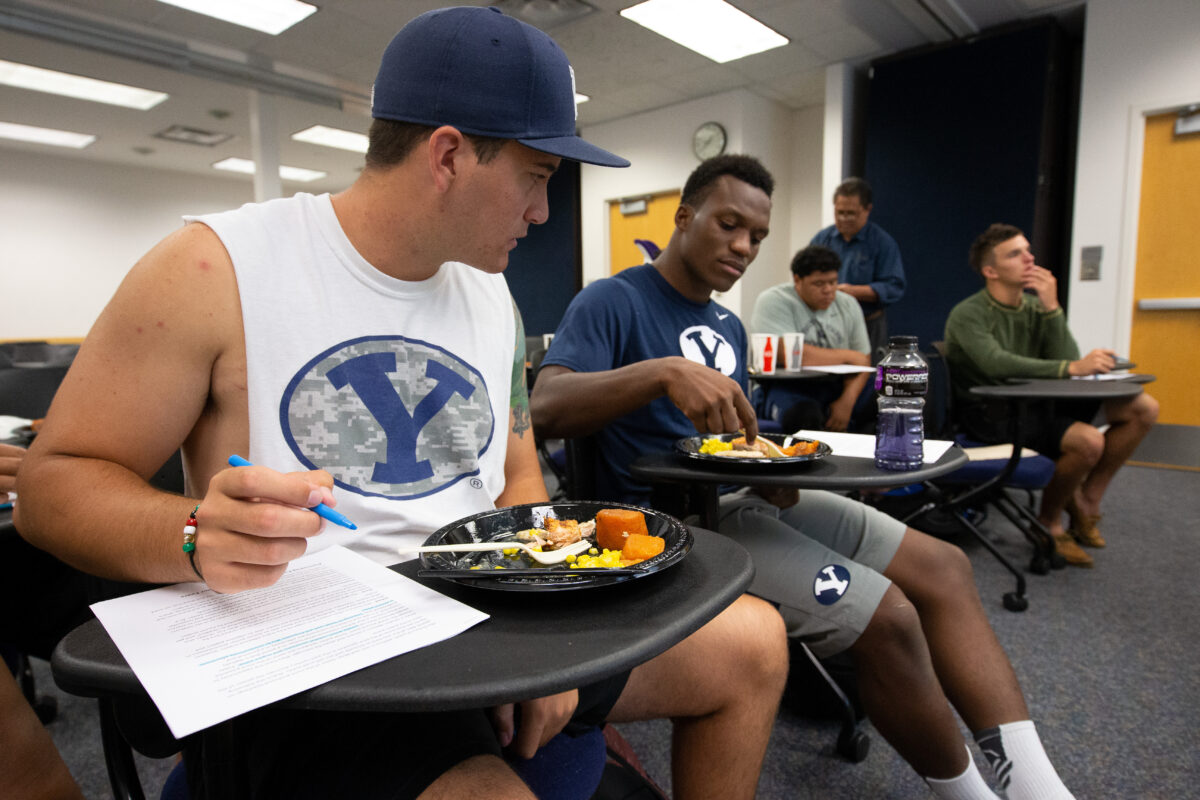
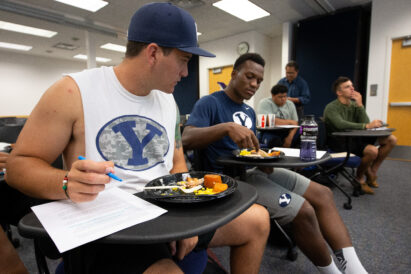
BYU football players (from left) Matt Foley, Dayan Ghanwoloku and Tevita Mo'unga study at the Student Athlete Life and Wellness Center.
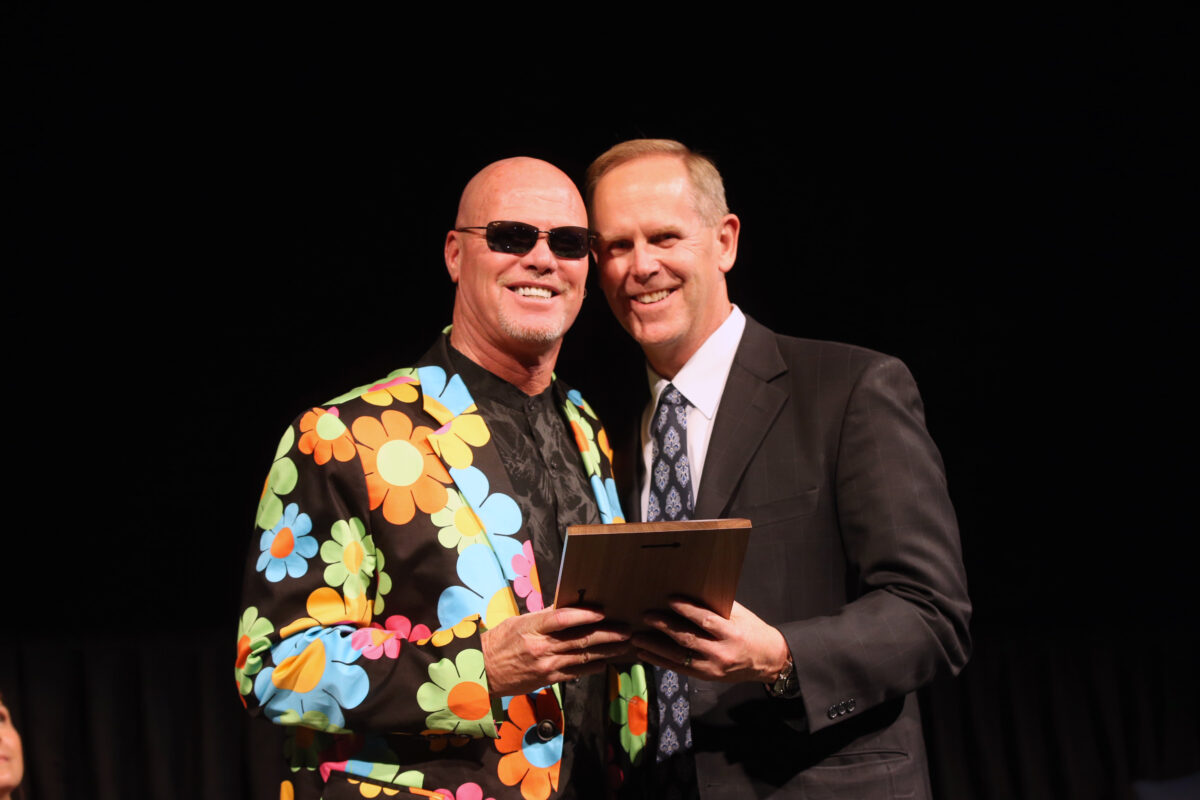
Former BYU quarterback Jim McMahon, left, with current BYU athletic director Tom Holmoe at the BYU Hall of Fame induction banquet on Thursday, Oct. 2, 2014.
-

- BYU senior learning specialist Jim Hamblin (second from right) poses for a photo with his foursome — including Cougar golfers Brock Goyen (far left) and Simon Kwon (second from left) during the Coaches Legacy Tournament benefitting the National Kidney Foundation of Utah and Idaho at Hidden Valley Country Club in Draper on Monday, June 3, 2024.
-
-
BYU football players (from left) Matt Foley, Dayan Ghanwoloku and Tevita Mo’unga study at the Student Athlete Life and Wellness Center.
-
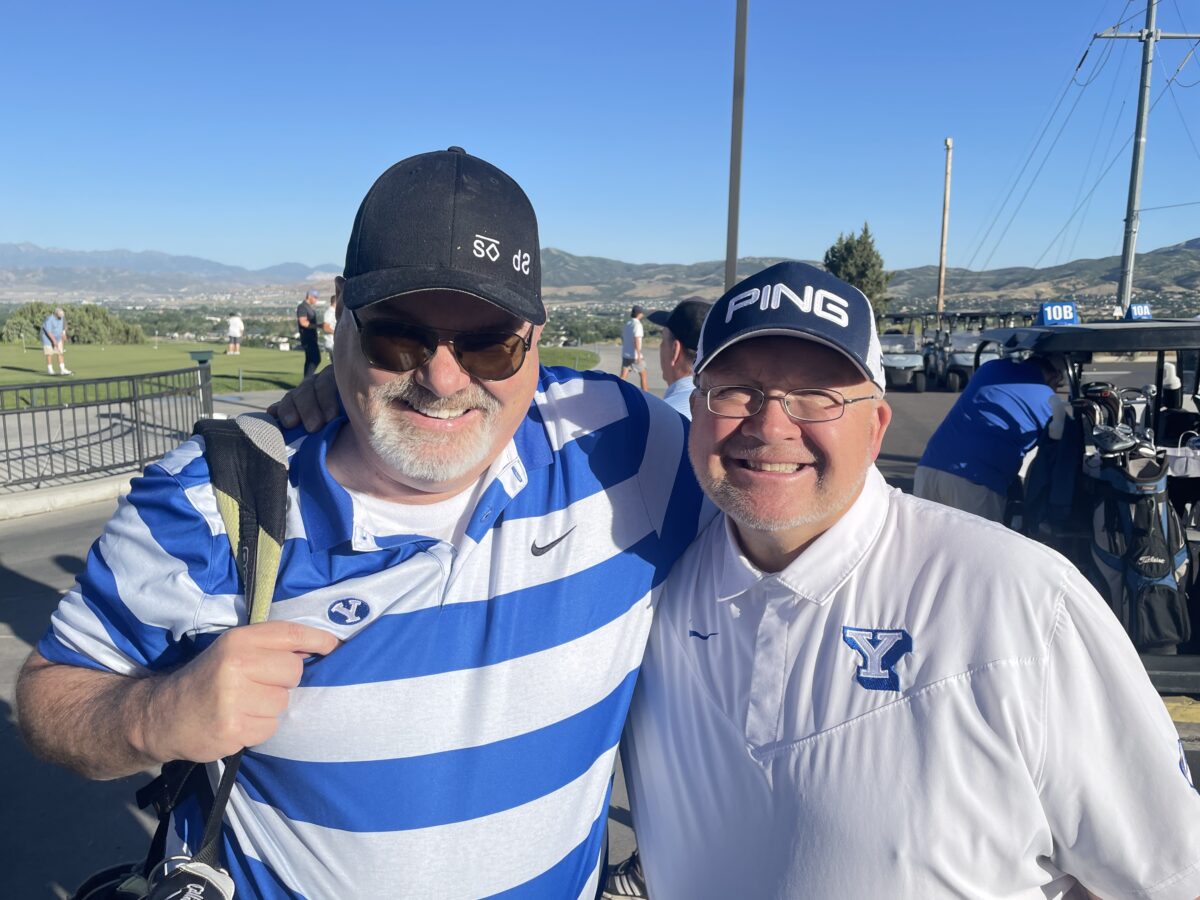
- BYU senior learning specialist Jim Hamblin (right) poses for a photo with Daily Herald correspondent Brian E. Preece at the BYU football media golf scramble at Cedar Hills golf course in Cedar Hills on Monday, June 24, 2024.
-

-
Former BYU quarterback Jim McMahon, left, with current BYU athletic director Tom Holmoe at the BYU Hall of Fame induction banquet on Thursday, Oct. 2, 2014.
Jim Hamblin, who serves as a senior learning specialist for the BYU football and men’s and women’s golf teams, can be best described as someone who has a contagious enthusiasm for BYU, its student athletes, and his job.
BYU has a strong foundation with helping all of its student athletes and working with Hamblin are the likes of assistant athletic director over football academics Jasen Ah You, associate dean of student athletics Trevor Wilson, academic football advisor Sandy Thomas, football academic coordinator Ray Stewart, and fellow senior learning specialist Tofa Tahuna II-Namulau’ulu G. Va’afuti Tavana.
Hamblin has been working with BYU student athletes for the past 22 seasons and the bulk of his time is with athletes in the football program. He was hired by Gary Crowton in 2003 to help guide athletes and has stayed on in that position since, working later with BYU head coaches Bronco Mendenhall and Kalani Sitake. He says he has a close friendship with BYU men’s coach Bruce Brockbank, so has also worked with the golf teams in a similar capacity.
“I find a lot of satisfaction in helping young adults in this part of their lives,” Hamblin said in an interview on Monday.
Hamblin pointed out that the academic team tries to check up on every athlete in the athletic program. The main duties are to help student-athletes plan their academic schedules, chart graduation progress, provide career planning, teach study skills and help students find tutors if needed. But of course, some students will need more help or guidance than others.
“I would be willing to say that the 80-20 rule is in effect where we spend 80 percent of our time with about 20 percent of the team,” said Hamblin. “We have a much bigger role during their first year then we will have going forward.”
This past Monday was also the beginning of summer classes at BYU and 18 players, freshmen or transfers, will be taking classes which Hamblin thinks is important.
“We just want these players to just get off to a strong start,” Hamblin said.
Hamblin also has a strong coaching background and won a state football title as a head coach in 1994 at Murtaugh High School in Idaho. He was also a head coach at East High School for a short time and his other duties as a high school educator and coach were being an athletic director and an assistant coach in track and basketball.
Between these stints leading high school gridiron teams, Hamblin got a master’s degree in educational leadership. He did this while being a graduate assistant, along with current Cougar offensive coordinator Aaron Roderick, during the last two years of LaVell Edwards’ tenure. And this was a time in his life Hamblin truly treasured.
“Any accolades that man gets or has gotten in his life are well deserved,” Hamblin said of Edwards. “He is the most genuine person in that role I have ever met.”
Hamblin expected to go into high school administration but when Crowton and BYU called his life took a major turn.,
“I felt it was an opportunity I couldn’t pass up,” Hamblin said. “It was BYU athletics. It was BYU football. But I never thought it would turn into a career.”
As far as current head coach Kalani Sitake goes, Hamblin describes him as a “LaVell junior”.
“You can tell that there is a strong influence,” he said. “Kalani very much trusts us. He’s interested and not necessarily hands off, but he very much expects the academic team to take care of business.”
Of the four Cougar football head coaches Hamblin has worked for, he said Mendenhall was the most hands-on.
“Coach Mendenhall wanted to know exactly what was going on with every part of the program,” Hamblin said. “Kalani very much still has high expectations for us, but he expects us to handle it.”
There are a lot of challenges that Hamblin and the rest of the academic team faces. One of those has come from the transition to the Big 12.
“For the last three or four years, in preparation for the Big 12 and the first year (in the conference), it has definitely been all hands on deck,” said Hamblin.
While NIL has had a huge impact on college football, it is actually the transfer portal that has added the most different and challenging wrinkle to Hamblin’s job of late.
“From the NIL standpoint, we (the academic team) don’t deal with that a whole bunch,” Hamblin said. “But the transfer thing, it provides some difficult situations. If a student has transferred a couple of different times, they have lost credits through those things. BYU is not going to accept all those credits everyone wants, and BYU is going to require things other universities don’t, particularly religion credits (to graduate) for example. The game of making sure athletes are eligible becomes tricky with transfers.”
But Hamblin is quick to say it is often the transfer athletes that are the most serious about their academics.
“We don’t have a lot of guys that come (to BYU) that don’t expect to perform academically,” said Hamblin. “The academic culture that has been built here is strong.”
This strong academic culture of BYU starts with the average ACT score of an incoming freshman being above 28. Hamblin noted how challenging that can be for some of the athletes.
“Some of our guys come in with kind of an inferiority complex (academically) because they are used to dominating in so many things,” said Hambin. “They are competing against 30 or higher ACT kids, and sometimes they feel like they’re imposters. But we just emphasize to them to ‘stay with it, you’re going to graduate.’ I think that’s why I think what we do is so important, why it’s needed, and why I’m so passionate about it quite honestly.”
And when athletes leave the program without a degree, it doesn’t mean Hamblin’s work with them is over. Recent Cougar players Blake Freeland and Dax Milne have worked to graduate though they left early to pursue careers in the NFL.
But some of Hamblin’s most satisfying work was done with former BYU All-American and Super Bowl winning quarterback Jim McMahon.
To qualify for the BYU Athletic Hall of Fame one has to be a graduate. McMahon finished his Cougar football career in 1981 but didn’t earn his degree just finishing a few credits short. But in 2014 McMahon finished his work and was inducted in the Cougar Hall of Fame working with Hamblin and the rest of the academic team.
“One thing holding Jim (McMahon) back was he was a bit of a perfectionist,” said Hamblin. “But all credit to him for getting it done, and I was glad to play an integral part.”