The doctor is in: How to survive and thrive during BYU-Utah rivalry week

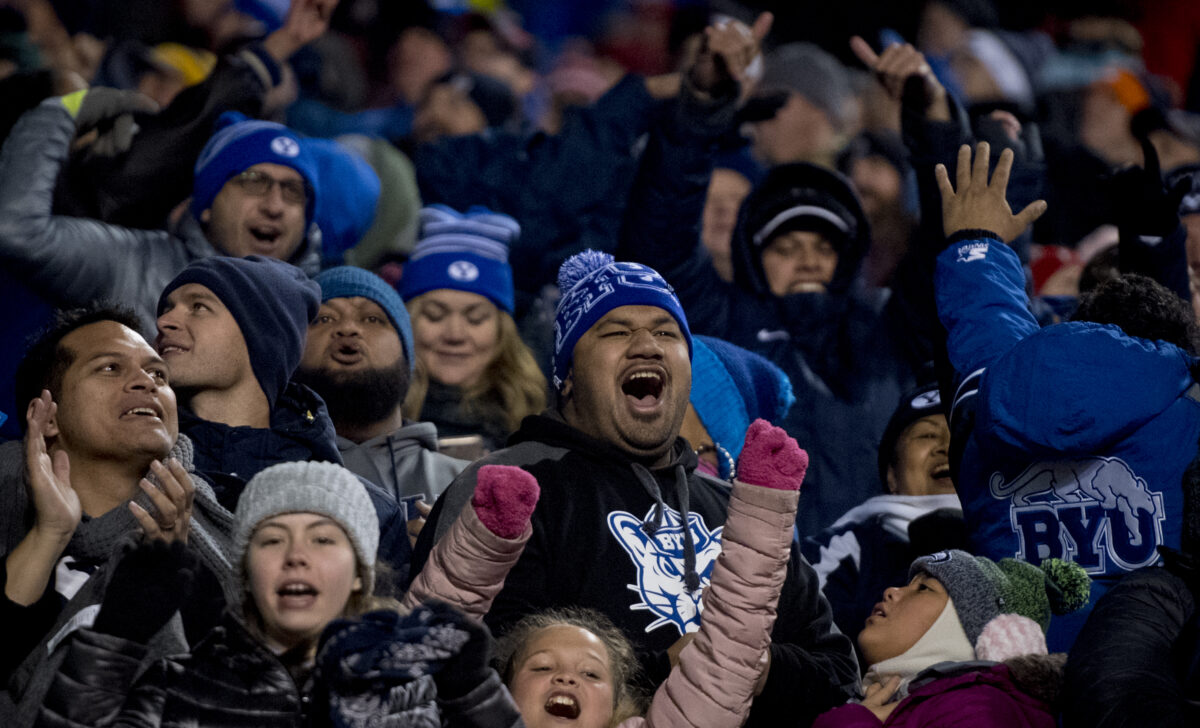
BYU fans cheer after a drive by the Cougars ended near the end zone during a game between Brigham Young University and the University of Utah held Saturday, Nov. 24, 2018, at Rice-Eccles Stadium in Salt Lake City. Isaac Hale, Daily Herald


-

- BYU’s Atunasia Mahe (62) celebrates a big defensive play against Utah at LaVell Edwards Stadium on Saturday, Sept. 11, 2021. (BYU Courtesy Photo)
-
-
BYU fans cheer after a drive by the Cougars ended near the end zone during a game between Brigham Young University and the University of Utah held Saturday, Nov. 24, 2018, at Rice-Eccles Stadium in Salt Lake City. Isaac Hale, Daily Herald
-
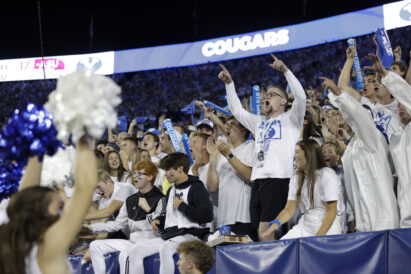
- BYU football fans cheer on their team during the 27-17 Cougar win over Arizona State at LaVell Edwards Stadium in Provo on Saturday, Sept. 18, 2021. (Jaren Wilkey, BYU Photo)
-
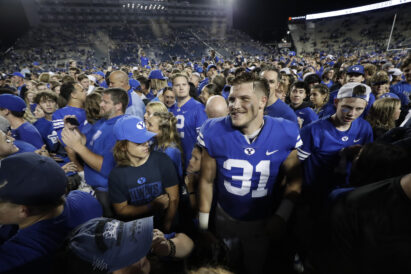
- BYU players celebrate with fans after the 26-17 Cougar win over the Utes at LaVell Edwards Stadium in Provo on Saturday, Sept. 11, 2021. (BYU Photo)
During BYU-Utah football rivalry week, everybody has a story.
Everyone has had one of their opponent’s fans say something that offended them … or said something that felt like was a particularly good zinger on the other guys. Most fans can quote something one of the BYU players said (Cougar quarterback Max Hall: “I hate everything about them” or Ute quarterback Tyler Huntley: “They so poo-poo.”)
Off the top of their heads, fans can rattle off statistics like “Utah won nine in a row from 2010 to 2019” or how long it’s been since the Utes beat the Cougars (“2,242 days”).
This kind of banter goes on year round, but the week leading up to the game can get a bit ridiculous. Perfectly rational fans become paranoid and friends become enemies.
Don’t worry, there’s help: Dr. Jensen is in the house.
Riley Jensen has a unique perspective on the BYU-Utah rivalry game. He spent a semester playing quarterback for the Cougars and also played at Utah State. He has a masters in Sports and Exercise Psychology from the University of Utah. He currently coaches his own son’s little league football team (that could be a whole separate article) and works with various high school and college programs, including Weber State football, as a mental health specialist.
“It’s really interesting to me because as a player, part of me doesn’t understand how this gets so deeply emotional for fans,” Jensen said. “I don’t think the players feel the same way. There’s a underlying level of a huge amount of respect for the other guys. When I played the quarterbacks were Kevin Feterik (BYU) and Darnell Arceneaux (Utah). I’ve talked to both of those guys since we played. We get it. If there’s hate between the players now, social media has eliminated a lot of that. Players are always reading and liking each other’s posts.”
As a sports psychologist, Jensen has some ideas on how BYU and Utah fans can better handle rivalry week.
“People that aren’t playing in the game are so invested in it,” he said. “One really important life lesson for fans is they have to learn what they can control and what they can’t. So many things are outside of their control in the game: Weather, referees, coaches, players, they are all outside their control. If you’re hyper-focused on those things, that builds anxiety and you get stressed out.
“The things you can control include your attitude, how you react to things, your body language, sleep and nutrition. That can keep you healthy in a general sense and even lower your blood pressure.”
Jensen also said fans can work on trying to be “less offended and less offensive” while dealing with the rivalry.
“If we all did that, wouldn’t it make the rivalry more fun?” he said. “If someone gets online and writes ‘All Utah fans are dumb and couldn’t get into BYU,’ does the Utah student who is a 4.0 and won the president’s scholarship have to get offended for everyone? If someone goes online and describes all BYU fans as ‘holier than thou’ and condescending, as a BYU fan do you have to get offended for everyone?”
Jensen said its also important to know when to “zoom in” or “zoom out” in regards to feelings about the rivalry.
“Taking the bigger picture view can help,” he said. “When I coach my son’s little league football team, it can get stressful. One tool that has been really beneficial for me is to think about what I’m going to do after the game. I don’t want to embarrass myself or my wife with the way I act. We have a playoff game Saturday morning, so I’m drawing a picture on my head of enjoying the BYU-Utah game later that day. I think about how I’m going to feel when I drive home, or going to church on Sunday, or how I’ll be at work on Monday.”
Jensen also suggests the “power of the pause” with deep breathing, meditation, or even prayer.
“When I was a kid, when BYU lost to UTEP in 1985, I was walking around the house beside myself,” he said. “As an 11 year old, I was really upset. But I don’t feel that way anymore. In sport sports psychology, I’ve worked with players from both BYU and Utah. I cheer for them both.”
As for his work with athletes, he said sports psychology is more preventative than emergency medicine.
“We just try to get the players in the right mindset to understand themselves,” Jensen said. “One of the real pressures in this world is being told to ‘stay positive.’ Sometimes it’s really hard to jump from a negative mindset all the way to a positive one. We tell the players they don’t have to move from red to green. They can move to yellow, which is more neutral and productive thinking.”
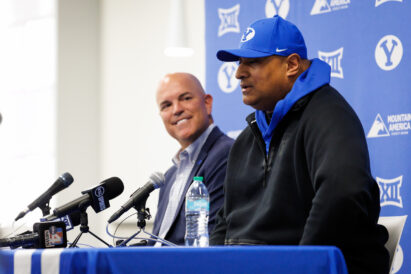
The approach by both BYU and Utah to questions from the media has been interesting for this year’s game. Most of the players are careful not to say anything that could fire up the other team. While Cougar coach Kalani Sitake has been effusive of his praise for the Utes — “We need each other” he said earlier this week — Ute coach Kyle Whittingham (himself a former Cougar player and coach) has refused to answer questions about BYU and said he wants to focus on his own players.
“Everybody has a different way,” Jensen said. “Bulletin board material can be important so players and coaches are careful.”
In fact, BYU declined to be interviewed for this story, insisting that they don’t prepare any differently — mentally or physically — for the Utah game.
When Bronco Mendenhall first took the BYU head coaching job in the mid-2000’s, he repeatedly told the media that rivalry week was “just another week.” The message to his team was that they shouldn’t prepare any differently for the Utes than any other game. But later in his career, Mendenhall acknowledged that rivalry week was different.
“Players often use extra bandwidth during rivalry week,” Jensen said. “Fans will approach them more at church, on the street, at a restaurant … Players use a certain amount of mental bandwidth for games and there’s more of a distraction during rivalry week.”
Jensen said when he was playing at Utah State back in the mid to late 1990’s, the Wildcats employed a sports psychologist, Dr. Rich Gordon.
“He told us his office was always open, but nobody had time for that,” Jensen said. “This generation currently is more open for help. At Weber State, I meet with the team every week and a lot of kids come up to me personally and tell me, ‘That’s exactly what I needed to hear.’ That’s very gratifying. We just want the players to be the best version of themselves.”
The Cougars and Utes first played each other four times in 1896 and 1897 when BYU was known as “BYU Academy.” The two teams played each other every year from 1922 to 1942, took a break until 1946, then played every year until 2013. Since then, BYU and Utah have played seven times in a 12-year span, mainly due to the Utes moving into the Pac-12 and the Cougars playing an independent schedule. Now, the two teams are both in the Big 12 and will likely play each other every year.
“I think the best thing for everyone is to be thankful for the rivalry,” Jensen said. “I lived my whole life wanting to be a part of it and it’s way more fun to be involved in it than to not be. We should be glad its back and try not to go overboard on it. It’s something we should look forward to every year.”