DICKSON: ROI in the future of BYU men’s basketball is still looking good

-
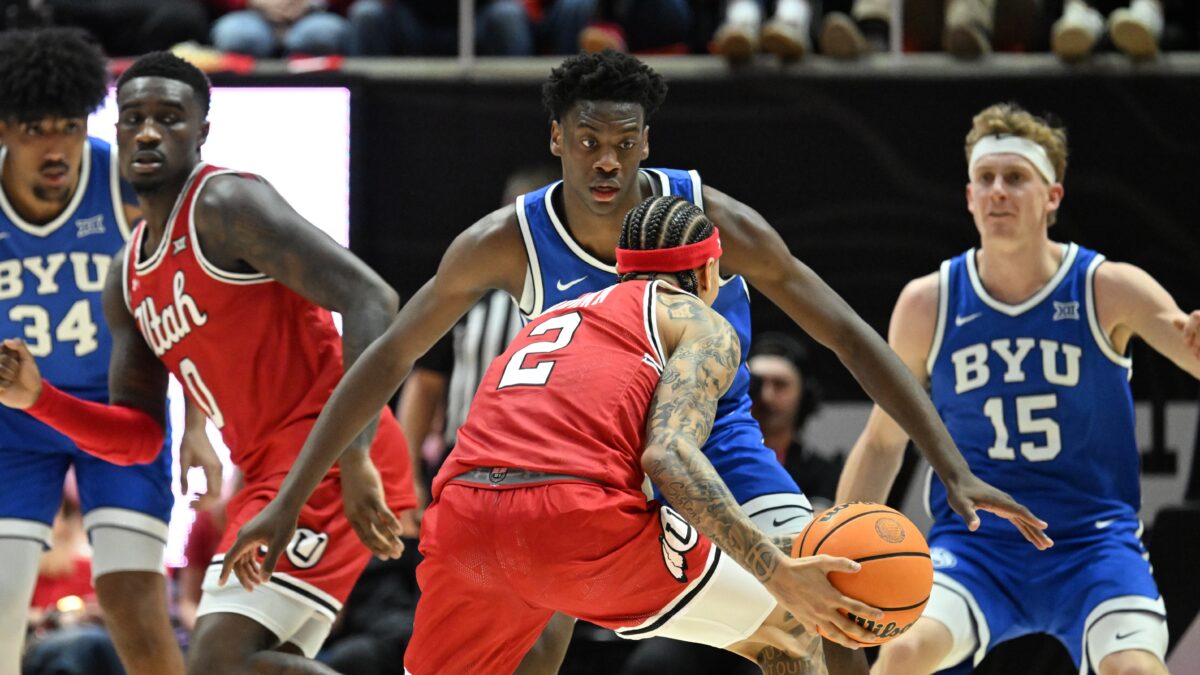
- BYU’s AJ Dybantsa defends Utah’s Terrance Brown in a Big 12 men’s basketball game at the Huntsman Center in Salt Lake City on Saturday, Jan. 10, 2026.
-

- Darnell Dickson, Daily Herald
In the past several years, college sports fans have become familiar with terms such as “Transfer Portal” and “Name, Image and Likeness.”
Those two processes have fundamentally changed college sports, specifically football and men’s basketball, in good and bad ways.
There’s another term that’s creeping into the college sports lexicon: ROI.
It’s an acronym for a business reference, “Return on Investment.”
In business, ROI is a key financial metric used to evaluate the profitability or efficiency of an investment by comparing its gain or loss relative to its cost. In other words, if the percentage of return isn’t high enough, the investor will be hesitant to continue to sink money into a venture.
NIL is relatively new in college sports so defining investment fatigue among booster organizations might be hard to do just yet.
College football and men’s basketball boosters are spending more and more money in the NIL space, hoping to lure the best athletes to their universities. It’s expected that wins and national championships will follow.
When they don’t …
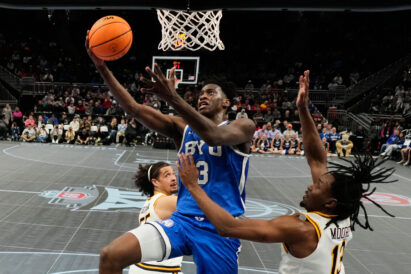
There has been lots of naysayers piling on the BYU men’s basketball program in the wake of its elimination in the first round of the NCAA Tournament despite a significant financial investment into NIL. Freshman sensation AJ Dybantsa was paid anywhere from $5 to $7 million dollars to play for the Cougars (depending on who you believe) and the program’s total NIL investment is somewhere between $10 million and $15 million (again, depending on who you believe).
A 22-13 record (9-9 in Big 12 play) and a first-round exit from the NCAA Tournament gives doubters plenty of ammunition to claim BYU boosters didn’t get much ROI.
It’s a short-sighted view, though.
Sure, the Cougars fell far short of preseason predictions, which had them challenging for a Final Four berth. It didn’t work out that way, for a number of reasons including a rash of season-ending injuries, poor defense and inconsistent 3-point shooting.
If BYU and its boosters were throwing everything into a one-year plan, taking just one shot to put a championship team on the floor, then it failed. But that’s not the goal, or at least, it shouldn’t be. The goal is to create a program where every year the Cougars put the proper amount of resources into building a national contender.
Dybantsa’s freshman season was nothing short of spectacular. He performed well on the big stages, sang the praises of the university and led the nation in scoring. BYU has never had anyone like him in the program and the benefits have been beyond expectations. Dybantsa’s one year in Provo has led to the signing of another top five prospect (Bruce Branch III) and the addition of one of the top junior college players in the country (KJ Perry). When Cougar head coach Kevin Young goes hunting on the transfer portal trail, he’ll have no shortage of interested parties due to Dybantsa’s name recognition. The national attention Dybantsa brought to Provo is invaluable for the continued growth and visibility of the program. That the Cougars faltered down the stretch and still earned a No. 6 seed is proof that the signing of Dybantsa, the attention paid to the non-conference schedule and playing in the Big 12 Conference is pushing BYU in the right direction.
AJ Dybantsa coming to play for the Cougars was never about just the 2025-26 season.
Young has the right people in place so that the ROI on the investment into BYU men’s basketball will continue to pay off in years to come.