LLOYD: Costs and benefits come with modern high school football in Utah Valley



-

- American Fork players prepare for the 6A semifinal game against Skyridge at Rice-Eccles Stadium in Salt Lake City on Friday, Nov. 10, 2023.
-

- Skyridge fans celebrate a big play during the 6A semifinal game against American Fork at Rice-Eccles Stadium in Salt Lake City on Friday, Nov. 10, 2023.
-

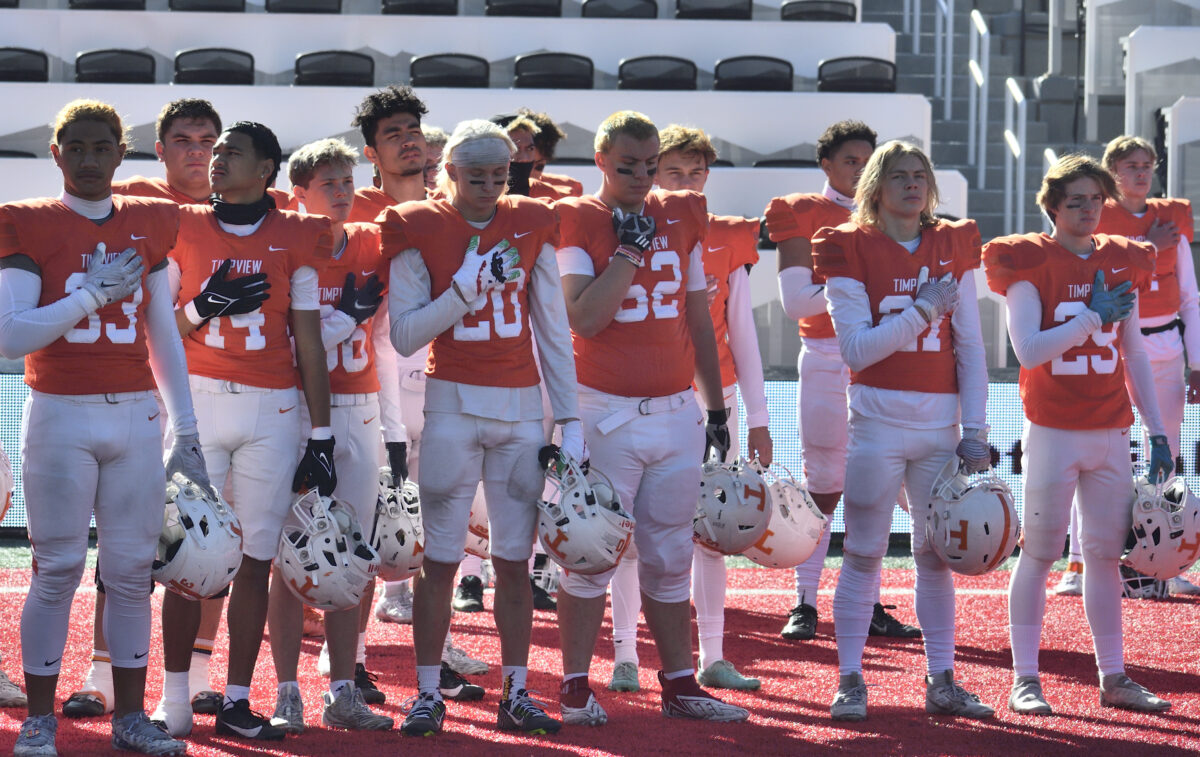
- Timpview players stand for the national anthem before the 5A semifinal game against Olympus at Rice-Eccles Stadium in Salt Lake City on Thursday, Nov. 9, 2023.
-

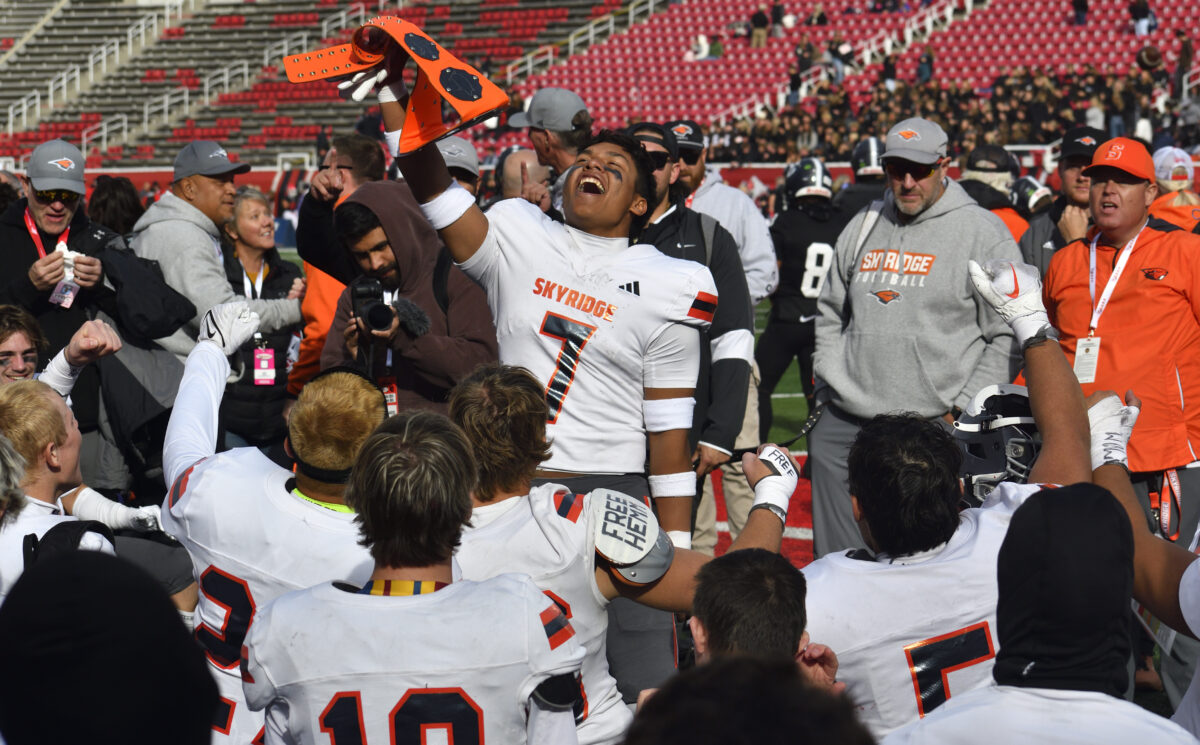
- Skyridge senior Laa Kalama celebrates with his team after the 6A semifinal game against American Fork at Rice-Eccles Stadium in Salt Lake City on Friday, Nov. 10, 2023.
-

- The Lehi defense tries to stop Corner Canyon at the goal line during the 6A semifinal game against Corner Canyon at Rice-Eccles Stadium in Salt Lake City on Friday, Nov. 10, 2023.
-

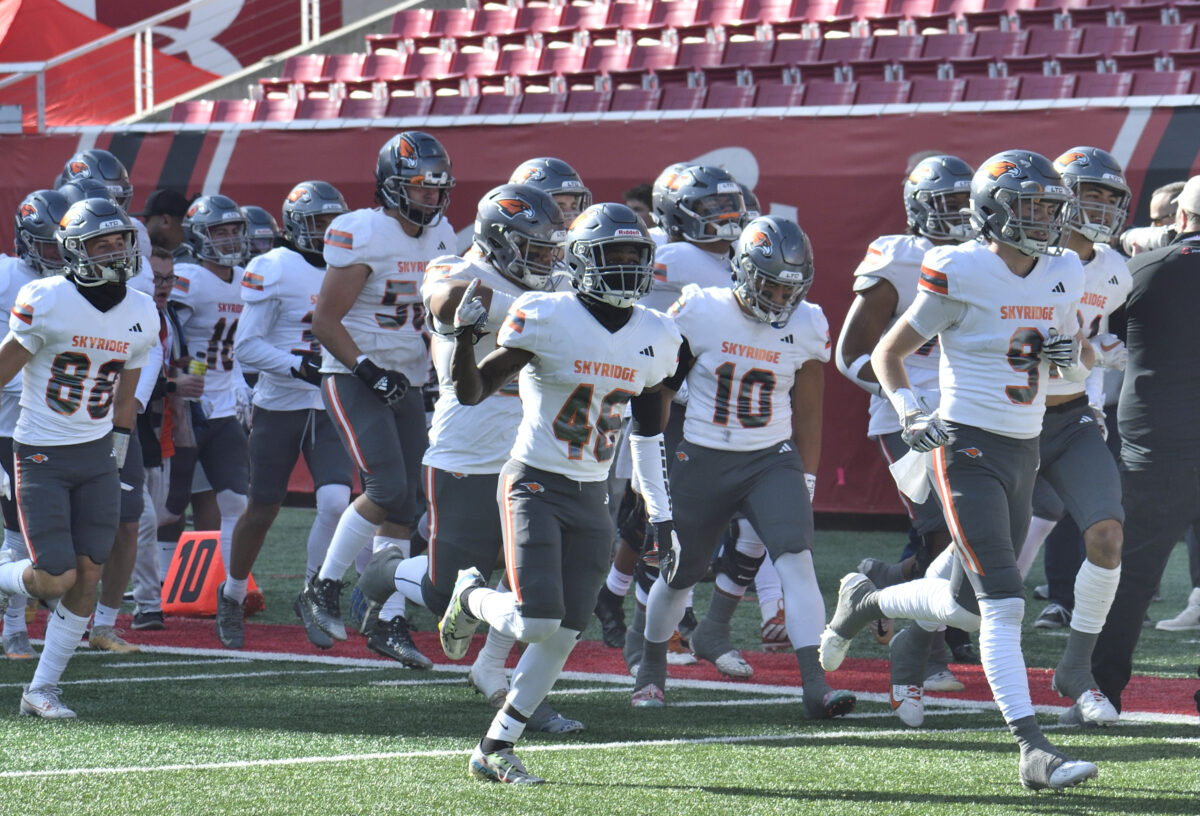
- Skyridge players prepare for the 6A semifinal game against American Fork at Rice-Eccles Stadium in Salt Lake City on Friday, Nov. 10, 2023.
As I sat in the press box at Rice-Eccles Stadium during the state high school football semifinals last week, I voiced a question that I knew no one could answer, but intrigued me nonetheless:
Of the eight teams competing for spots in the 5A and 6A championships — Timpview, Olympus, Alta, Bountiful, Skyridge, Lehi, American Fork and Corner Canyon — on Thursday and Friday, what percentage of participating players actually lived in the school boundaries for more than three years?
I think the answer would be fascinating because it impacts whether high school football really is what it should be.
Let me make a few things perfectly clear before I talk more about my perspective:
1. I’m not accusing anyone of cheating.
My responsibilities don’t include enforcing the rules of the Utah High School Activities Association. There are others who have those duties and I think they do an excellent job within the parameters they are given.
2. This issue is not new.
Players in many sports and other activities have “moved” or found other ways to be at schools they think will be better or provide more opportunities. It’s been part of high school sports for a long time and isn’t going away.
3. The schools I mentioned aren’t unique.
I highlighted the football semifinalists because that was who was competing at that moment, not to say they should be the only ones held accountable. My point of view encompassed high school sports as a whole and these teams were just examples.
While all of those things are true, the modern era of “super-teams” in high school sports is unfortunate, in my opinion, because of the costs we don’t often talk about.
There are five groups that have a stake it what happens as an athlete considers where he will showcase her/his talents: The school, the sports program, the community, the family and the individual.
What is most important to each group?
The objectives aren’t always the same.
Sure, all of them usually feel tremendous pride when a team does well — but that can be impacted by other factors.
A school needs to pay attention to academic achievement, not just success in activities.
A community benefits but feels it more strongly when they have been around the athletes on the field or the court or the diamond, having interacted in their neighborhoods.
Families and individuals sometimes get their priorities distorted, focusing more on the needs of their specific participant than on what is best for the team as a whole.
And sports programs can sacrifice the physical and mental health of their players if they get too focused on what is on the scoreboard.
One of the reasons I have come to love high school sports so much in my two decades of covering them in Utah Valley is that ideally they strike a balance between the various interested parties. It’s rarely easy, but the best schools find ways to make it happen.
I also see the schools and programs I admire most emphasizing the life lessons that their athletes get to learn through competition — and that means learning to win and to lose with dignity.
It’s easy to see the reasons players (and their families) consider joining programs that have had a lot of success. Wins, championships, awards and college recruiting attention are certainly in play.
But what about the costs?
I often wonder about the impact of pushing teenagers to deal with the combination of adapting to a new situation (which is challenging enough by itself) with the pressure to perform.
We see these talented athletes congregating at certain schools, leaving behind the friends and communities they were part of in earlier times in their lives. Is that the best thing for them?
I think that question doesn’t have a black-and-white answer. It’s more applicable on a case-by-case basis.
So maybe this is just an homage to the days when most players on a football team (and other sports and activities) has known each other for years and has built the bonds that come with seceding and failing together.
Nothing was ever completely idyllic and even teams assembled that way have issues.
But they were the essence of community, which to me is still one of the biggest parts of high school sports.
And I hope it always will be.
So athletes and families, please consider the costs as well as the benefits when looking at making changes. It’s not always simple to know the best way to go.