
Why ending slavery wasn’t that simple
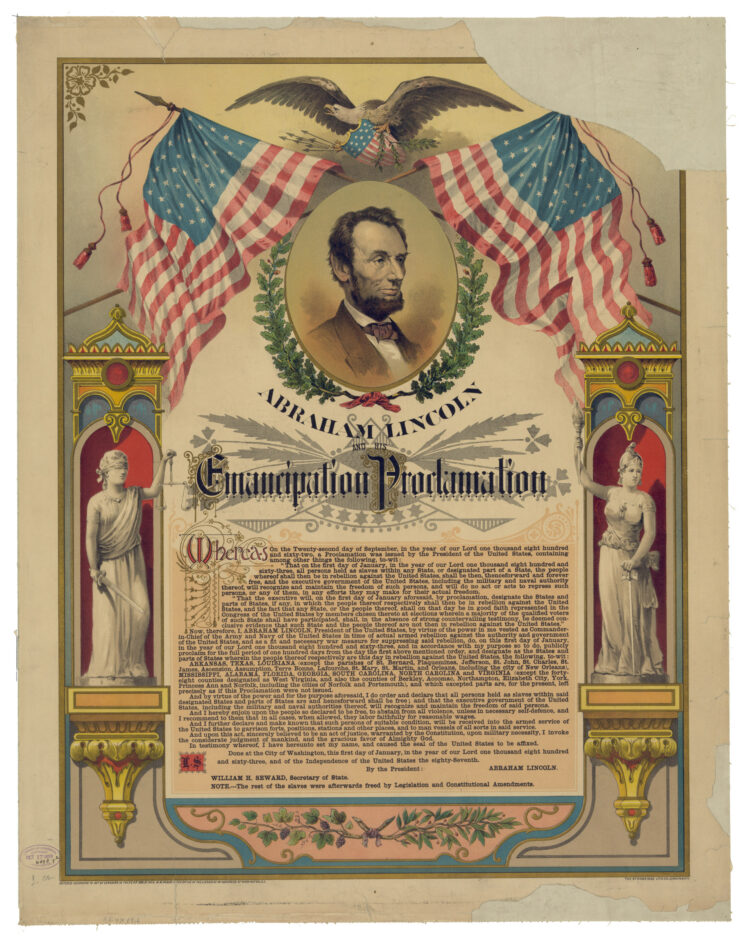
This ornate illustration, published around 1888 by The Strobridge Lithograph Co. and now in the collection of the Library of Congress in Washington, doesn’t hint that the real Emancipation Proclamation was a five-page, double-sided document. (The Library of Congress).
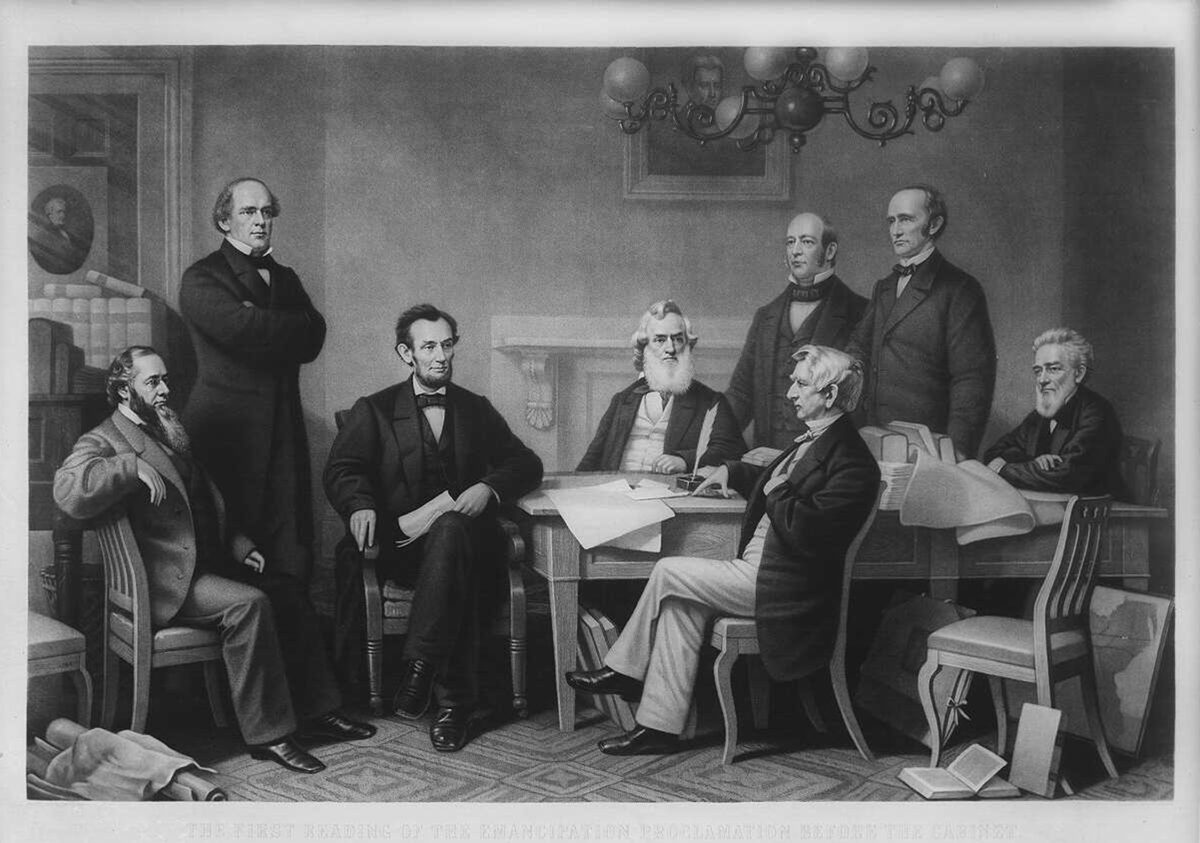
This painting shows a reenactment of Abraham Lincoln signing the Emancipation Proclamation on July 22, 1862. It was painted by F.B. Carpenter and engraved by A.H. Ritchie around 1866. Depicted, from left, are: Edwin M. Stanton, secretary of War, Salmon P. Chase, secretary of the Treasury, President Lincoln, Gideon Welles, secretary of the Navy, Caleb B. Smith, secretary of the Interior, William H. Seward, secretary of State, Montgomery Blair, postmaster general, and Edward Bates, attorney general. Simon Cameron and Andrew Jackson are featured as paintings. (The Library of Congress).
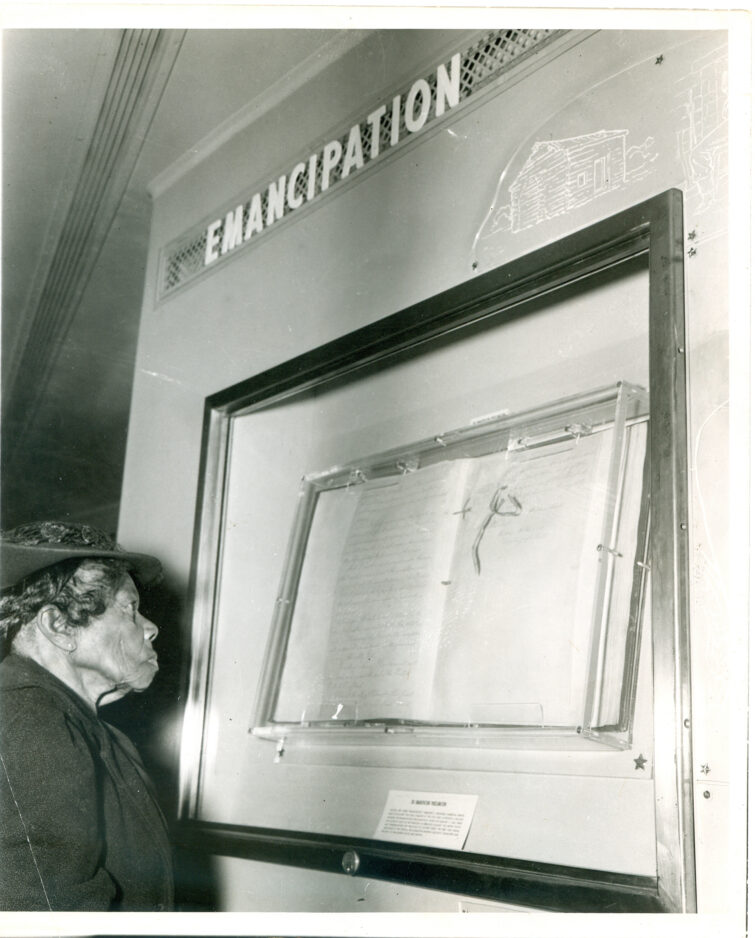
Sally Fickland, a former slave, views the Emancipation Proclamation in 1947. (The National Archives and Records Aministration).
The year 1863 was an important one for the rights of African Americans in the United States. The country was in the middle of the Civil War, with Southern states (also called the Confederacy) having seceded — or separated — from the North (the Union). A large reason for the war was slavery, which was permitted in the South. The South believed that without slaves, its economy and everything about the way white Southerners lived would be ruined.
President Abraham Lincoln was against slavery, but his main concern was winning the war and bringing the North and South together again. He once wrote: “If I could save the Union without freeing any slave I would do it, and if I could save it by freeing all the slaves I would do it.”
That was the situation in the country on January 1, 1863, when Lincoln signed the Emancipation Proclamation — a long name for a long document (it went on for five pages!). You might have heard that it freed all slaves, but that isn’t true. Only a small number of the country’s 4 million slaves were freed immediately.
We talked to the National Archives’s Jennifer Johnson, who agreed to help explain what Lincoln’s words mean and what happened after he wrote them.
Q: What is emancipation?
A: Emancipation means to set free.
Q: Who was freed on January 1, 1863?
A: Slaves held within Confederate states that were not under Union control were officially freed. In reality, the South didn’t have to follow Lincoln’s order. Southerners saw themselves as having their own country with their own president, Jefferson Davis. That’s why not many slaves were actually freed that day. After January 1, as Union troops won battles and took over Confederate territory, slaves there were freed.
Q: What else did the document do for African Americans?
A: It allowed freed slaves to join the Union army and navy to help free those who were still slaves. By the end of the war, 200,000 African Americans had fought for the Union.
Q: Why didn’t Lincoln free all slaves?
A: Because he didn’t have the power to. He signed the proclamation acting as commander-in-chief (the head of the army and navy,) so he could free slaves in states the Union was at war with. Congress had to suggest that the Constitution be changed (with the 13th Amendment in 1865) and most states had to support that change for slavery to end in all of the states.
Q: Did the proclamation surprise the Confederacy?
A: No. On September 22, 1862, Lincoln issued a version of the document telling the Confederacy that he would make it official January 1.
Q: So if the proclamation didn’t end slavery, why is it a big deal in history?
A: The Emancipation Proclamation changed how people thought about the war. By signing it, Lincoln said that the war wasn’t really about whether states should be able to decide issues such as slavery for themselves. He was saying that the war was about freedom. Lincoln’s words encouraged slaves to escape and start new lives as free people.