
Cruise lines launching new ships in late 2026 are selling specific kinds of travel, not just cruises
The newest cruise ships arriving after spring 2026 are being built around very specific travel styles instead of trying to appeal to everyone at once. Cruise lines are leaning harder into ships designed for particular experiences, whether that means lingering longer in European ports, wellness-focused luxury, expedition cruising in remote regions or culturally driven river itineraries.
The shift is becoming more noticeable across the premium and luxury cruise market, where smaller ships, more focused itineraries and destination-heavy sailing schedules are increasingly replacing the floating-resort mentality that dominated much of the industry over the last decade. Europe remains the center of many of these new deployments, while river cruising and yacht-style travel continue attracting investment from both cruise companies and hotel brands. The trend extends beyond ocean cruising, with Celebrity Cruises already building anticipation for Celebrity River Cruises ahead of its planned 2027 launch on the Rhine and Danube.
Smaller ships are putting the focus back on the destinations
Some of the most interesting launches arriving in late 2026 are moving away from the idea that the ship itself has to be the main attraction.
Windstar Cruises launches Star Explorer in December 2026 as the second of two new all-suite yachts joining the fleet. With just 224 guests on board, the ship is being built around a style of cruising that spends more time in the destination and less time trying to entertain passengers with giant onboard attractions.
The cruise’s itineraries lean heavily into overnight port stays and smaller European ports that larger ships struggle to access. Windstar is specifically highlighting overnight calls in places like Bordeaux, Tallinn and Biarritz, along with access to ports such as Caen and San Sebastián.
That kind of schedule creates a very different trip from the typical big-ship cruise, where passengers may only have a few hours ashore before sailing again.
“Windstar has a long history of exploring in the Mediterranean and Europe, and the small size of this ship opens even more interesting places, including rivers,” said Christopher Prelog, president of Windstar Cruises.
Regent Seven Seas Cruises is also leaning into space and personalization with Seven Seas Prestige, launching in December 2026 as Regent’s first new ship class in a decade. The emphasis is less on headline-grabbing attractions and more on larger accommodations, lower passenger density and a quieter luxury experience.
Luxury cruise ships start feeling more like high-end resorts
One of the clearest themes emerging across late-2026 launches is how aggressively luxury cruise lines are moving toward hotel-style and residential-style travel. The direction mirrors what affluent travelers increasingly expect on land, where wellness, privacy and design often matter more than nonstop activity.
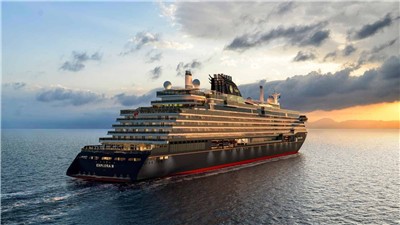
Explora Journeys debuts EXPLORA III in summer 2026 as the first liquefied natural gas-powered vessel in the brand’s fleet. Liquefied natural gas, commonly called LNG, is promoted by cruise lines as a lower-emissions alternative to traditional marine fuels.
However, the bigger story onboard is how much space and wellness now shape the experience itself. EXPLORA III adds expanded outdoor living areas, a merged spa and fitness complex, outdoor sports courts and oversized Owner’s Residences designed with Patricia Urquiola. The ship’s inaugural season stretches from the Mediterranean to Northern Europe, Greenland, Canada’s East Coast, Alaska and the Caribbean.
Expedition operators lean harder into conservation and authenticity
Heritage Expeditions has been highlighting a different sustainability approach with Heritage Discoverer, which is scheduled to join the fleet in 2027 following a preview Antarctic voyage in late 2026.
Instead of focusing on new construction, the company emphasizes refurbishing and extending the life of existing expedition vessels. Heritage Expeditions has described the strategy as the opposite of “fast cruising,” borrowing language more often associated with fast fashion. That positioning stands out in an industry where many sustainability conversations focus almost entirely on fuel technology.
Heritage Expeditions operates voyages through Antarctica, the Ross Sea, the Subantarctic Islands and remote areas across Indonesia, Papua New Guinea, Micronesia, the Philippines and Japan, continuing to focus heavily on conservation-based expedition travel.
River cruising keeps pushing deeper into design and cultural travel
River cruising is also becoming more design-focused as lines compete for travelers looking for slower, more immersive European itineraries.
Uniworld Boutique River Cruises launched the S.S. Emilie in March 2026 as its newest Super Ship and most sustainability-focused vessel so far. Named for Emilie Flöge, the muse of Austrian painter Gustav Klimt, the ship leans heavily into Vienna-inspired design with walnut-clad interiors, mosaic-lined bathrooms and decorative ceilings throughout the restaurant spaces.
The 154-passenger ship sails Danube itineraries, including Capital Cities of the Danube and Vineyards & Palaces along the Danube, along with Mystery Cruises where guests do not learn the itinerary until departure.
The continued growth of the river market is also drawing more attention from major ocean cruise brands. Celebrity River Cruises announced its planned 2027 launch, signaling how attractive the European river segment has become as travelers continue looking for smaller-scale ships and more destination-focused travel.
Even the mega-ships are becoming more specialized
Large ships are not disappearing from the market; they are becoming more experience specific, with vessels like MSC Cruises ‘ MSC World Asia launching in winter 2026 as part of its expanding World Class series. The LNG-powered ship still leans into large-scale cruising, but the experience is increasingly organized around themed entertainment districts and destination-inspired environments tied to the ship’s Asia-focused identity.
That indicates the broader direction of the cruise industry right now. Cruise lines are no longer just trying to build ships that appeal to everyone. Increasingly, they are building ships designed around exactly the kind of trip travelers want before they even step on board.
Jennifer Allen is a retired chef turned traveler, cookbook author and nationally syndicated journalist; she’s also a co-founder of Food Drink Life, where she shares expert travel tips, cruise insights and luxury destination guides. A recognized cruise expert with a deep passion for high-end experiences and off-the-beaten-path destinations, Jennifer explores the world with curiosity, depth and a storyteller’s perspective. Her articles are regularly featured on the Associated Press Wire, The Washington Post, Seattle Times, MSN and more.