
Garden Help Desk: Putting the cut flower garden to bed for the winter
-
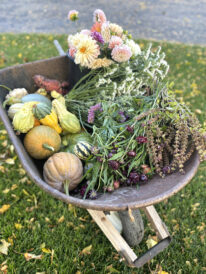
- With the arrival of fall temperatures, there are many seasonal ornamentals that can be added to cut flower arrangements before the cut flower garden is cleaned out for the year.
-
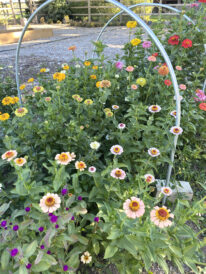
- Once we’ve had a killing frost, beautiful summer annuals like these zinnias will die back and need to be removed as part of putting a cut flower garden to bed for the year.
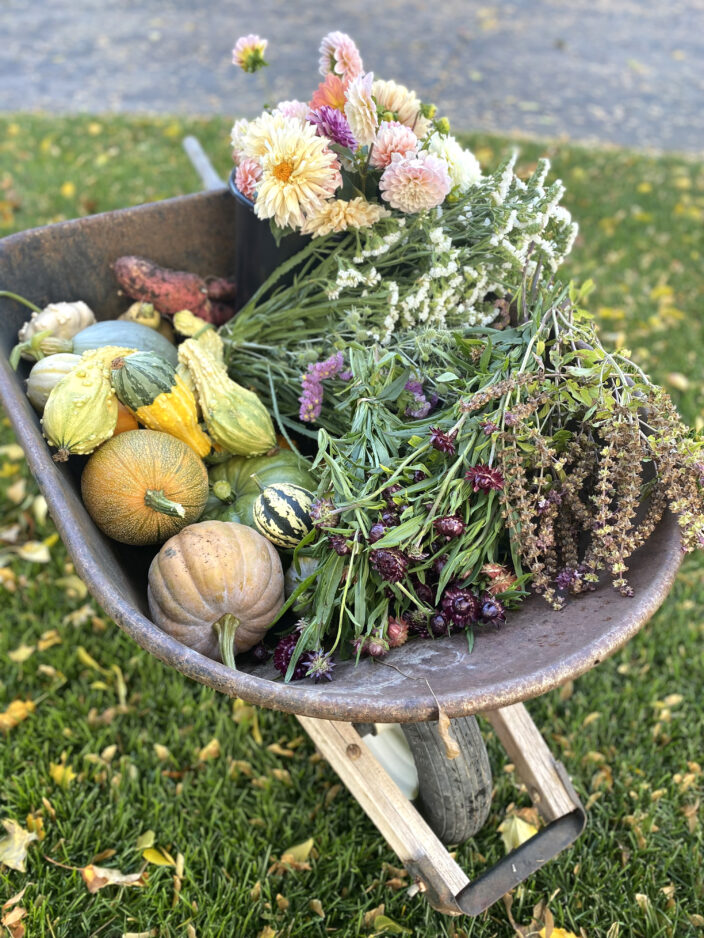
Photo by Elizabeth Binks
With the arrival of fall temperatures, there are many seasonal ornamentals that can be added to cut flower arrangements before the cut flower garden is cleaned out for the year.
Autumn is here, and a killing frost is on the horizon. It is time to start thinking about putting your cut flower garden to bed for the winter. Preparation now will give your garden beds time to rest and rebuild and will make it much easier in the spring to replant. Here are some tips on how to best prepare your beds for an easy transition into the colder months.
1. Clean each cut flower bed by removing and disposing of any diseased plants. Cut away healthy annual plants at the soil line, leaving roots to decompose in the soil. Compost healthy vegetation or even consider leaving it in place so that birds can eat the seed heads (if you haven’t saved the seeds for next year) and beneficial insects can overwinter in a safe, protected place. If you decide to leave this material in the bed, remove it in the spring after beneficial insects start to emerge with the warming weather.
2. Cut back perennials to the ground. Divide and replant overgrown perennials such as irises and black-eyed Susans.
3. Prepare for spring by planting spring bulbs such as daffodils and tulips.
4. Maintain your gardening equipment and tools by cleaning and sharpening them. Store your tools in a shed or garage where they’ll be protected from moisture. Blow out or drain irrigation lines. Don’t forget to disconnect hoses from their hose bibs before frost to prevent plumbing damage.
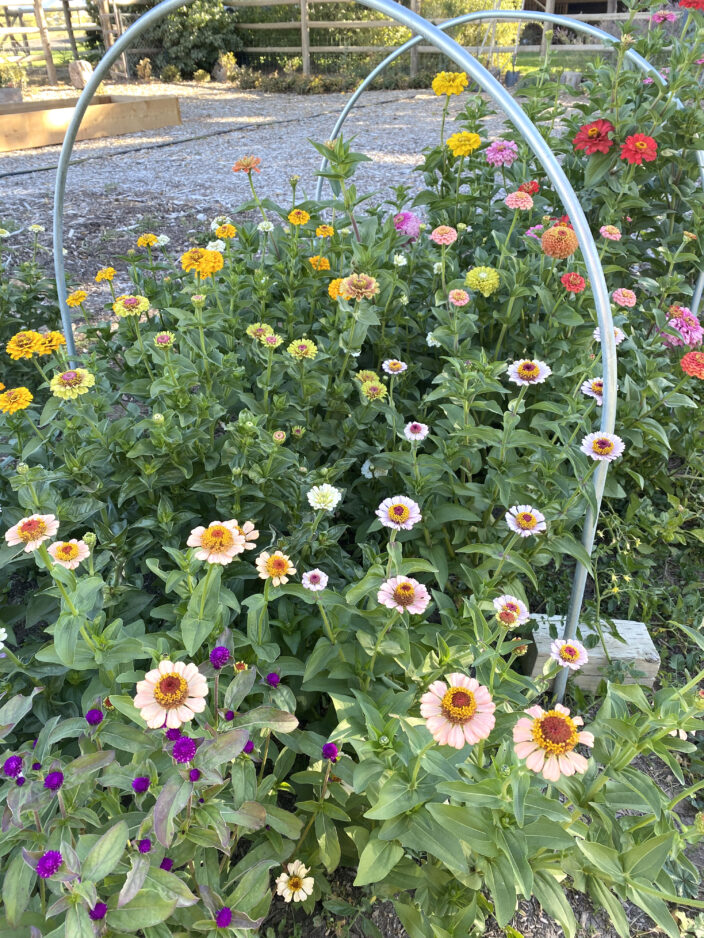
Photo by Elizabeth Binks
Once we’ve had a killing frost, beautiful summer annuals like these zinnias will die back and need to be removed as part of putting a cut flower garden to bed for the year.
5. Add 2 to 3 inches of compost to the garden beds. Alternatively, consider mowing the lawn and any fallen leaves together and using the bagged clippings in the garden bed to compost in place over the winter. Sprinkle a little nitrogen sulfate or urea on these clippings to help the soil microorganisms have sufficient nitrogen to get the composting job done.
6. Consider a cover crop. If your bed is cleaned up early enough in the season, you have time to further build your soil by planting a cool season cover crop in the bed. Daikon radish can help break up compacted soils. A cool season legume such as hairy vetch will help to fix nitrogen in the soil. Oats and winter rye create great soil structure and biomass as they decompose. Several seed companies have cover crop mixes that include all of these varieties in one seed packet. Look for a cover crop mix that is good for fall and winter. Have a plan in place on how you will eradicate these cover crops before they go to seed. This plan can include cutting them down, weed whacking, mowing or just simply pulling them. Let them decompose where they are and your soil will come back healthier than ever.
Next spring you will thank yourself for preparing your beds in the fall. You will be able to plant sooner and your soil will be rebuilt and replenished for another growing season.
Elizabeth Binks is a horticulture assistant with USU Extension.