
Garden Help Desk: Get ready for this year’s growing season with preparation now
-
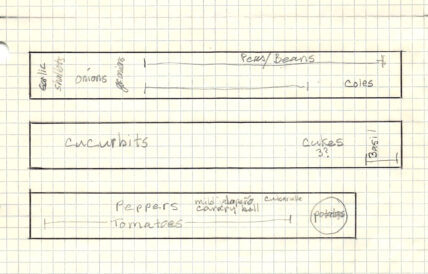
- A garden plan doesn’t need to be fancy or complicated to be effective. With a plan or sketch for your garden rows or beds, you can make sure you have room for all your favorites and won’t forget anything.
-
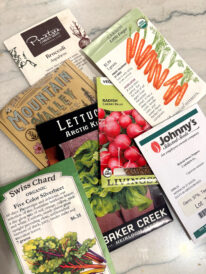
- Seed packets usually have a wealth of information about what the seeds need to germinate and thrive before they can be moved into your early spring garden.
-
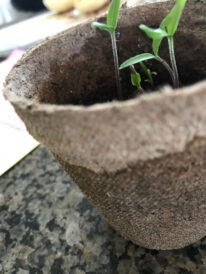
- January is a good time to plan and get started with your cool-season transplants or slow-growing perennials.
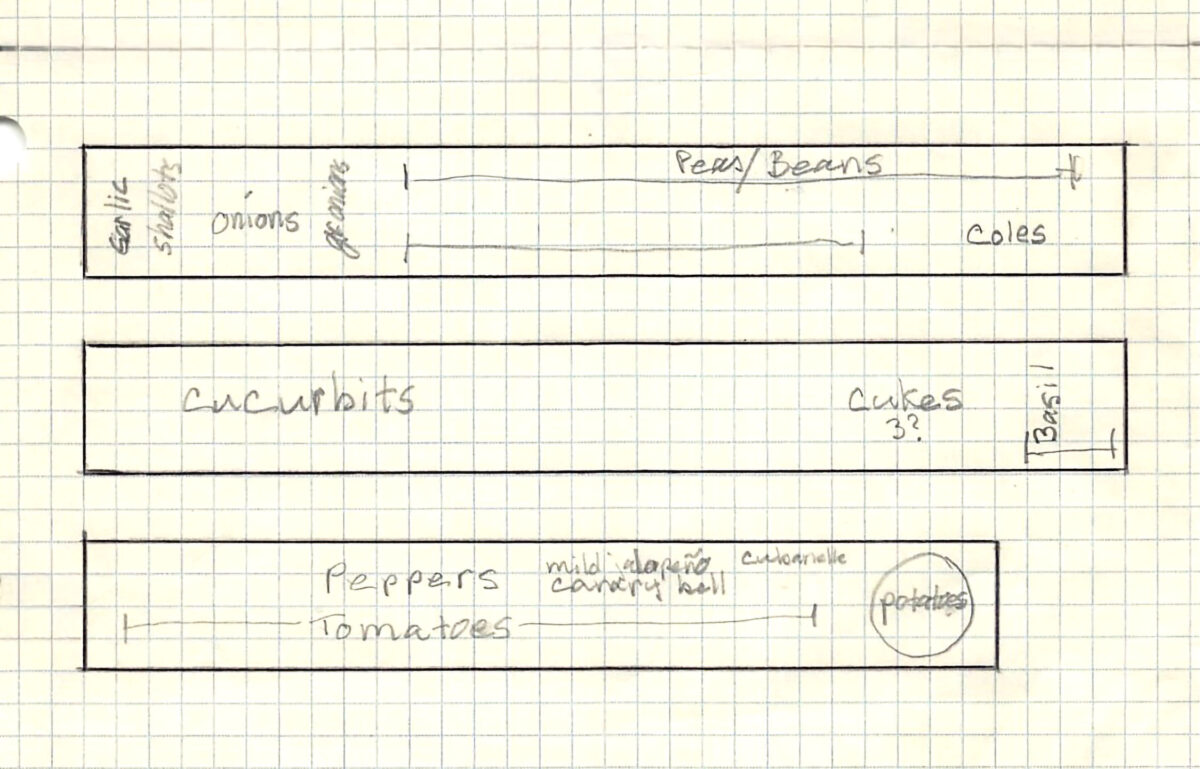
Photo by Meredith Seaver
A garden plan doesn’t need to be fancy or complicated to be effective. With a plan or sketch for your garden rows or beds, you can make sure you have room for all your favorites and won’t forget anything.
I love to receive seed catalogs in the mail over the winter months. They hold the promise of spring weather, new buds and green leaves. January is a great time to study seed catalogs and decide which plants you want to grow this coming year. There may not be much to do in the garden, but any planning and preparation done in January will be much appreciated later in the spring.
Plan your garden. Making a garden plan beforehand can save time, energy and money. I like to draw my garden beds on a sheet of paper and label them with what I would like to plant in each bed for the coming year. To avoid pests and disease, I try to avoid planting the same crop (or crop family) in the same place as last season.
I also plan succession plantings to maximize production. When a spring crop is harvested, I plant another cool season crop in its place for a fall harvest. If there is enough time in the growing season, I may even squeeze a quick warm season crop in between a spring and fall crop. Not everything goes to plan, so I adapt mid-season as necessary. But a written garden plan has helped me stay focused on my gardening goals.
If you like to plan in great detail, consider using graph paper and draw your garden beds to scale. Learn how much space each plant needs and draw them in as well. This could help you know how many of each plant you can fit per bed.
Keep a record of your past successes and failures. I record the date of seed starting, transplanting and direct sowing. I often take photos of the garden’s progress and attach them to my digital notes. I use these to remind myself the following year on what to expect and how to improve.
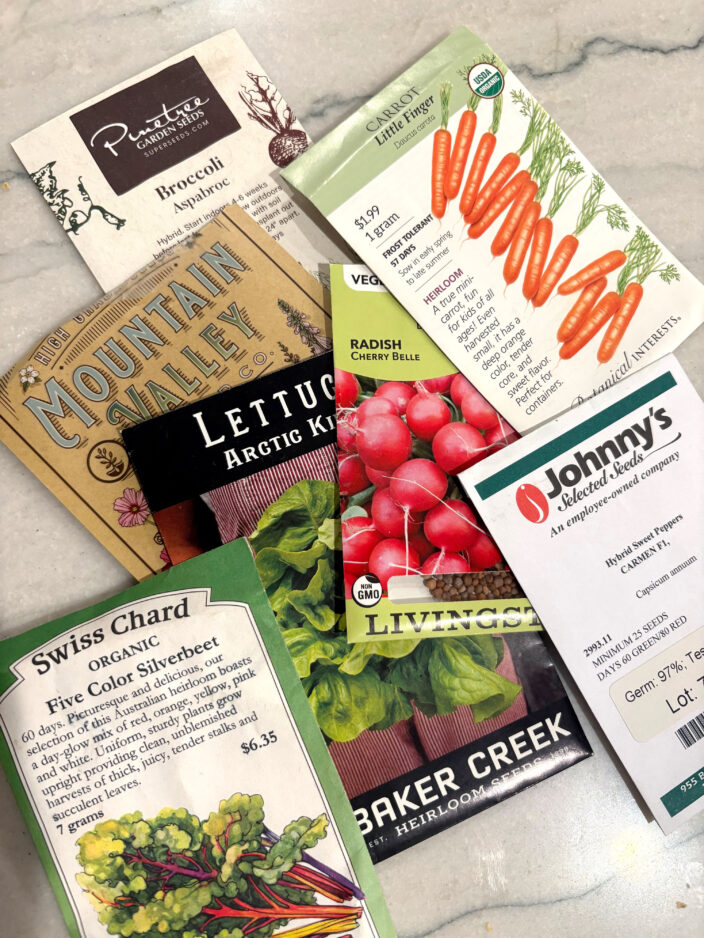
Photo by Elizabeth Binks
Seed packets usually have a wealth of information about what the seeds need to germinate and thrive before they can be moved into your early spring garden.
Order seed packets before any desired varieties sell out. Whether you are looking for a new cultivar of tomato or the latest new pale pink zinnia, you will have a better chance of getting what you want if you order early. Some seed catalogs offer trial size seed packets as well as larger bulk packs. The trial seed packets are usually a little more expensive per seed than the larger packs but give you the opportunity to try the variety without having to buy too many seeds.
In January, prioritize obtaining cool season plant seeds that you want to grow in spring. These will be the seeds you will need first. Cool season edible plants include cabbage, broccoli, peas, spinach, radish, lettuce and kale. Cool season flowers include feverfew, delphinium, snapdragons, pansies and sweet peas. If I am organized enough, I try to purchase my warm season annual seeds at the same time to save on shipping costs.
Get ready to start seedlings. Certain cool season crops will be more productive if planted as transplants (rather than direct sown) in mid-March to early April. These seeds need to be started 6 to 8 weeks before they are transplanted, which means they should be planted in late January to late February. These include those in the Brassica family, such as kale, broccoli, cabbage, Brussels sprouts and cauliflower. Leeks, onions and celery are also good candidates for transplanting. Many cool season cut flowers also thrive when transplanted, such as snapdragons, stock and sweet peas.
Transplants get a head start in our short cool spring season and most of these are easy to germinate. Pay attention to their ideal soil germination temperature (which can be found online and in some seed catalogs) and use heat mats if necessary. Use a germination soil mix and moisten it before putting it in pots. Pay attention to the depth each type of seed prefers to be planted. Some even require to be surface sown to germinate. This information can be found on the seed packet or online. Lightly water the soil again after the seed is planted, and consider using a humidity dome or plastic wrap to trap humidity and speed up germination. Remove once most of the seeds have germinated. Have florescent, LED or plant grow lights ready after they germinate. Sunny windows are not usually sufficient to grow healthy transplants.
Some types of seeds need cold stratification before they will germinate. Do some research and find out if the seeds you are planting need to be put in the freezer or refrigerator for a few weeks before germination will initiate. I have been frustrated many times when I have failed to do this. Several cool season annual cut flower seeds need cold stratification in order to germinate.
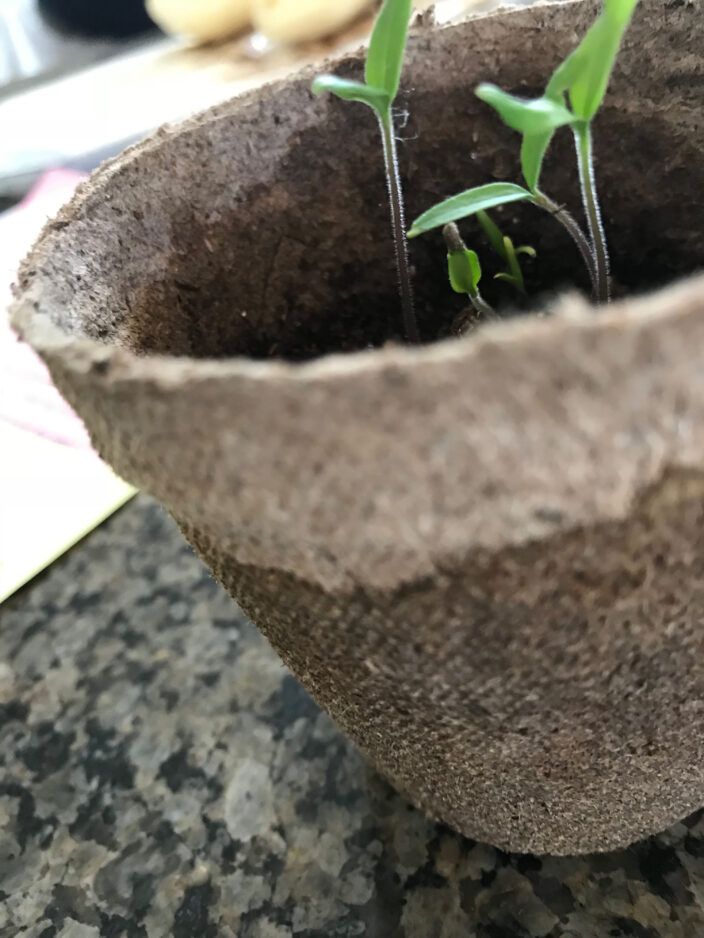
Photo by Elizabeth Binks
January is a good time to plan and get started with your cool-season transplants or slow-growing perennials.