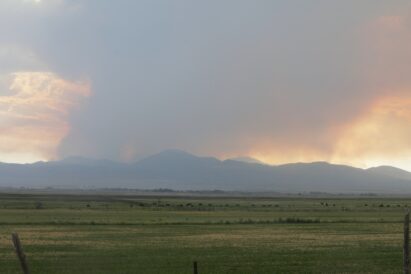
Intermountain officials warn about extreme heat, poor air quality


When temperatures rise to the triple digits, people need to be extra careful to monitor for heat exhaustion.
Temperatures throughout Utah County this week are set to be in the triple digits in some areas and with the ensuing heatwave starting, Intermountain Healthcare officials spoke in a press conference on Monday about staying safe with regards to the high temperatures and poor air quality.
Dr. Adam Balls, Intermountain Healthcare emergency medicine physician, said that people should focus on hydration, steer clear of hot temperatures during the middle of the day, and look out for those who may be high-risk — like children and elderly adults — to stay out of the emergency room due to heat-related illnesses.
Young children may not be able to keep themselves hydrated, so parents and adults should monitor them and recommend water breaks when needed. For the elderly population, their bodies respond to the heat differently and because of this, they also are prone to heat-related illnesses.
“The heat-related illnesses that we experience can be catastrophic,” Balls said. “We’ve seen this in Europe over the last decade or so where they have had very prolonged heat waves, for a number of weeks at a time, and death can even result from that. It is about banding together as a community to make sure that we are caring for each other, we’re caring for ourselves, as parents you’re caring for your children.”
Balls added that people should look out for those who are high-risk, checking in on neighbors who may live alone or children seen recreating.
With regards to signs of heat-related illness, Balls pointed to prolonged muscle cramping, feeling more fatigued and tired than normal, and confusion or losing consciousness.
The more serious signs, like lethargy, serious fatigue and loss of consciousness should prompt urgent medical care.
While pre-hydration may be key while recreating outside, Balls stressed that hydration during events also is important. People recreating outdoors, going for long hikes or adventures, should be sure to pack enough water to avoid heat-related illnesses.
For Intermountain, Balls said that there is an uptick in traffic during longer heatwaves including the recent heat the Wasatch Front has been seeing.
“We see it when the temperature is high for an extended period of time,” Balls said of an increase in heat-related illnesses. “Normally we have traffic that will trickle in and patients that will trickle in if the temperature gets hot for a day or two. When we’re going into these extended periods of time, when people are going to be outside and having to work in this environment, that’s when we’re going to see an increase in patients that are seeking care for heat-related illness.”
Balls suggested getting out in the morning or evening when temperatures begin to cool down, and to avoid, if possible, being out during the mid-day heat.
Intermountain Pulmonologist Dr. Denitza Blagev then spoke about the air quality and ozone, warning about how air quality can impact those with lung or heart disease and people who may have tested positive for COVID-19.
She said symptoms to watch for include chest tightness, trouble breathing or working harder to breathe.
“If you are experiencing problems with breathing, please contact your doctor and if you really can’t breathe, seeking medical care in the emergency department would be appropriate,” Blagev said.
To learn more about dodging heat-related illnesses, visit www.cdc.gov/disasters/extremeheat/heattips.html.