Lehi-based NetDocuments’s cloud service gears up for flood of growth

Marriott Murdock poses for a portrait at NetDocuments on Tuesday, June 16, 2015. NetDocuments is a cloud-based document and email management for legal services based out of Lehi.

Rick Cowdell and Alan Landes compete in a football tournament while taking a break from work at NetDocuments on Tuesday, June 16, 2015. NetDocuments is a cloud-based document and email management for legal services based out of Lehi.
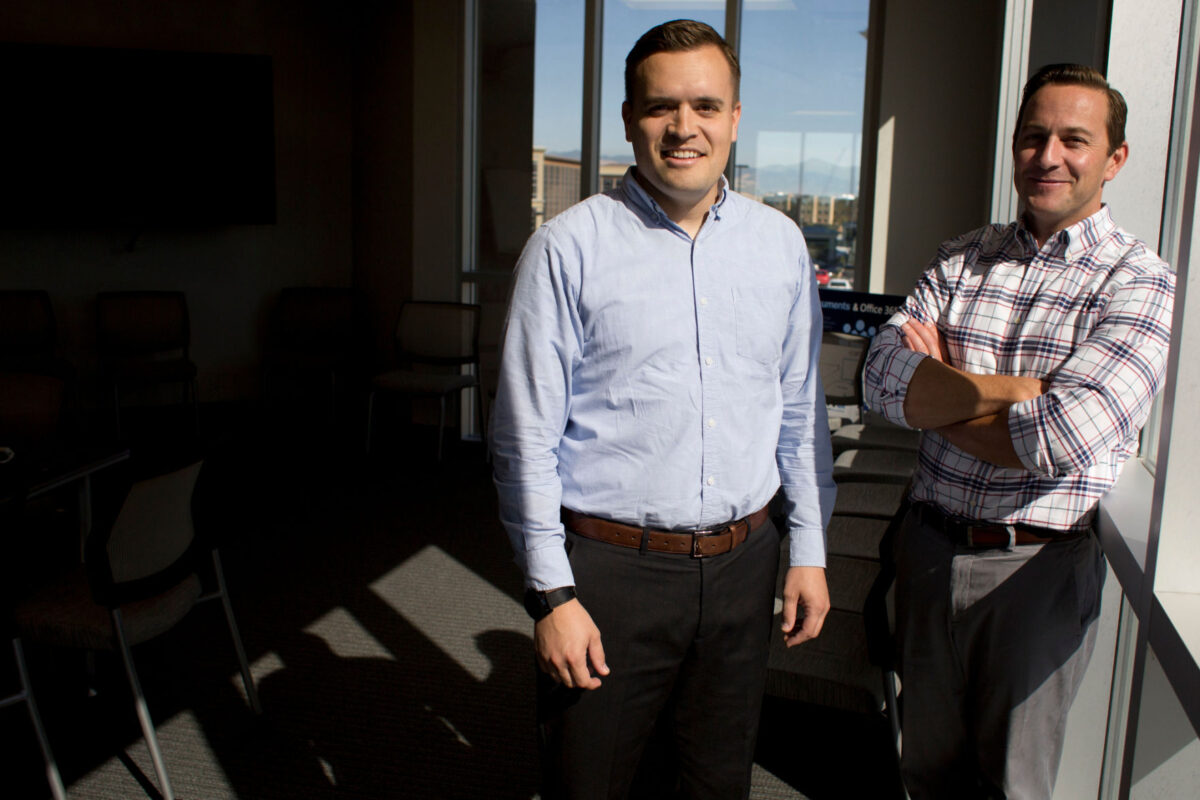
Nick Salas and Marriott Murdock pose for a portrait at NetDocuments on Tuesday, June 16, 2015. NetDocuments is a cloud-based document and email management for legal services based out of Lehi.
As with most software as a service (SaaS) companies in Utah Valley, NetDocuments in Lehi is growing. Not only are they growing, but they actually are preparing for an imminent tidal wave of growth.
“There is a document management shift coming. We know the flood is coming, so we’re building the ark,” said Marriott Murdock, marketing director at NetDocuments.
The shift Murdock is referring to is move from server-based document storage to cloud-based document storage for law firms. Law firms have an abundant need for data storage, but many have been reluctant to jump into the cloud because of security concerns.
“For law firms, their documents are like money is to banks, and many firms resist moving to the cloud, because of security reasons,” said Alan Landes, vice president of quality assurance at NetDocuments. “But we think as time goes by, it will be unusual for any business not to accept the cloud.”
NetDocuments is one of the few companies locally and worldwide that has the software and experience to securely handle legal documents and email, according to Landes. The NetDocuments document storage cloud is fully compliant with the Health Insurance Portability and Accountability Act (HIPAA), the Securities And Exchange Commission (SEC), the Financial Industry Regulatory Authority (FINRA), and ISO 27001, a specification for information security management systems. The company is regularly audited through the Statement on Auditing Standards (SAS) No. 70.
“A lot of cloud companies don’t have all these compliance and auditing processes, but because of what we deal with, it’s critical,” Landes said.
NetDocuments was founded by brothers Ken and Lee Duncan, and Alvin Tedjamulia in 1999 after selling their previous company, SoftSolutions. SoftSolutions focused on traditional server-based document management software, and was purchased by Wordperfect in the early 1990s. Ken Duncan is currently the chairman of the board of directors, Lee Duncan is the chief customer officer and Tedjamulia is the chief technology officer.
NetDocuments was founded with the vision that cloud computing would be the superior model for delivering secure document management software to law firms worldwide, but it initially was a tough sell. The first few years were very lean while the founders worked to convince law firms of the ability and need for cloud based document storage. Currently the company manages more than 1.5 billion documents and email across 140 countries.
“They [the founders] were way ahead of their time, and they struggled that first decade. But that decade was necessary for where we are today. The advantage we have over our competitors is we have 15 years of industry-specific service,” Murdock said.
The company’s innovation and position for growth caught the eye of Frontier Capital, a growth equity investment firm based in North Carolina. Frontier Capital invested $25 million in NetDocuments in 2014. The investment allowed the company to purchase Decisiv Email from Recommind, an email management software system.
“Email is considered legal documents now, and firms exchange documents by email. We now store more emails than documents,” Murdock said.
The Frontier Capital funding also allowed NetDocuments to add more engineers and sales personnel to their ranks. They currently have 120 employees, many of whom enjoy highly competitive bouts on the foosball table and free food from an entire pantry designated as the “Costco Cupboard” in the break room. They may need to get another Costco Cupboard because they expect their employee numbers to swell as more law firms, financial services, healthcare and real estate companies require secure cloud-based document services.
The first trickle of the deluge came two weeks ago, after NetDocuments executives did a presentation for some of the top law firms. Almost 30 firms have contacted NetDocuments since then.
“It’s safe to say we expect about half of them to be with us in the next few months,” Murdock said. “We’re ready to scale, and we expect 200 percent growth in the next few years.”