Floating the Green River
I don’t know why the Green River is called The “Green” River. There is nothing green about it.
It could be a matter for discussion on whether there is more silt or water in the river. I would guess that there is more silt. While I have to admit that “Green River” has a nicer ring to it than “Tan Sand Bar,” the latter would give you a more accurate image. At least it sounds like a place you want to go, and indeed you should.
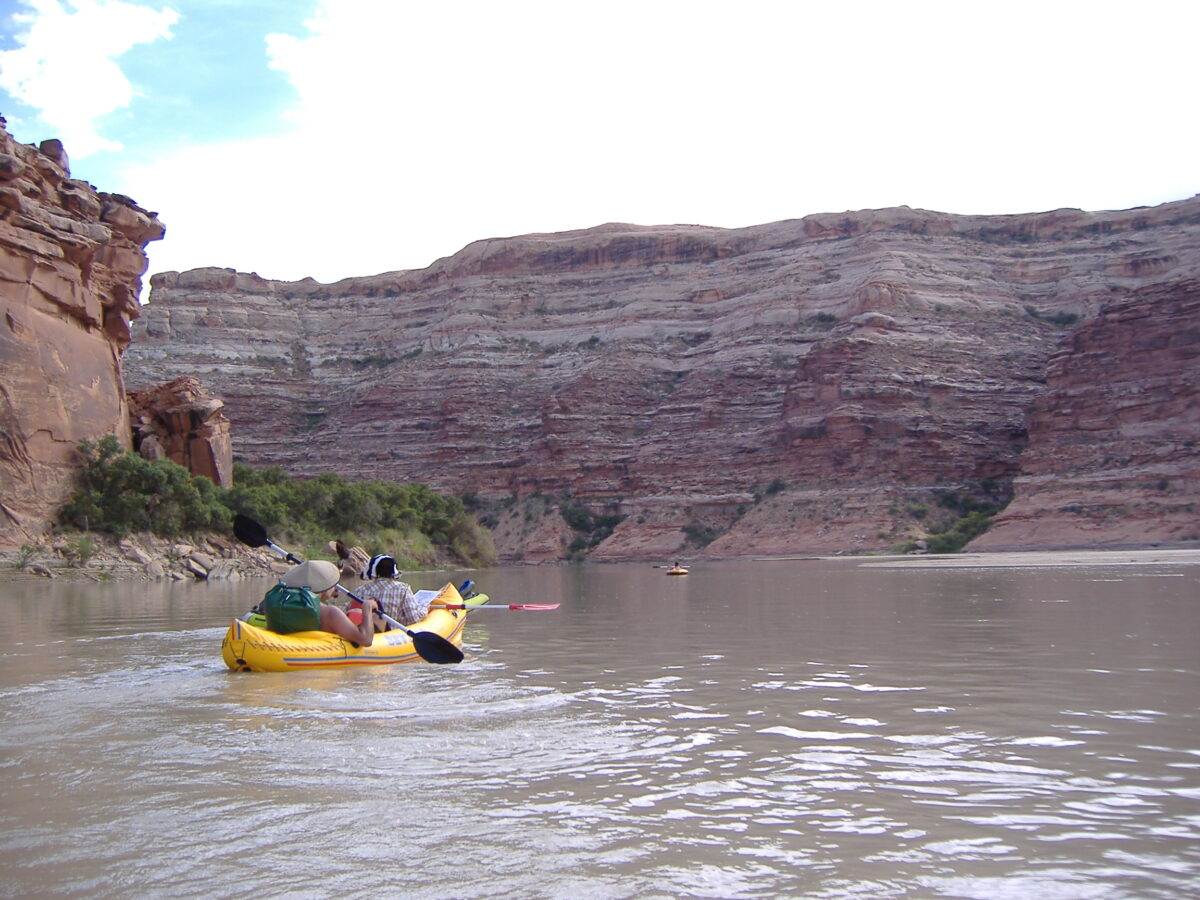
Normally, the Green River is really busy in late spring and early summer. When we floated it, there were only two other groups on the entire river and the pesky bugs were nonexistent. There are numerous options you can choose when floating the Green. Anywhere from a day-long trip in the northern section by Vernal, to a six-day adventure from the town of Green River to the Colorado River. Recently, we floated a 44-mile section from Ruby Ranch to Mineral Bottom.
We took two days to float the entire 44 miles. However, if you can spend the time, three days is better. There are numerous things that can diminish the quality of such a fine trip, like paddling, or wind. If you have to push for two days, you can feel a little hurried and overwhelmed. You won’t be able to sit back and relax. If you are a normal thrill-seeking adventurer who needs the whitewater rapids and the risk, this trip is not for you.
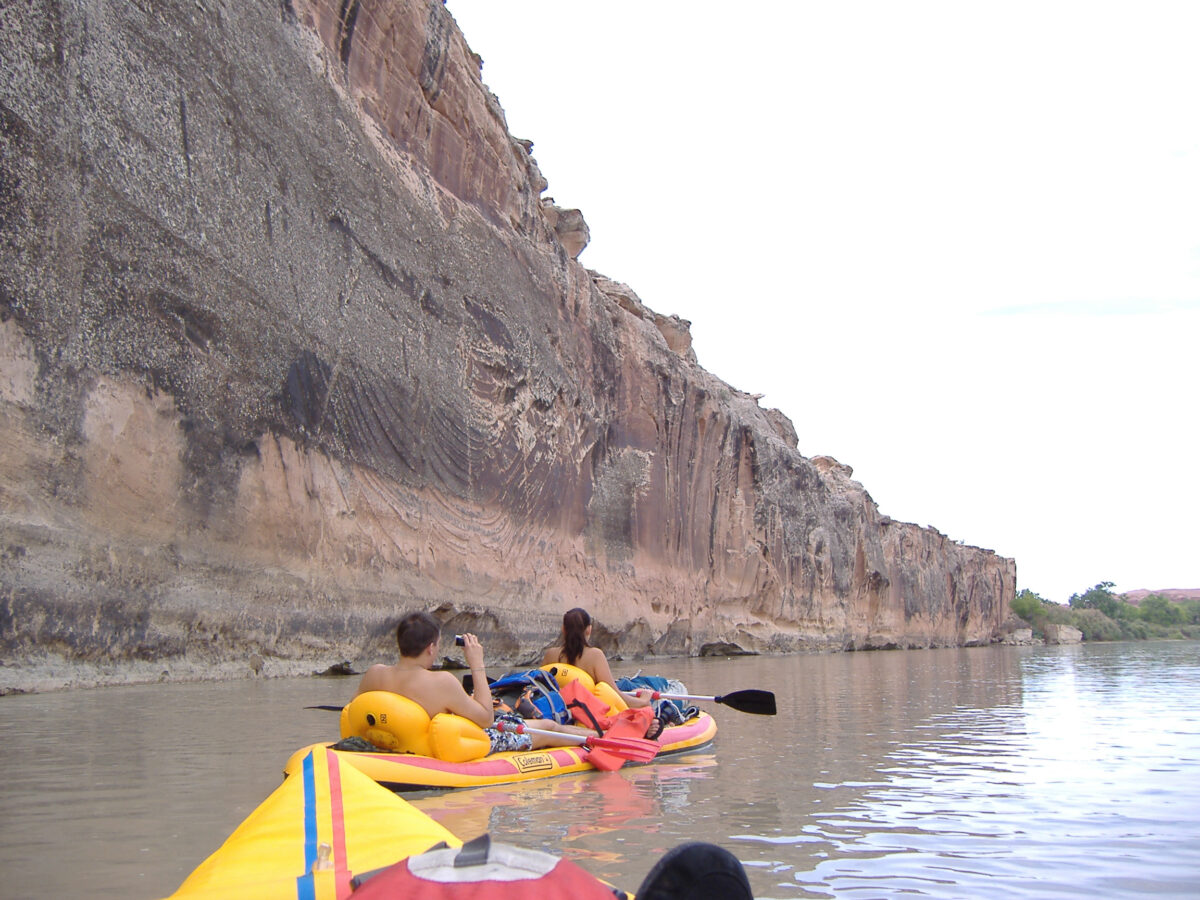
This section of the river is known for its flat water. It is also known for the rock walls that rise from the shore and give a grand feel to the canyon. A person can feel small in this canyon. The best thing about this canyon is it is easy for beginners with little experience. Some of the most impressive features were the abundant wildlife that the Green River provides, like an old inscription for the launching of a paddleboat, and a heart-shaped rock.
The first day of our trip, the two-person raft developed a hole that required some care while the patch dried. We had to shuffle the rafts around a little and took turns floating in the water in our life jackets. This was actually preferable to sitting on the raft. It was a pleasant escape from the 100-degree heat. Although this time of year, you’ll likely want to stay in the raft.
After 20 miles of floating, we began looking for a place to camp. The optimal place, a shelf of sand lodged in between the river and a 400-foot cliff, was taken by a couple in a canoe. We floated another mile and set up camp on an island in the middle of the river. Strong winds traveling up the river and then back down again kept some people awake while lulling others to sleep.
Day 2 took us on another extraordinary adventure. Shortly after breaking camp and heading down the river, we came to some huge black lettering on the side of the canyon wall. The lettering featured the name of a paddleboat that used to migrate up and down the river in the late 1800s.
Bowknot Bend came next. It took us 7 miles to travel a straight distance of 200 yards. As soon as you enter the bend you can stop, hike up the ridge and look down on the other side. This was another great place to jump out of the raft and float alongside it. It wasn’t long before we floated past Valentine Rock, a large heart-shaped rock sitting on the river bank. If the water were higher a portion of this rock may be under water, but the shape is undeniable.
The rest of the day was spent randomly paddling and sitting back to enjoy the scenery. The journey became a little trying toward the end when a constant wind came up the canyon. If we didn’t paddle, we would actually start moving upriver. During these times, we found it easier to jump out of the raft and walk it downriver.
The exit was easy to find. It was marked, and there was a mini ramp that made it possible to drive the truck right next to the river.