Movie review: ‘Alice Through the Looking Glass,’ has female-empowerment themes
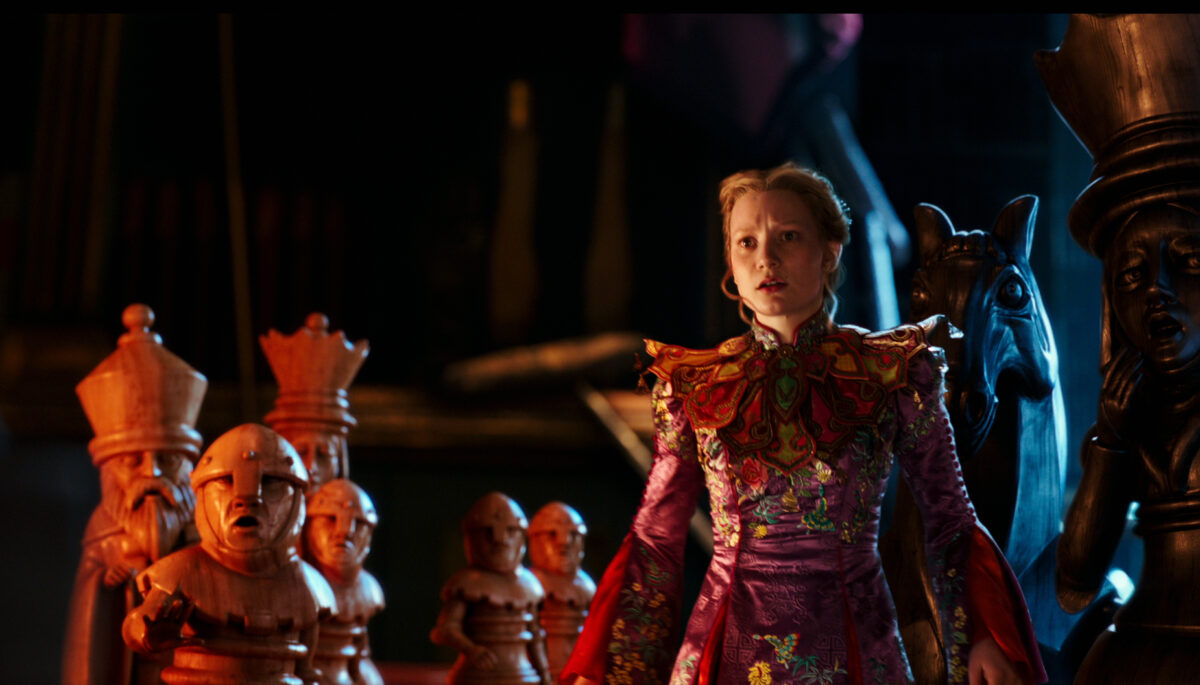
Mia Wasikowska in a scene from "Alice Through The Looking Glass."
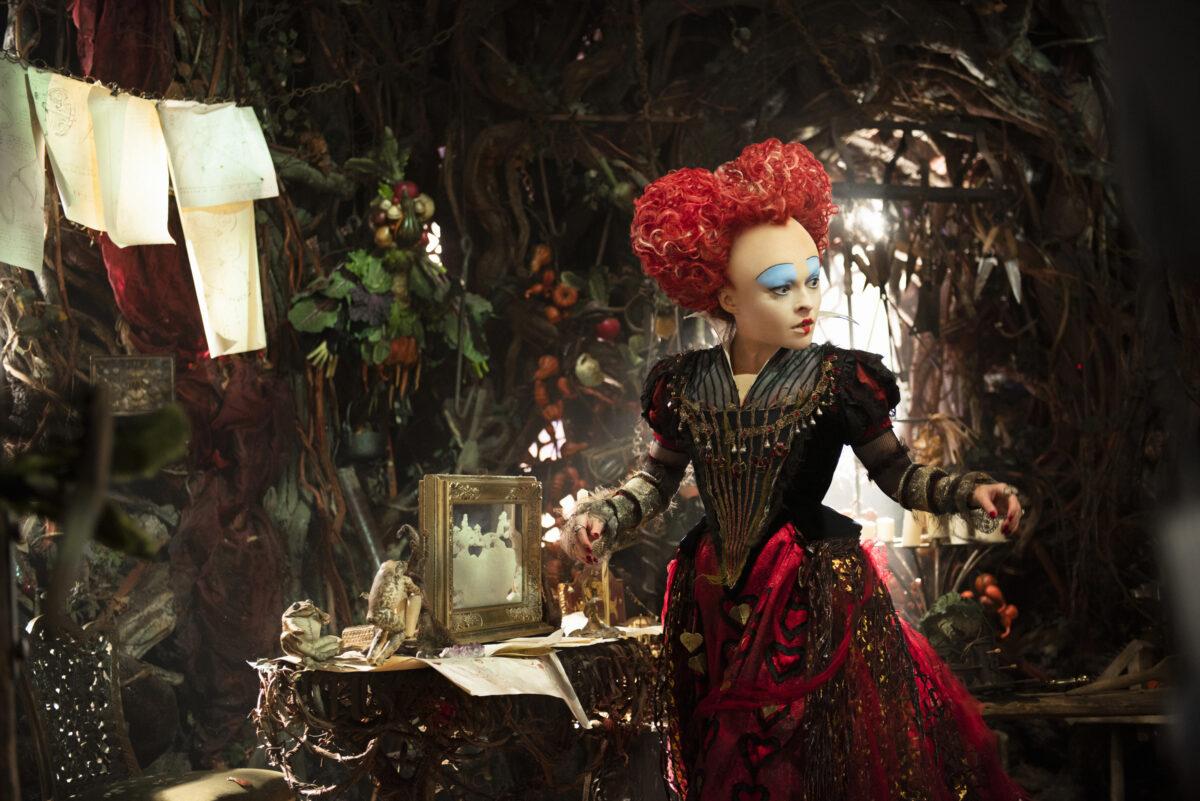
Helena Bonham Carter, portraying the Red Queen, in a scene from "Alice Through The Looking Glass ."
Parents need to know that “Alice Through the Looking Glass” is the less-violent sequel to 2010’s “Alice in Wonderland,” based on Lewis Carroll’s classic tales. While there are certainly moments of peril and fantasy violence — including some close calls when key characters seem on the verge of death — the sequel is actually less scary/bloodthirsty than its predecessor. There’s one comical death (someone’s time is literally up) and tense moments when it seems like the past, present, and future have been destroyed. Alice’s courage and determination make her a force to be reckoned with, even though she’s considered “hysterical” back in 19th-century England. Expect some insults along the lines of “imbecile” and “stupid.”
WHAT’S THE STORY?
Based on Lewis Carroll’s classic books, “Alice Through the Looking Glass” is the sequel to 2010’s “Alice in Wonderland,” once again starring Mia Wasikowska as Alice and Johnny Depp as the Mad Hatter. A few years have passed since Alice, facing an engagement she didn’t want, was first in Underland. Stripped of her satisfying career as a sea captain on her father’s trading ship (thanks to her vengeful ex-fiance) and facing the prospect of life as a clerk, Alice ends up back in the other world, where the Hatter is sickly and depressed — convinced that his entire family is alive, even though everyone knows they perished in a Jabberwocky-caused fire long ago. Princess Mirana (Anne Hathaway) tasks Alice with finding Time (Sacha Baron Cohen), stealing his chronosphere, traveling to the past, and stopping the Hatter family’s deaths. But as Alice quickly finds out, stealing the chronosphere has life-altering consequences, made all the worse because the Red Queen (Helena Bonham Carter) is also interested in stealing it and using it for her own purposes.
IS IT ANY GOOD?
Visually stimulating but uneven, this sequel owes a debt to Tim Burton’s trippy original but lacks cohesive narrative other than to explain the origins of Hatter’s sadness and the Red Queen’s head. The Mad Hatter is especially reduced to a grieving, unstable phantom of his previous self, leaving poor Depp with little to do other than make alternating sad, hopeful, and cheerful eyes at Alice. Alice is still plucky, but now there’s an edge to her, like when she angrily tells her mother that she hopes never to end up like her. And the supporting players so beloved in the first film make only brief appearances, while Cohen and Carter chew up the scenery.
Director James Bobin does his best to conjure the same whimsical fantasyland that Burton did the first time around, but the tone here is dark, uncomfortable, and slightly underwhelming. There’s some humor, usually courtesy of Cohen, but otherwise this is a tale of a family lost and two sisters torn apart by a flimsy childhood lie. And although Wasikowska is quite luminous and talented an actress, the movie is entertaining but not the extraordinary adaptation that Carroll’s work deserves.
——
RATING AND CONTENT
Recommended for ages 9 and older
Quality: 3 out of 5
Positive messages: 3 out of 5
Positive role models: 3 out of 5
Violence: 2 out of 5
Sex: 0 out of 5
Language: 1 out of 5
Drinking, drugs, and smoking: 0 out of 5
Consumerism: 1 out of 5 (Are products/advertisements embedded? Is the title part of a broader marketing initiative/empire? Is the intent to sell things to kids?)
——
MOVIE DETAILS
Theatrical release date: May 27, 2016
Director: James Bobin
Studio: Walt Disney Studios Motion Pictures
Genre: Fantasy
Run time: 113 minutes
MPAA rating: PG