Cheers for all mothers: The interesting history of Mother’s Day and ways to make it special


cortfrancis
If there is anything being a mom has taught me (especially a mom of 5, six and under ??) It’s to find joy in the chaos, find beauty in the mess and to appreciate this imperfect journey. ?? #twins #twinmom #twinsx2 #5kids6andunder
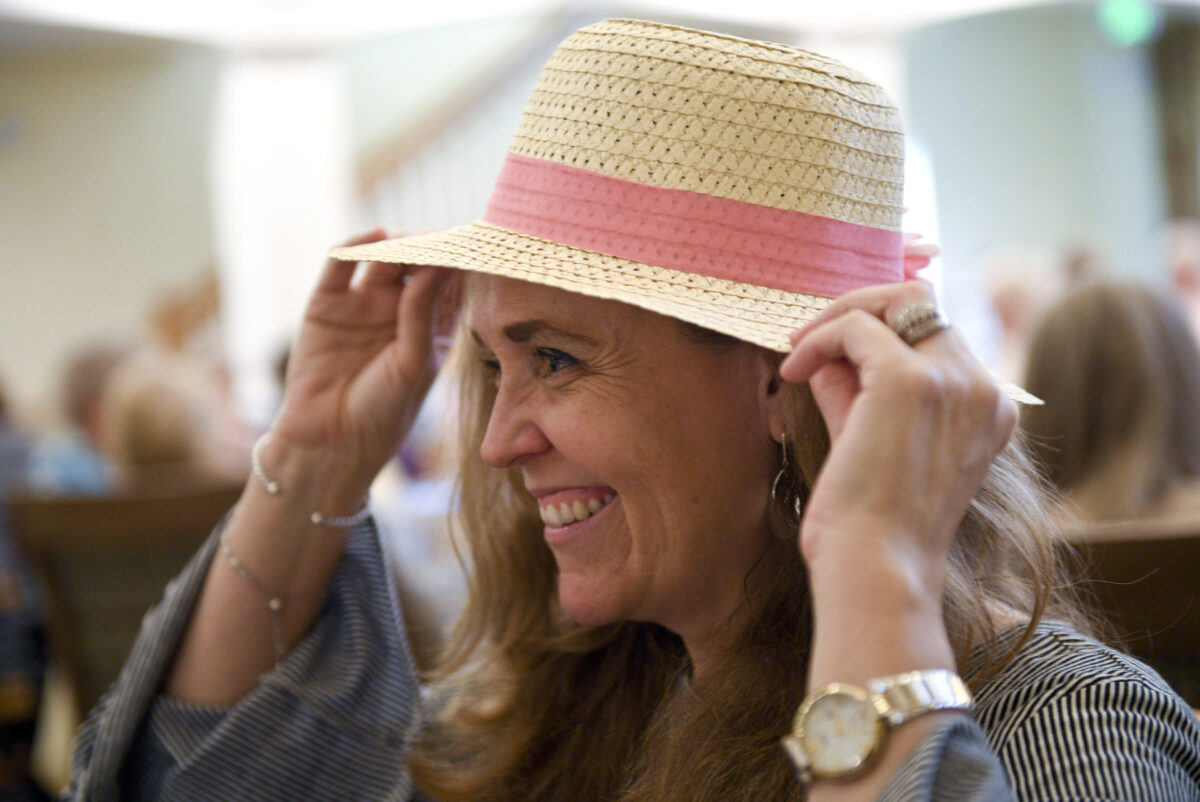
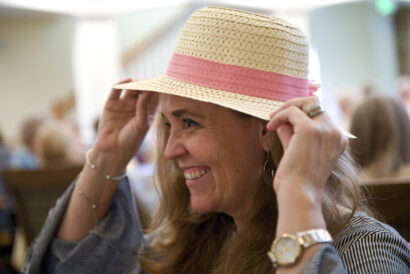
Tammy Smith, of Springville, dons a hat as she has a meal with her mother during a mother and daughter Mother's Day tea party celebration Friday, May 11, 2018, at Summerfield Retirement in Orem. Isaac Hale, Daily Herald
-
- Happy Mother’s Day!
-

- Portrait of girl hugging mom and grandmother making a family picture.
-

-
cortfrancis
If there is anything being a mom has taught me (especially a mom of 5, six and under ??) It’s to find joy in the chaos, find beauty in the mess and to appreciate this imperfect journey. ?? #twins #twinmom #twinsx2 #5kids6andunder
-
-
Tammy Smith, of Springville, dons a hat as she has a meal with her mother during a mother and daughter Mother’s Day tea party celebration Friday, May 11, 2018, at Summerfield Retirement in Orem. Isaac Hale, Daily Herald
-
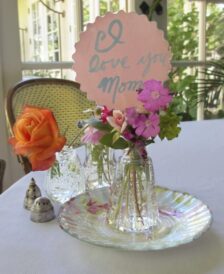
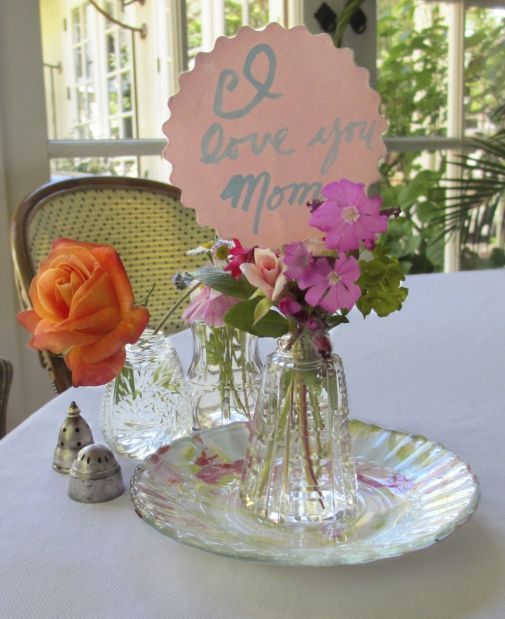
- Make a one-of-a-kind floral Mother’s Day card using glass salt shakers.
Everyone knows what we celebrate on the second Sunday in May. It’s a time to toast the mothers throughout the country, to celebrate their successes and sacrifices.
But it’s a holiday that is only 112 years old and has evolved in ways that weren’t always intended.
Not only that, but the traditions also sometimes miss the mark when trying to make mothers feel truly appreciated.
Here’s a short look on the history of this important celebration and some things to think about when honoring the mothers in your life.
Beginnings
According to both the National Women’s History Alliance and the Smithsonian American Women’s History Museum, the genesis of the holiday we are so familiar with today began in the mid-1800s.
Rachel Seidman, Curator for the Smithsonian American Women’s History Museum, started her article on the museum’s website about the history by describing the different ways the holiday was viewed.
“Mother’s Day in the United States has a history all its own — and it’s more complicated than greeting cards might lead you to believe,” Seidman said. “There were repeated efforts to establish a Mother’s Day holiday and conflicting ideas about what it should stand for and how it should be observed. From a call for women to improve global policymaking and seek peace to a day to honor women’s work and role in the family, the history of the holiday reveals multiple insights into how mothers shape the world. ”
A post on the alliance website describing the history credits a trio of women — Ann Jarvis, her daughter Anna Jarvis and Julia Ward Howe — for playing significant roles in laying the foundation for Mother’s Day.
According to the organization, Mother’s Day began in “In 1858, when Ann Jarvis, a young Appalachian homemaker, organized “Mother’s Work Days” to improve the sanitation and avert deaths from disease-bearing insects and seepage of polluted water,” “In 1872, when Boston poet, pacifist and women’s suffragist Julia Ward Howe established a special day for mothers -and for peace- not long after the bloody Franco-Prussian War,” and “In 1905, when Ann Jarvis died. Her daughter, Anna, decided to memorialize her mother’s lifelong activism, and began a campaign that culminated in 1914 when Congress passed a Mother’s Day resolution.”
Both articles start by highlighting the public contributions of Howe.
“Julia Ward Howe, best known as the author of the “Battle Hymn of the Republic,” was an abolitionist, a women’s rights advocate, and a peace activist,” Seidman said. “In 1870, horrified by the death and destruction she had witnessed during the Civil War and concerned by the Franco-Prussian war unfolding abroad, Howe issued what has come to be known as her ‘Mother’s Day Proclamation,’ originally called an ‘Appeal to womanhood throughout the world.’
“In it, Howe urged the creation of an international body of women who could find ways to avoid war and bloodshed: ‘I earnestly ask that a general congress of women, without limit of nationality, may be appointed … to promote the alliance of the different nationalities, the amicable settlement of international questions, the great and general interests of peace.'”
Things didn’t go as Howe hoped, however, but she suggested a June holiday to be called “Mother’s Day for Peace” and it was celebrated in some places.
The Jarvis family, however, ended up being catalysts for the national holiday’s recognition — but didn’t see it become what was originally intended.
“For Ann Jarvis, also known as ‘Mother Jarvis,’ community improvement by mothers was only a beginning,” the National Women’s History Alliance article said. “Throughout the Civil War she organized women’s brigades, asking her workers to do all they could without regard for which side their men had chosen. And, in 1868, she took the initiative to heal the bitter rifts between her Confederate and Union neighbors.
“The younger Anna Jarvis was only twelve years old in 1878 when she listened to her mother teach a Sunday school lesson on mothers in the Bible. ‘I hope and pray that someone, sometime, will found a memorial mother’s day,’ the senior Jarvis said. ‘There are many days for men, but none for mothers.'”
Anna Jarvis started a campaign to honor her mother, seeking to celebrate Mother’s Day on the second Sunday in May, which was the day of Ann Jarvis’s death.
“She poured out a constant stream of letters to men of prominence — President William Taft and former President Theodore Roosevelt among them — and enlisted considerable help from Philadelphia merchant John Wannamaker,” the alliance article says. “By May of 1907, a Mother’s Day service had been arranged on the second Sunday in May at the Methodist Church in Grafton, West Virginia, where Mother Jarvis had taught. That same day a special service was held at the Wannamaker Auditorium in Philadelphia, which could seat no more than a third of the 15,000 people who showed up.”
The movement spread and by 1912 it was an official holiday in West Virginia. In 1913, it became a holiday in Pennsylvania and the following year, a Congressional Resolution was signed by President Woodrow Wilson establishing Mother’s Day as a national holiday.
But it didn’t turn out to be what Anna Jarvis envisioned.
“Anna Jarvis, however, soon grew discontented as she noted increasing commercialization of the celebration,” Seidman said. “What she had wanted to be an earnest ‘holy day’ had become, in her eyes, a crass holiday benefitting florists and greeting card companies more than honoring the mothering work done by women. Anna was so distraught over the way Americans observed the holiday she had worked hard to establish that she started a petition to have it recalled in 1943. Five years later she died penniless in a sanitarium where her bills were paid by the same greeting card companies and florists she despised. ”
Both Seidman and the alliance emphasize that celebrating mothers can be done in many ways and refer to many difference contributions of women.
“Mother’s Day has endured,” the alliance article said. “It serves now, as it originally did, to recognize the contributions of women. Mother’s Day, like the job of ‘mothering,’ is varied and diverse. Perhaps that’s only appropriate for a day honoring the multiple ways women find to nurture their families, and the ways in which so many have nurtured their communities, their countries, and the larger world.”
Seidman said: “Mother’s Day provides an excellent opportunity to reflect on and honor the role of mothers in our own families and in the rich and complicated history of our nation.”
What do mothers really want?
There are many traditional gifts that mothers receive as part of the celebration, but many studies show that gift-givers may be missing the mark.
Priya Rajendran, CEO and co-founder of It’s a Family Thing! (iaft.smoresup.com), posted the results of an April 2026 survey of 2,000 American moms and said “the data revealed some big problems.”
She explained that the challenges of managing the demands of family life is wearing on many women.
“There’s one stat from our new survey that stopped me in my tracks: 40% of moms say no one gets the credit when their household runs smoothly,” Rajendran said. “That means not even them.”
She listed some of the results of the survey as “The 2026 Hierarchy of Mom Needs: What moms with kids under 19 say would most reduce their day-to-day mental load”:
- “#1. More personal time to rest and recharge — 42%”
- “#2. More help from other family members — 40%”
- “#3. Not having to remind others about tasks or responsibilities — 37%”
- “#4. Better communication within the household — 33%”
- “#5. Better follow-through from my child or children — 32%”
- “#6. Less overall responsibility — 24%”
The conclusion of that survey is reflected in other articles that recommend that the best thing to give Mom is time: Both your time to spend with her and help her with the challenges of life and time for her to do her own things and step away from the stresses of daily life.
So when grabbing that greeting card or bouquet of flowers, think about both how we came to celebrate all that mothers do and how to make their day a little bit better as well.