Garden Help Desk: The best time to apply chelated iron to your maple tree
-
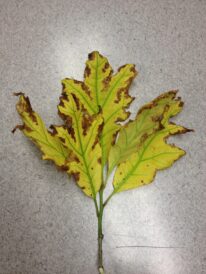
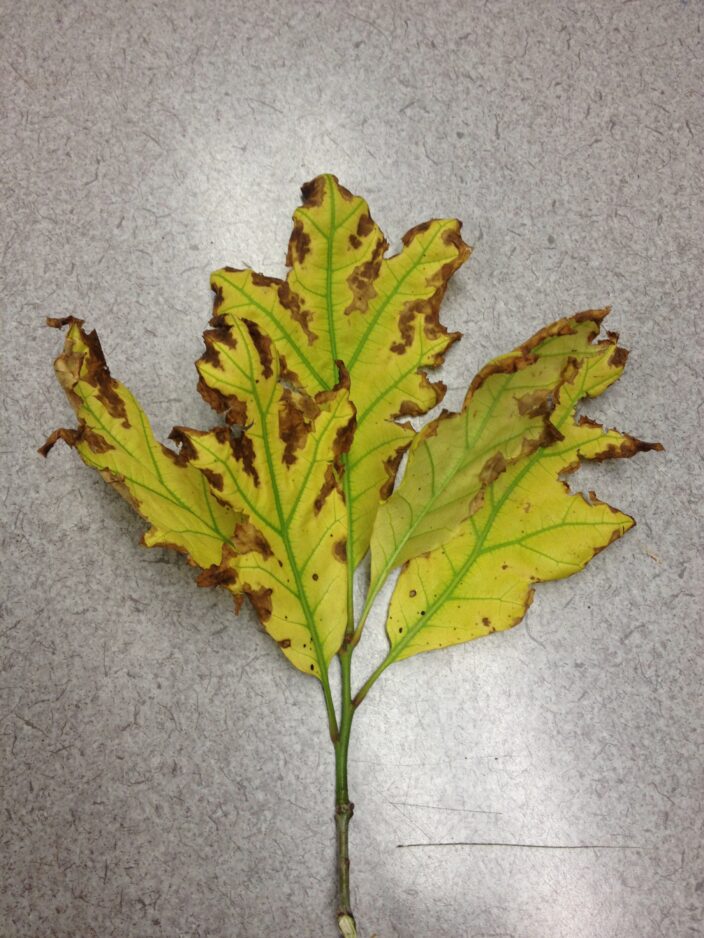
- When iron chlorosis is severe, dark necrotic spots can develop on the affected leaves.
-

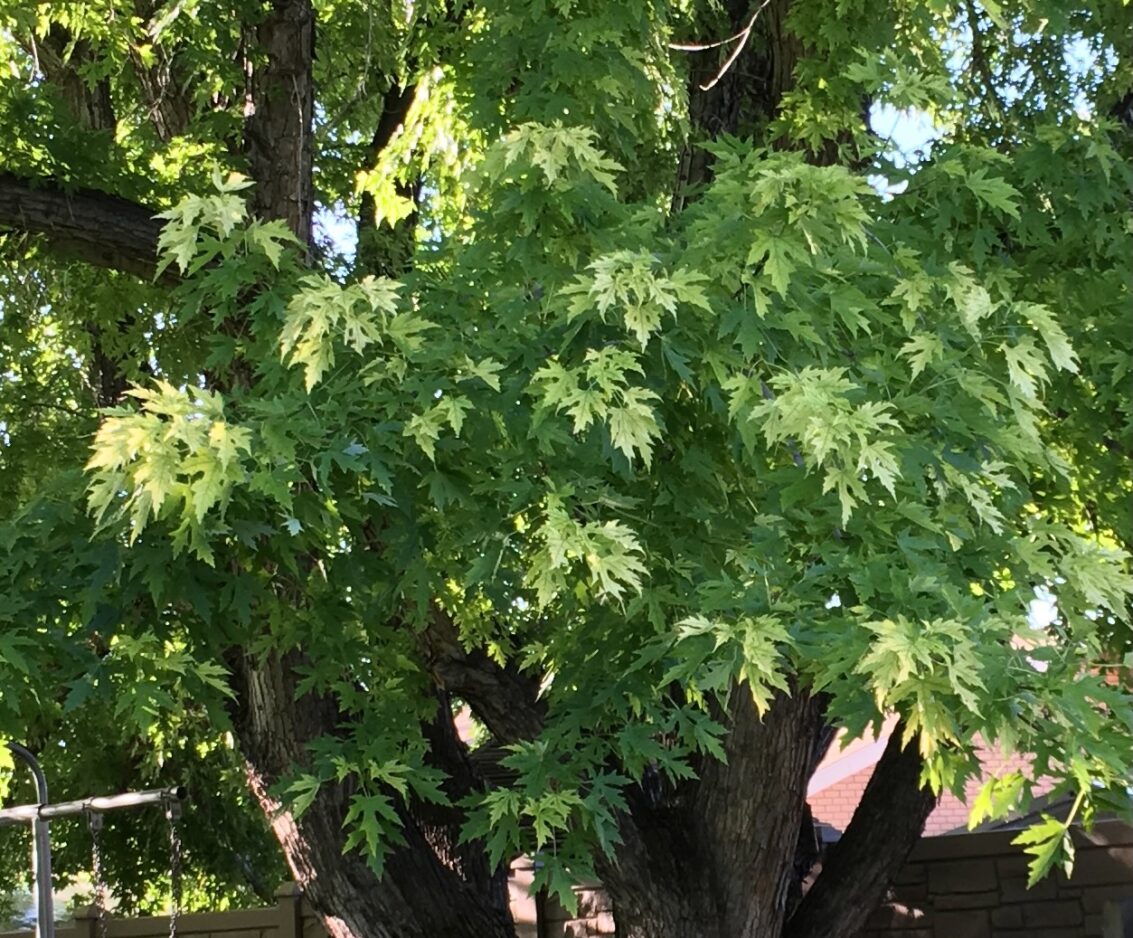
- The first leaves in the spring on this maple tree had access to enough iron for good chlorophyll development. The weather near the end of spring was wet and cold and the leaves in the last flush of growth were chlorotic because they couldn’t get enough iron.
-
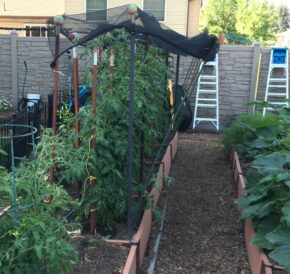
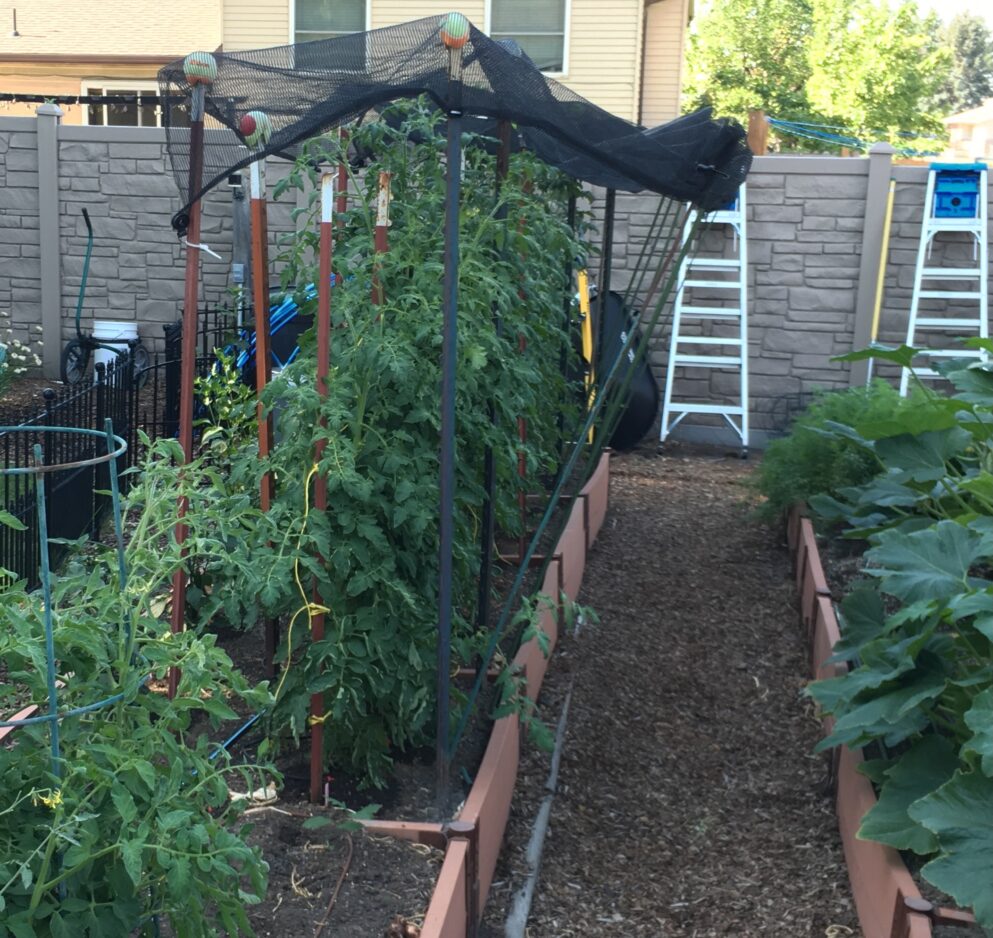
- Shade cloth over sensitive vegetable plants can reduce the temperature around the plants by a few degrees. The shade cloth must be held high enough above the plants to permit some air circulation.
Courtesy photo
When iron chlorosis is severe, dark necrotic spots can develop on the affected leaves.
I have been hesitant to apply the chelated iron to my chlorotic maple tree with all the rain and snow we have had. My backyard has been pretty wet and muddy until now. Do you have any suggestions for when to do the application?
You’ll want to get the chelated iron into the soil just as soon as you can. Late February until mid-March is the best time to do a first application, but the weather interfered this year. No one wanted to go out in the snow, rain and mud this spring to get chelated iron down below lawn roots or bark mulch and into their trees’ root zones.
Iron chlorosis is leaf-yellowing caused by an iron deficiency in new growth. That’s why good iron availability is so important when sensitive trees break dormancy and begin to leaf out. All the growth on the tree is new at that time! The leaves require iron to produce the chlorophyll they’ll need during the rest of the season. Applying chelated iron after the leaves have expanded and look chlorotic is not very helpful.
I need some help with my garden. In past years I have had a very good garden, but for the last two years nothing seems to thrive. My plants grow well until the heat of the summer, then they shrivel up and die. This happens with squash, cantaloupes, strawberries, beets, carrots, tomatoes, and others. Maybe I have some fungus or other pathogen in my ground? I’ve read about soil fungicides, but they seem expensive. Is there something affordable that I can use? I’m stumped and hope you can help.
You’ve had plenty of company! Many gardens have struggled in the past two years. Tomatoes and squash in particular did poorly all over Utah County. Many of the problems were related to the weather — mild conditions that encouraged an early start in the garden followed by a few weeks of cold, wet weather and then a sudden shift into summer weather that plants weren’t prepared for. We also had a few weeks of extreme heat after that. These stressful conditions left many vegetable plants more susceptible to problems.
Courtesy photo
The first leaves in the spring on this maple tree had access to enough iron for good chlorophyll development. The weather near the end of spring was wet and cold and the leaves in the last flush of growth were chlorotic because they couldn't get enough iron.
Your description of the problem has given me a clue that could be helpful. You’ve mentioned several different, unrelated species, which suggests the problem isn’t a fungal disease but something environmental like soil or weather issues.
Many vegetable species are sensitive to higher soil salinity. If it has been more than 3-4 years since your last soil test, please get a new test http://usual.usu.edu/home-soil/index to find out if you need to correct a salinity problem.
Do you fertilize with large amounts of manure or apply other fertilizers? You might be raising the salinity of your soil. A soil test will tell you whether you need to change your fertilizer program.
What is your watering like? Have you been watering frequently, but lightly? This could discourage the development of deep, resilient root systems and increase the level of salts in your garden soil. Deep, less frequent watering is best.
Consider using shade cloth over the most heat-sensitive plants in your garden if we have extreme heat again this year. Shade cloth is available in different densities that describe the amount of sunlight the cloth will block. For example, a 20% shade cloth will block 20 percent of the sunlight. Choose 30% shade to provide a few degrees of heat protection while also letting through enough light for good plant growth. As a bonus, shade cloth will also protect tomato and pepper fruits from sunscald.
Courtesy photo
Shade cloth over sensitive vegetable plants can reduce the temperature around the plants by a few degrees. The shade cloth must be held high enough above the plants to permit some air circulation.
Could a fungal disease also be part of the problem? Of course! You’ve been gardening in the same area for many years. Fungal pathogens can build up in the soil when the same crops are grown in the same area year after year. Rotating your crops is challenging when you only have a small space to work with, and rotation has limited benefits when you don’t have a way to effectively clean and sanitize the tiller or other tools you use to prepare your soil and plant your vegetables. Adding plant-based compost to your soil can increase the level of beneficial microorganisms in the soil, but time is the most important soil addition if the problem is fungal.
I know it’s not easy, but if you feel that the problem must be a soil-borne disease, you might consider growing only cover crops for the next year at least, and limiting your vegetable crops to what can be grown in containers.