Garden Help Desk: The benefits of thinning fruit on trees
-
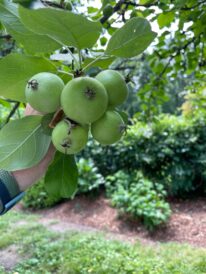
- When enlarging apples like this touch each other, it provides a protected place where female codling moths can lay their eggs.
-
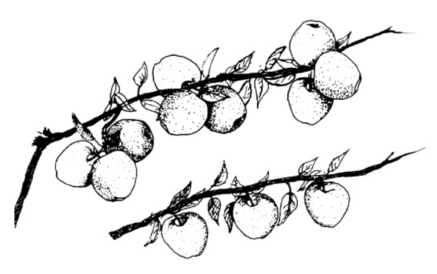
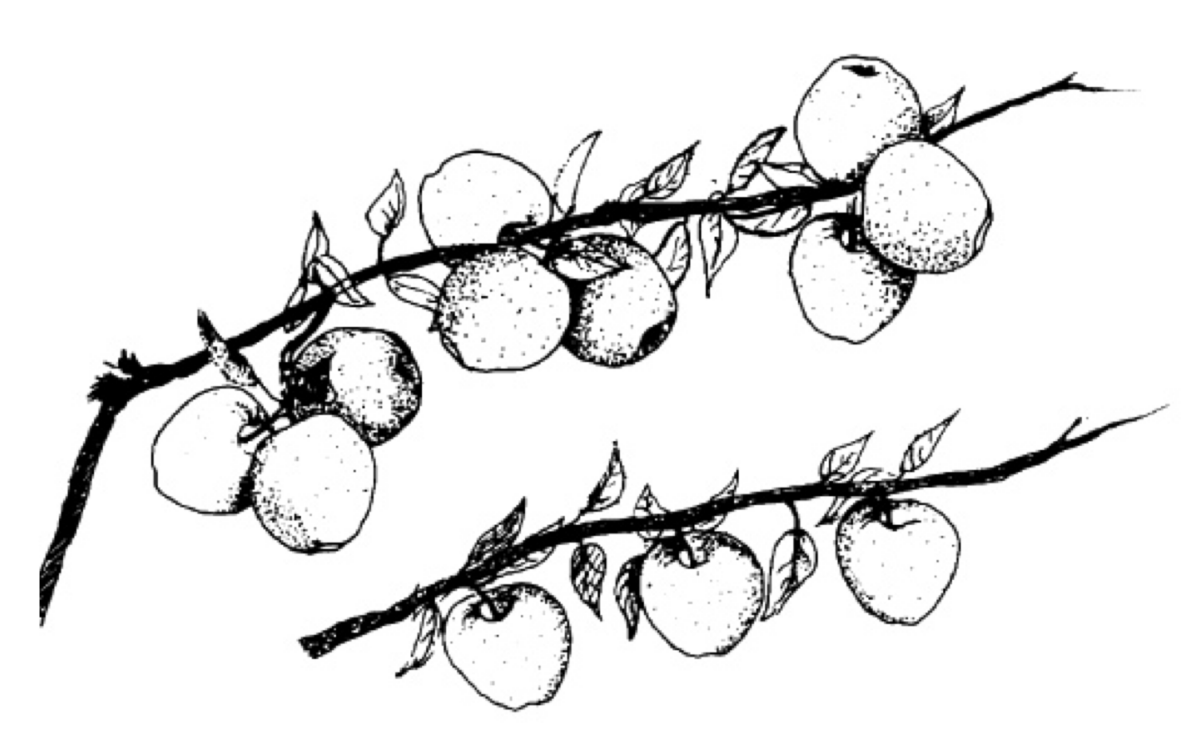
- The fruit may look sparse once you’ve thinned your tree, but thinning the fruit on the branches leaves room for the remaining fruit to enlarge and improve in sweetness and flavor.
-
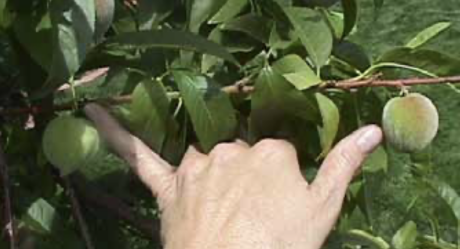
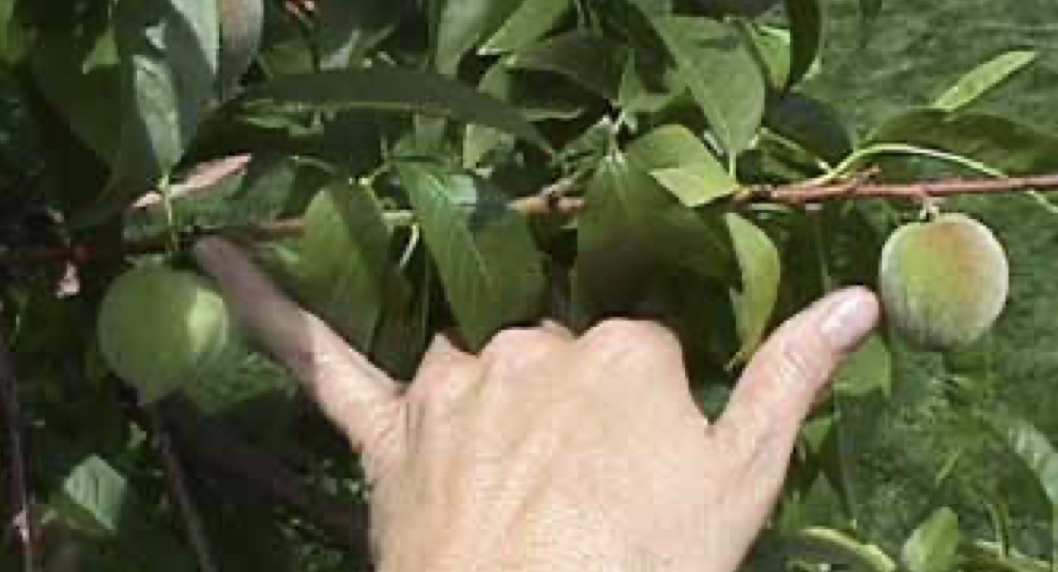
- Your hand is an ”always available” measuring tool when you’re thinning your fruit.
-
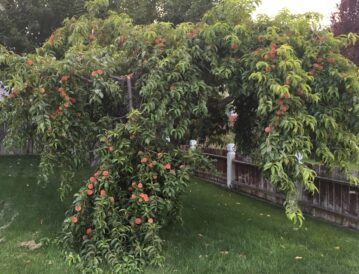
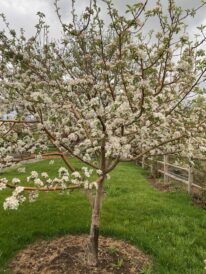
- The weight of enlarging fruit on an unthinned branch, even a scaffold branch like this, can eventually put enough strain on the branch to break it.
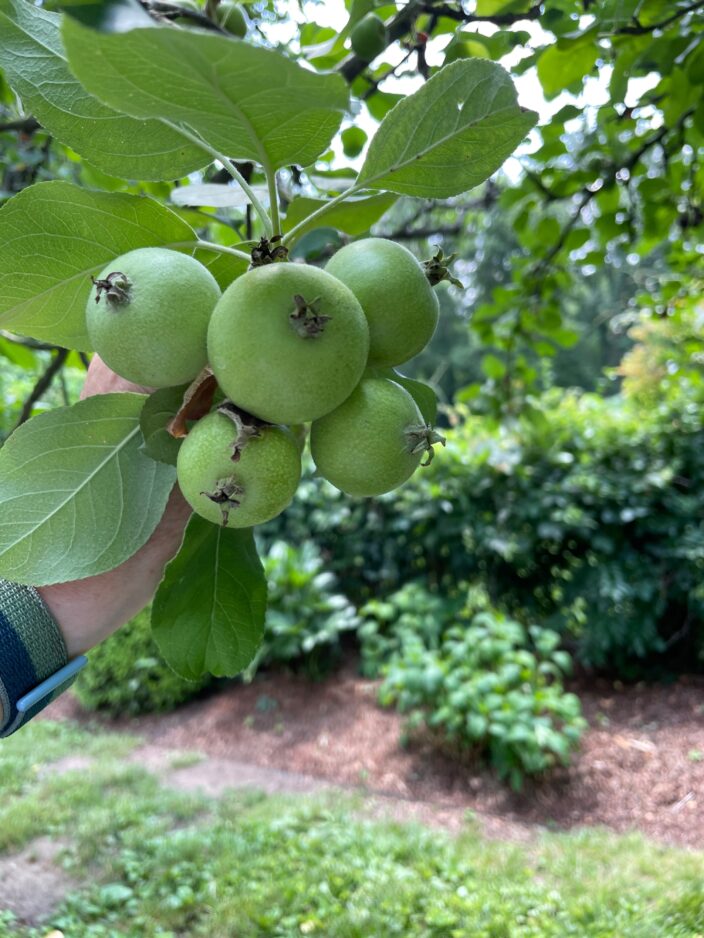
Photo by Meredith Seaver
When enlarging apples like this touch each other, it provides a protected place where female codling moths can lay their eggs.
Now that we’re well into spring, it’s time to assess the fruit set on apples, pears, peaches and nectarines. It’s common for fruit trees to begin the season with more flowers and fruits than a home orchardist will need for a good harvest at the end of the season.
Fruit set can be affected by poor pollinator activity. Bees are fair-weather pollinators and they won’t be out working the fruit trees if the weather is overcast, wet, too cold or windy. A late spring frost could also reduce fruit set on trees. In most years, though, local fruit trees need help managing their fruit set.
Today we’re looking at the basics of thinning the fruit in your home orchard, but before we jump into how to do it, let’s look at five reasons why you should.
Fruit size. Thinning your trees at the right time will increase the size of the fruit at harvest time. There is a limit to the amount of carbohydrates the leaves on your tree can produce. Those carbohydrates can be divided among many small fruits or fewer larger fruits.
Fruit quality. When the fruit on well-cared-for trees is properly thinned, the fruits will be sweeter and more flavorful.
Courtesy NC State University Extension
The fruit may look sparse once you’ve thinned your tree, but thinning the fruit on the branches leaves room for the remaining fruit to enlarge and improve in sweetness and flavor.
Good flowering for the following year. Hormones from the seeds in developing fruits cause the fruit to develop, but they can also reduce the production of the flower buds needed for the following year’s fruits. The more fruits on the tree, the fewer flowers you can expect next year.
Easier pest control. It’s easier to get good spray coverage on trees where the fruit has been thinned. It’s also easier to use protective bags around the fruit if you’re using that organic pest management method. Unthinned apples and pears are also more attractive to codling moth females because they prefer to lay their eggs where two fruits touch each other.
Reduced branch breakage. A heavy fruit load can bend and break branches. Thinning the fruit reduces the load on the branches. Thinning the fruit on young trees also helps promote good scaffold branch development.
Now that you have five good reasons to thin your fruit, let’s move on to when and how to do it.
Apples and pears are the first fruits to thin in the spring if the tree is carrying a heavy fruit set – multiple fruits in a cluster, and clusters of fruits less than 6 inches apart (about the distance between your thumb and pinkie when you fold down your three middle fingers). These trees’ fruits should be thinned when the largest fruitlets are about ½ to ¾ of an inch in diameter.
Courtesy NC State University Extension
Your hand is an ”always available” measuring tool when you’re thinning your fruit.
Start checking the fruitlets on your trees about three weeks after the petals drop from the blossoms. Snap or snip away any damaged or poorly formed fruitlets and all but the largest fruitlet in each cluster (usually the center fruitlet in an apple cluster or the lowest one in a pear cluster). Then remove any additional clusters of fruit so the fruits are spaced about 6 inches apart on the branches. You’ll get the most benefit from thinning apples and pears if you get the job done no later than 30 days after petal fall.
Peaches and nectarines don’t flower and set fruit in clusters. You’ll be starting your thinning when these stone fruits are ½ to 1 inch in diameter (think marble sized). Your goal when thinning these trees is to first remove any misshapen or damaged fruitlets or ones near the ends of tender twigs or branches where the branches may bend under the weight of the expanding fruit while keeping the largest or best fruitlets. You’ll then remove any fruits that are spaced more closely than about 6 inches. Just like with apples and pears, you’ll want to get this done while the fruits are small.
Is there any benefit to thinning later in the season if you couldn’t get it done earlier? Yes, but the only significant benefit then is protecting the branches from breaking under the weight of a heavy fruit load.
If you’re growing cherries and apricots, you’ll have a little less work in the spring because these tree fruits are not generally thinned.
Meredith Seaver is a USU Extension horticulture assistant.
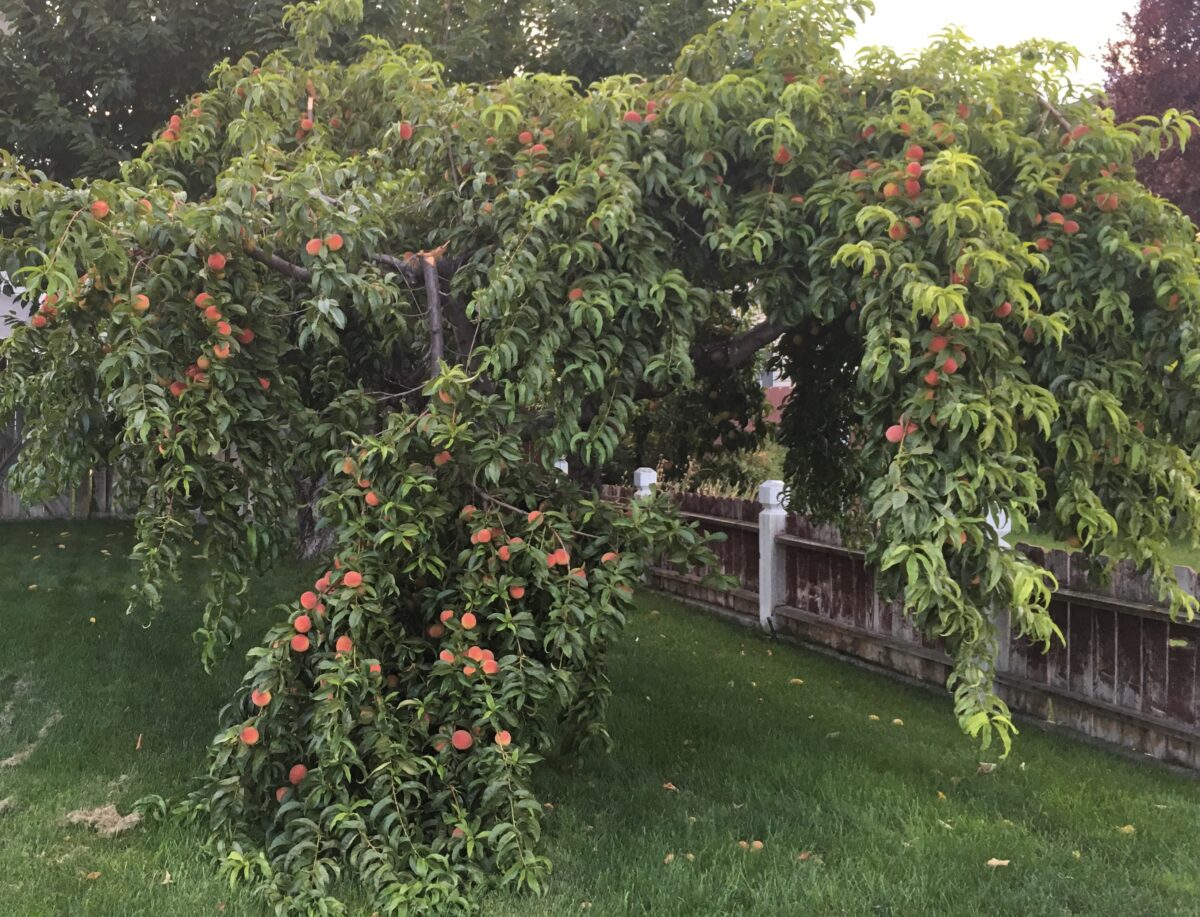
Photo by Meredith Seaver
The weight of enlarging fruit on an unthinned branch, even a scaffold branch like this, can eventually put enough strain on the branch to break it.