Garden Help Desk: Controlling garden pests through fostering garden predators
-
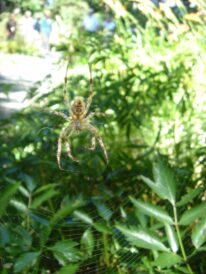
- Spiders like this orbweaver may look scary, but they provide important pest management services in yards and gardens.
-
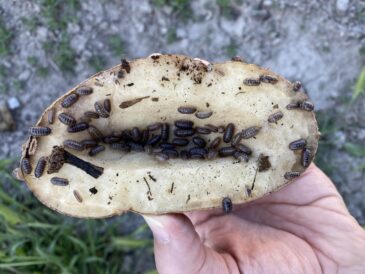
- High populations of pillbugs and sowbugs can be a problem in gardens, but when their populations are low, they can do their important work on the decomposer team without causing noticeable plant damage.
-
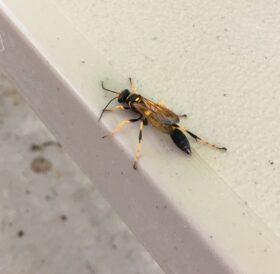
- A garden’s insect food chain needs to stay healthy and poison-free so beneficial predators such as this wasp are not harmed.
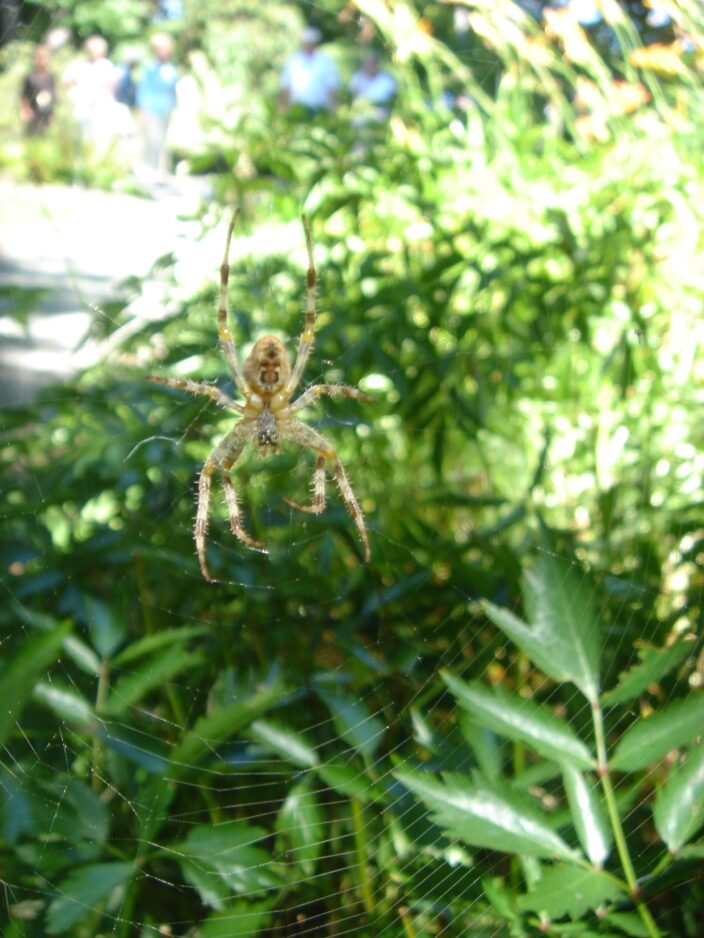
Photo by Meredith Seaver
Spiders like this orbweaver may look scary, but they provide important pest management services in yards and gardens.
Every spring and summer, salespeople try to convince me that laying down a protective barrier of chemicals around my house is a great idea. They promise to kill all of the pests, like spiders and wasps, that homeowners would not want near their homes.
They are shocked when I reply that I love my insects and would never want to kill a spider or a wasp, or any other beneficial insect, because they are an essential part of my yard’s ecosystem. These salespeople often insist that the poisons they use are organic and won’t harm me or my yard. They behave as if I’m crazy for not wanting to poison my home.
But I know better. My spiders feast on all kinds of insects that do damage to my plants, and wasps not only prey on other insects but help to pollinate my plants.
The insects in my yard are essential for my garden ecosystem because they do tasks in my garden I can’t possibly do. Some of the most hated insects, like pillbugs and earwigs, eat decaying detritus like wood chips and old leaves, eliminating sources of mold and turning dead plants into nutrients that make healthy soil. Yes, earwigs may do some damage to healthy plants along the way, but studies have shown that healthy plants can handle losing a percentage of their foliage and may grow more vigorously to compensate for it. Pollinators, like bees and wasps, ensure my flowers, fruits and vegetables become fertile in order to grow seeds or food.
And all these small insects, in turn, become food for other animals (like birds or bats) that I want in my yard eating larger pest insects (like grasshoppers and caterpillars) that would rapidly consume the plants that grow my food. I need my insect food chain to stay healthy and poison-free so that I don’t harm those predators. It doesn’t matter if the poisons are organic; they are still poison, and enough of any poison ingested over time and multiplied up the food chain could also kill the larger predators in that food chain.
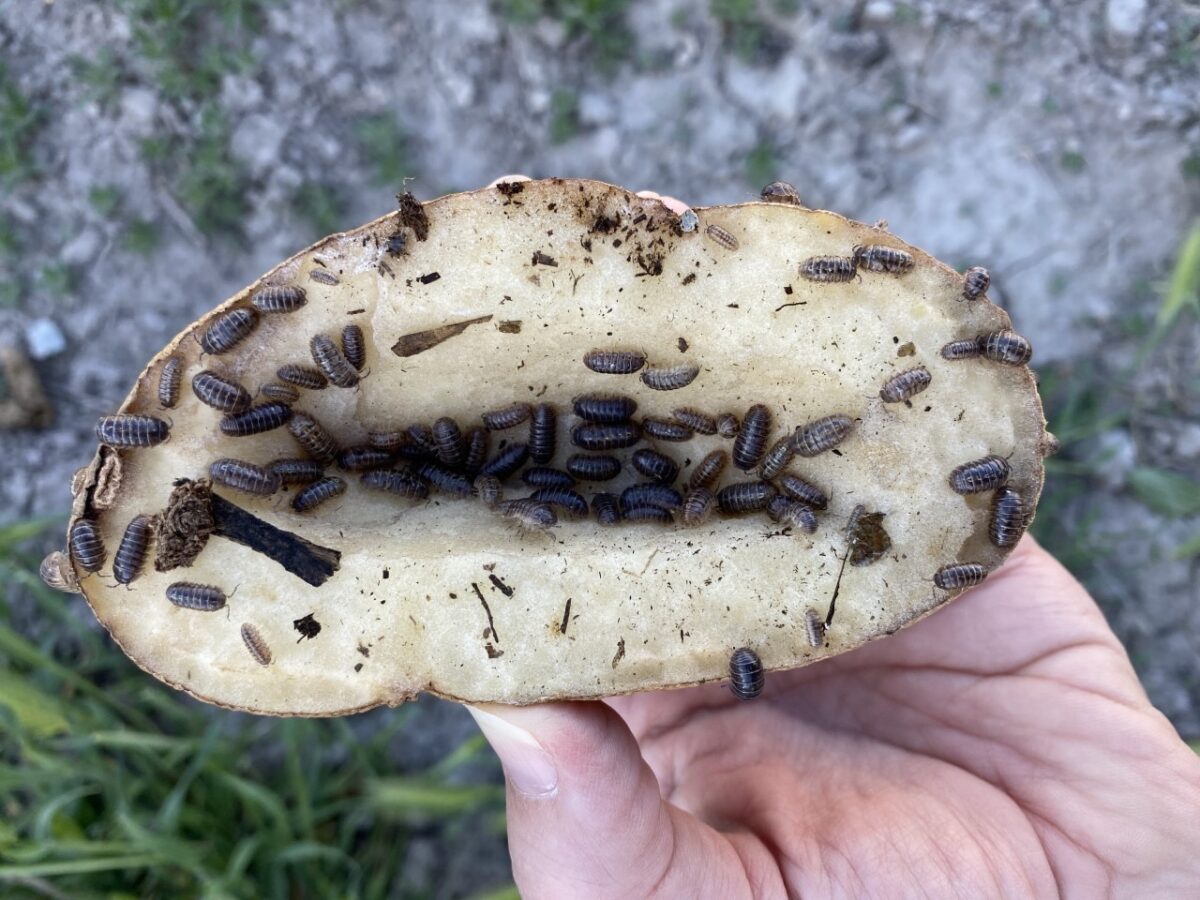
Photo used by permission, Juventa Vezzani
High populations of pillbugs and sowbugs can be a problem in gardens, but when their populations are low, they can do their important work on the decomposer team without causing noticeable plant damage.
Many people do not understand insect ecosystems. They believe that the wholesale killing of every insect they encounter with a harsh insecticide is a societal duty in order to help plant life thrive and keep the world healthy. But the opposite is true. Chemicals kill good and bad bugs alike, creating ecosystems that are unbalanced and unhealthy.
Some beneficial predator insects are more sensitive to insecticides and can be killed off in higher numbers than the pest insects, which then more abundantly reproduce and run rampant through the garden with fewer beneficial insects to help keep them in check. By creating balanced and healthy insect ecosystems, I can ensure that the beneficial insects outnumber the pests, helping my garden to be happier and healthier while increasing the harvest yields of my plants.
When we consider that every insect has a place and purpose in the garden, the kinds of beneficial insects we want to attract should be our first consideration in building a healthy garden ecosystem. It is generally acknowledged that beautiful bugs such as bees, butterflies, dragonflies and ladybugs are beneficial insects we want to welcome and encourage, but it seems that people are less familiar with the many other species of beneficial insects such as praying mantis, green lacewings, hoverflies and assassin bugs that can help keep our gardens pest-free.
Even icky-looking bugs, such as centipedes — which eat slugs and some species of thrips –eat microscopic mites and fungal spores and can be of benefit to the garden.
There is a large body of research-based information for the gardener online about what constitutes a pest or a beneficial insect and what kinds of conditions those insects need in order to thrive and multiply. With this information, gardeners can choose to foster their insect ecosystems instead of using broad-spectrum insecticides in their garden spaces while knowing that healthier insect ecosystems can make happier, healthier gardens.
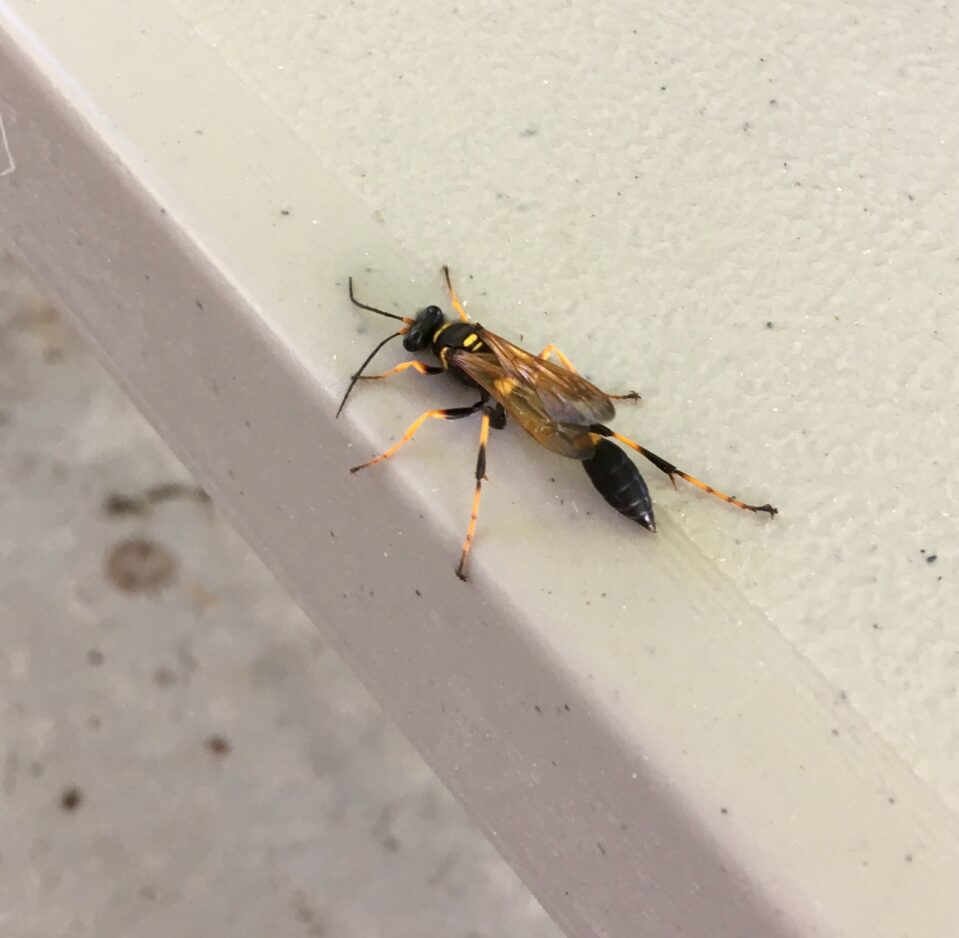
Photo by Meredith Seaver
A garden's insect food chain needs to stay healthy and poison-free so beneficial predators such as this wasp are not harmed.
Lisa Zeigler is a Master Gardener candidate with Utah State University Extension.