Garden Help Desk: How to control grassy weeds in the lawn
-
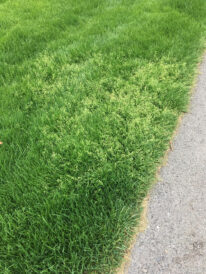
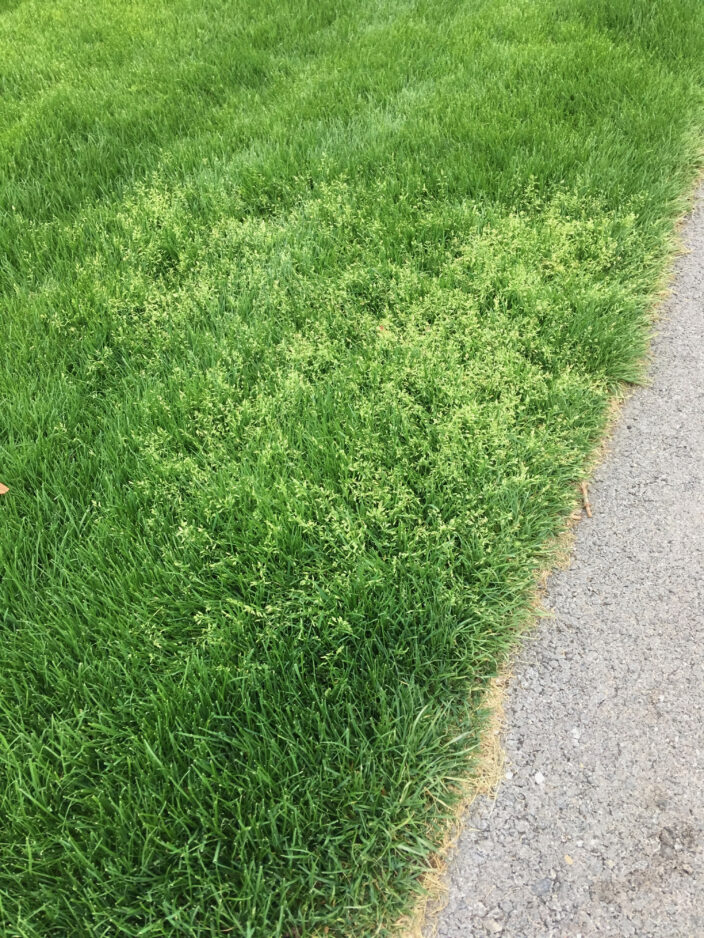
- Annual bluegrass is an annual weed that blends into a lawn until it blooms in early summer and then dies back. A pre-emergent herbicide can be applied in early spring to reduce annual bluegrass seedling establishment. (Photo by Meredith Seaver)
-
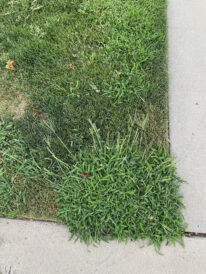
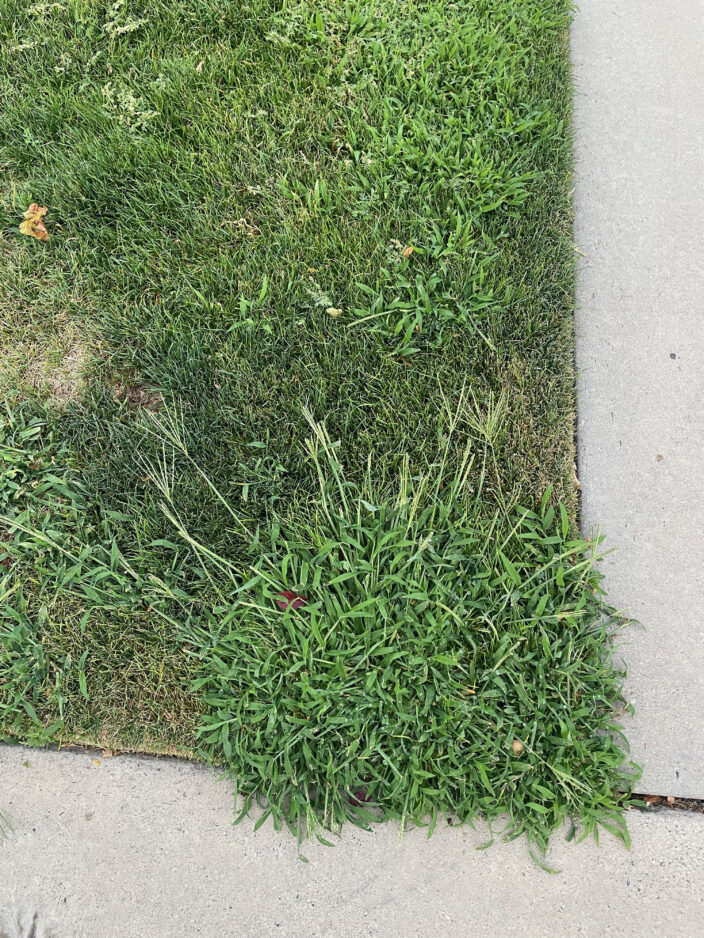
- Crabgrass is a very common grassy weed, but because it comes back from seed every year, it can be controlled by applying a pre-emergent herbicide to inhibit seedling establishment. (Photo by Meredith Seaver)
-
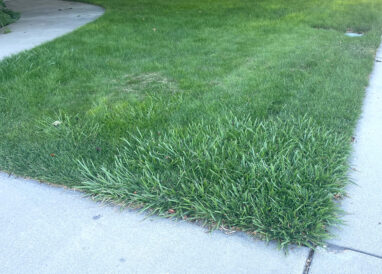
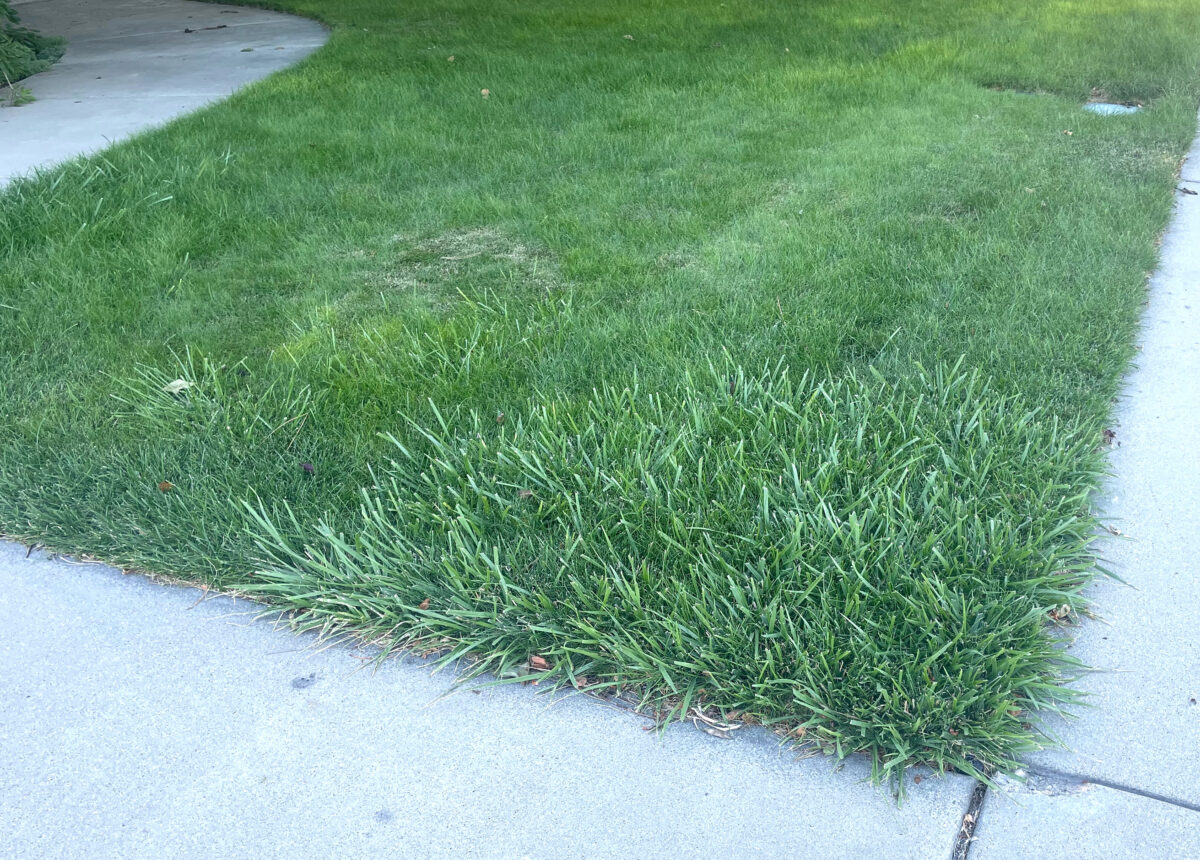
- Perennial grassy weeds overwinter and come back every year. There aren’t any reliable chemical controls that can kill the grassy weeds without damaging or killing the lawn. (Photo by Meredith Seaver)
My bluegrass lawn has some patches of tall different grass. I want to get rid of the fescue with weed killer, dig up the dirt in those patches and get rid of it. Then I’ll plan to get some new topsoil for those spots. I already have some good grass seed to plant. Am I right? Do you think I could get started and plant the seed in a couple of weeks?
Most lawns are monocultures or near-monocultures of just one or very few grass species. Unfortunately for us, Mother Nature would never make a grass-only lawn and is always working to introduce other plant species. We need to fight nature a bit if we want to have a “perfect” lawn.
The first thing to look at in your question is your plan to remove and replace some of the soil. No matter why you might want to replace some of your soil — poor soil texture, weed problems, disease problems or insect problems — you will almost always do better by working with the soil you have instead of trying to remove and replace it.
- Amending your current soil with plant-based compost will do more for the general texture quality of the soil in your yard than removing the “poor” soil and replacing it with new soil. The new soil may turn out to be no better than the soil you already have and can very likely be worse.
- If you’re hoping to remove all the roots and rhizomes of the grassy weeds, you’ll probably be disappointed with your results because the rhizomes can extend well beyond where you see signs of the grass you’re trying to eliminate.
- The fungal structures of many lawn diseases can extend far beyond and below any signs of disease and will be left behind after removing soil.
- Bringing in new soil also means bringing in new weed seeds. You may end up replacing one weed problem with an even worse weed problem.
You’ll get better germination if you’ll plant just a little later. Temperatures above 90 degrees inhibit Kentucky bluegrass germination, so you’ll want to see a weather forecast with consistent temperatures below 90 degrees. The beginning of September is a good target for planting — a little bit cooler weather but with enough weeks of growth for your new grass to overwinter successfully.
Now let’s look at your grassy weeds (grass species that we generally don’t want in our lawns). What you describe sounds like a perennial grassy weed. It’s possible you’ve also had to deal with an annual grassy weed like crabgrass or annual bluegrass before. Each type can be managed successfully but with different options.
There are chemical sprays that can help with crabgrass (an annual), but I’m afraid there isn’t a reliably effective chemical spray that will kill perennial grassy weeds without also killing or seriously damaging your lawn. You have a few options.
- You can dig out small, isolated patches of the perennial grassy weeds and reseed or resod those areas.
- You can use glyphosate or another grass killer (KillzAll, Ultra-Kill, some Roundup products) to kill the infested area and then resod. You would need to kill a wider area than just where you’re seeing the grassy weeds. Then you need to wait long enough to make sure the grassy weeds are dead (it sometimes takes more than one application to kill some of the tougher grassy weeds). Then you can reseed or resod the area.
- You can choose to ignore the grassy weeds. Give good lawn care — adequate nitrogen to ensure a nice, dense, competitive stand of lawn plus deep, infrequent watering — and mow the lawn a little more frequently to disguise the grassy weeds.
Maintain a dense, healthy lawn to shade the soil and make it more difficult for weedy seeds to germinate and thrive. A dense lawn will help to crowd out weeds. Use adequate nitrogen fertilizer (enough is good, but more isn’t better). Use a mulching mower and mow tall (3 to 3.5 inches). Water deeply but not frequently.
Crabgrass and annual bluegrass are two annual grassy weeds we often see here. You can gain control by using a pre-emergent herbicide in the spring when you see forsythia shrubs blooming. This will prevent the establishment of new seedlings. You can also use a lawn weed killer with crabgrass killer in early to mid-May to control any crabgrass that managed to germinate. You should not spray lawn weed killer products once we start having daytime temperatures that are 85 degrees or higher.