Garden Help Desk: Any change in location can be stressful for houseplants
-
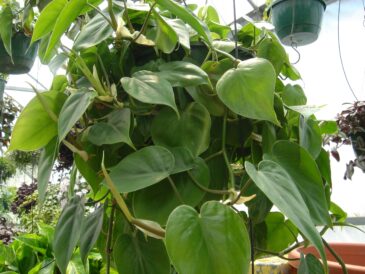
- The dense foliage on this healthy philodendron is the result of good care, bright indirect light and mild temperatures.
-
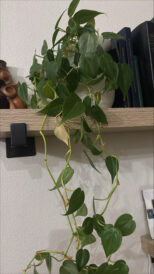
- Indoor plants can be stressed when moved from one location to another. Leaf yellowing or leaf loss can be a symptom of this kind of stress. With good care and time, indoor plants will recover.
-
- Pots should never sit in the collected water. Always come back a few minutes after watering and letting the soil drain so you can discard the water in a saucer or catch tray.
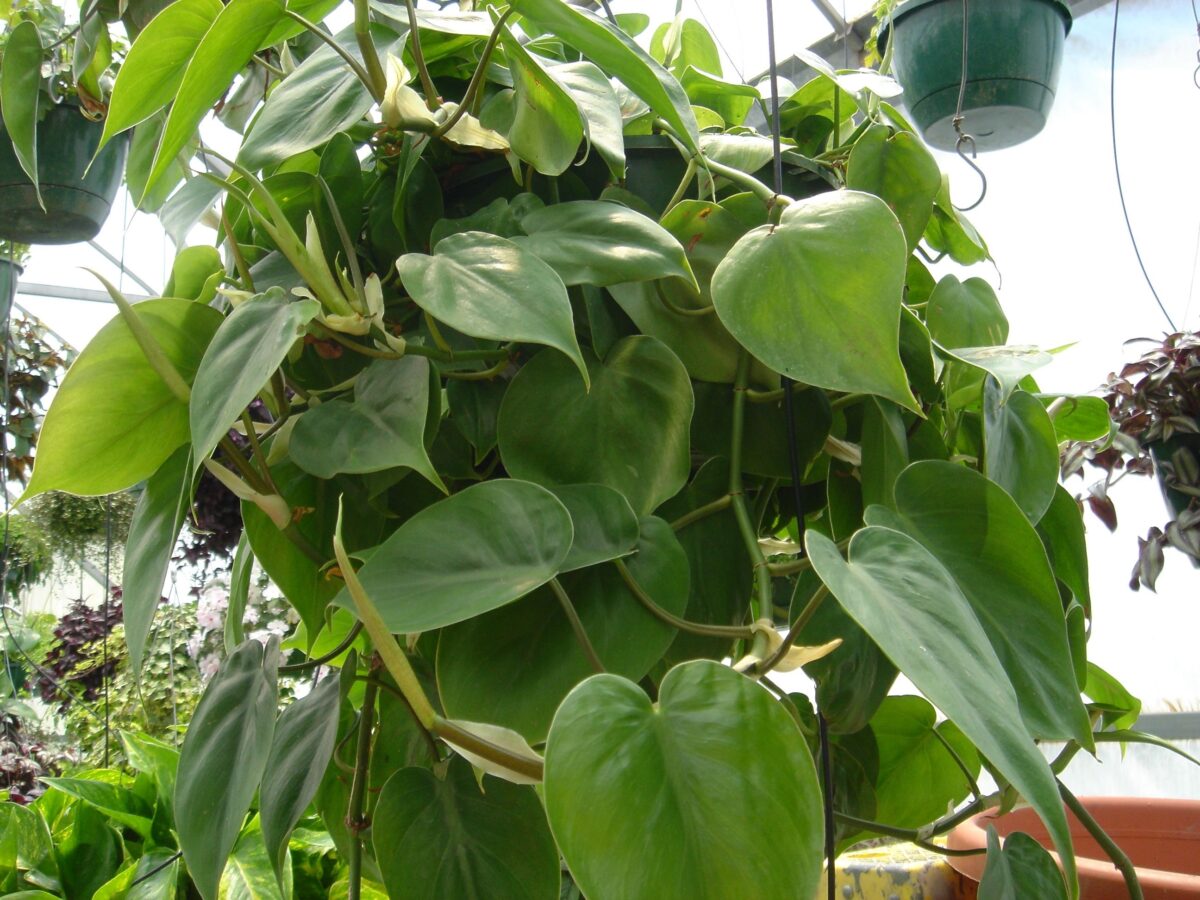
Photo by Meredith Seaver
The dense foliage on this healthy philodendron is the result of good care, bright indirect light and mild temperatures.
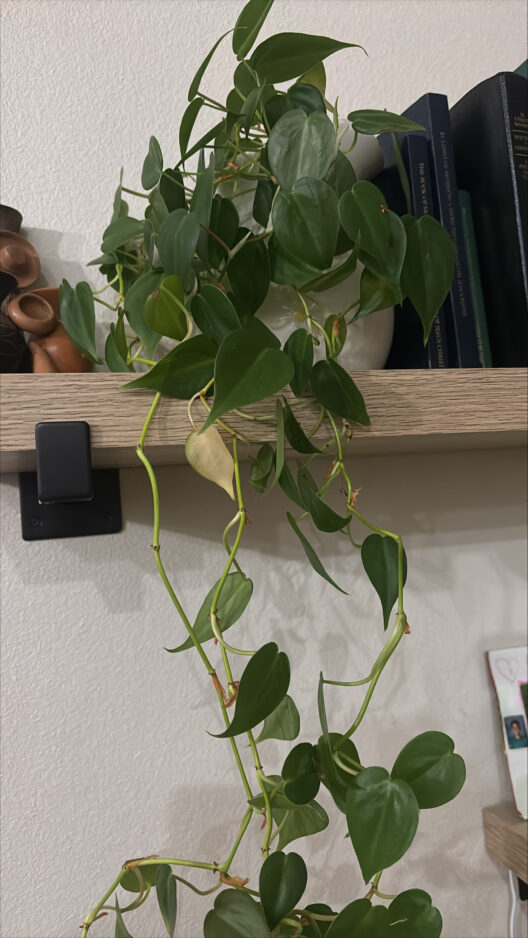
I just inherited this plant, and I don’t know its prior history. I don’t even know what type it is, but it looks like it’s starting to yellow in some spots. There is no direct sunlight on it. It’s about 5 feet away from a north-facing window. The plant sits on the wall parallel to the window. Just wondering if it needs more water or not. I haven’t watered it since I got it a week ago.
Indoor plants can find any kind of change to be stressful. Whether the change is moving back indoors after a few summer months in bright outdoor shade, moving from one home to another or even moving from one end of a room to the other end, a plant may need some time to adjust to the change of environments.
This plant looks like a philodendron, a popular mounding and trailing indoor plant. It will live for many years if given good care. Here are some things to consider for your philodendron and any other indoor plant in your home.
Overwatering, and chronically wet soils, are the number one cause of houseplant death. If you’ve been a daily or every-other-day waterer, you’ll want to break that habit.
Good drainage is important, so there should be at least one large hole (thumb width) or a few smaller (pencil width) holes.
Courtesy photo
Indoor plants can be stressed when moved from one location to another. Leaf yellowing or leaf loss can be a symptom of this kind of stress. With good care and time, indoor plants will recover.
Most houseplant should be watered thoroughly so that all the soil has been wetted but then drained well so that no more water comes out the drainage holes. There shouldn’t be any water sitting in a saucer or catch tray under the pot.
Most houseplants need some time between waterings for the upper 1 to 3 inches of soil to have a chance to dry between waterings. This lets air move down into the soil, bringing oxygen to the roots. Watering deeply once every five to eight days is usually enough, depending on the size of the pot, the plant, the location and the temperature in the room.
Houseplants don’t like warm or cold drafts. Exterior doors aren’t the only source drafts. Floor and ceiling vents can deliver a steady stream of dry warm or cold air. You don’t need to close off those vents (not good for your HVAC system) but you do need to pay attention to where you place your plants.
Houseplants need indirect light, although an hour or two of morning light at an east window is fine. Some prefer low light and some want bright indirect light, but medium light is a good compromise for most plants.
For now:
- Check the upper inch or two of the soil. If the upper soil feels dry, water deeply and drain thoroughly.
- Be patient. Give your plant time to recover from the change of location.
- Remove the worst of the yellowing leaves so that you don’t assume new yellowing leaves are just the same old leaves.
- Good photos of the plant is another way you can tell whether you are seeing new yellow leaves or leaves that were already yellowing.
Meredith Seaver is a horticulture assistant with the USU/Utah County Extension Service.
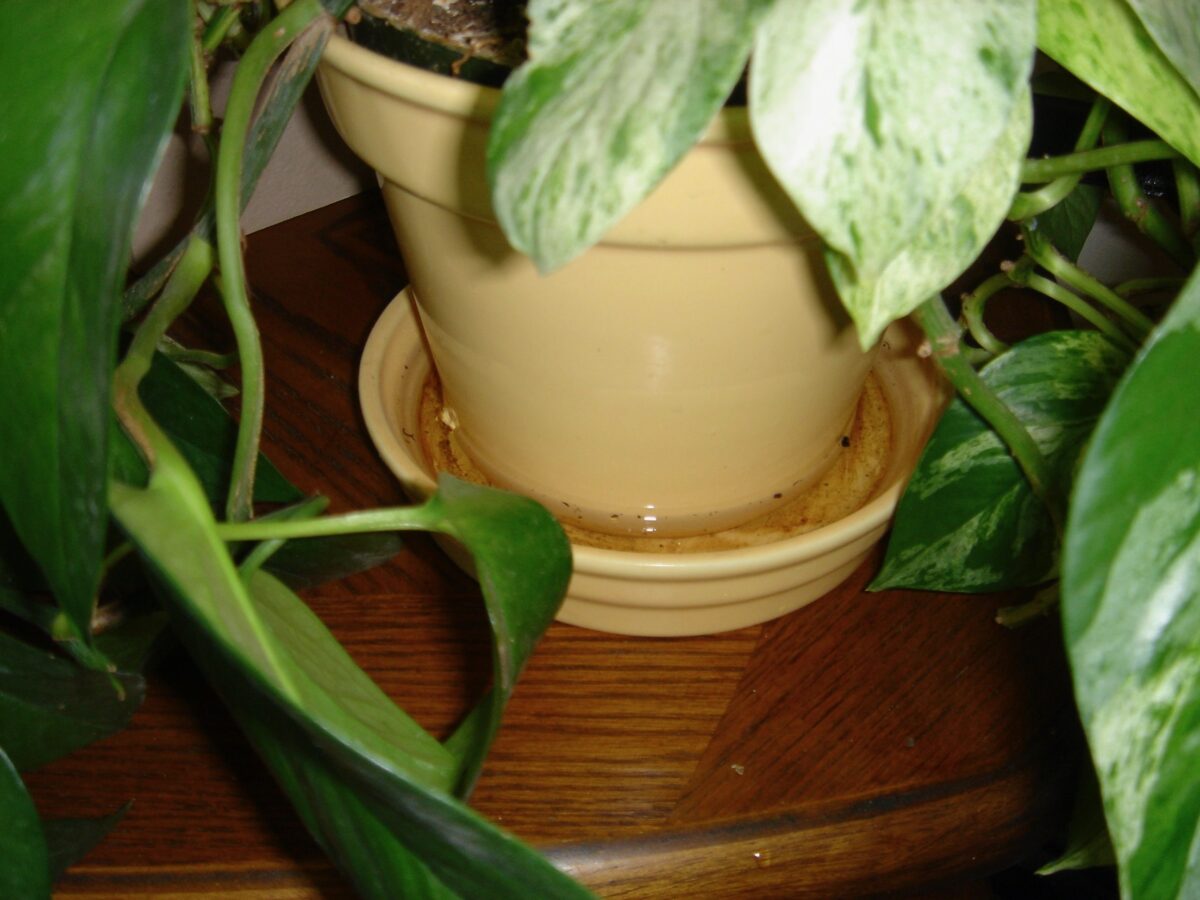
Photo by Meredith Seaver
Pots should never sit in the collected water. Always come back a few minutes after watering and letting the soil drain so you can discard the water in a saucer or catch tray.