Garden Help Desk: Garden problems? The answer may be the weather
-
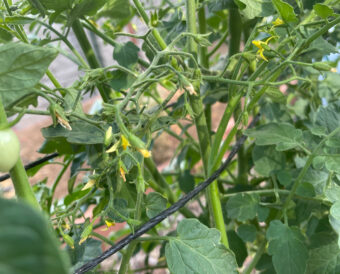
- Many flowers are sensitive to high temperatures, and tomato blossoms are no exception. When temperatures rise above 90 degrees, the pollen can be damaged and the flowers will drop instead of setting fruit. (Photo by Meredith Seaver)
-
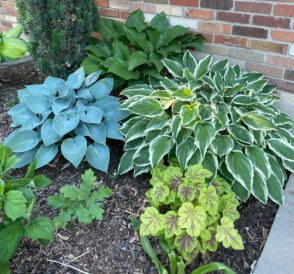
- Even perennials in shaded locations will benefit from a layer of small bark nuggets or some other organic mulch. (Photo by Meredith Seaver)
-
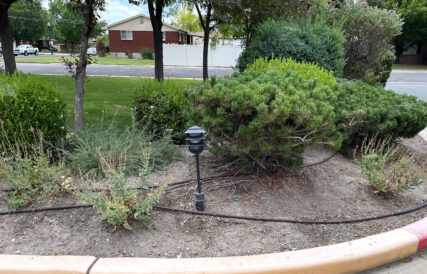
- Soil without mulch can get very hot during our summer months. A 3-inch layer of small bark nuggets or a similar mulch over the drip lines in this bed will cool the soil and slow down evaporation. (Photo by Meredith Seaver)
-
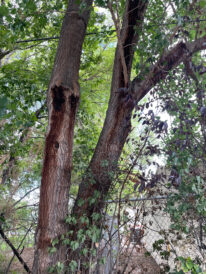
- Trees and shrubs will handle our hot, dry summer weather better if they have a weekly deep soak and mulch over the soil. (Photo by Meredith Seaver)
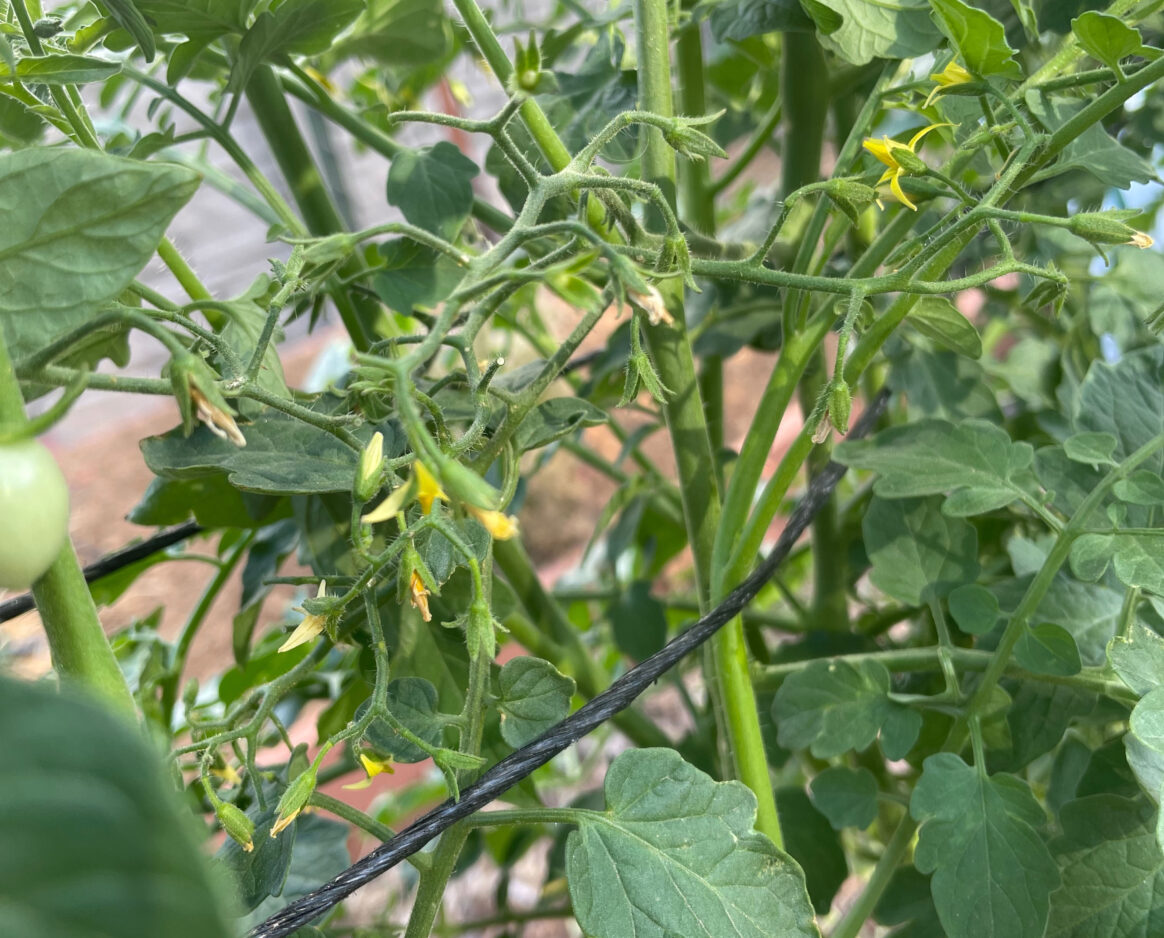
Photo by Meredith Seaver
Many flowers are sensitive to high temperatures, and tomato blossoms are no exception. When temperatures rise above 90 degrees, the pollen can be damaged and the flowers will drop instead of setting fruit. (Photo by Meredith Seaver)
I’ve been getting lots of questions this year about problems with flowers, vegetables, trees and lawns, and the answers all have a common theme: Blame it on the weather!
Even though we can’t change the weather, we’re looking at a collection of these common questions today to understand what’s happening and whether there is anything we can do.
My tomato plants get flowers, but there is never fruit. The flowers just seem to give up and drop.
The pollen in tomato blossoms is damaged by temperatures above 90 degrees. When that happens, the flowers will dry and drop. Using 30% shade cloth can reduce the temperature around the plants by a few degrees. Mulch can keep the soil cooler, which will also help with the air temperature around your plants. Also, water early in the morning so your plants are well-hydrated before the hottest part of the day.
Even though I water my flowerbeds deeply twice a week, I still see plants wilting late in the day.
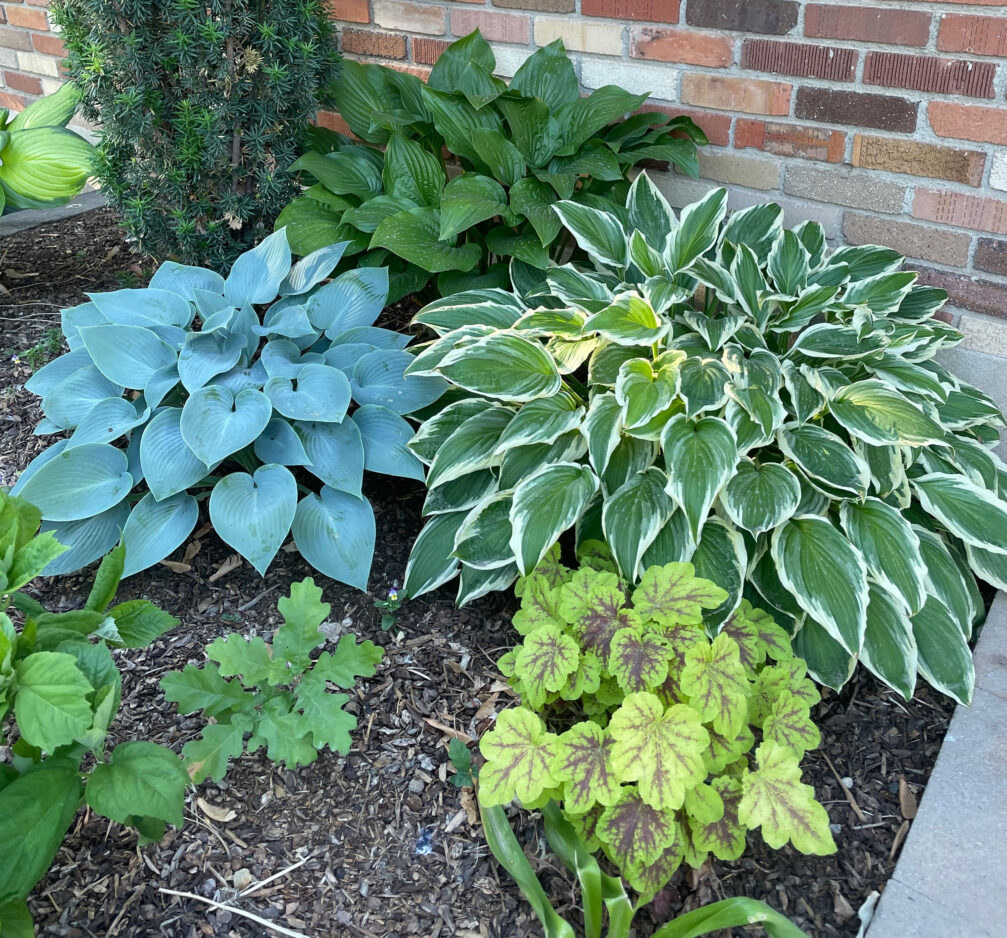
Photo by Meredith Seaver
Even perennials in shaded locations will benefit from a layer of small bark nuggets or some other organic mulch. (Photo by Meredith Seaver)
Are you using an organic mulch like small bark nuggets, compost or shredded bark over the soil in your flowerbeds? If not, that is one thing that can help your flowers during our hot weather. If you are using drip irrigation, make sure drip lines and emitters are under the mulch. Make sure you’re watering deeply. Check how deep the water is soaking down into the soil about an hour after you’ve watered. If water isn’t moving at least 8 inches down into the root zone, you’ll want to adjust your watering time.
My pepper plants have hardly grown at all since I transplanted them out into the garden after Mother’s Day. Will they ever snap out of it?
Peppers are among the tender plants that can suffer from chilling injury when temperatures are very low but not freezing. This happened to plants in some parts of Utah County shortly after Mother’s Day. Peppers are very tender and can struggle to recover. If the injury is severe, plants may not completely recover. Some of my own pepper plants were injured by the low temperatures. They may or may not recover, but I have nothing to lose by continuing to give them good care and being patient. Cold soils at that time also slowed down root development, so some plants didn’t have the robust root system needed to cope with the suddenly hot weather that followed the cold spells. Protective coverings during unsettled spring weather can help you avoid this problem.
I’ve noticed that the leaves on my linden tree look droopy or sort of rolled up. What can I do to save my tree?
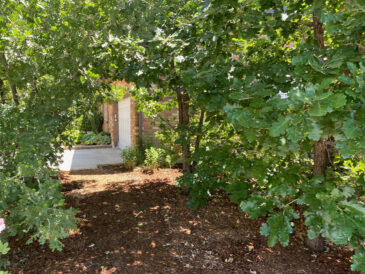
Not only has the weather been very hot lately, it’s also been windy. This combination can easily pull moisture from the leaves. You may see this wilting on hot windy days even though you’ve been watering deeply but infrequently. If you haven’t been watering deeply but infrequently, that is something you can change to help your tree. Established trees need a deep soak but only once a week during the summer and less often in the spring and fall. Organic mulch over the soil will also help.
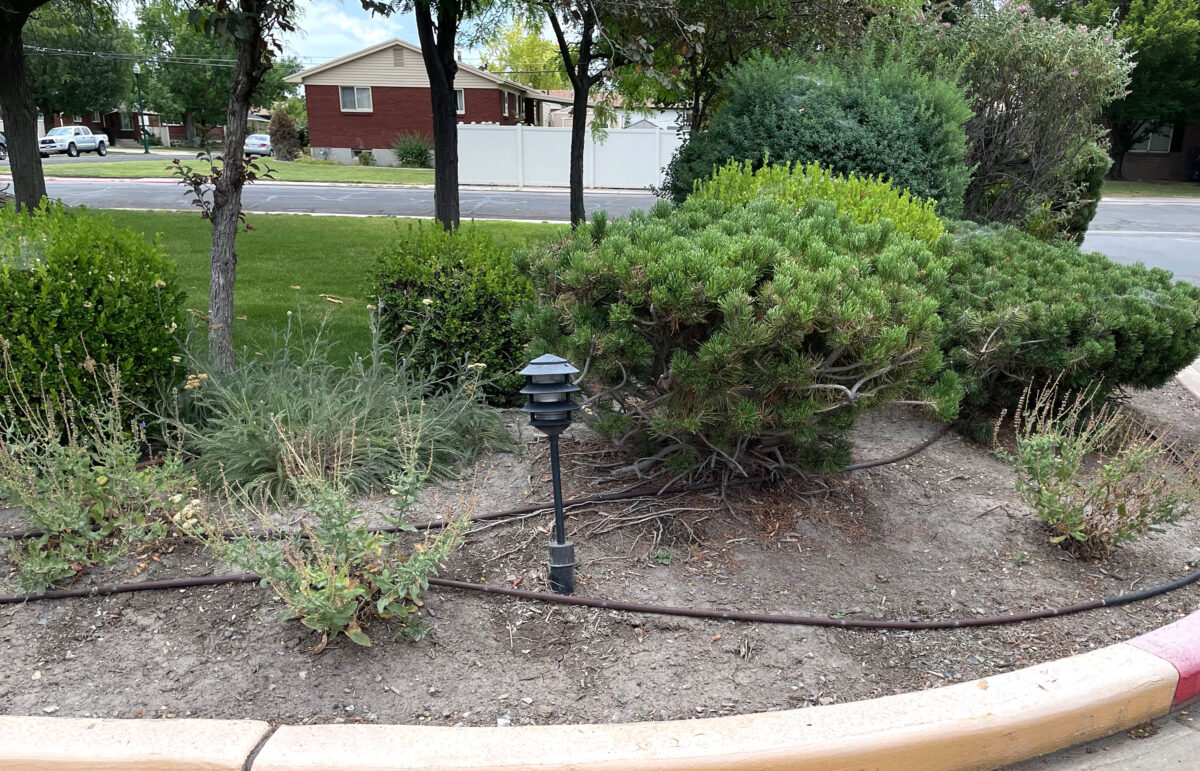
Photo by Meredith Seaver
Soil without mulch can get very hot during our summer months. A 3-inch layer of small bark nuggets or a similar mulch over the drip lines in this bed will cool the soil and slow down evaporation. (Photo by Meredith Seaver)
I’ve lost almost all of my tomato plants to curly top virus this year. I’ve never seen it this bad before.
Curly top virus is a disease that is spread by beet leaf hoppers. Our warm, dry winter left us with a higher population of these insects and dry spring conditions sent them out of foothills and other weedy areas into our gardens. There is no cure for this disease. Infected plants (stunted, yellowed, twisted/curled, purple veins on undersides of leaves) should be removed so that new leaf hoppers don’t pick up and spread the virus. Floating row cover during the spring and early summer can exclude these pests.
My lawn was doing OK this year until suddenly it seemed to just dry up. I know it gets plenty of water. Should I fertilize or spray it to help it?
There are a few things to keep in mind when a lawn looks brown. Your sprinklers may not be giving you good, uniform coverage; there may be earlier disease or insect damage that is showing up now because the damaged lawn can’t keep up with the heat stress; or you may have mowed during the hottest part of the day. Mowing a drought-stressed lawn or removing a large percentage of the blades can also be a cause.
Don’t fertilize right now. Stressed plants shouldn’t be fertilized, and our cool season lawns also shouldn’t be fertilized during the hot part of the summer. Let your lawn rest until early fall.
USU/Utah County Extension has moved!
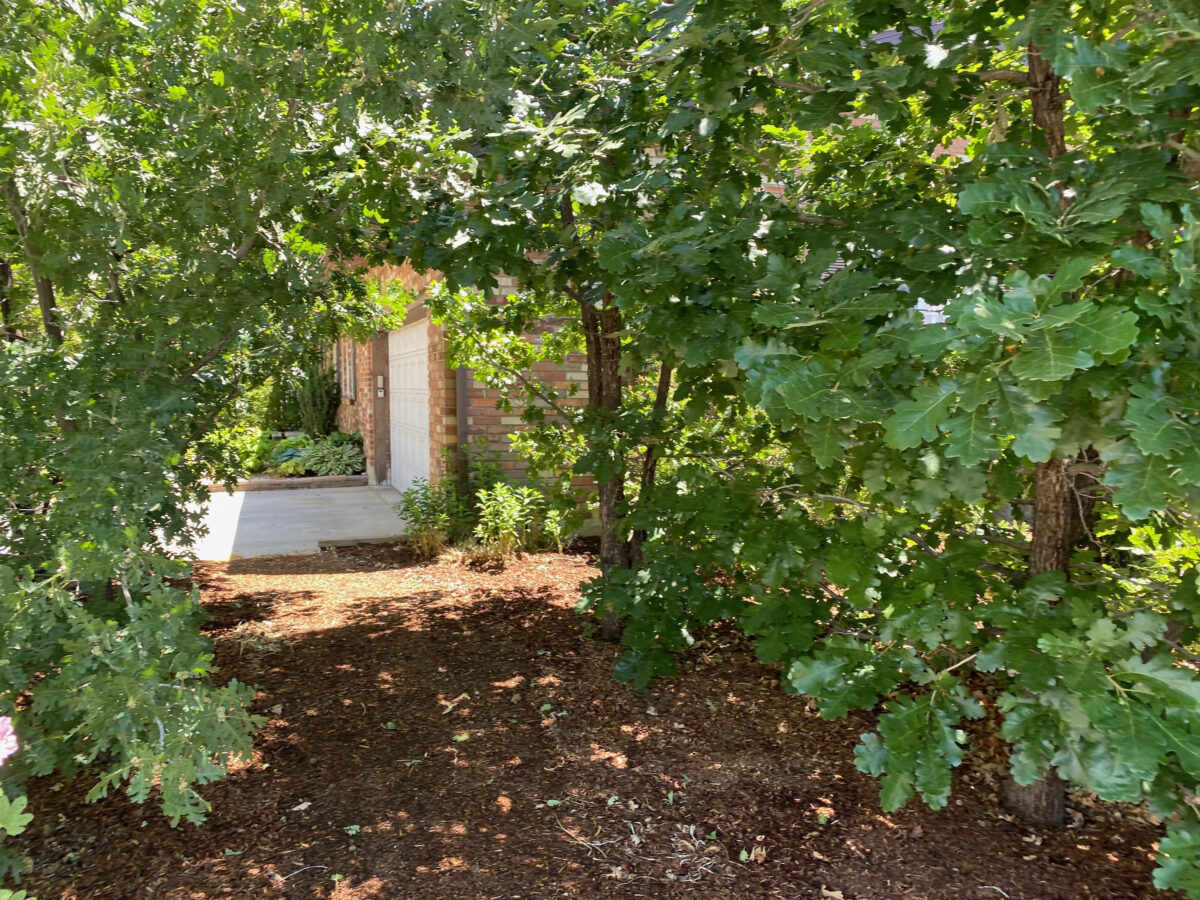
Photo by Anna Seaver
Trees and shrubs will handle our hot, dry summer weather better if they have a weekly deep soak and mulch over the soil. (Photo by Meredith Seaver)
You’ll find the USU/Utah County Extension Office in our new location: 1875 S. State Street, Suite 3100 & 3200, Orem. The office is open Monday through Friday from 8 a.m. to 4:30 p.m.
While our location has changed, our phone number hasn’t. You can still reach the Utah County Extension Office at 385-268-6530.
Meredith Seaver is a horticulture assistant at the USU/Utah County Extension Service.