Stars and Stripes forever: Appreciate the national symbol of the United States flag for Flag Day
-

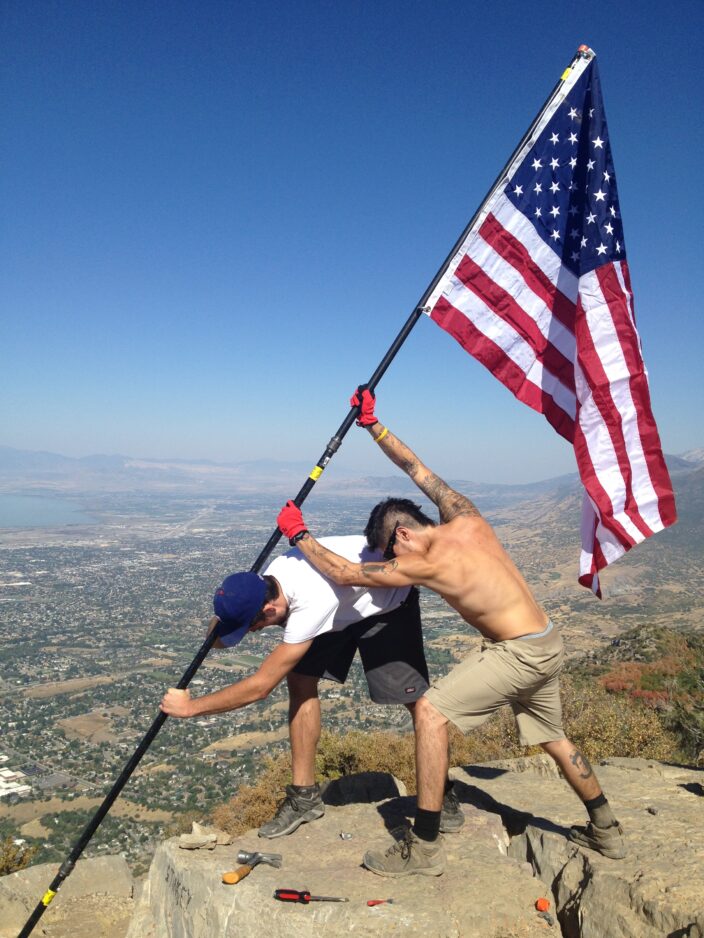
- Two men plant an American flag atop Kyhv Peak in an undated photo.
-

- Flowers, candles and American flags sit at a vigil for Charlie Kirk, the CEO and co-founder of Turning Point USA who was shot and killed, Thursday, Sept. 11, 2025, in Orem, Utah. (AP Photo/Lindsey Wasson)
-
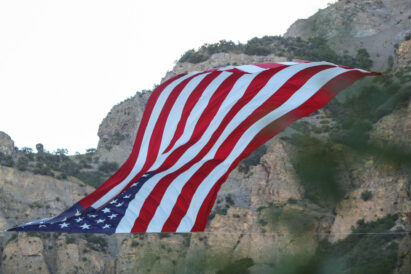
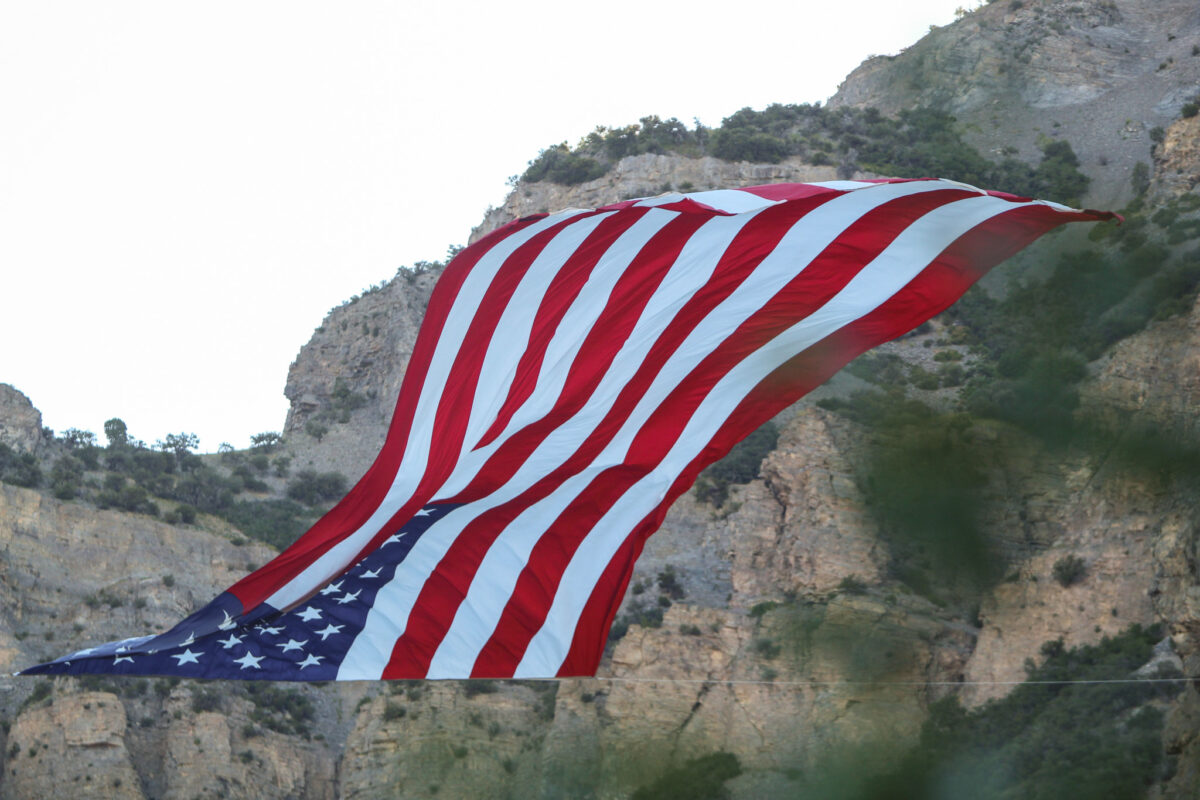
- “Lady Liberty,” an American flag, flies over Grove Creek Canyon in Pleasant Grove on Independence Day, July 4, 2024.
-
-
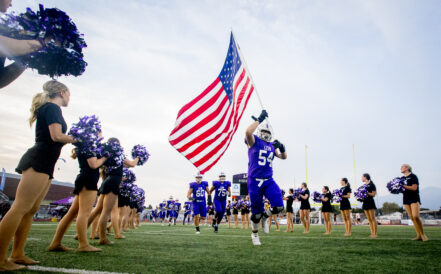
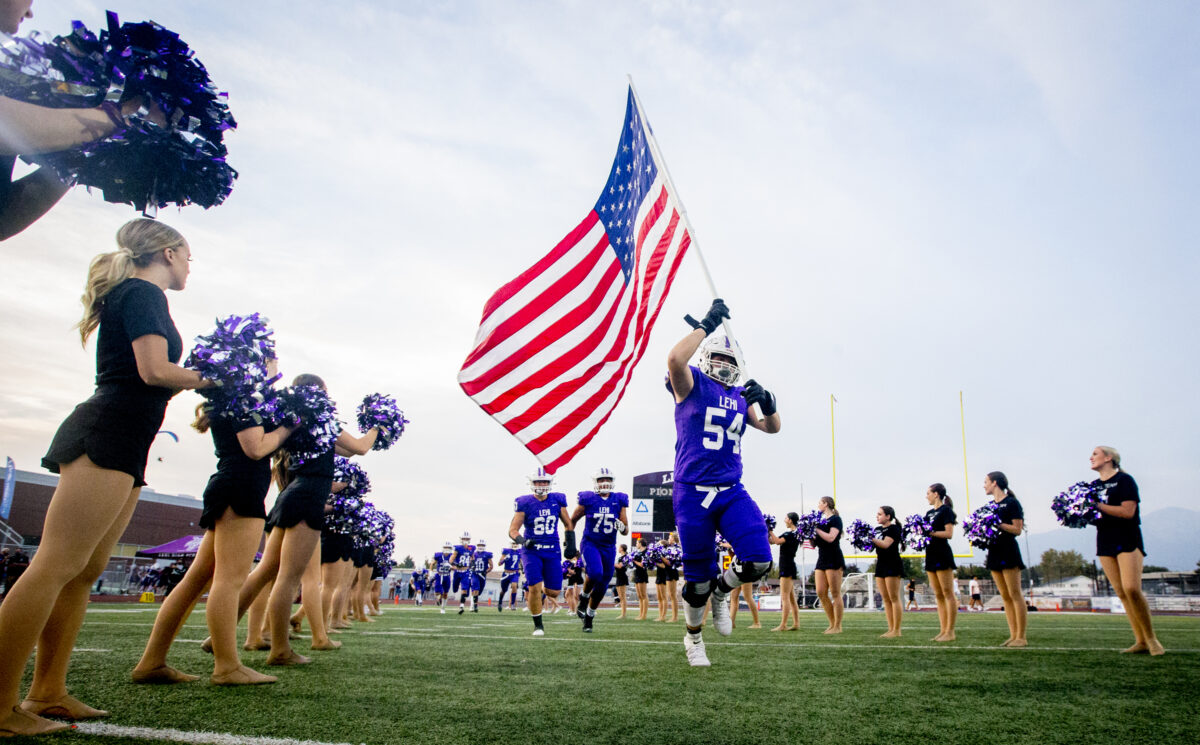
Lehi offensive lineman Teague Andersen (54) runs with the American flag as he and his teammates take the field before a game between the Lehi Pioneers and the Timpview Thunderbirds held at Lehi High School on Friday, Sept. 25, 2020. Isaac Hale, Daily Herald
-

- American flags are strapped to crosses in honor of deceased veterans for the Memorial Day service at the Provo City Cemetery on Monday, May 29, 2023.
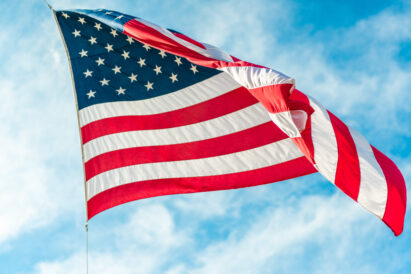
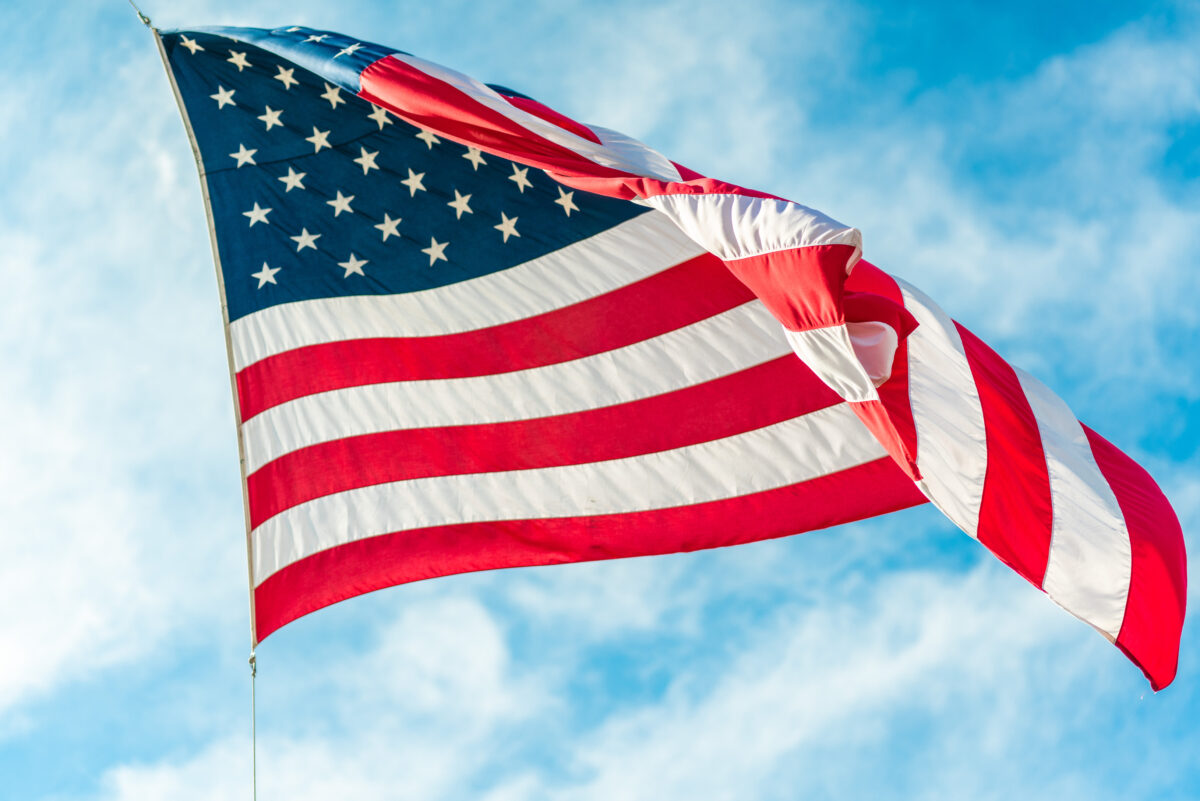
Just about anywhere you go in the United States, you’ll see one of its most common symbols: the American flag.
Iterations of the flag wave from flag poles in front of buildings, from stands on houses, honoring veterans at cemeteries and countless other locations. Images of it are used in product marketing, apparel design and — naturally — as part of political campaigns.
It’s so prevalent that many may not even stop to think about it.
But every year on June 14 the nation takes a moment to honor that symbol, which will be 249 years old in 2026.
Courtesy Robert Collins
Two men plant an American flag atop Kyhv Peak in an undated photo.
Here is a look at some of the history that led to the creation of the US flag, the efforts that resulted in it getting its own holiday and some of the tributes to it that may remind us of its value.
The history of flags
People having been using flag-like identifiers for thousands of years.
According to a 2024 article on Flagco.com by Tracy Crawford, flags and their equivalents are “one of the oldest forms of human communication.”
“Long before written language was widespread, people used colored cloth, carved standards, and painted symbols to identify their group, rally their forces, and declare what they stood for,” Crawford said. “The history of flags stretches back thousands of years, and the reasons people fly them today are not so different from the reasons they first appeared.”
The article talks about how early forms of flags included the carved symbols mounted on poles used by Ancient Egyptians and the use of vexillum, a rectangular cloth banner hung from a crossbar, by the Roman legions.
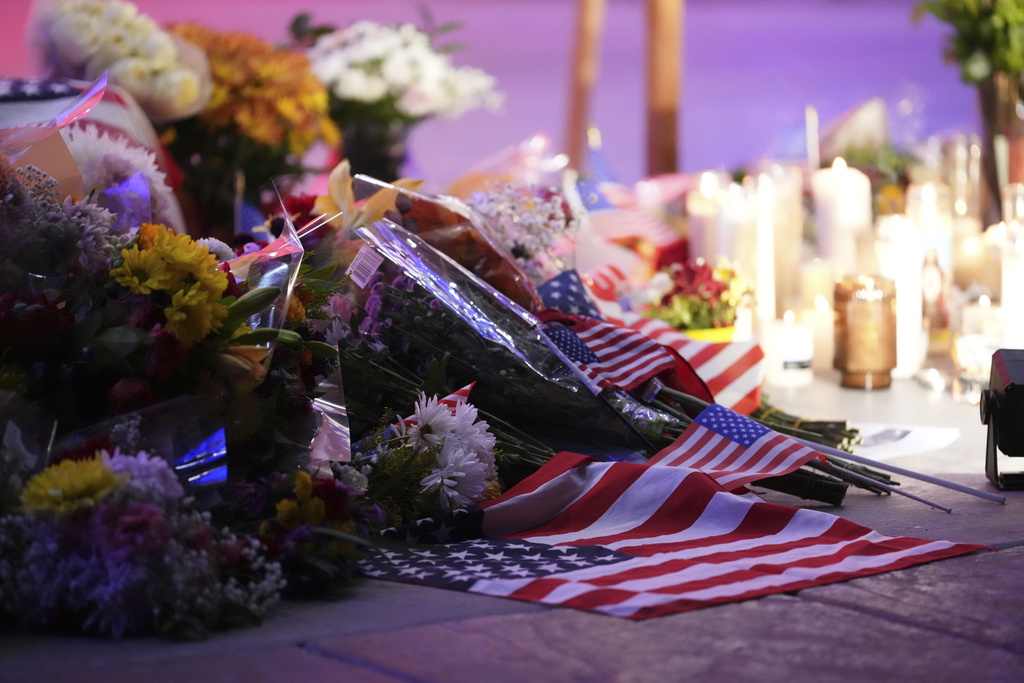
Flowers, candles and American flags sit at a vigil for Charlie Kirk, the CEO and co-founder of Turning Point USA who was shot and killed, Thursday, Sept. 11, 2025, in Orem, Utah. (AP Photo/Lindsey Wasson)
Those early forms evolved in medieval times, according to Crawford, as families developed unique coats of arms to display.
“On a battlefield where everyone wore similar armor, these heraldic flags were the only reliable way to tell friend from enemy,” Crawford said.
Eventually flags become associated with central governments, leading to the common forms of flags established by countries and states.
The creation of a flag for the new United States of America
The National Flag Foundation and the PBS.org page on the history of the American flag both note that the establishment of the flag that is now so familiar wasn’t something that happened with a lot of fanfare at the time.
The foundation describes it on its website by saying: “On June 14, 1777, the Second Continental Congress passed a short but momentous resolution: ‘Resolved, that the flag of the United States be thirteen stripes, alternate red and white; that the union be thirteen stars, white in a blue field, representing a new constellation.’ There was no ceremony, no fanfare, no holiday. Just a young country, at war, deciding what it would fly.”
Carlene Coombs, Daily Herald file photo
"Lady Liberty," an American flag, flies over Grove Creek Canyon in Pleasant Grove on Independence Day, July 4, 2024.
PBS.org notes that origin of the first American flag is unknown, although some “believe it was designed by New Jersey Congressman Francis Hopkinson and sewn by Philadelphia seamstress Betsy Ross.”
It also says that “Between 1777 and 1960 Congress passed several acts that changed the shape, design and arrangement of the flag and allowed stars and stripes to be added to reflect the admission of each new state.”
During the last 249 years, the flag has added and subtracted stripes and added dozens of stars, resulting in the format that is so familiar today. It’s last change came in 1960 after the admission of Hawaii as the 50th state.
Celebrating the flag with its own holiday
Various states and communities had small local celebrations of the flag, but it wasn’t until 1885 that momentum built to honor the historical significance of the symbol with its own special day.
The National Flag Foundation said that “in 1885, Bernard J. Cigrand, a young schoolteacher in Wisconsin, asked his students to observe what he called the flag’s “birthday.” He had them write essays on what the Stars and Stripes meant to them. It was a small gesture in a one-room schoolhouse, but Cigrand spent the rest of his life expanding it. He wrote articles, gave speeches, and pressed anyone who would listen to set aside a day for the flag. History remembers him as the Father of Flag Day.”
Isaac Hale Daily Herald
Lehi offensive lineman Teague Andersen (54) runs with the American flag as he and his teammates take the field before a game between the Lehi Pioneers and the Timpview Thunderbirds held at Lehi High School on Friday, Sept. 25, 2020. Isaac Hale, Daily Herald
Cigrand’s efforts expanded the celebration to other locations across the country and the foundation described how, in 1916, President Woodrow Wilson “issued a proclamation officially establishing June 14 as Flag Day across the country. For the first time, the anniversary had the weight of the presidency behind it.”
It wasn’t until 1949, however, that it went from an observance to an official holiday when President Harry S. Truman signed an Act of Congress designating June 14 as National Flag Day.
The foundation also described how Flag Day is different than many other holidays, saying: “Here is the detail that surprises many people: Flag Day is not a federal public holiday. Banks stay open and the mail still runs. It is a day of recognition, not a day off. In a way, that suits it. Flag Day asks nothing of us except attention. It invites every American to step outside, raise the colors, and remember that the symbol overhead is older than almost anything else we share.”
Tributes to the flag
Many have honored the symbol of the US flag in poems, songs and performances.
The most well-known is likely Francis Scott Key’s poem that became the country’s national anthem, “The Star-Spangled Banner.”

Nichole Whiteley, Special to the Daily Herald
American flags are strapped to crosses in honor of deceased veterans for the Memorial Day service at the Provo City Cemetery on Monday, May 29, 2023.
While almost every American knows the first stanza by heart, fewer know that Key actually wrote four stanzas for his work. He concluded the poem by saying:
“Then conquer we must, for our cause it is just.
And this be our motto– ‘In God is our trust;’
And the star-spangled banner in triumph shall wave
O’er the land of the free, and the home of the brave.”
Other songs also have showcased the imagery of the flag, including “You’re a Grand Old Flag” and “America the Beautiful.”
Popular music has added other renditions the have included the flag, from the complexity of Bruce Springsteen’s “Born in the USA” to Toby Keith’s fired-up 9/11 response “Courtesy of the Red, White and Blue.”
Johnny Cash used the flag to talk about what the country means to some in the song, “Ragged Old Flag,” which ends by saying:
“So we raise her up every morning. We take her down every night. We don’t let her touch the ground and we fold her up right. On second thought, I do like to brag, ’cause I’m mighty proud of that ragged old flag.”
One final iconic tribute to mention was the comedic routine done by Robin Williams in the “I Love Liberty” television special in 1982. While he had plenty of his signature humor in the five-minute performance where gives voice to the flag, he also had poignant moments. He concluded by saying:
“Don’t look at it (flying the flag) as saluting me; look at it as saluting yourselves. I’m just a flag, a symbol. You are the people. If I may say from here, long may you wave.”
Community

Constitution conversation: High School students taught the significance of the U.S. Constitution at UVU conference

With demographic dip in sight, Utah universities prepare for budget impacts