Garden Help Desk: Considering onions’ needs as they near harvest time
-
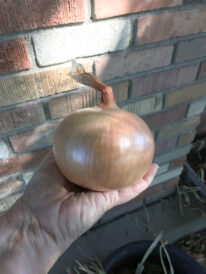
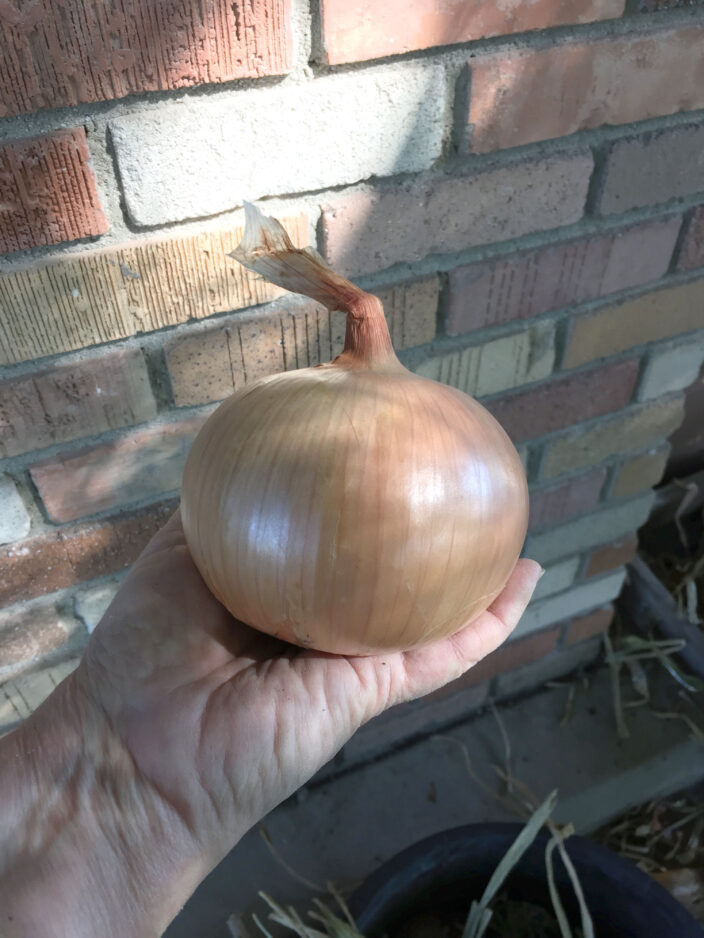
- When you’ve put time and care into growing big, beautiful onions, you don’t want your efforts to go to waste. Proper post-harvest care means you’ll be able to enjoy the “fruits” of your labors for several months. (Meredith Seaver, USU/Utah County Extension Service)
-
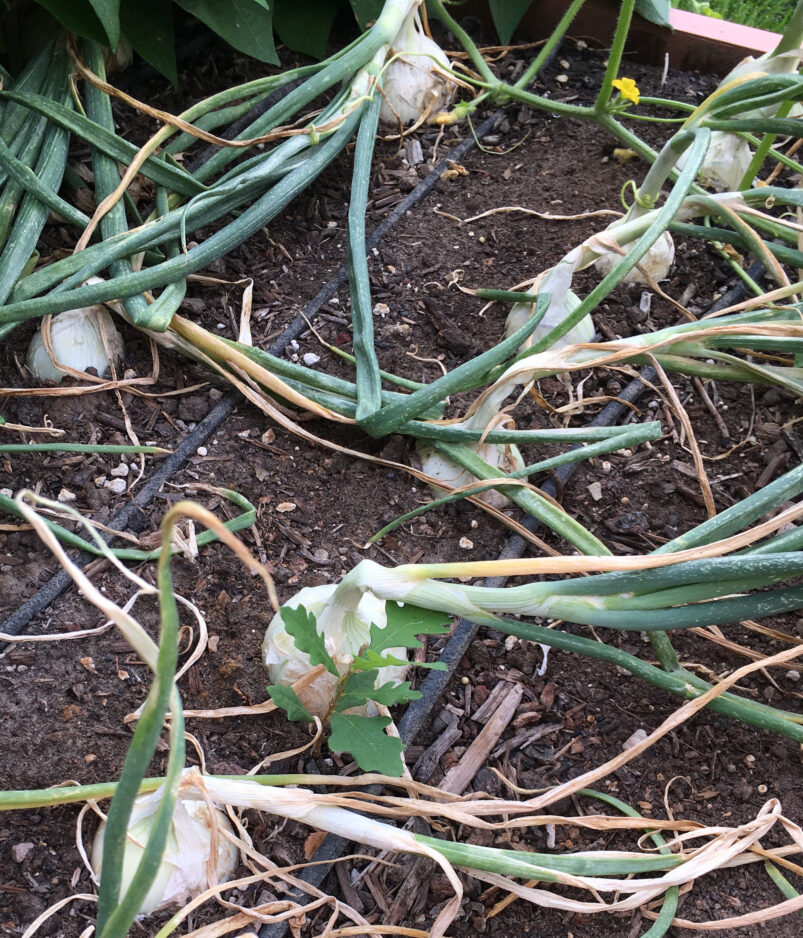
- There’s no need to be concerned about onion bulbs that are partially exposed above the soil line. This is normal for many varieties of onions. These onions are ready to lift and cure because more than 50% of the tops have tipped over. (Meredith Seaver, USU/Utah County Extension Service)
-
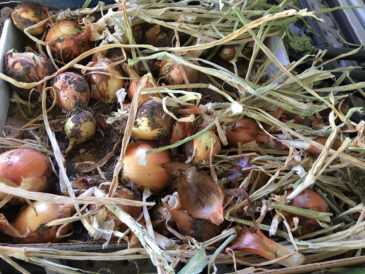
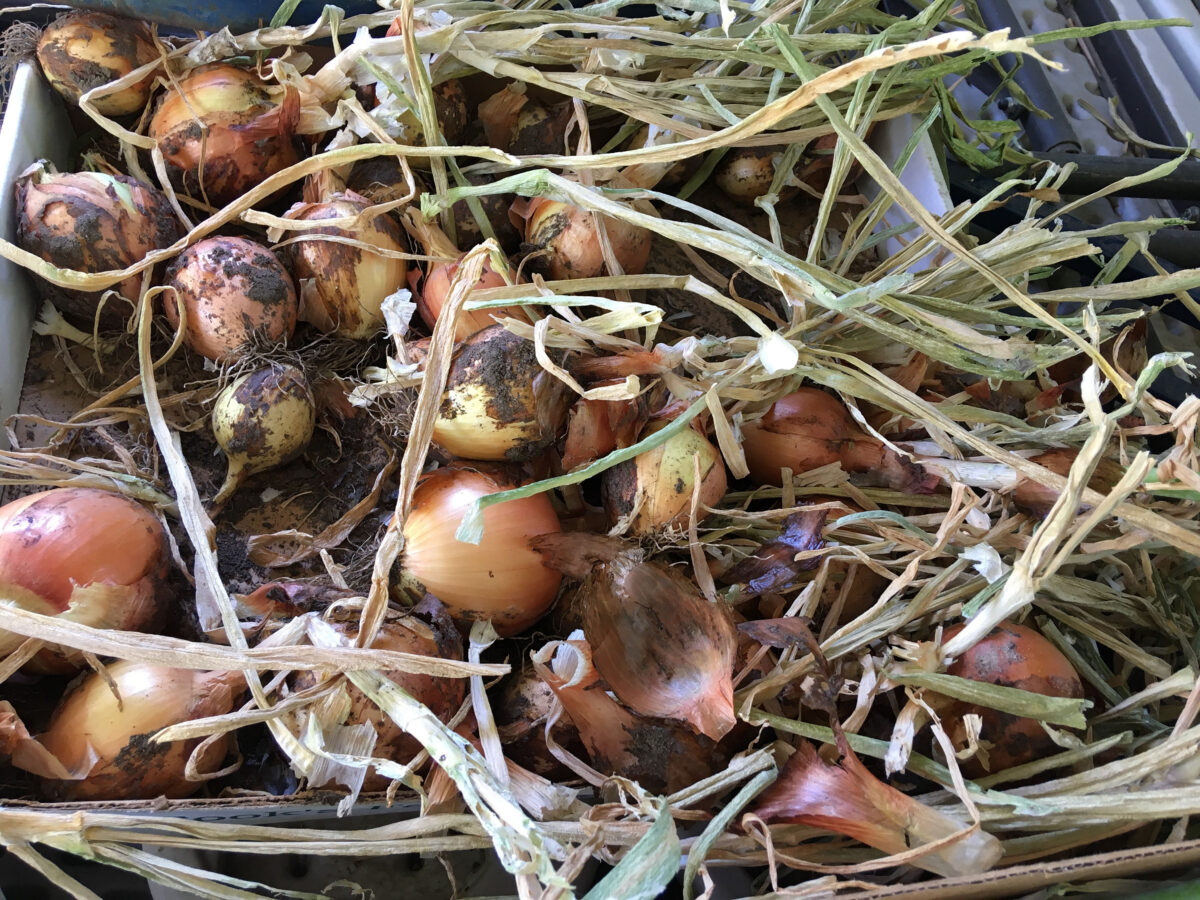
- Harvesting at the right time and curing onions properly are two keys to longer storage life for onions. The onions should cure in a well-ventilated place where they’re protected from rain and direct sun. Once the tops are completely dry, they can be trimmed off and the onions can be stored in a dry location with good air circulation. (Meredith Seaver, USU/Utah County Extension Service)
The top parts of all my onion bulbs are sticking up above the soil but the green tops haven’t tipped over yet. Is this normal? Did I plant them wrong? Will this ruin the onions? Is it too late to cover them with more soil or will that be bad for the onions?
This is one worry that you can cross off your list. It’s normal for the bulbs to show above the soil line as they enlarge, sometimes with even one-third of the bulb exposed. If you had planted your onions very deep trying to avoid this, you might have ended up with onions that were shaped more like beets — broader and flattened at the top and more narrow at the bottom.
It’s best if you don’t add more soil over the tops of the bulbs. They are just fine the way they are and adding more soil could introduce bacteria or fungi into the layers at the base of the green tops.
Since we’re talking about onions, here’s a little refresher on onion harvest questions we’ve already answered in previous years.
The recommended time for “lifting” onions from the soil to dry is when about 50 to 60% of the tops have fallen over. At that time, you have a couple of options. You can leave the entire plants on top of the soil in the garden while the tops dry out, but you must make sure lay them so that the leaves shade the bulbs to prevent sun scald that could damage the outer layer.
Your other option is to bring your onions into a shaded area with good air circulation to dry out and then cut the tops off after they’ve completely dried. Make sure the onions are protected from rain and sprinkler water.
Store your onions in a cool, dark, dry area with some air circulation for best quality and longest storage life once they’ve cured and you’ve trimmed off the dry tops.
How long can I leave my onions in the garden after the tops fall over? I’m going to be gone for a few weeks this summer, but my onions may not be ready to pull. I’m worried my onions will be ready before I get home. Is there anything I can do besides giving them a deep soak before I leave and hoping for the best?
It is OK to leave onions in the ground for a while (days, or even a few weeks) after the tops fall over IF you are no longer watering while you are gone. Onions are usually lifted when about 50 to 60% of the bulbs have their tops fall over. You say you think your onion tops may almost be falling over when you need to leave. Some onion varieties still have some weeks to go before harvest and still need regular watering, so don’t cut off the water if your onion tops are not tipping.
Just before you leave, check carefully for signs of readiness: necks narrowing, leaf tips starting to yellow or dry. If you think they’re going to start tipping, don’t water them while you’re gone. They’ll may be ready for lifting from the soil when you get home.
If you need to leave the onions in the ground longer after the tops are all dried out, the outermost layer of the bulbs will continue to naturally dry out, forming the papery layer you expect to see on a mature, cured onion.
One key factor to leaving the onion bulbs in the soil after the tops fall over is that you do not water them. If the outer bulb layers and leaves are dry, then water will activate the onion to re-grow (mostly roots but also leaves). You really want the bulb to stay dormant so you get onions that will store well and have the best quality. This is why you usually lift onions out of the soil once they’re ready — you reduce the chance of new root growth, plus the outer layer also dries down faster.