Garden Help Desk: Helping plants make the transition from outdoors to indoors
-
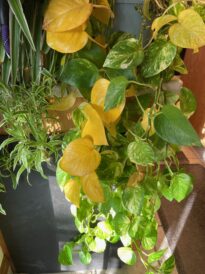
- All plants have high and low temperatures limits. Very tender indoor plants like this pothos can suffer chilling injury when temperatures drop below 50 degrees. Yellowing leaves and leaf drop are two signs of chilling injury.
-
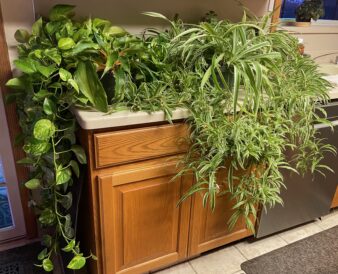
- Houseplants can be crowded together temporarily once they’re brought indoors, but to remain healthy they need good air circulation and adequate light, something they can’t get when crowded up against each other. Plants like these pothos and spider plants need to be trimmed so that they are easier to care for during their time indoors.
-
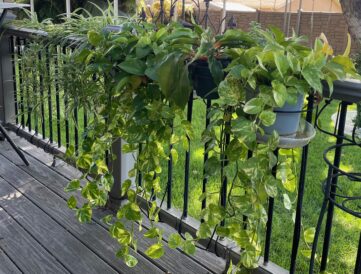
- When houseplants are kept in the right spot for the summer – shade for most of the day, consistent watering, out of the wind – they will thrive and return back indoors in good condition.
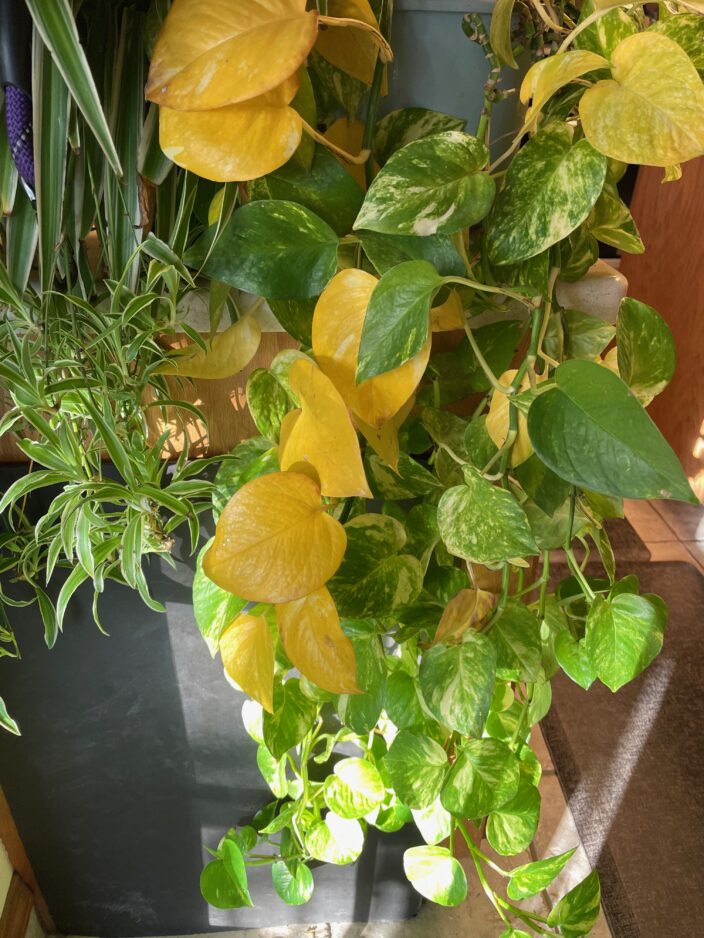
Photo by Meredith Seaver
All plants have high and low temperatures limits. Very tender indoor plants like this pothos can suffer chilling injury when temperatures drop below 50 degrees. Yellowing leaves and leaf drop are two signs of chilling injury.
If you’re like me, you treated some of your houseplants to a few summer months outdoors in a shady spot. Hopefully you’ve been keeping an eye on the weather forecast so you can move them back indoors before overnight temperatures drop too low.
The most tender indoor plants can be damaged by temperatures below 50 degrees, so for some indoor plants, the time to bring them in has already arrived, and for others that time will soon be here. Many plants can recover from cold injury if you’ll be patient and give them good care. Houseplants need special attention when we bring them back indoors. Here are some things to consider.
With the recent storm that moved through our area, our outside temperatures now, especially our overnight lows, were low enough to make the transition from outdoors to warm indoors stressful for tender plants. Moving them back into the house sooner rather than later will help.
Even though they are exposed to many pests while outdoors, there are many natural controls out in the landscape that help to manage the situation. The problems come when you’re ready to bring your plants back indoors. Pests can travel inside on your plants, but the beneficial insects and spiders found outdoors aren’t available in your house.
Many outdoor pests can be washed off your plants with a strong spray of water before you bring them in or in a sink or shower once they’re back in the house. You’ll also need to check your plants carefully for mites, aphids and other common pests. Look on the undersides of leaves and along stems. Pay special attention to leaf and flower buds and examine leaf axils (the places where leaves attach to stems). Any remaining pests that you find can often be controlled by applying insecticidal soap or horticultural oil or by wiping them off with alcohol wipes. Test any of these products first on just a small portion of your plant and wait a few days before treating the rest of the plant to make sure your particular houseplant can tolerate the treatment.
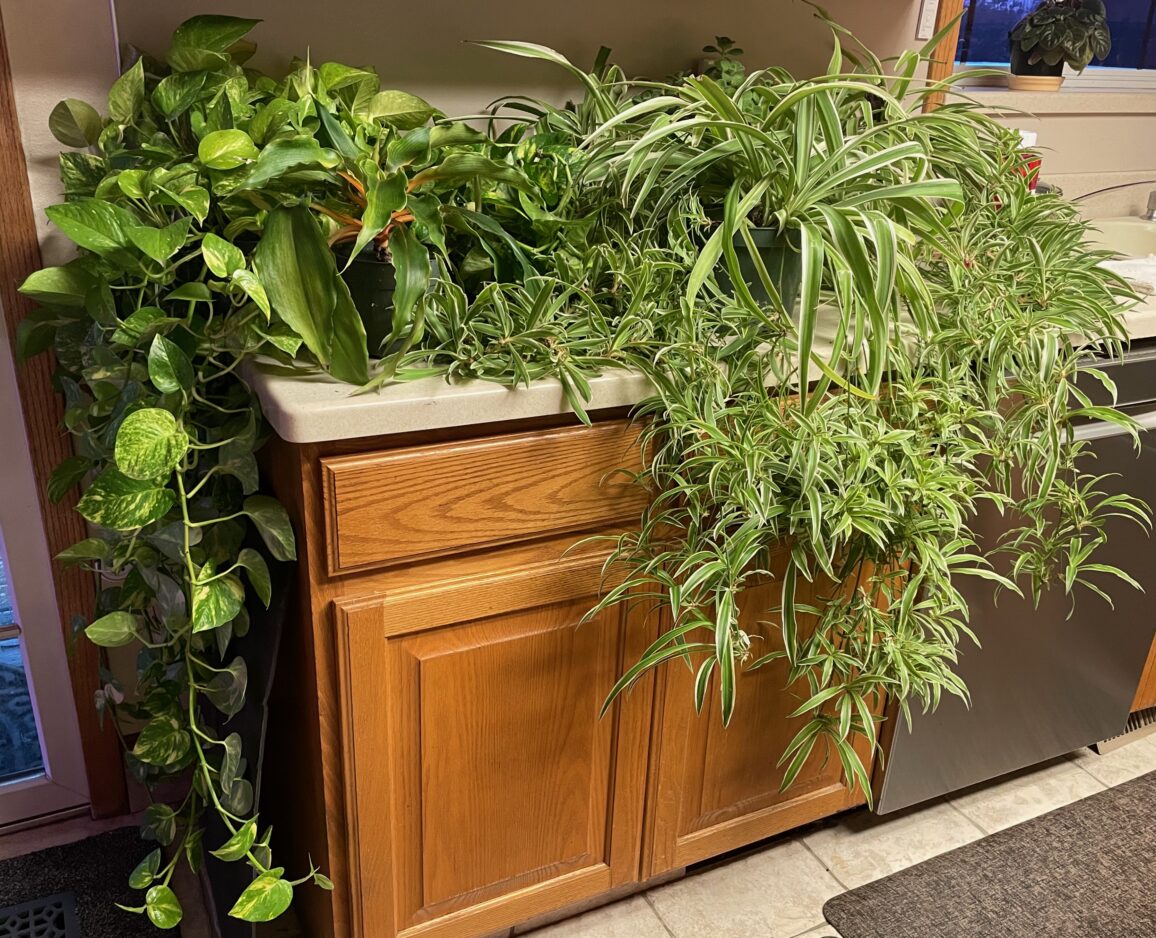
Photo by Meredith Seaver
Houseplants can be crowded together temporarily once they’re brought indoors, but to remain healthy they need good air circulation and adequate light, something they can’t get when crowded up against each other. Plants like these pothos and spider plants need to be trimmed so that they are easier to care for during their time indoors.
Another option is to use a systemic insecticide. It’s best applied a week or two before you bring your plants indoors but can still be helpful if used later. Systemic insecticides aren’t always effective for mites, but they give good control for aphids, scale and mealy bug.
The humidity in your house may be lower than your plants are accustomed to when you bring them indoors. Check soil moisture a little more frequently to make sure they’ve don’t get drought stressed while getting acclimated to being indoors, but don’t overwater either. Make sure you don’t place your plants near any heat vents, and avoid drafty locations like exterior doors and windows.
The light quality may also be different indoors. Learn what the best light level is for your plants and place them where the lighting is similar.
It won’t take long for your plants to adjust to being back indoors, but you’ll want to inspect them frequently for the first few weeks to make sure there aren’t any remaining pests that will cause problems.
Master Gardener course
The 2026 Master Gardener Course registration is now open!
Would you like to improve your gardening skills, learn more about how plants and soils work together or find better ways to manage pests in your landscape? If so, the Utah County Master Gardener Course is the place for you.
Classes will meet each Tuesday and Thursday beginning Jan. 19 and continuing through March 16, 2027, with an afternoon section from 1 to 3:30 p.m. and an evening section from 6 to 8:30 p.m. The same class content is covered in the afternoon and evening classes on the same day, so attend the session that best fits your schedule each day. Due to the relocation of the Orem USU Extension office, all 2027 classes will be taught virtually via Zoom.
Come learn and grow with us as you make new friends, learn lots of amazing things, gain new skills, appreciate your yard and garden from a new perspective, and get involved in cool gardening projects in the area!
Registration is open to anyone who would like to participate in the course. However, the purpose of the Master Gardener program is to develop trained volunteers who provide Utah communities with unbiased, research-based horticultural education and technical assistance in gardening and home horticulture. You’ll receive 17 class sessions of college-level lectures and hands-on training workshops taught by Utah State University Extension faculty and industry professionals.
In addition to the classwork, students who wish to become a Certified Master Gardener must provide a minimum of 40 hours of approved volunteer service back to their community. To register, click here.
Meredith Seaver is a USU Extension horticulture assistant.
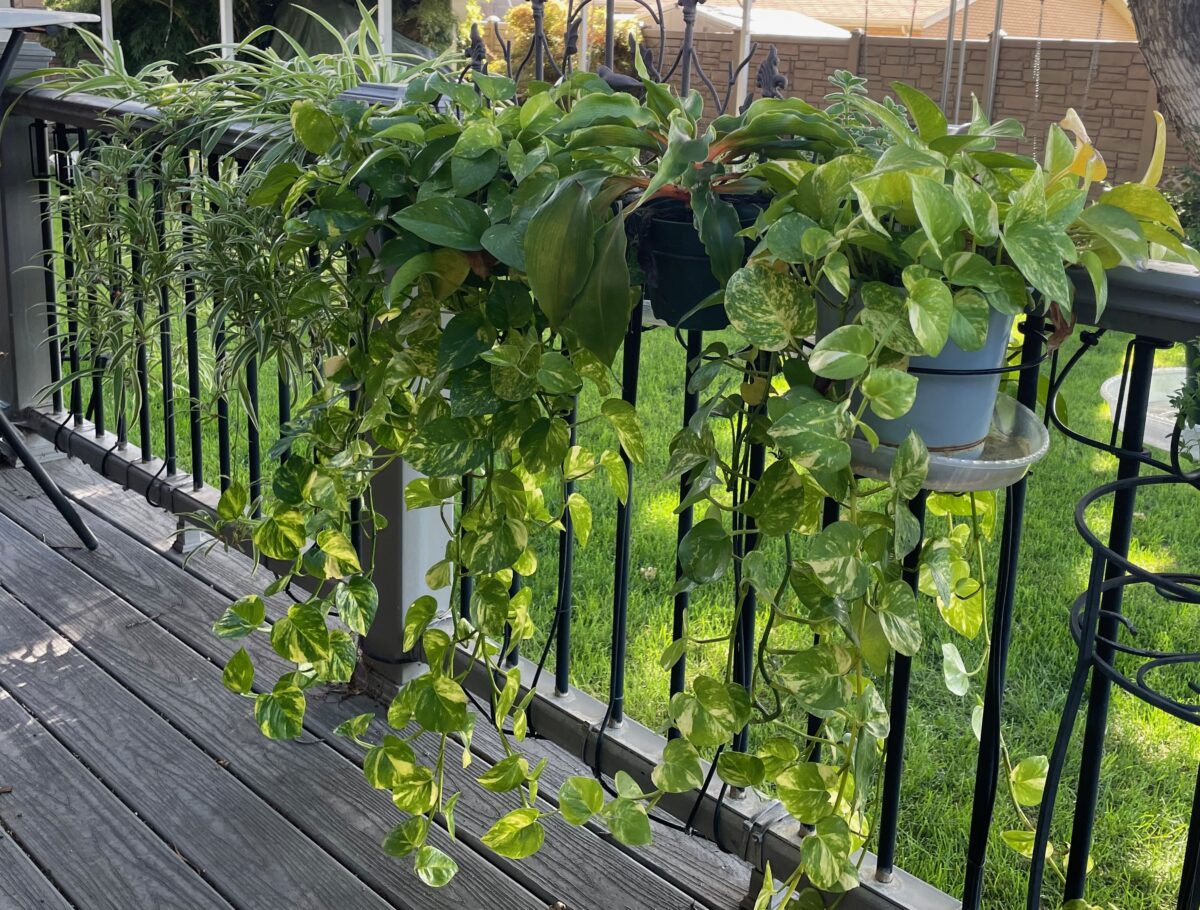
Photo by Meredith Seaver
When houseplants are kept in the right spot for the summer - shade for most of the day, consistent watering, out of the wind - they will thrive and return back indoors in good condition.