Garden Help Desk: There’s a type of serviceberry for everyone’s garden
-
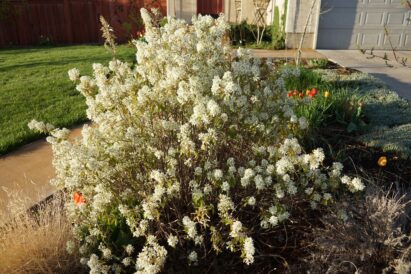
- Varieties of serviceberries come in a range of different sizes, making them a good fit for any home’s landscape.
-
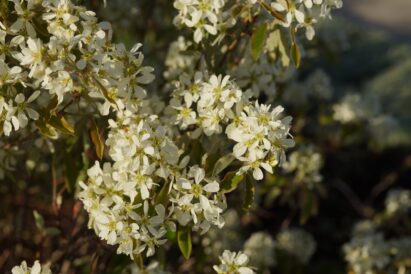
- Serviceberries are known for their nice fall color, but the attractive white blossoms provide early season nectar and pollen for bees and other pollinators.
-
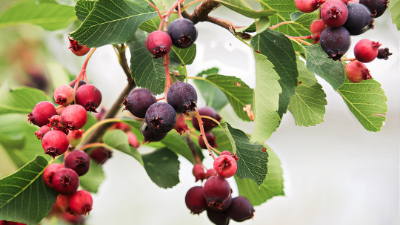
- Not all berries on the serviceberry plant will ripen at the same time. For peak flavor and sweetness, pick the berries when they are purple and fully colored.
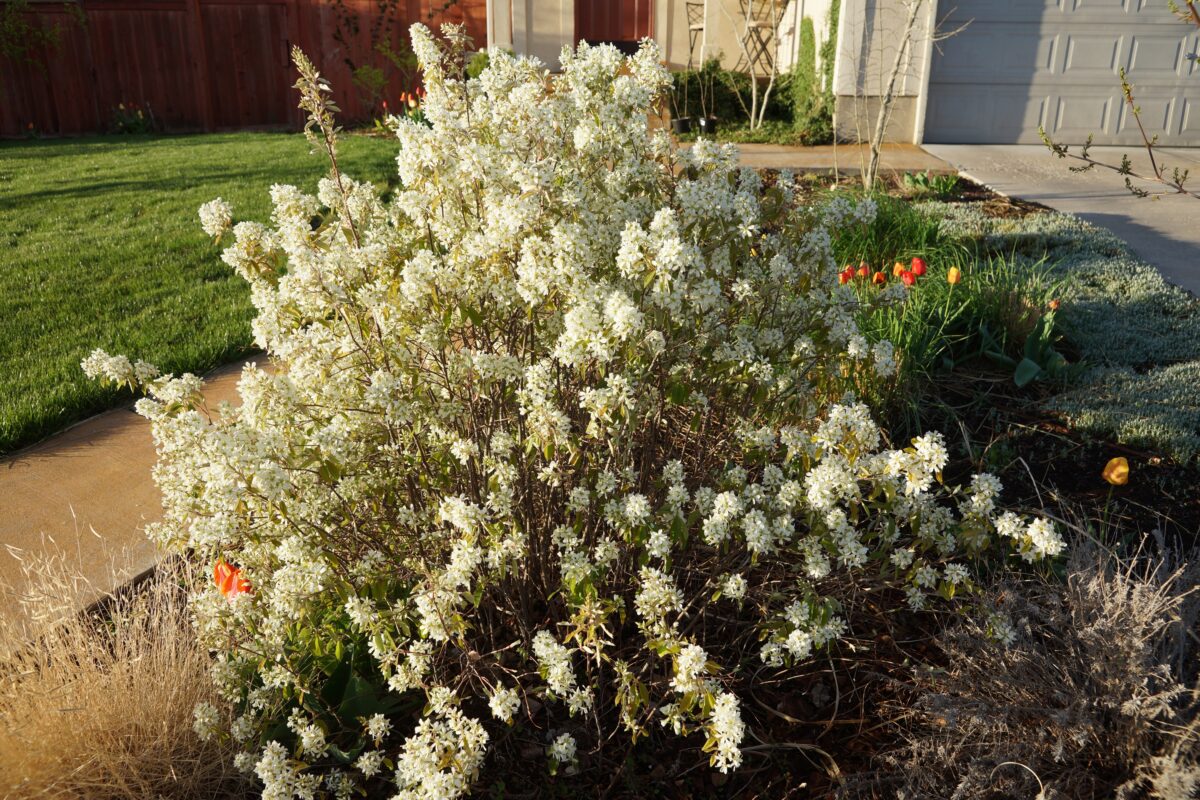
Photo by Michael Caron
Varieties of serviceberries come in a range of different sizes, making them a good fit for any home's landscape.
If ever someone were to ask me for a suggestion of what to plant in their yard in Utah (which they never do!), I would say, “serviceberry, or a juneberry, or a shadbush.” It might surprise them to know that these are all names for the same plant, which is also known as saskatoon, sarvis berry and shadblow. To be scientific, you might use the scientific name Amelanchier to cover all your bases. I like the name serviceberry.
There are a number of species within the serviceberry genus, which is a distant relative of roses. Some species are native to Utah, notably the Utah serviceberry (A. utahensis Koehne), and they are happy to grow here where there is good drainage, tolerating drought once established. A plant that wants to live can be a good enough reason to plant it, but consider some of these other reasons for planting a serviceberry.
You like blueberries
Blueberry plants do not want to live in hot, dry Utah. They also need highly acidic soil, which, even if you provide that to start, can be difficult to maintain over the lifetime of the blueberry bush.
Serviceberries, however, look and taste a lot like little blueberries; they’re very sweet, bright and purple. There are all kinds of ways to eat serviceberries, including pies, jams and even serviceberry ketchup, but I can’t speak to any of them because serviceberries tend to get eaten fresh in our home. Not many of them even make it out of the backyard and into the kitchen!
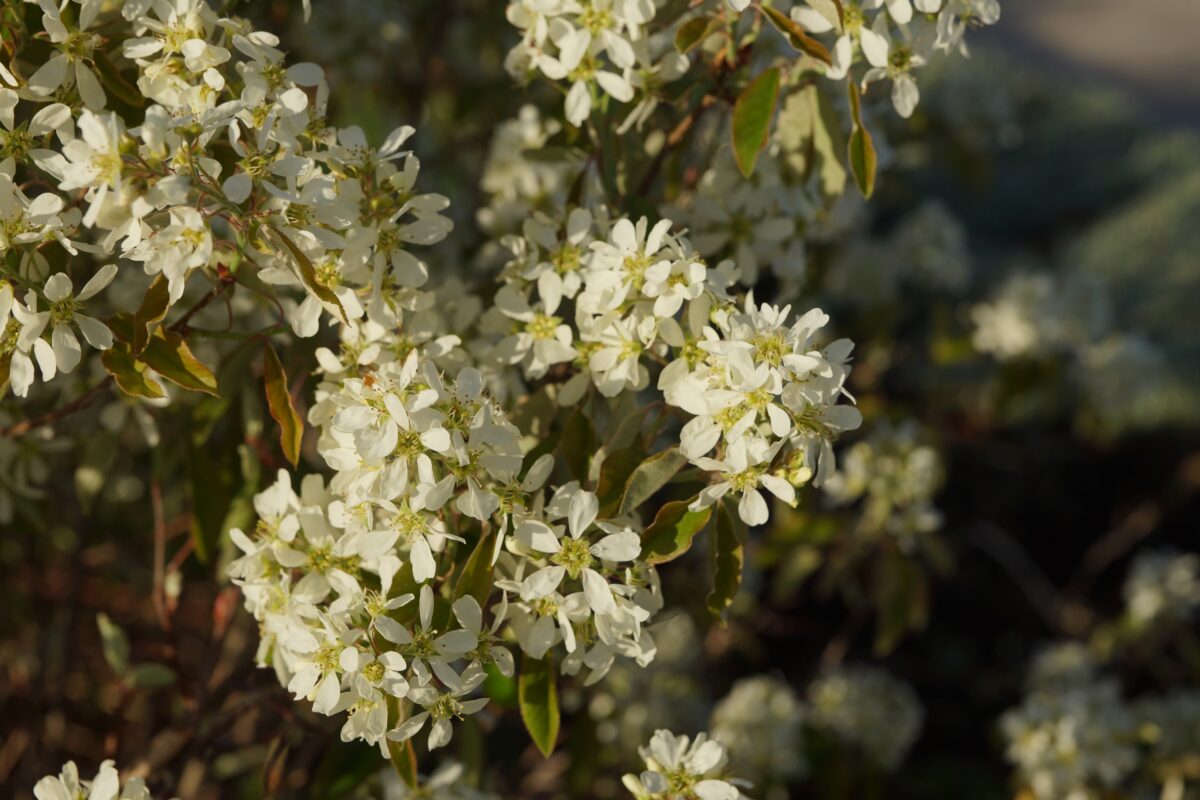
Photo by Michael Caron
Serviceberries are known for their nice fall color, but the attractive white blossoms provide early season nectar and pollen for bees and other pollinators.
You like birds in your yard
People like serviceberries, but so does local wildlife! Some growers complain that they can hardly get a berry harvested before the birds, chipmunks and other critters gobble them all up. For some gardeners, that’s an advantage — a living bird feeder! For others, netting and other deterrents can discourage the birds.
You like pretty white flowers
Springtime serviceberries sport clusters of delicate little white flowers that smell amazing. They look frothy and delicate in their spring flowering.
You would like a broad shrub. Or a single-trunk tree. Or a multi-stem tree.
Photo courtesy extension.usu.edu
Not all berries on the serviceberry plant will ripen at the same time. For peak flavor and sweetness, pick the berries when they are purple and fully colored.
Even though the serviceberry is a native plant, there are plenty of variations across North America to provide variety. Western serviceberry (A. alnifolia) is a shrub that forms thickets and sweet fruits — if you ever buy a serviceberry from a road stand, it’s probably the Western serviceberry. In the east, you’ll find A. canadensis, which becomes a tree up to 24 to 30 feet tall with a tangier fruit, and A. arborea, which is a little dry on the fruit but gets quite tall — up to 40 feet, while cases in the wild have been up to 60 feet tall!
In addition to the variety provided by Mother Nature, there are many manmade cultivars of serviceberry to highlight different properties of its strengths. Snowcloud is a small single-trunk tree that shines with spring blooms in tight places like parking strips, while Autumn Brilliance is a more rounded and potentially multi-stem tree with — as you might guess — brilliant autumn color.
Not wanting a lot of fruit mess? Rainbow Pillar trees are beautiful spring and fall and have a nice tight form, but only 10% of their flowers will set fruit. But wait — what if you can’t get enough berries for you and for your wildlife friends? Then the Regent serviceberry, with its low, shrub-sized growth and big, sweet berries in profusion is just the thing for you.
As you can tell, there’s a serviceberry for everyone, so give them a try!