Get Out There: 5 borderlines that feel like two trips in one
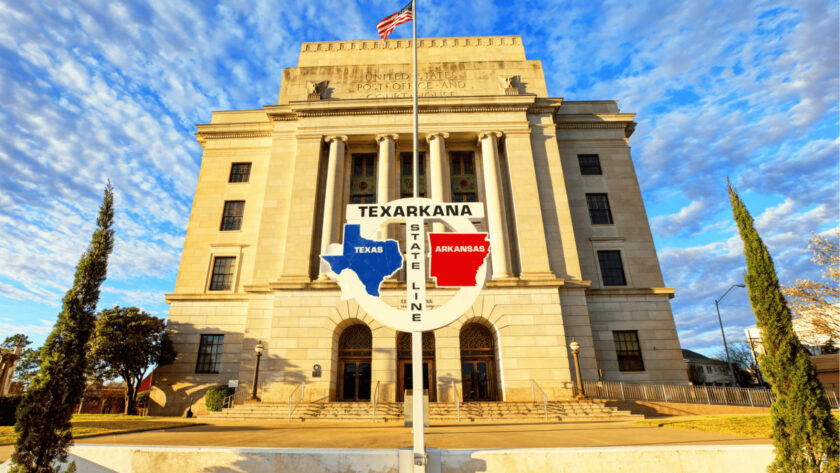
Courtesy iStock
Texarkana is a town on the border of Texas and Arkansas.Some of the world’s most fascinating places live in tension. Between languages. Between governments. Between religions, cuisines, ideologies, and identities. They are borderline towns living on the literal edge. Places where boundaries blur and travel doubles.
I’ve long believed the best trips don’t just transport you physically. They sharpen your awareness. Border cities do this better than almost anywhere else on Earth. They offer two cultures in one experience, often within walking distance of each other. Sometimes within a single block.
Better still, they make short trips feel massive. Cross one bridge, one checkpoint, or one city square, and suddenly the food changes, the language shifts, and the worldview flips. To that end, here are five of the world’s most compelling borderline destinations.
1. Iguazu
There are waterfalls, and then there’s Iguazu. Straddling Brazil and Argentina, Iguazu Falls feels less like a natural attraction and more like a continental event. On the Brazilian side, you get the cinematic panorama–the wide-angle spectacle that reveals the scale of the falls in all their thunderous glory. Cross into Argentina, and suddenly the experience gets up close and personal.
Two countries. Two perspectives. One world wonder. As the saying goes, “Argentina has the falls, Brazil has the views.” That’s what makes this destination unforgettable. You’re not simply sightseeing. You’re comparing national personalities. Few places allow you to witness the same natural masterpiece through two different cultures in a single day.
2. Jerusalem
No city on Earth carries more historical, spiritual, and political gravity per square mile than Jerusalem. And that’s precisely why it leaves such a lasting impression. Within the Old City alone, Jewish, Muslim, Christian, and Armenian quarters coexist in a maze of ancient stone alleys. Church bells compete with Islamic calls to prayer. Sacred sites revered for thousands of years stand within walking distance of heavily contested borders.
Then there’s the nearby West Bank, where the atmosphere changes again. The architecture, street art, checkpoints, and conversations all reveal another side of the region’s deeply layered identity. Travel here isn’t always comfortable–and that’s partly the point. Because Jerusalem doesn’t just teach ancient history. It bathes you in it.
3. Strasbourg
France and Germany have spent centuries fighting over the Alsace region. Today, they mostly share it beautifully. Nowhere captures that cultural fusion better than Strasbourg, a city that somehow feels distinctly French and unmistakably German at the same time. Half-timbered houses line canals beside elegant French plazas. Menus bounce between foie gras and sausages. Even the language carries echoes of both sides of the Rhine.
You can feel Europe’s complicated past here, but also its modern ambitions. Gothic cathedrals towering over storybook neighborhoods. All of it is beautifully blended and wildly charming.
4. Texarkana
America has its own fascinating border culture too. Texarkana–split between Texas and Arkansas–is delightfully weird in the most American way possible. State lines literally run through downtown. Stand in front of the federal courthouse and you can place one foot in Texas and the other in Arkansas for the obligatory tourist photo.
But the appeal goes beyond novelty. Spend enough time here and you notice subtle contrasts in laws, taxes, accents, and identity. Residents casually navigate two state systems as part of everyday life. Festivals, businesses, and neighborhoods overlap into a shared culture that feels both unified and divided. It’s a micro-border experience without passports or checkpoints, proving you don’t need international boundaries to create fascinating edges.
5. Gorizia
On paper, Gorizia, Italy and Nova Gorica, Slovenia are separate cities. In reality, they function almost as one. That’s what makes them so intriguing. For decades, this border represented a hard divide between Western Europe and communist Yugoslavia. Today, thanks to the Schengen Zone, you can casually walk back and forth across what was once a tense Cold War frontier. And the contrasts remain wonderfully visible.
Italian cafés spill into elegant piazzas on one side. Slovenian modernism and Balkan influences emerge on the other. Unlike Europe’s more famous border cities, this one still feels undiscovered. Which means you experience the cultural blending and colliding worlds without the crowds or inflated prices.
Blake Snow contributes to fancy publications and Fortune 500 companies as a bodacious writer-for-hire and seasoned travel journalist to all seven continents. He lives in Provo, Utah with his wife, five children, and one ferocious chihuahua.