Protect the water: Everyone needs to work together to stop invasive species spread in Utah
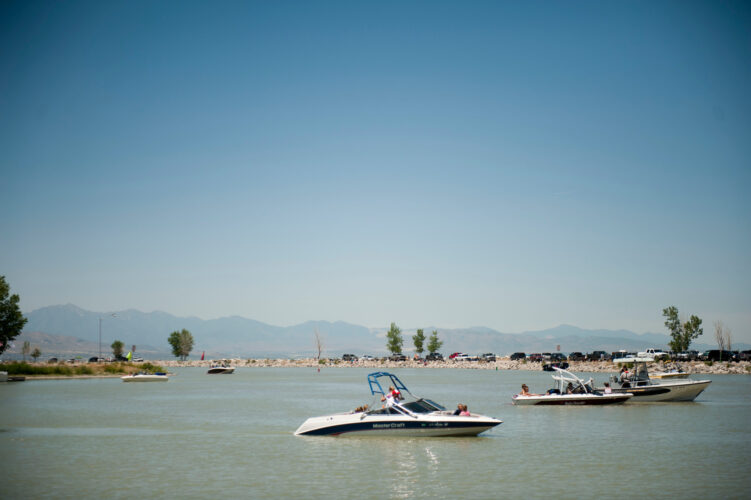
GRANT HINDSLEY, Daily Herald
Boats motor in the harbor during the Utah Lake Festival held at Utah Lake State Park on June 7.
This is the first of a two-part series on boating and aquatic recreation in Utah. This article focuses on the challenges of preventing the spread of invasive species, while the second (scheduled for May 30) will focus on safety on the water.
As temperatures rise and spring turns to summer, it’s natural to start thinking about getting out on some of Utah’s many beautiful lakes, rivers and reservoirs.
But the opportunity to enjoy such recreation comes with some important responsibilities, particularly when facing the challenges of protecting the waters.
Bruce Johnson, the aquatic invasive species operations lieutenant for the Utah Department of Natural Resources Law Enforcement, understands just how real the risks are when it comes to trying to stop invasive species from taking over.
“We’ve got mussels in our surrounding states,” Johnson said. “We’ve got zebra mussels in Colorado, quagga mussels in Arizona, Nevada and California, and then the recent development up on the Snake River in Idaho.”
Many boaters take their craft to other states, while Johnson also pointed out that Utah hosts a number of popular fishing tournaments that draw fisherman from other places as well.
All of that movement, though, increases the risk that invasive species will spread into more and more places in the state.
But Johnson and other officials are going to do everything they can to prevent that from happening.
That’s why the state has rigorous regulations and mandatory education in place so everyone can work together to protect the future of water recreation in Utah.
“Education continues to be one of the most important tools in preventing the spread of aquatic invasive species,” said Lynne O’Hearn, BoatUS Foundation program manager. “A lot of people may not realize how easily invasive species can move from one waterway to another, so simple habits like cleaning, draining, and drying boats and equipment really matter. Helping boaters understand those steps is an important part of protecting Utah’s lakes and waterways for the long term.”
Johnson explained that he sees a lot of the boating population participating in the education programs and that it is making a big difference.
“We see boaters showing up prepared like we hope they would be,” Johnson said. “They have the drain plugs pulled and the boats and trailers cleaned off. They are ready for the inspections as they get to the inspection stations. The education has been a big part of our success and the lack of advancement of mussels in the state of Utah in the last 13 years.”
The dry winter and construction mean that boaters in certain locations need to be ready for some different requirements.
“There are certainly lower water levels and that will reduce access points for watercraft,” Johnson said. “It allows us to pool our resources and our educational opportunities for the boating public and that that helps us potentially reduce that infestation potential for voters who aren’t paying attention, who disregard those rules. We trying to accommodate as much as we can to have even more impact on stopping that threat.”
While recreational boats are larger and have more surface area, Johnson said that other personal watercraft also can transport invasive species. Many people, however, don’t take the risks as seriously for kayaks, canoes, paddleboards and other smaller craft.
“They are still a threat,” Johnson said. “They’re obviously less of a threat because they don’t have bows, tanks, bilge pumps and ways to contain as much water. I’ve contacted kayakers at inspection stations who have said, ‘Oh, they’re fine. They don’t need to do this,’ but yet I end up dumping a gallon of water out of their kayak upon an inspection. It’s unfortunate that there’s still some misunderstanding of what their role is and their importance to those water bodies. If you’re going to paddle at different lakes, which we want the public to do. We want you to experience everything that Utah has to offer but that does come with some responsibility.”
He advises everyone to be prepared and be patient with the process.
“That way we can expedite you through that process far better and make your trip that much more enjoyable,” Johnson said. “We want them to be happy and satisfied and having a good time, and yet still keeping everything safe.”
Inspectors and other officials can’t be everywhere, so it is on everyone to do their part. Johnson said the key is to pay attention to the basics.
“It is very important for everybody to remember to please clean, drain and dry,” Johnson said. “Make sure you’re doing the simple things that are the most effective and preventative measure to stop the spread of invasive species.”