ATV Adventures: Negotiating the Piute Pass Trail in red rock country in a UTV
-
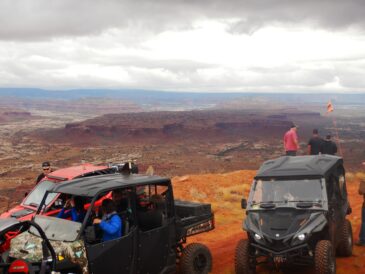
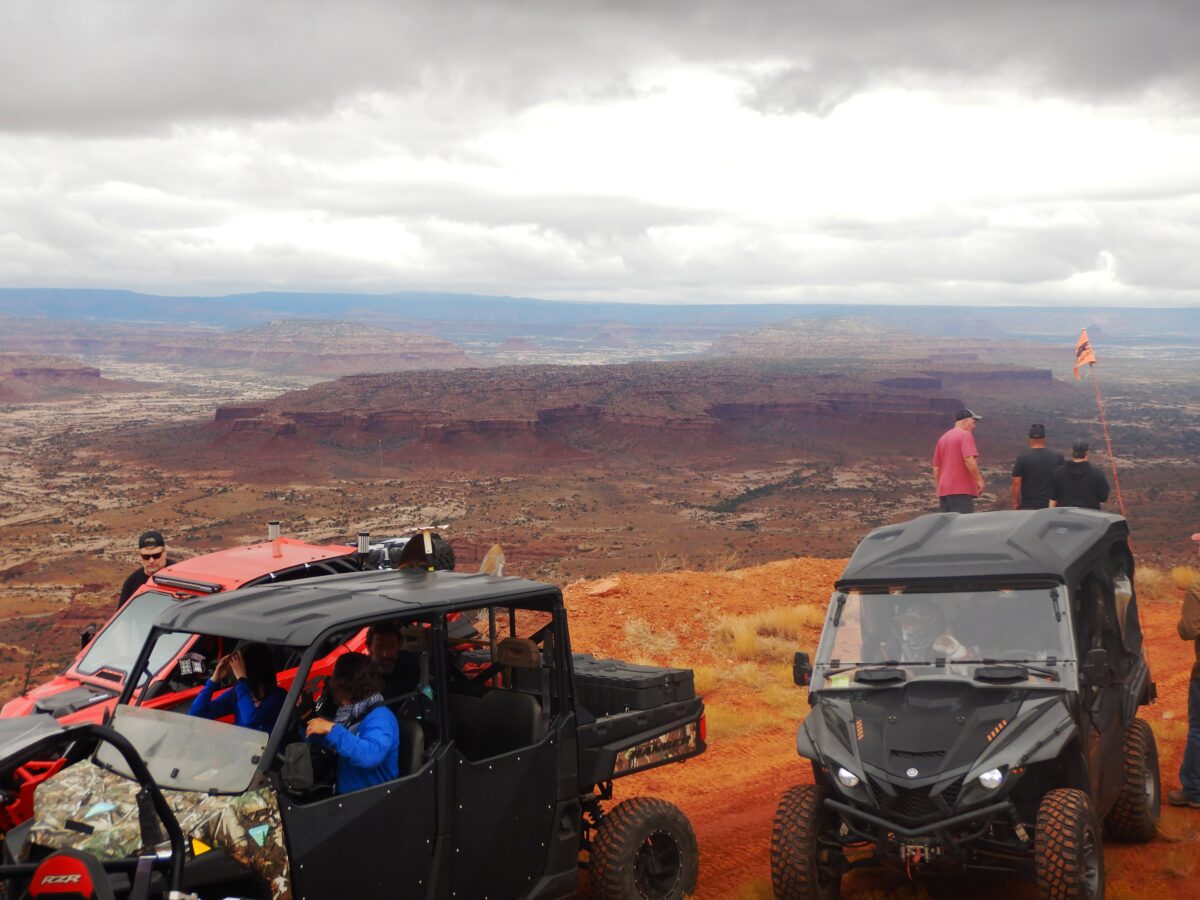
- A view from the top of the pass.
-
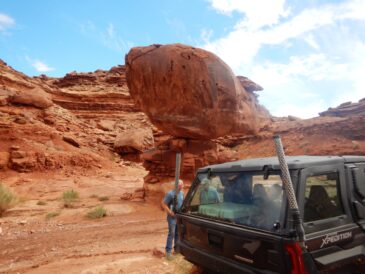
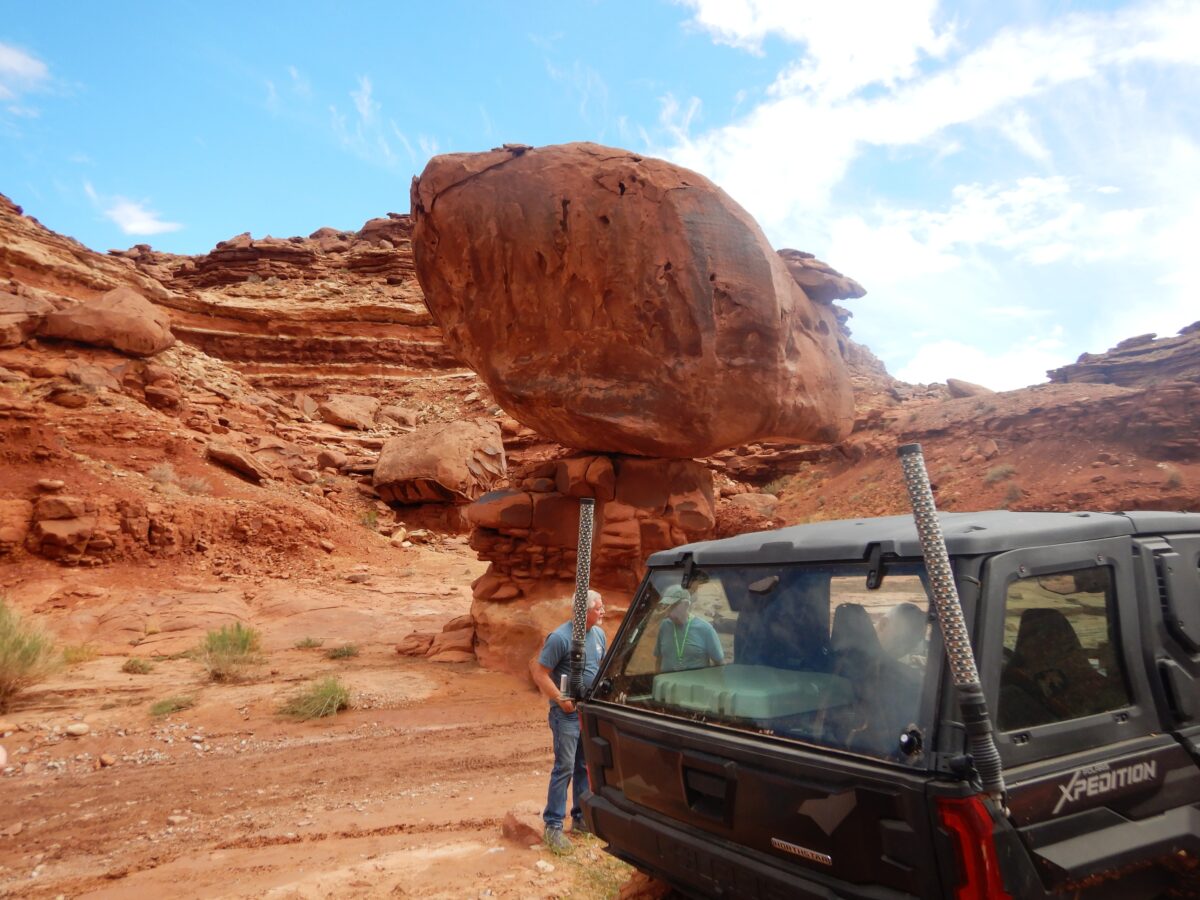
- The balanced rock where we stopped for lunch on the Piute Pass Trail.
-
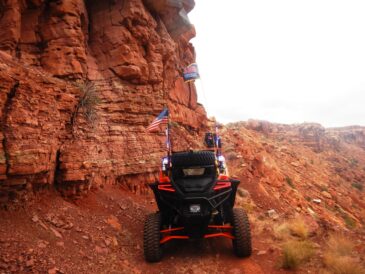
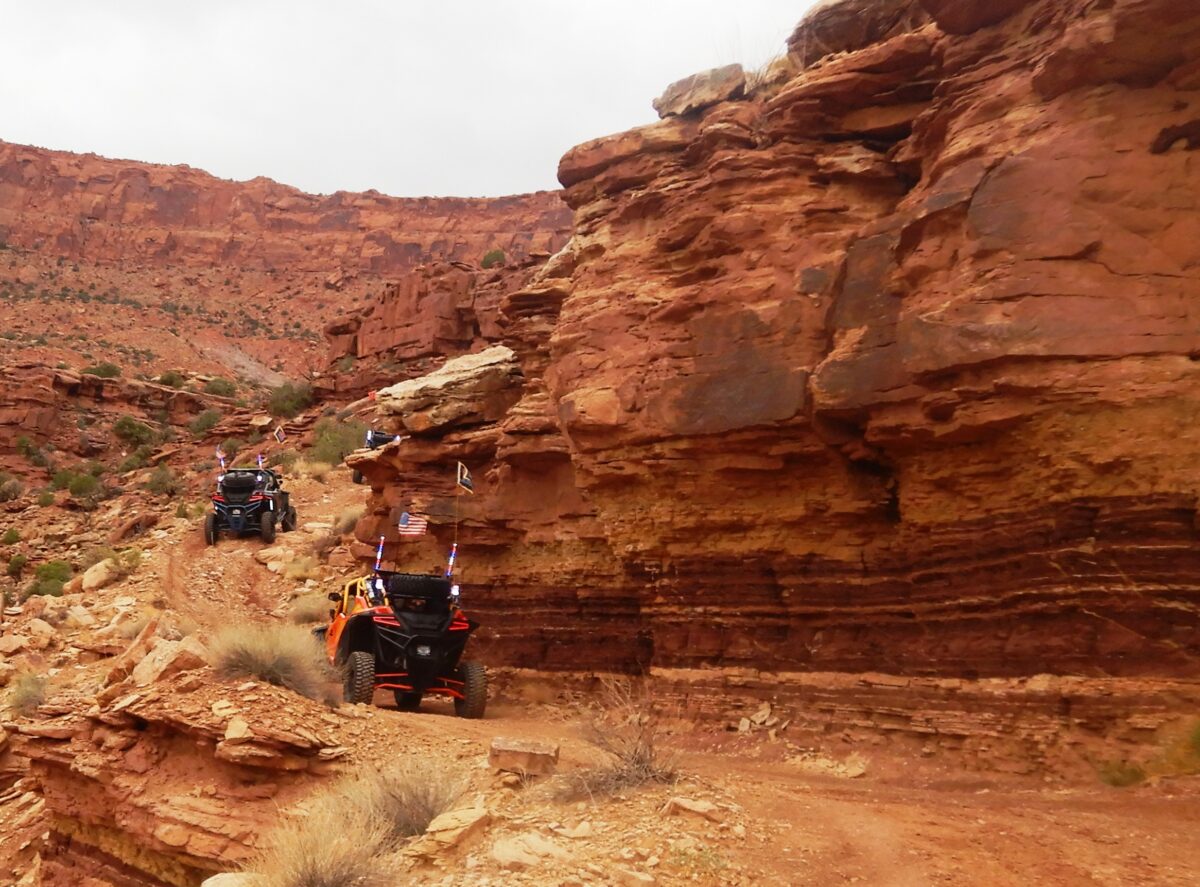
- Negotiating the narrow dugway on the final climb to Piute Pass.
-
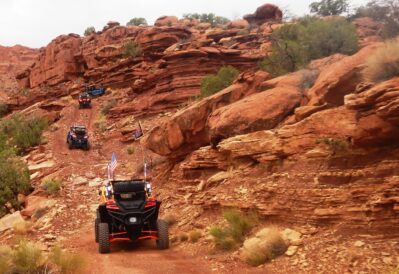
- Waiting in line to make the sharp turn onto the dugway to Piute Pass.
-
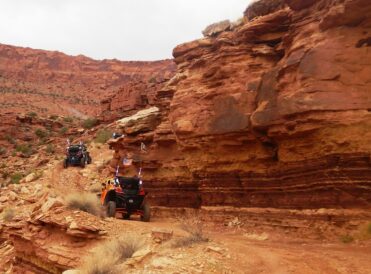
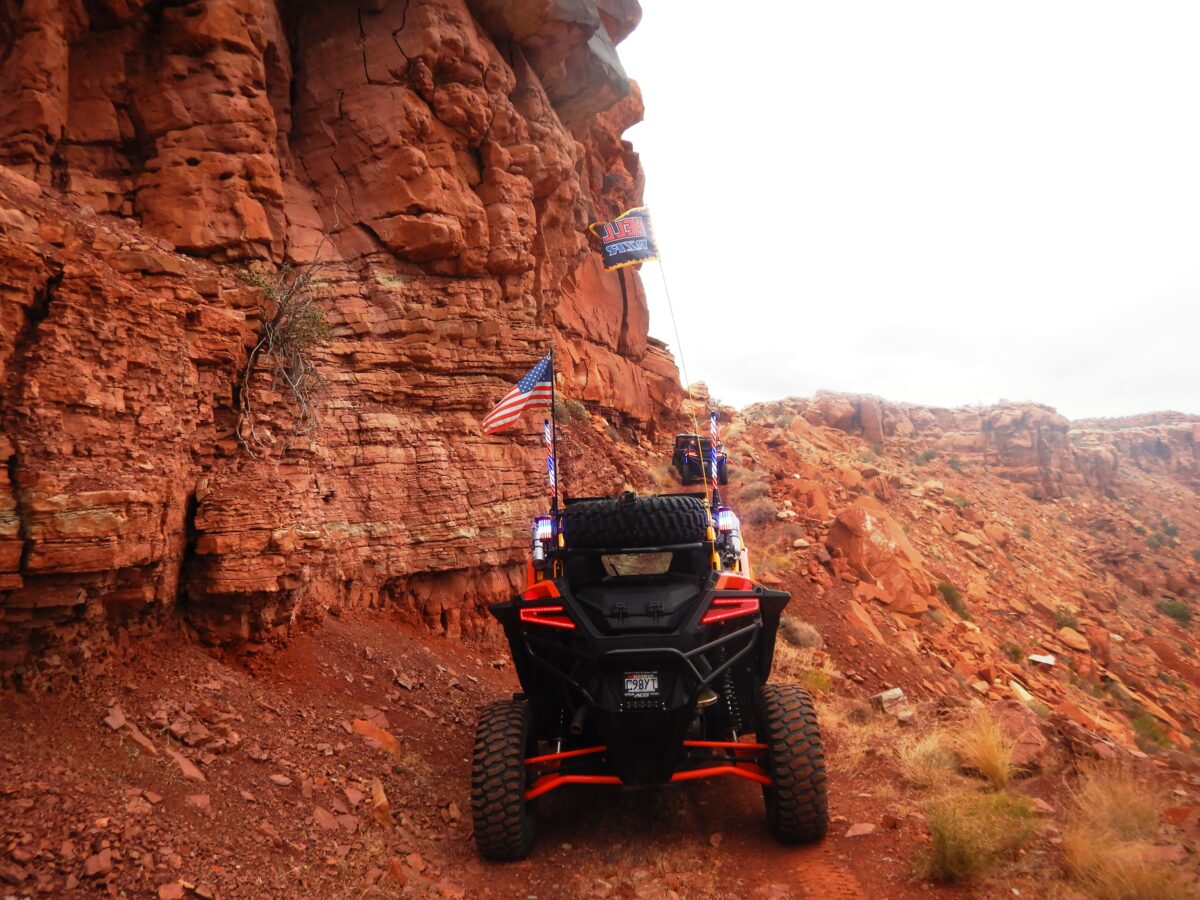
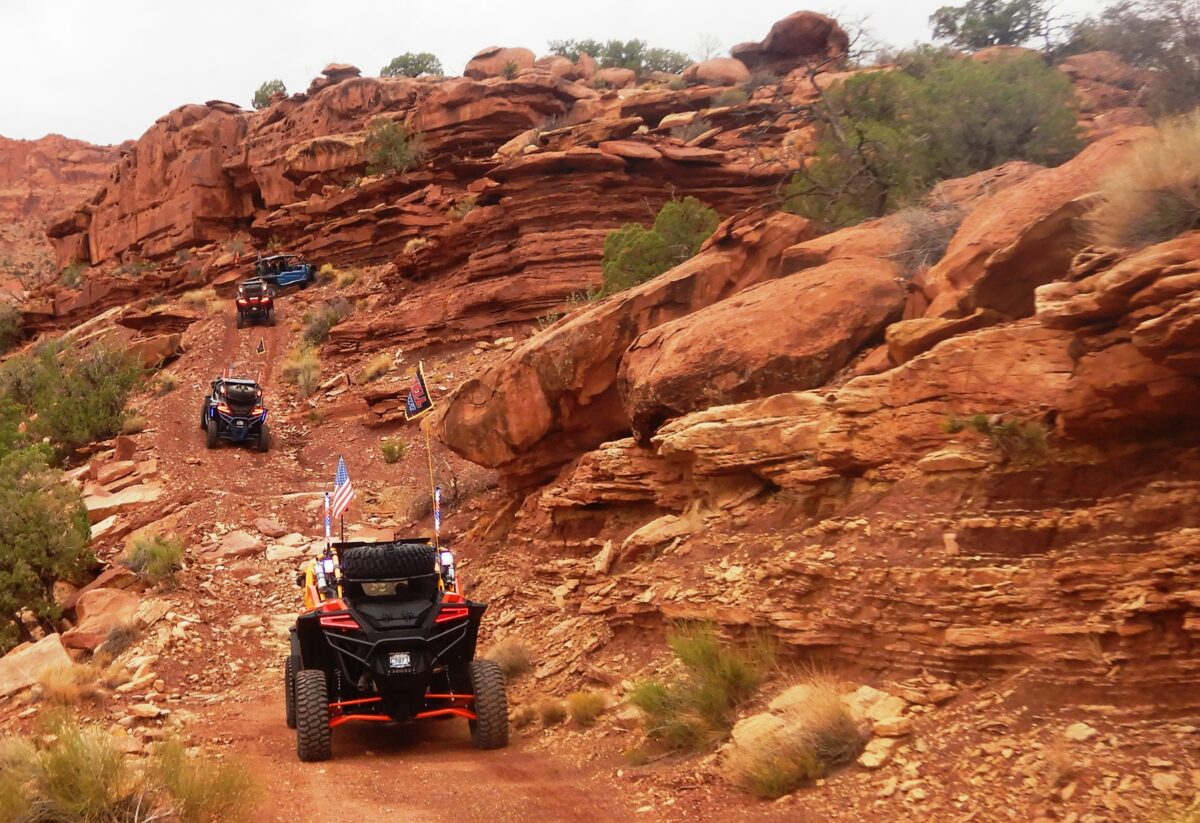
- Working our way through the red rocks to Piute Pass at the San Juan Safari.
The difference between guiding a ride and following a guide is that the one following has no idea what he is getting himself into. That was the case at the morning briefing held in Blanding, Utah, for the Piute Pass Trail on the 2026 San Juan Safari. I am careful not to choose jamboree rides that include “body damage likely” in the ride description, but I overheard someone say, “and then we go straight up the canyon wall.” Now my antenna was up.
We left Blanding on Highway 191 heading south. We turned west on Highway 95 – the trailhead was about 69 miles away near Hite Marina at Lake Powell. We turned right and unloaded in Gravel Canyon.
As we started our ride, we crossed the road and immediately plunged into a maze of red rock canyons. As we wound our way around the boulders, I tried to stay on the trail while taking in this unique and wonderful landscape.
We had only climbed a few hundred feet when we came to a steep climb to Piute Pass. The trail made a sharp right turn onto a narrow dugway that continued climbing. Waiting my turn, I watched the long wheel-based RZRs and Can-Ams make precarious three-point turns because the change in direction was so sharp and there was little room between the cliff and the canyon to negotiate. I didn’t have that worry with my two-seat Polaris Expedition.
We climbed the narrow dugway and stopped for a break at Piute Pass. I was glad we didn’t meet any oncoming traffic in that section. It is definitely a one-way track and steep. Meeting oncoming traffic would have been a big problem.
At the pass, I had a chance to look down at the ground we had just covered. We were only 1,100 feet above the place we had unloaded, but the last 500 feet was steep and boulder-strewn. As I scanned the valley, I felt grateful that I didn’t live in pioneer days. The ground looked impossible to negotiate in a horse-drawn wagon.
While stopped in this pass, I learned about the Battle of Piute Pass, which happened on July 15, 1884. Native Utes and Paiutes frequently resisted the encroachment of white settlers and large cattle operations. A renegade band of Indians led by Mancos Jim raided the round-up grounds in Verdure, Utah, and took about 150 horses.
A posse of local cattlemen and soldiers from the Sixth Cavalry (F-Troop) from Fort Lewis, Colorado, totaling 131, pursued the band across rugged, unfamiliar terrain. Mancos Jim’s party consisted of an entire migratory community of about 100 people, including women and children with belongings, herding their goats and horses.
After eluding their pursuers for 75 miles, Mancos Jim came to the base of Piute Pass. After scrambling to the top of the pass with their children and all their animals, they made a stand. With the rugged terrain and their high position, they had the advantage over their pursuers.
Exhausted from the grueling, fast-paced chase in the intense July heat, and without adequate food or water, the posse was lured up the steep pass. As Cavalry scout Joseph S. Wormington and cowboy James Higgins rode up to scout the mesa, the Utes opened fire and mortally wounded both men. The remaining posse utterly panicked at the sudden volley, broke ranks, and fled back down the hill to seek cover in a nearby grove of juniper trees, leaving the bodies of the two fallen men behind. It was two years later that prospectors found and buried what remained of the bodies of the fallen scouts. Standing at the pass, from the view Manco Jim would have had, I could picture the whole scene.
We continued our ride through and around the red rocks, enjoying every minute. We stopped to examine a guzzler we found on the trail. I have written about guzzlers I have found on the Grassy Mountain Trails. They consist of a large sheet of corrugated metal that collects water and distributes it to wild animals. It would be fun to set up a trail cam to see what animals came to drink.
We stopped for lunch under a balanced rock in Blue Canyon before heading back to the trucks. Our adventure was only 30 miles long, but it was an amazing 30 miles.
When you go, take plenty of water, keep the rubber side down, and see if you can see what Manco Jim saw from Piute Pass.
Lynn R. Blamires can be reached at quadmanone@gmail.com.