Local Toastmaster practice communication, leadership skills
Barbara Christiansen
They came. They saw. They conquered their fear of public speaking — almost.
They are the Olympic Orators, the American Fork division of Toastmasters, International.
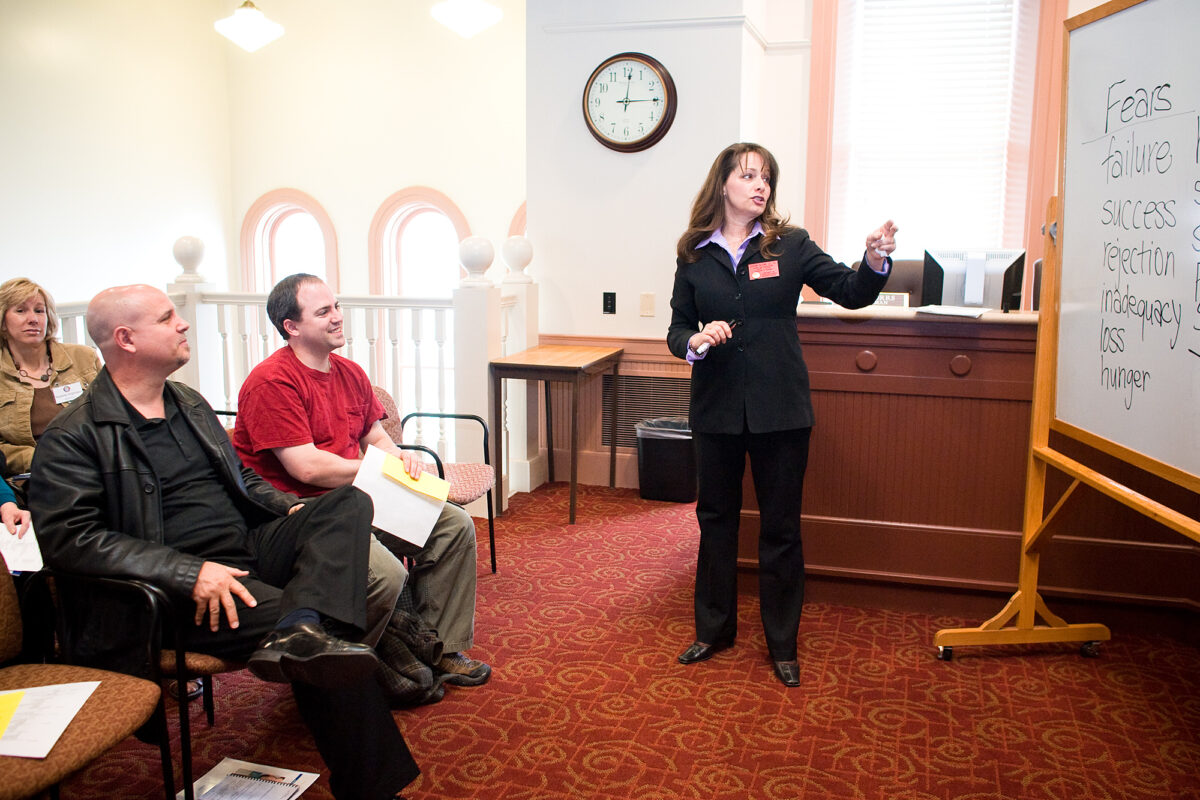
Each week they come to American Fork City Hall to learn about communication skills and put into practice what they have learned. They rotate positions each Tuesday and some give speeches; some evaluate the speeches, while some serve as grammarians, timers, vote counters or in similar positions.
And one has the title of “Ah Master.” That person counts the number of times a speaker says “ah” or “um,” or does a “double clutch,” which is when the speaker repeats a word before moving onto the next portion of the sentence.
Despite facing critiques and learning of possible grammar concerns, even facing the “Ah Master,” the members do a lot of applauding. They applaud each other as they perform their various tasks and move the hour-long meeting into its stages. They applaud each speaker and each evaluator.
The 25 to 30 members of the local club also applaud the system, which helps them conquer, or at least face, their fears of speaking in front of a group. Seasoned members admitted they still get nervous, but say it helps them perform better.
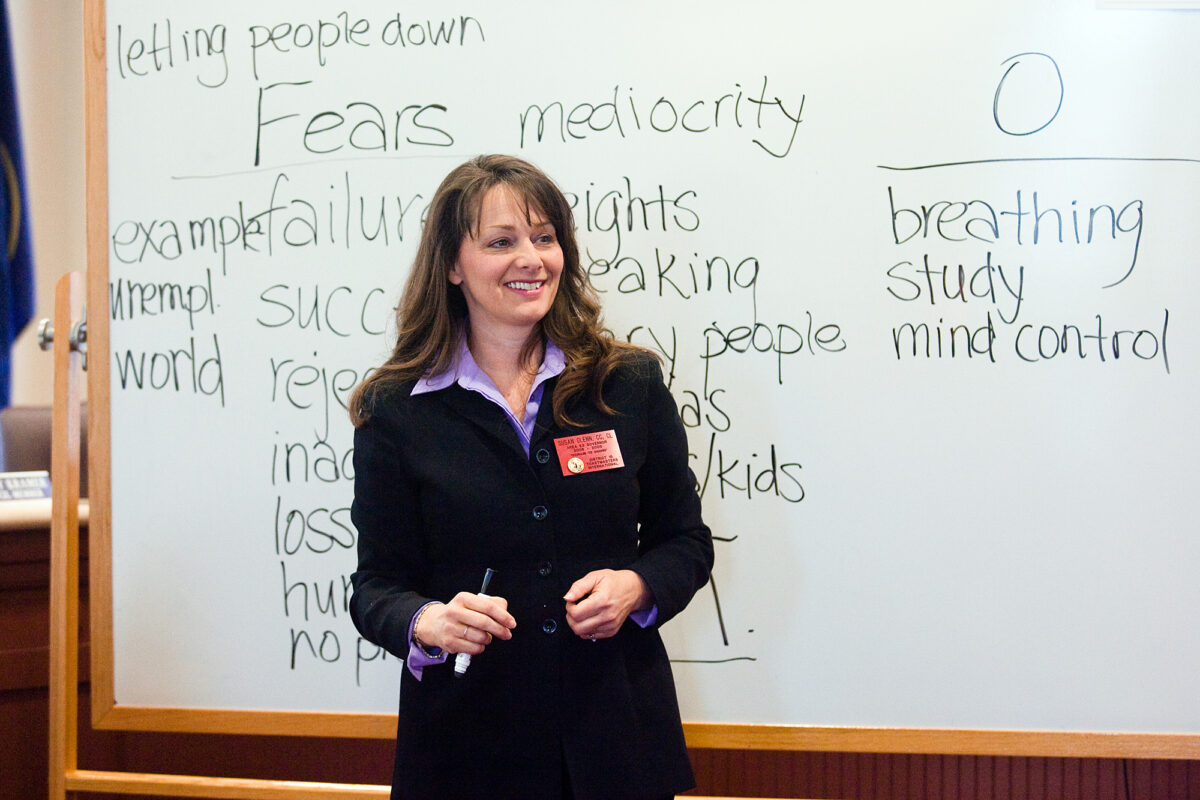
“When I first joined Toastmasters and had to give an icebreaker [first speech], I was mortified,” said Susan Glenn. “We never really get rid of these things. We just push through them.”
Facing the initial fears and meeting them in a positive atmosphere on a repeated basis helps overcome them, Glenn said. Group members shared other ways they learned to better control of fears — praying, studying and deep breathing. The members get to use all those approaches as they present both prepared and impromptu speeches.
Those impromptu addresses are called “table topics.” One club member selects an idea, gives an introduction about it, then calls on other members to give one- to two-minute talks on the topic.
“You learn to be fast when you get the opportunity to speak off the cuff,” said Neil Oscarson.
At one recent meeting, Oscarson asked two members to talk about coping skills they use when they are dealing with stress or frustration.
Raylene Jorgenson quickly quipped that chocolate was a big help. Mike Kirsch said playing racquetball brought about a natural high, which helped him overcome stress.
After speeches and table topics, each one was evaluated by a member assigned to assess the points of the talks. It could sound daunting, but each was brief and focused mainly on positive aspects.
One member presents the “word of the day,” and others try to find ways to use that word in their assignments. They say it helps them learn better ways to express themselves.
“We tend to use the same words over and over,” said GayeLynne Richards. “It’s nice to have a variety of words to use. For example, we recently used the word ‘concur.’ It’s basically the same as ‘agree,’ but it’s nice to be able to build our vocabulary and incorporate different words into everyday life.”
When members join, they get two initial manuals — one for communications skills, the other for leadership. They practice one or two of the skills at a time, and gradually work up to others. The club’s goal is to have members finish the first 10 communications goals in their first year.
Tingey said the process works well in helping the members.
“You focus on different areas of improvement,” she said. “You take teeny bites of development and gradually add to your basket of skills.”
The first 10 items include an ice breaker, in which new members tell about themselves. They move onto organization of a speech, getting to the point, how to say it, body language, vocal variety, researching a topic, getting comfortable with visual aids, persuading with power and inspiring the audience.
There is also a manual that focuses on leadership skills.
Club members learn those skills, then put them into practice through serving in various roles in the club and at the meetings. Those roles include evaluator, timer, toastmaster and general evaluator.