Provo printing museum: Labor of love, risk of loss
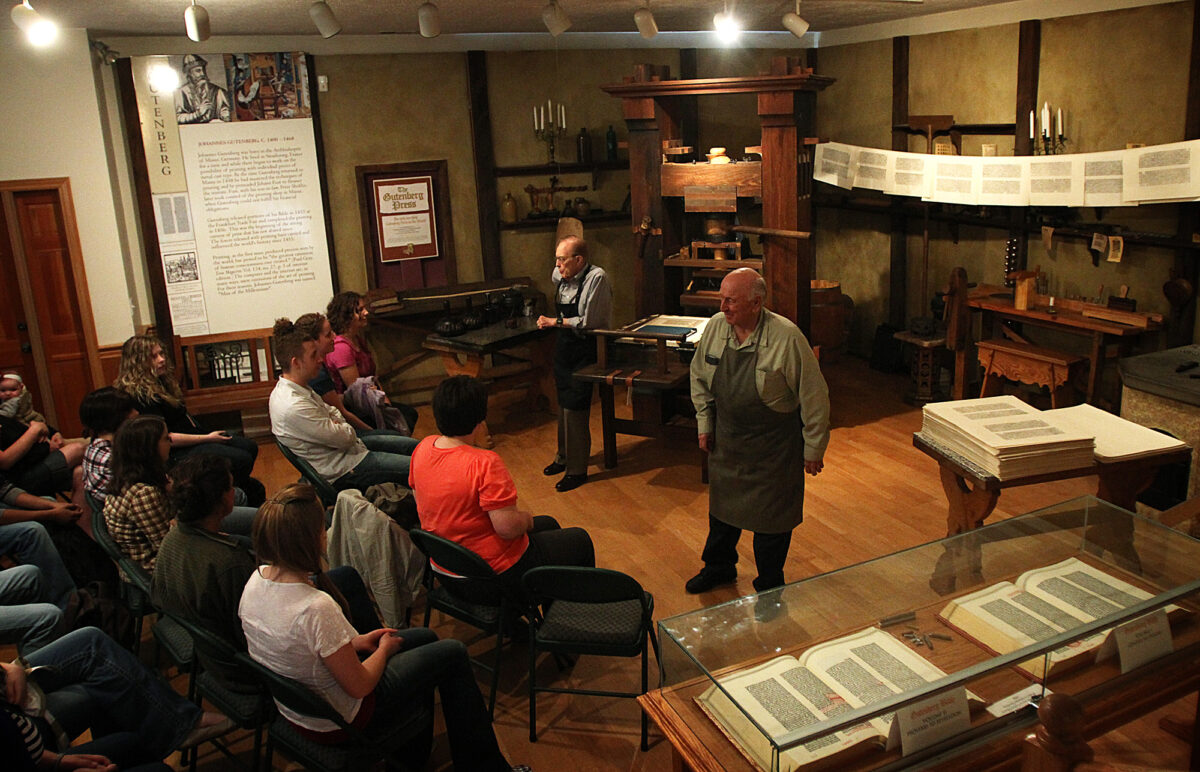
Founder Louis Crandall speaks to visitors as they begin a tour at the Crandall Historic Printing Museum in Provo Tuesday, April 5, 2011. MARK JOHNSTON/Daily Herald
The man who developed the printing press in Europe in the 1400s, Johannes Gutenberg, was foreclosed on and lost his presses before his major project — the printing of the Bible in Latin — was completed.
Today, Louis Crandall, who created a printing museum in Provo with a full-size working replica of Gutenberg’s famous press, is facing the prospect of the same ignominious end: foreclosure and possible loss of all he has worked for in the last 15 years.
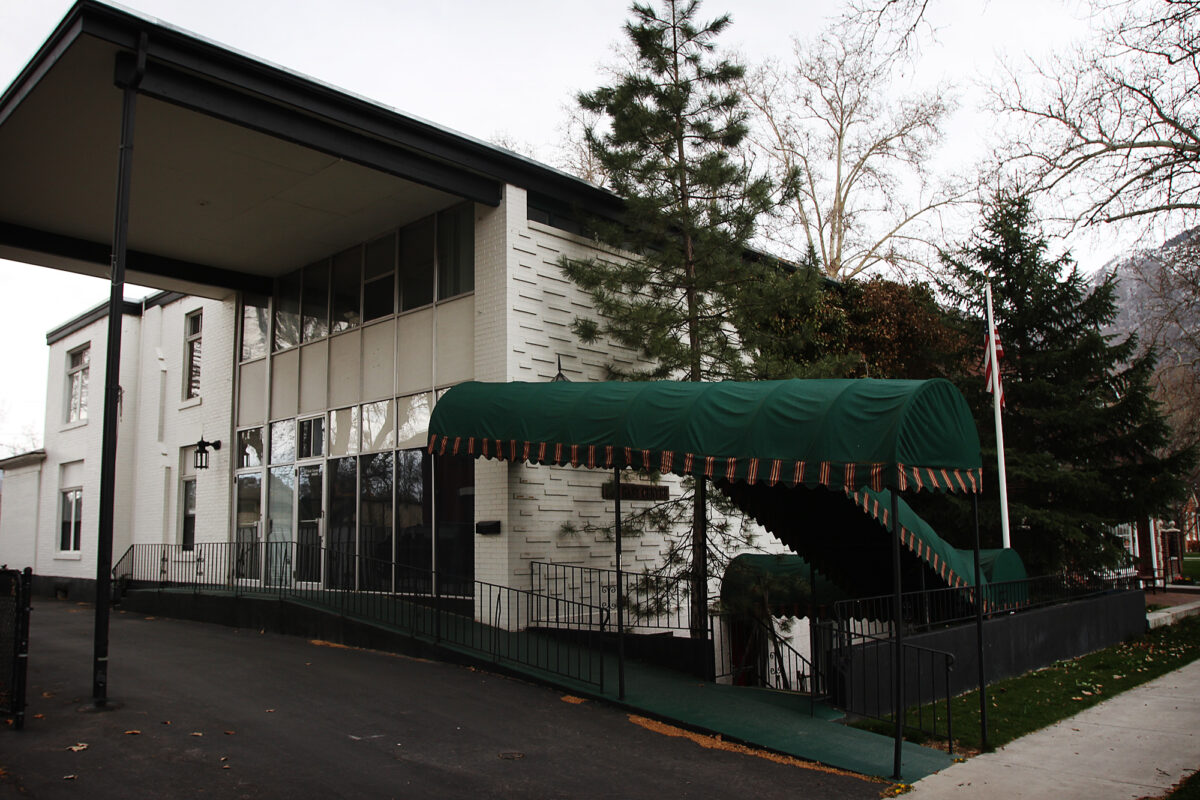
The Crandall Historic Printing Museum is still operating, for now, in the quaint red-brick building at 275 E. Center St. in Provo that it has occupied since it opened in 1996. In that building, visitors crowd into different rooms to learn about the world-altering history of printing, starting with the early writers who scratched symbols onto baked clay tablets, later into metal, and culminating with the innovators and thinkers who impressed words onto paper with a Gutenberg-style printing press that set the world in motion.
The roots of the American Revolution, as well as today’s newspapers, books and magazines, all stretch to Gutenberg.
Mormons might appreciate Crandall’s duplication of the E.B. Grandin print shop in Palmyra, N.Y., which first printed the Book of Mormon in 1830, as well as the Ben Franklin press like the one that printed important American documents like the Declaration of Independence and Constitution of the United States.
As the museum’s collection has grown and its high-class live exhibitions of typecasting and printing have developed, it has received increasing numbers of visitors. To accommodate the load, it must have more space. Lacking that, the program could dwindle.
But there’s the rub. In 2005, owner Crandall and the museum’s board of trustees took out a loan from Far West Bank to buy an empty building next door to the museum that was owned by philanthropist Gaylord Swim. Expansion plans began for the display of a world-class collection of printing artifacts and documents for public benefit — including a rare hand-illuminated replica of a 1456 Gutenberg Bible.
But last year, after struggling to pay the mortgage through the economic downturn, the museum board found itself in a box. They had been making the payments through donations and fees, but with the downturn donations dried up and things fell behind, board chairman Dann Hone said.
They now have only nine days to bring the note current.
Losing that second building could lead to a loss of the entire museum as a result of legal language that seems to link the second building with Crandall’s personal assets.
On April 19, the adjacent building will be put up for sale by Far West Bank. The notice of default filed on behalf of the bank listed outstanding payments of about $28,000 in back payments. Other items bring the total near $30,000.
The museum board needs to come up with that money to avoid losing the building, and then needs to find a way to continue making the $3,000 monthly mortgage payments.
Attorney Jeff Steele, who represents a title company that is moving to retake the second building, said that only that building is up for sale — at least for now. The museum board borrowed $376,845, while Crandall took out a personal loan for $75,000 in cash, and used his main museum building — which his family owns outright — to secure it. If the bank’s lawyers prevail, the main exhibit building is on the line as well.
Crandall and the board are disputing the linkage, but they’re worried. Even though Crandall has never missed a payment, the terms of his personal loan could tether it to the other building. That means, eventually, the primary museum building could go on the chopping block.
No one wants to see the museum disappear — not Crandall, not the board, not the people who visit the museum or the many teachers who bring classes to view the unusual exhibits and demonstrations.
Some of the locals at Far West Bank apparently don’t want the museum to die, either. It was forced to move for sake of its own finances, a representative said. Crandall doesn’t fault that.
Kelly McPhee, the communication manager for Far West Bank, said she could not comment on specifics of any customer’s account, but said the bank’s general policy is to work with all their customers to avoid foreclosure. No one is standing outside with locks ready to shutter the printing museum.
But Crandall needs to find the money.
Oddly enough, the museum is sandwiched between the bank and an insurance office. Many of the people who have attended presentations at the museum didn’t know it was there until a teacher or friend told them about it.
The museum hosts thousands of visitors during America’s Freedom Festival at Provo with a special exhibition called Colonial Days. Hundreds of costumed actors bring American history to life on the museum’s grounds and adjacent property.
The museum revels in the history of the printed word and celebrates the inventors of movable type and the ingenious hand molding device that creates metal alphabets for use on a press. It honors the printers who gave life to the American Revolution and who put together the first copies of the Book of Mormon.
Germany, 1450
The story starts halfway across the world, with a young man who didn’t want to be a goldsmith like his father. Instead, Johannes Gutenberg became a wordsmith.
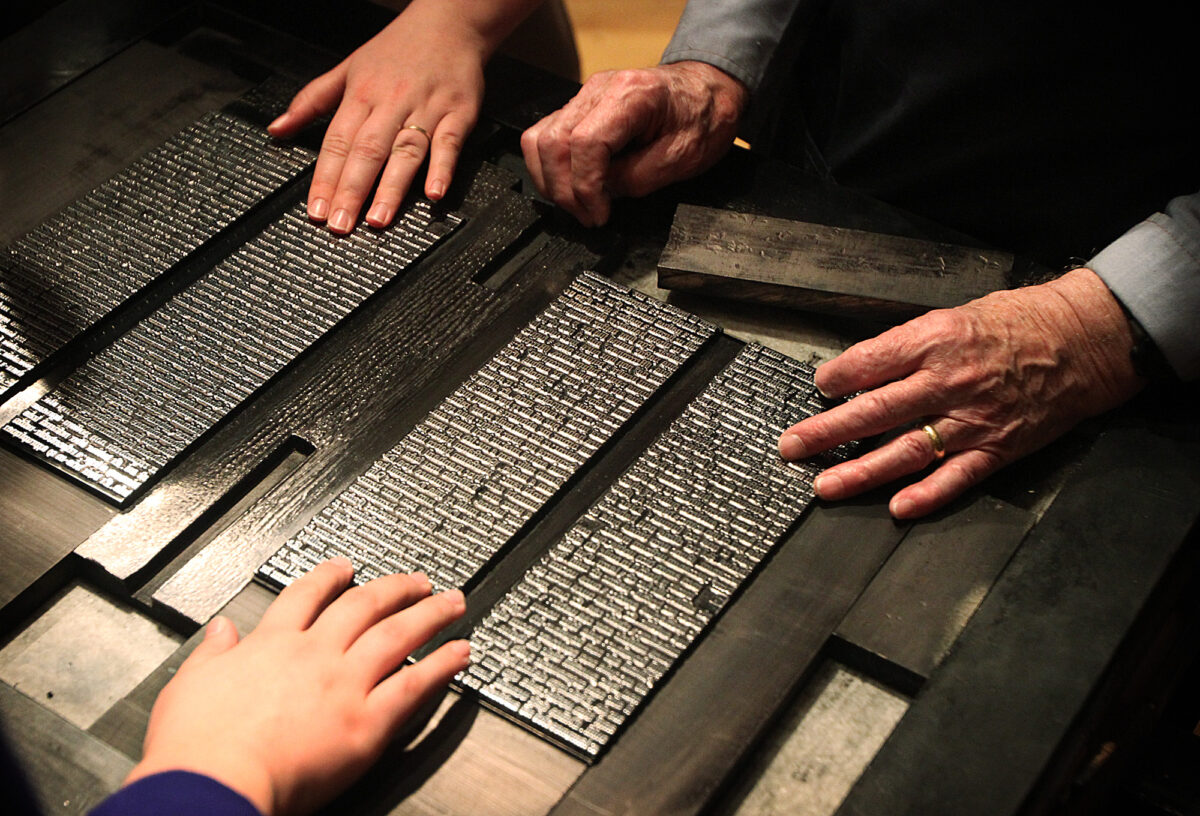
The largest room in the museum holds the Gutenberg printing press, cases of metal letters that fit into frames on a hand press, and samples of what a page from the Gutenberg Bible would look like. The room is decorated to give a feel of what a print shop in Gutenberg’s day would feel like — candles, barrels, water kept in ceramic jugs.
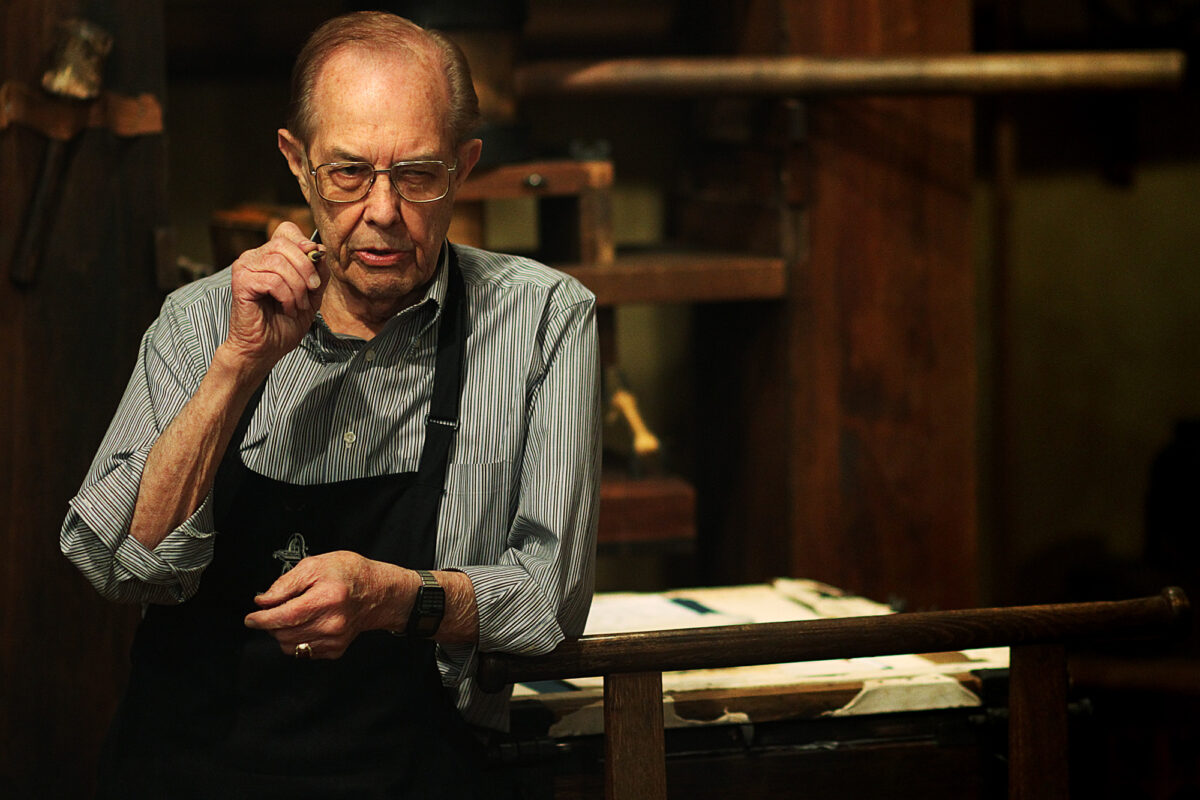
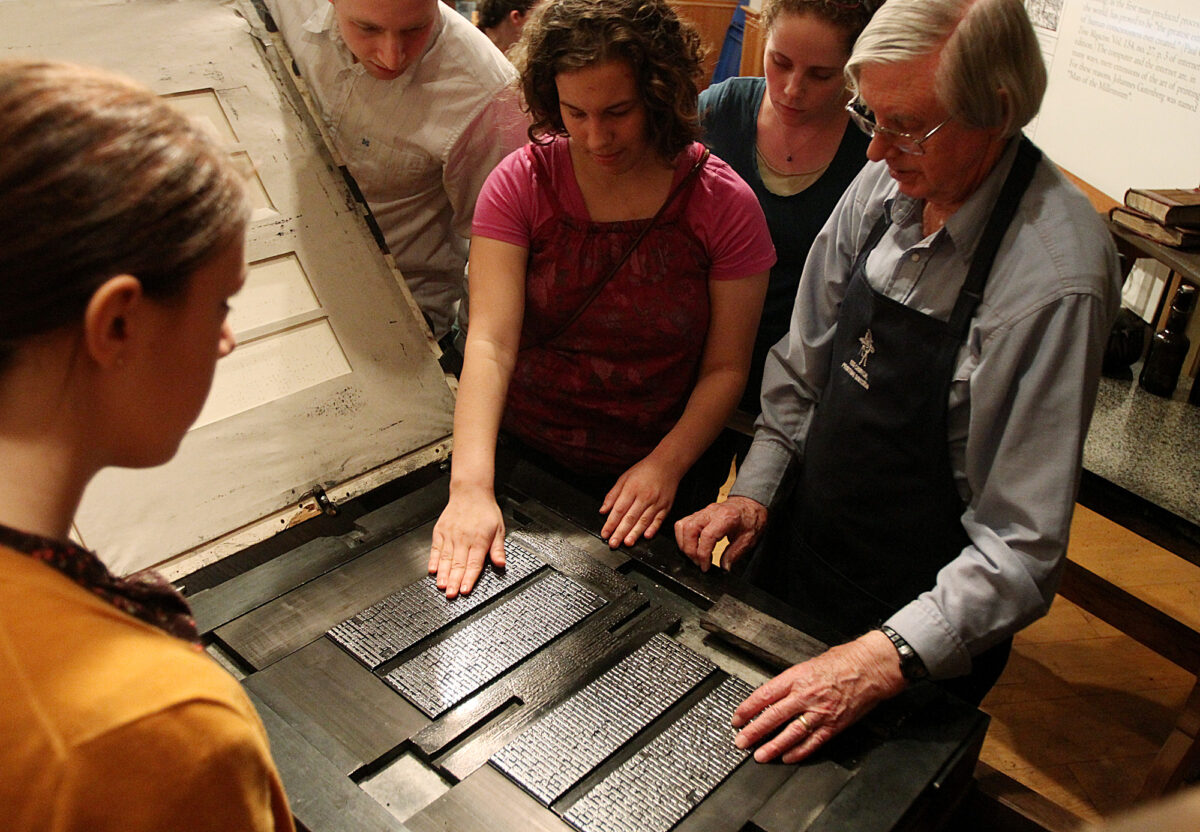
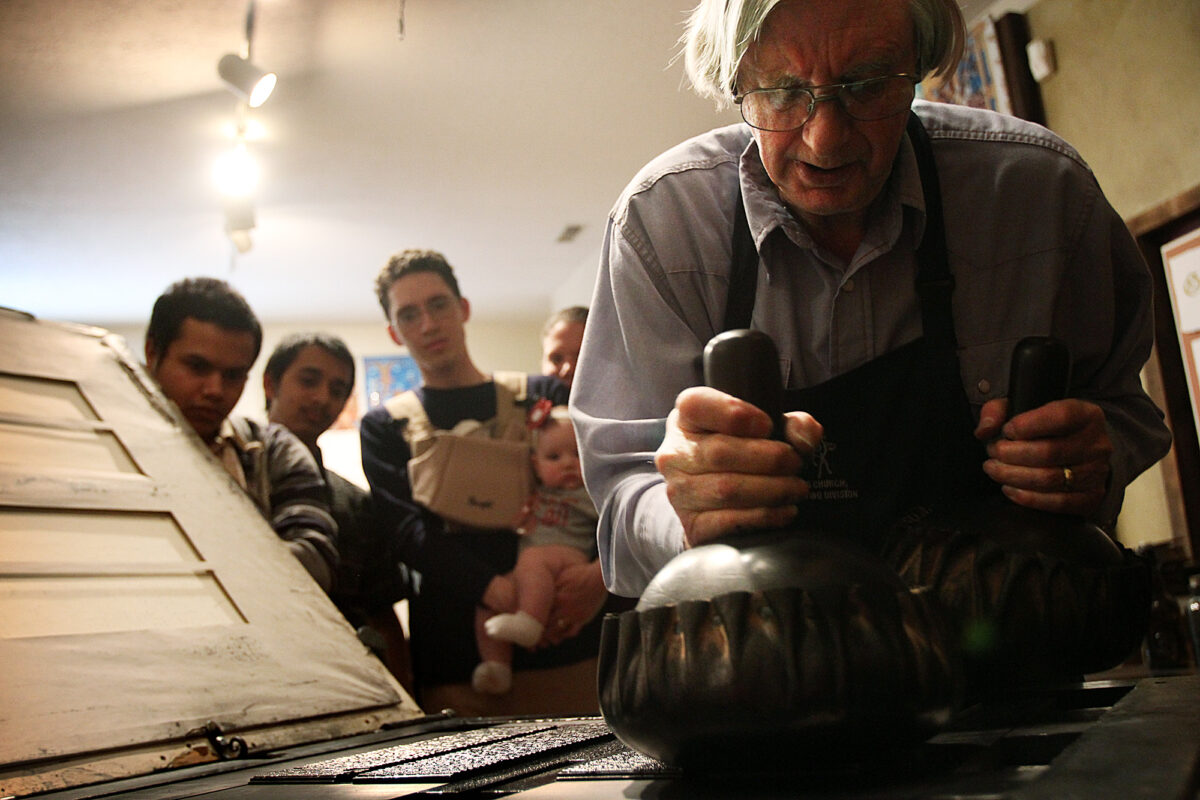
Printer Wally Saling walks groups through the painstaking process of creating type and then loading it onto a press. He does his overview in 15 minutes. It took Gutenberg closer to 20 years to work out the kinks.
The press is already set up with the first two pages of the Bible — in Latin, the official language of the Catholic church, which commissioned the first printing of the Bible.
One day recently, Saling was talking to a class of BYU religion students. He waved the group up to stand around the press as he scooped out a glob of thick black ink and dipped the ink ball into it to prepare to roll it onto metal letters held in place by a wooden frame.
“You have to realize that Gutenberg was the first rock ‘n’ roller,” Saling told the students.
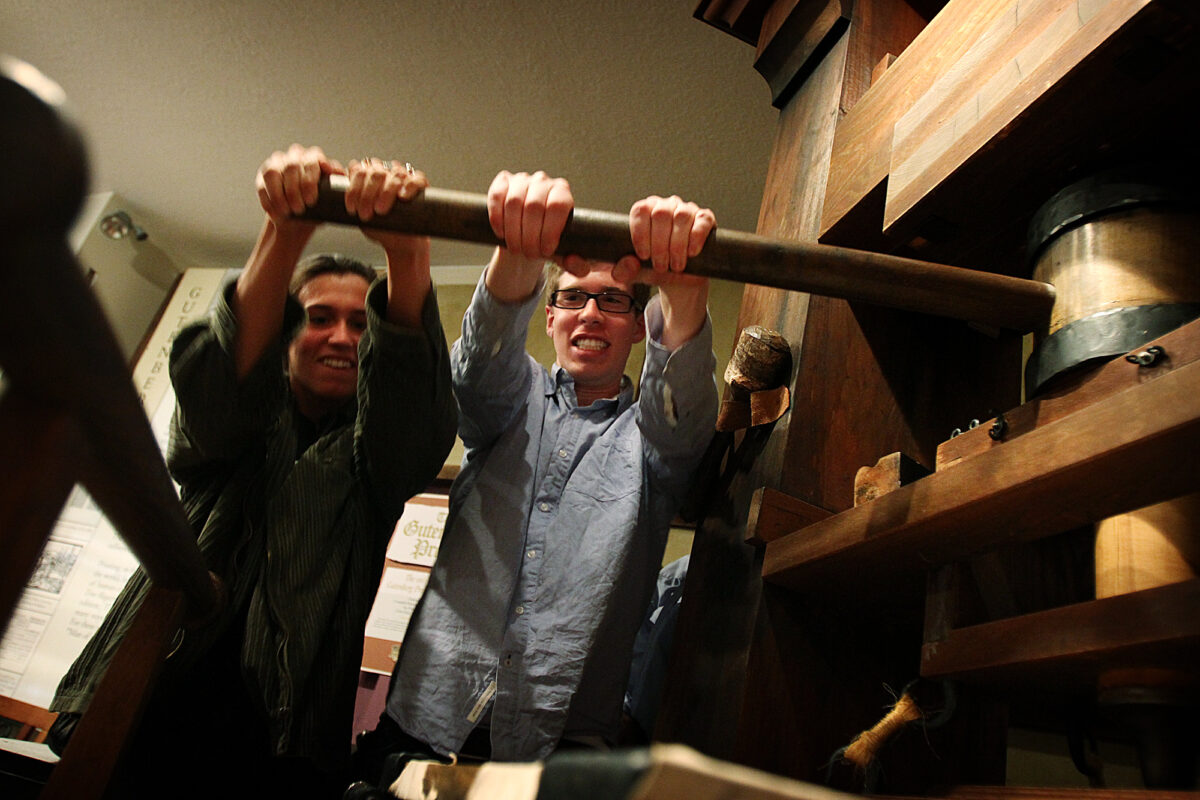
Volunteers pull the handle that forces the paper against the inked type, then Saling opens the mechanism and removes a perfectly aligned single printed sheet.
“We printed a Bible,” one student said with reverence.
They’re in good company: Different versions and printings of the Bible, pages from historic Bibles and a decorated page from the Book of Mormon line the walls, as does a poster discussing Gutenberg’s role in modern society and why Time Magazine selected him as the Man of the Millennium.
The development of movable type may be the single most important advance in human history.
Averyl Dietering, a BYU student with another group, said at first glance she wondered why Gutenberg got that honor instead of modern minds like Apple CEO Steve Jobs or Microsoft founder Bill Gates, but listening to Saling outline every detail that went into a development that catapulted the world out of the Dark Ages, Time’s choice made sense.
“What they did, that’s kids play compared to what Gutenberg did,” she said.
Gutenberg’s notion of printing with inked letters pressed onto paper endures even today in specialty print shops. It has been largely supplanted in practical terms today, with the advent of the “print” option on every computer, but Gutenberg was the giant on whose shoulders modern innovators stood. Gutenber literally was the foundation that allowed virtually every developer or inventor afterwards to invent, she said.
The printing press also changed the future of 13 fledgling British colonies more than 200 years later.
Philadelphia, 1776
Once they’ve had their fill of 15th century printing, groups crowd around the English common press in the B. Franklin Printing House. Copies of Poor Richard’s Almanacks and the Declaration of Independence take up corner and shelf space. Hone, dressed as Ben Franklin, talks the group through Franklin’s early history in newspapers, his alter ego as the insightful and eloquent Silence Dogood and his role in the Revolution.
“The Revolutionary War wasn’t won by lead bullets, it was won by lead type,” a plaque propped on a desk reads.
Franklin printed copies of the Declaration of Independence and Thomas Paine’s Common Sense. He also printed Paine’s Crisis Papers, which began as George Washington’s plea to American soldiers to not leave the army on Dec. 31, 1776, when their first term of enlistment ended.
“These are the times that try men’s souls,” Hone read to the group. “Tyranny, like hell, is not easily conquered; yet we have this consolation with us, that the harder the conflict, the more glorious the triumph.”
Were it not for Franklin and other printers like him, the Declaration of Independence would not have gained sufficient momentum to inspire revolution, and the Constitution never would have passed, museum advisory board chairman Ray Beckham said. The history of printing is the history of modern civilization, he said, and nowhere is that more true than in American history.
“We tell these stories in the museum,” he said.
Palmyra, N.Y., 1829
Another group that started small also can attribute much of its growth to the evolution of printing — the Mormons.
In a 35- by 17-foot room stuffed with printing apparatuses from many points in history, historian Jim Watkins sits by an acorn-shaped cast iron press that weighs nearly a ton. It looks different from Gutenberg’s modified olive press but more similar than not.
“Ignore that machine,” Watkins said, waving at a 1930s-era Linotype machine in one corner. “That machine hasn’t been invented yet.”
The cast iron Peter Smith hand press is almost identical to the press that sat in E.B. Grandin’s print shop and printed the first copies of the Book of Mormon. The first 16 pages of the book remain loaded in the type of the press, and stacks of printed Book of Mormon “signatures” — multi-page sheets — fill the room. Grandin and his assistants worked 11 hours a day for seven months to print the first 5,000 copies, Watkins said.
This room is popular even among non-LDS visitors, Crandall said. It describes a piece of LDS history that many people don’t consider. Printing and binding 5,000 copies of a book in that era should have taken much longer, especially in a little town like Palmyra, where a printer or a binder or a paper mill just a few miles away should have been a rarity. It is part of the miracle of the early beginnings of the church, he said.
Salt Lake City, 1850
Four hundred years after pages of the first Gutenberg Bible were pulled from a wooden press, the first copy of Utah’s first newspaper, the Deseret News, came off another press at the unheard-of speed of two pages per minute.
“After 400 years, everything’s still the same,” Watkins said.
Well, OK, not everything — Utah’s earliest newspapers, including the Daily Herald’s predecessors, used an ink roller instead of an ink ball. But the press, the movable type and the procedures remained essentially the same.
In one exhibit at the museum, visitors can see an exact copy of Utah’s first newspaper press, brought by Mormon pioneers, as well as copies of the first edition of June 15, 1850. There’s even a replica of the press that 14-year-old Thomas Monson, now the president of the LDS Church, worked on with his father.
President Monson was honored by the museum board in 2009 and came to Provo to view the exhibits. He pulled the big lever on Crandall’s Gutenberg press to produce pages of the Bible, and he lingered in the Grandin room to view the Book of Mormon exhibit and talk about his days in the printing business.
Here and now
Crandall’s eyes light up as he’s telling visitors about the presses, joshing with Saling as the two go through the familiar routine and talking about his vision for the museum. He remains optimistic that everything’s going to be OK.
“We’re asking the community to help keep us alive,” he said. “I know that the community is going to come in and help us.”
The consensus is that the museum is valuable because it provides a unique educational experience to all types of people. But the question of sustainability remains. Even if Crandall is able to raise $30,000, he and the board will still owe the bank for the mortgage next month. That is a question with few obvious answers.
Wendi Hassan, communications specialist for the Utah Division of Arts and Museums, said many museums are struggling in this economy. Donations from corporations, foundations, governments and individuals all are down because there is less money to go around.
“The difficulty in this economy is every funding pool shrinks,” she said.
The state offers grants for museums, but those grants range in size from $1,000 to $6,000 and are for projects, not capital. Museums can ask for capital funds from the Utah Legislature, but even if that funding were approved it would not be given out for close to a year. Hassan suspects those funds are less available now as well.
“I wish we had stacks of money to give away,” she said.
Stacks of money may not help in the long run, however, without a sustainable business model. Former board member Paul Savage said many nonprofits face a similar challenge. What the museum needs, he said, is a consistent business model that takes Crandall’s passion and creates enough of an income stream that the museum isn’t operating from month to month.
Both Crandall and Beckham said they don’t see a need for major changes. Beckham said the added space in the adjacent building and scheduled tours would allow the museum to attract even more visitors and would encourage more donations, which would go a long way toward resolving the financial difficulties.
Board members point to the coming convention center and expansion of Nu Skin Enterprises, which will draw many more people downtown. Crandall believes a focus on marketing will increase attendance and donations as well. Both credited the board of directors with good management.
Neither Crandall nor Beckham would go back to life before the purchase of the second building: It was the right thing to do, Crandall said. They simply need the exhibit space; they need the parking space; and they need the capacity to reach more people.
They also need just a little help from the community, he reiterated. Donate a few dollars, bring your friends to the museum, let people know it’s there, he said.
“We can save the museum for the world,” he said.
Crandall and Hone are holding an open house at 2 p.m. Tuesday at the museum to introduce the museum to the community — for those who aren’t familiar with it — and let the museum speak for itself.
It speaks eloquently.
“We want to demonstrate to them why we’re asking the community to become involved with us,” Hone said.
Local News
Cox makes 2 picks to fill expanded Utah Supreme Court: A church attorney and a prosecutor
Vesper Amphitheater plan shared at neighborhood meeting; residents voice concerns