Adonis Bronze more than just a foundry
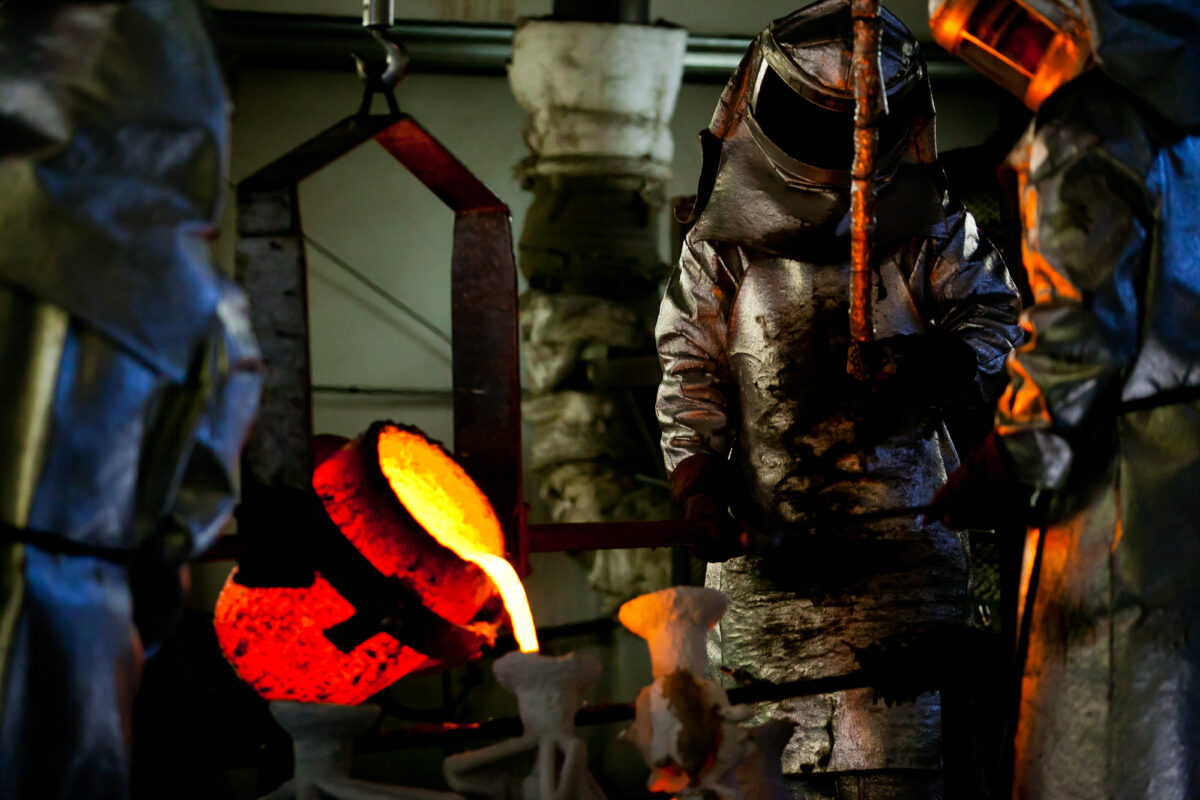
Hunter Nelson, Erasmo Cisneros, and John Pryor pour molten bronze into molds at Adonis Bronze in Alpine on Wednesday, Sept. 28, 2011. Bronze ingots must be heated to nearly 2,200 degrees to flow smoothly into the molds. SPENSER HEAPS/Daily Herald
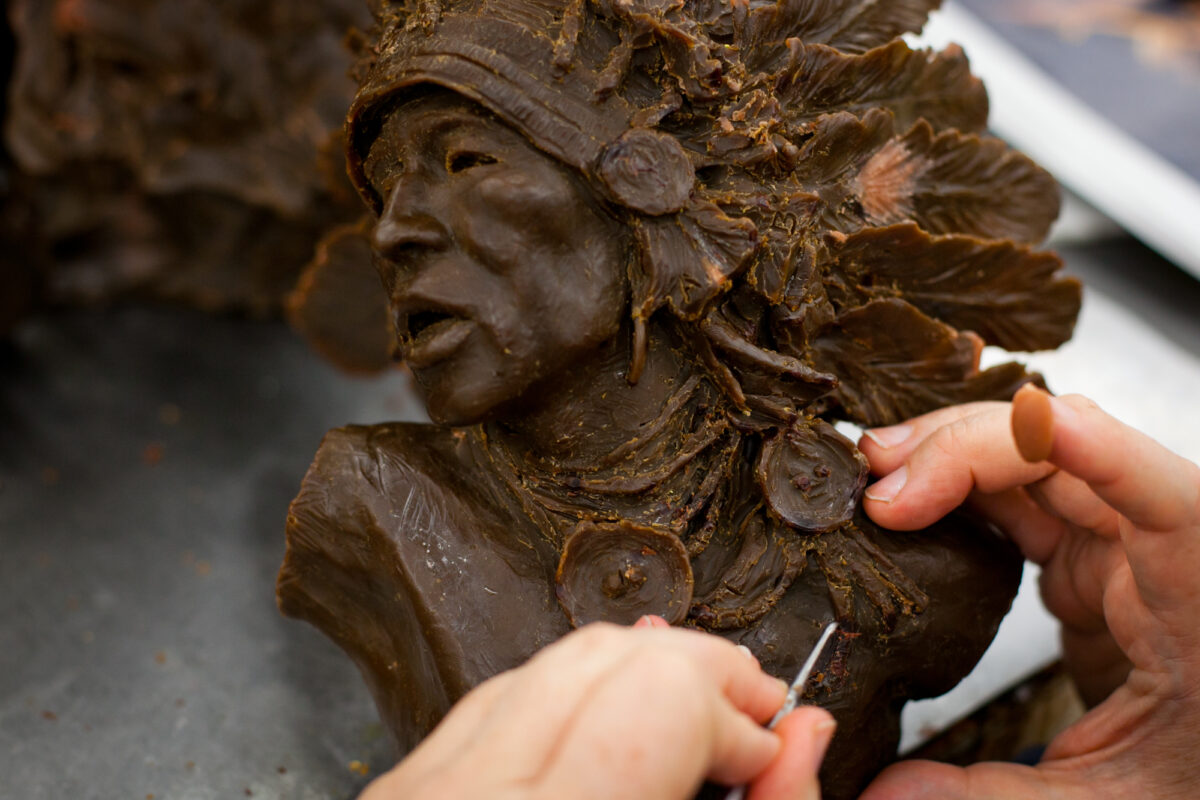
Sherrie Burnham cleans up a wax piece before it can be coated in a hard shell, which will become the mold into which the bronze is poured, on Thursday, Sept. 29, 2011. SPENSER HEAPS/Daily Herald
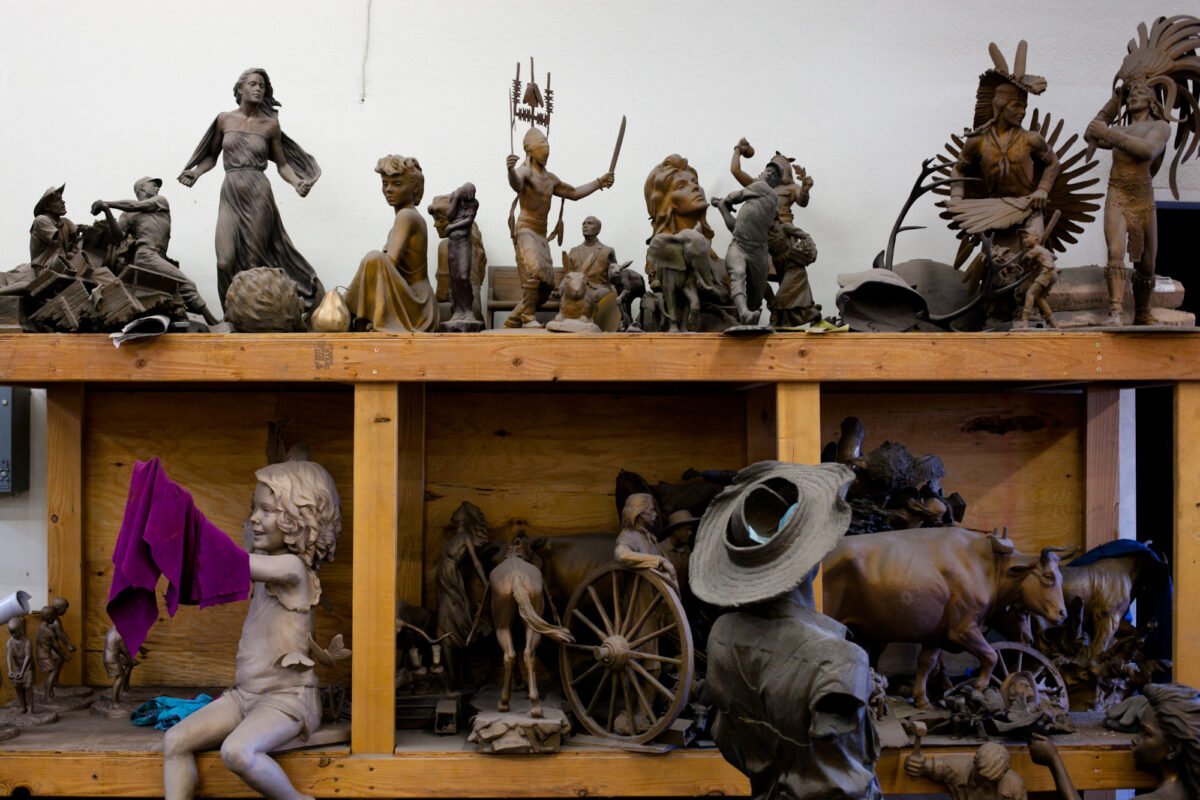
Unfinished bronze pieces sit on a shelving unit at Adonis Bronze on Wednesday, Sept. 28, 2011. SPENSER HEAPS/Daily Herald
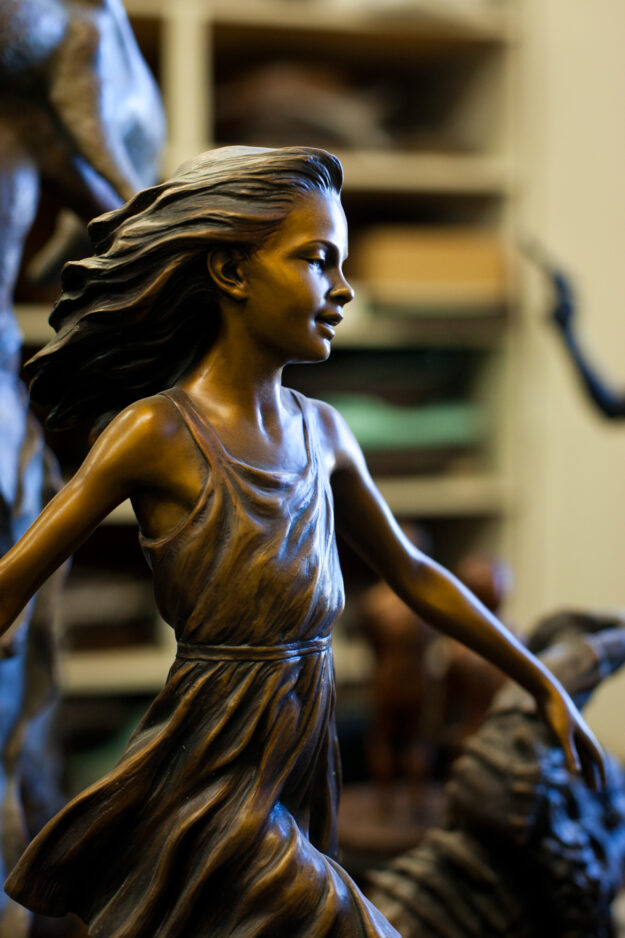
A finished bronze statue. SPENSER HEAPS/Daily Herald
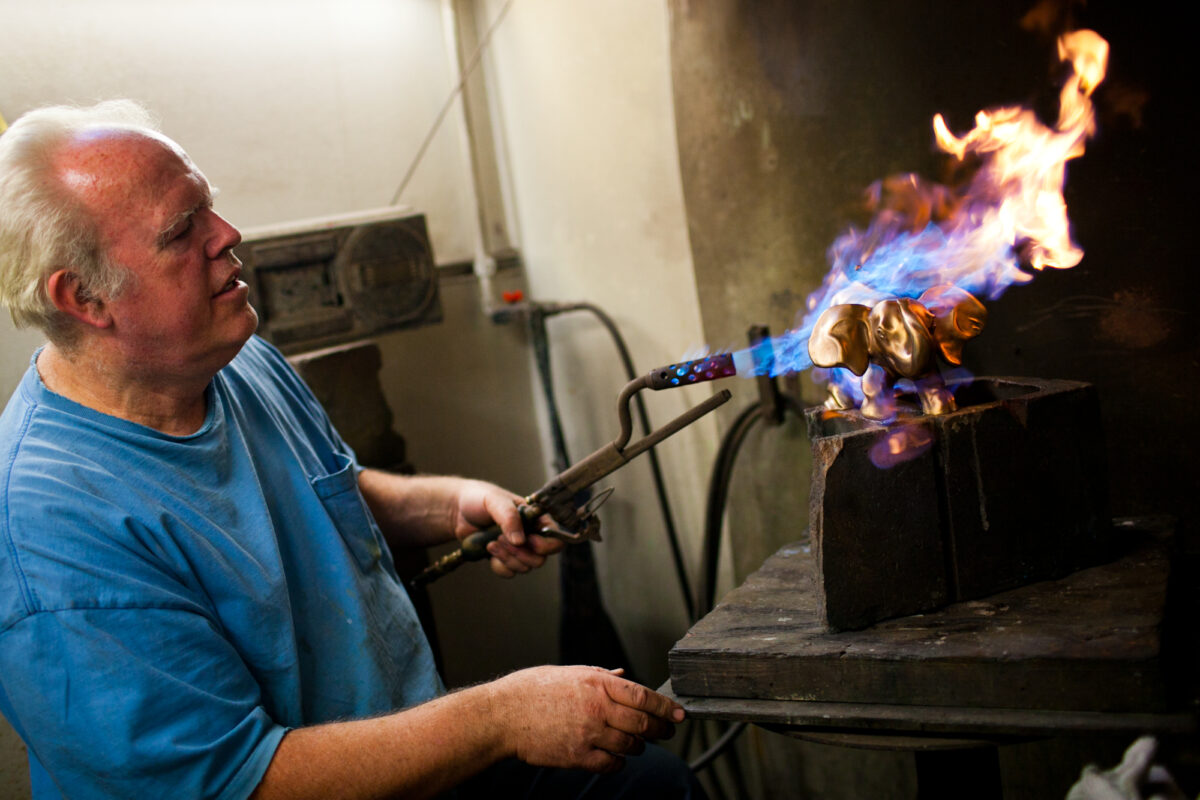
Richard Erickson applies the patina to a small bronze elephant on Thursday, Sept. 29, 2011.
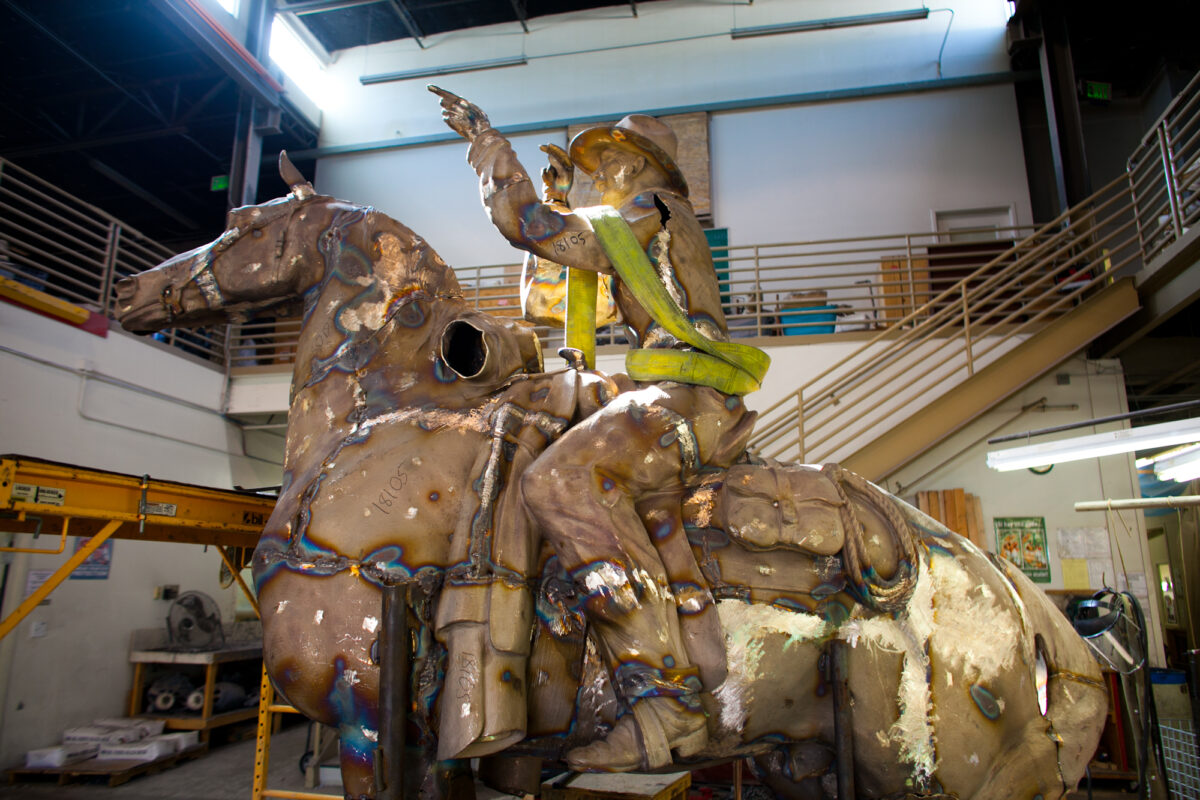
A monumental statue by sculpter Anne Butler is being reassembled at Adonis on Thursday, Sept. 29, 2011. Large works like this are cast in small pieces and then welded back together. SPENSER HEAPS/Daily Herald
Thirty years ago, brothers Gary and Steve Streadbeck built a small bronze foundry in an artist’s backyard in Springville. They used 55-gallon drums and small electric blowers and could barely get the bronze to its melting point. Today, the Streadbecks operate a 33,000-square-foot facility that helps artists from throughout the globe transform their inner vision into some of the finest bronze sculptures in the world.
The story of Adonis Bronze started when the Streadbecks were young and their professor father took them along on student trips to Europe.
“Europe always had a lot of beautiful sculpture, beautiful paintings,” Gary Streadbeck said. “That definitely influenced Steve, and Steve is who really got me into the business.”
Back in the United States, Steve started working with a sculpture artist in Springville, helping build clay pieces that they would then send to foundries to be cast in bronze. Meanwhile, Gary had taken welding classes in school and went off to work on a sprint car racing team, helping weld and manufacture parts for the car. When Steve approached Gary to help weld together bronze statues, the brothers started their work together.
“I went to work with him, welding and grinding and putting the statues together,” Gary said. “Then we decided that we needed a way to produce them all, so we started doing research, finding out how to pour our own bronze.”
The brothers didn’t find it easy. Afraid of the competition, established bronze foundries refused to share any of their knowledge. So the Streadbecks sat down with a single book, “Methods for Modern Sculptors,” which showed them how to build a primitive backyard foundry from scratch.
“A lot of that didn’t work very well,” Gary said. “A lot of it failed, but it sparked your imagination with things you could try.”
The brothers kept experimenting, building newer and better equipment and refining their process. Steve started making his own pieces, and the brothers eventually developed a workable method for creating the bronze statues.
Their foundry today has evolved from that first backyard operation. The foundry industry is a largely home-grown operation. Many started the way the Streadbecks did, and the sophisticated equipment and processes they developed are unique to each foundry.
Casting bronze sculptures is a complex process, and Adonis has developed it into a science. From a clay sculpture they create a silicon mold, which is filled with wax. The wax is then the base for a hard shell into which molten bronze is poured at almost 2,200 degrees Fahrenheit. After the shell is chipped off, the bronze is cleaned up and reassembled. A patina is applied, which uses chemicals to transform the light-colored bronze into deep and varied colors.
As scientific and mechanically involved as the process is, it takes skilled artists and artisans at every stage to make it work. The employees at Adonis must clean up the wax replica of the original clay, they must recreate the original texturing on the cast bronze, and they apply the patina, which is as unique to each piece as it is to each foundry.
“It’s all about the artisans who work in the foundries,” Gary said. “The foundry business is a dirty, messy, difficult business, but it’s very rewarding. It’s difficult for these guys to do this process,” he said of his artisans, many of whom have worked there for more than 10 years. “But they have something inside of them; they love producing.”
Last year Adonis created bronze pieces for 220 artists from throughout the world, and this year they are hoping to exceed that number.
But from the beginning, the vision for Adonis was more than simply a foundry.
In their state-of-the-art facility in Alpine, Adonis has made space available for any of their artists to come and work on their pieces. A large art room, replete with various supplies and a large library of art books, gives them space to perfect each piece and get critiques from other artists.
“We wanted it to be an art center where artists could come and sculpt together and help each other,” Gary said. “We wanted to be able to have art shows and a gallery. The dream was to be able to give something back to the public and put in a permanent sculpture park.”
The Streadbecks have created a nonprofit called the Sculpture Park Arts Foundation in order to acquire sculptures and land and put on shows. A number of large works already populate their grounds, and paved walkways and benches are coming soon.
“We want to continue that so someday when we retire from this business we can leave a beautiful legacy for the community,” Gary said.
In the meantime, Adonis will continue pushing their processes and developing new techniques to produce some of the finest bronze art around.
Adonis Bronze is located at 540 S. Alpine Highway in Alpine and can be reached at (801) 763-9700.