Two wildfires burn opposite ends of Utah County
A pair of fires at opposite ends of Utah County kept crews and wildland authorities busy Monday, but the two fires weren’t responsible for the murky air.
Utah Valley residents began noticing a dense haze settling over the county. David James, overseer of the BYU weather station, said that particles in the air were being driven into the area by a wind blowing out of the northwest. James explained that recent wind has come from the south, but a beginning Sunday night those winds shifted and brought with them smoke and ash from neighboring states. According to James, the wind from the northwest isn’t expected to last much longer than Monday.
In the meantime, however, the Utah Division of Environmental Quality ranked air quality in Utah County as moderate Monday. Air quality was expected to be moderate today followed by an improvement to good conditions on Wednesday.
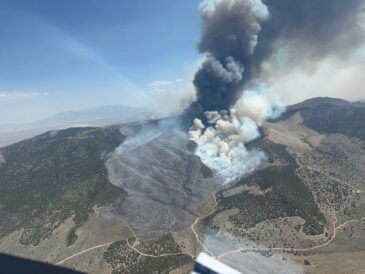
The larger of the two blazes, dubbed the West Lake Fire, had burned roughly 400 acres on the west side of West Mountain, according to Bureau of Land Management spokeswoman Cami Lee.
It was 95 percent contained by Monday evening.
Lee said authorities believe the fire was started by target shooters. It was burning mostly cheatgrass and had forced the evacuation of a remote BYU observatory. Roughly 35 firefighters were working on the blaze and a heavy tanker had been on scene Sunday.
Farther north, the Tank Fire in American Fork Canyon grew over the weekend from 10 acres to cover an area of roughly 25 acres. According to U.S. Forest Service spokeswoman Loyal Clark, the blaze was sparked by lightning on Sept. 2 in a remote and inaccessible area. Clark described the blaze as a “beneficial fire” that authorities are closely monitoring but only periodically fighting directly.
“What this fire is doing is it’s burning through and removing fuel and vegetation that could pose a problem,” she said.
The burn area is too difficult and dangerous for firefighters to enter, Clark said, but a helicopter was called in to drop water Saturday when authorities received reports of new hot spots. The water dumps created more smoke, which was visible across Utah Valley. Clark added that because the fire was burning pine needles and other dry brush residents in the surrounding valley could expect to see smoke throughout the week.
The Tank Fire had not forced the closure of any recreation areas, according to Lee.
Clark and Lee also both stressed that Utah’s fire season has not ended. Lee cautioned people to take extra precautions when visiting wildlands, adding that an extremely dry year has created ample wildfire fuel.
“Because things have been so dry over the summer fuels haven’t really recovered as much,” she said.
For more information Utah’s current wildfires visit www.utahfireinfo.gov.