Congress passes bill that allows BYU to purchase Y Mountain
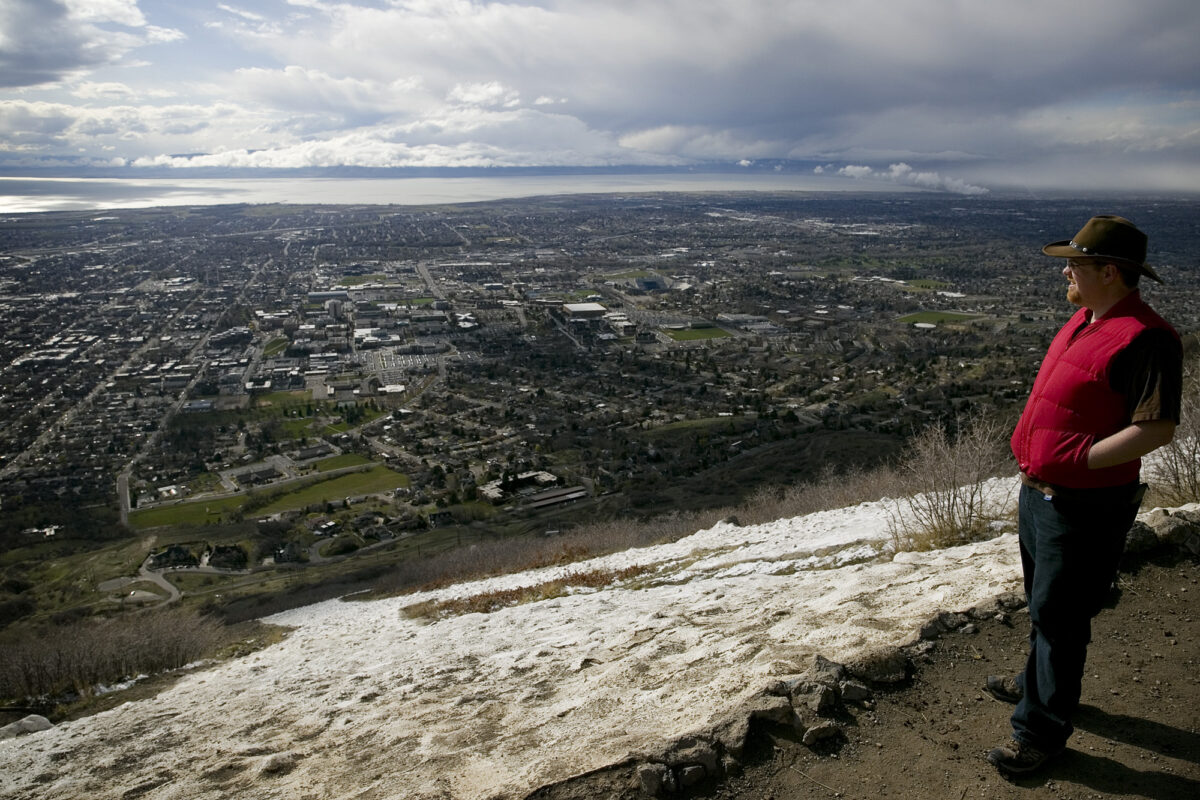
Joe Vasicek stands above the Y after hiking up the Y Mountain trail above Provo, on March 27.
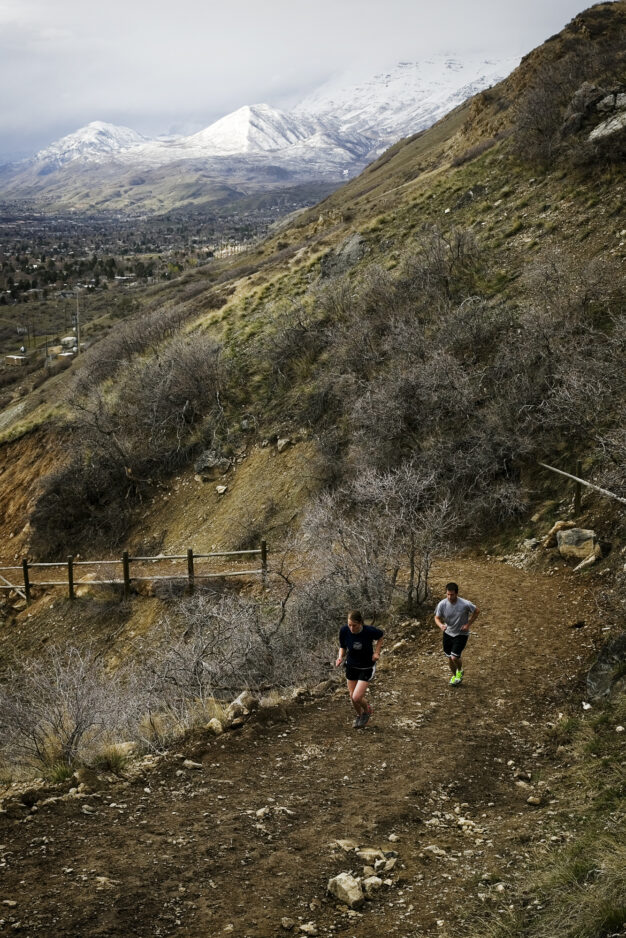
From left, Krista and Billy Hiatt run up a newly cut section of the Y Mountain trail above Provo, on March 27.
PROVO – Brigham Young University can now purchase its own mountain.
That is, with the signature of the President of the United States.
The U.S. Senate passed a bill Friday that allows BYU to purchase the land surrounding the block-letter Y on Y Mountain in Provo. The bill was attached to the National Defense Authorization Act, which authorizes $585 billion for the military in 2015.
The act now awaits the signature of President Barack Obama.
The bill — co-sponsored by Rep. Jason Chaffetz, R-Provo, and Sen. Orrin Hatch, R-Utah — says BYU can purchase the land from the Department of Agriculture. Government estimates are the land would sell for about $500,000.
BYU president Kevin Worthen said BYU is happy about the bill’s passage.
“We are very glad to see this bill pass and are grateful to all those who made it possible,” said Worthen in a statement. “Since 1906, when students shuttled lime, sand and rocks to build the Y, this landmark has stood as a welcoming symbol to all those who come to Utah Valley, whether it be for their studies, work or simply a visit. We look forward to sharing the trail to the Y with our neighbors, friends and visitors.”
Under the bill, BYU would have to pay for an appraisal of the land and the price that results from that evaluation. The school would also have to guarantee public access to the mountain.
Chaffetz said he thinks the difference in ownership will make the trail more enjoyable.
“I think people will have a better experience because the maintenance and care of the trail will be exponentially better,” Chaffetz told the Daily Herald. “When the federal government has been tending it, they haven’t always necessarily taken good care of it. They don’t have as much of a vested interest in it as BYU.”
BYU owns the lower 40 acres of the trail that leads up to the Y, and the bill will allow them to purchase an additional 80 acres — the whole trail — that the Y sits on. Plus, it gives the school the responsibility to maintain the trail.
The bill passed the House in 2012 and 2013, but it failed to be called up in the Senate both years. The attachment of the bill to the NDAA was a surefire way to get it passed.