Operation Underground Railroad: Saves lives in ways most can’t
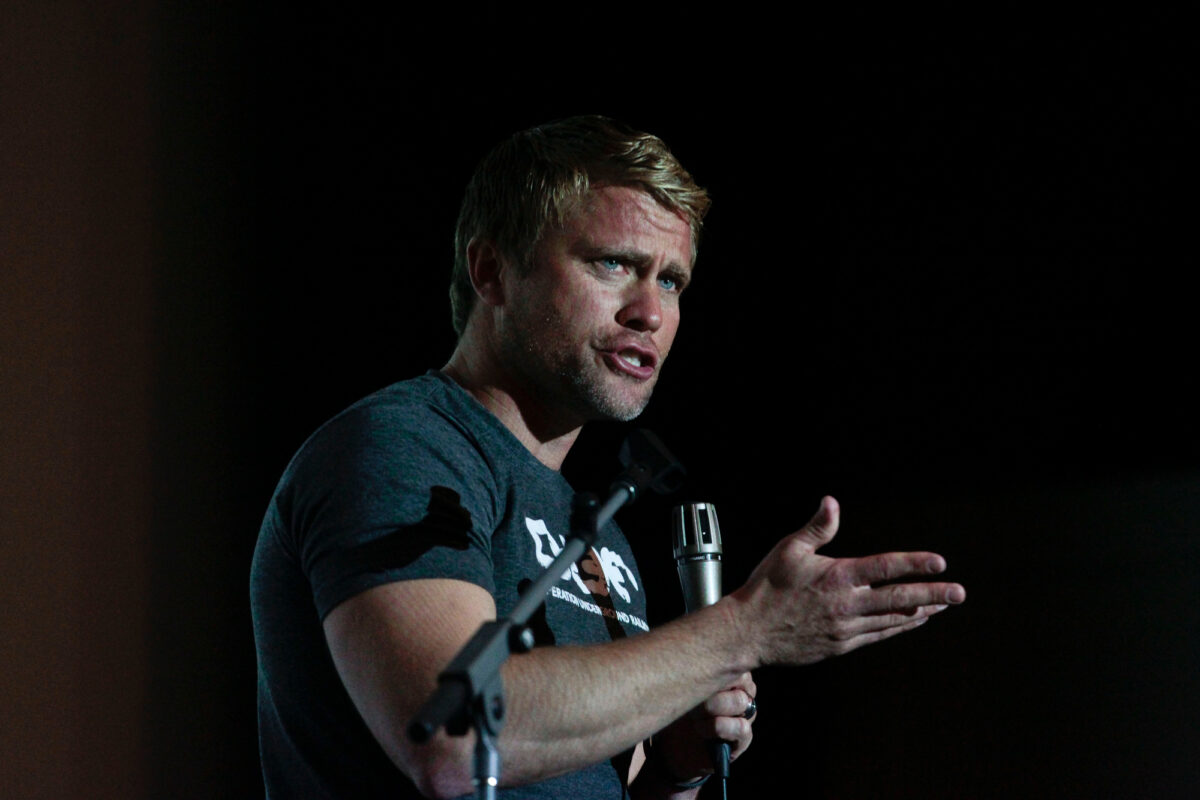
Organization founder Tim Ballard speaks after a documentary showing of "The Abolitionists," at the Wilkinson Student Center on campus at Brigham Young University on Wednesday, Feb. 25, 2015. The documentary tells of the program Operation Underground Railroad, an organization dedicated to fighting human trafficking. SAMMY JO HESTER, Daily Herald
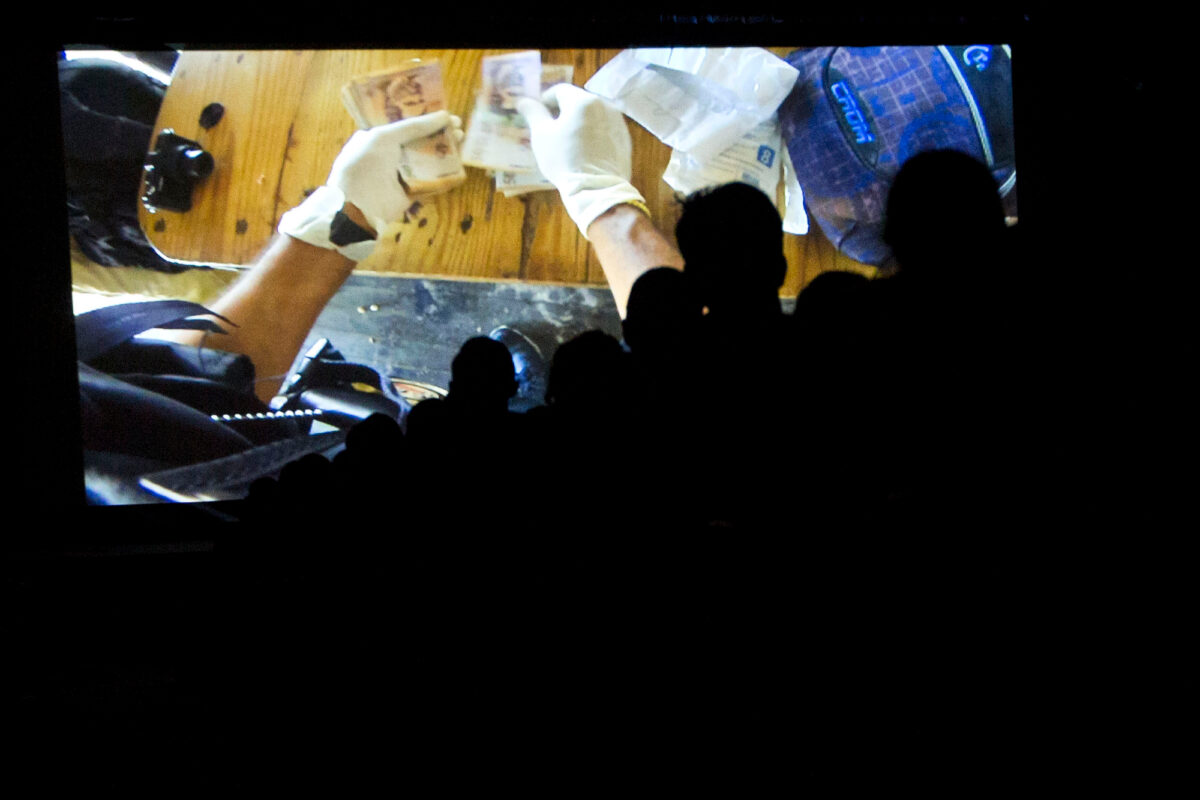
Students watch a documentary showing of "The Abolitionists," at the Wilkinson Student Center on campus at Brigham Young University on Wednesday, Feb. 25, 2015. The documentary tells of the program Operation Underground Railroad, an organization dedicated to fighting human trafficking. SAMMY JO HESTER, Daily Herald
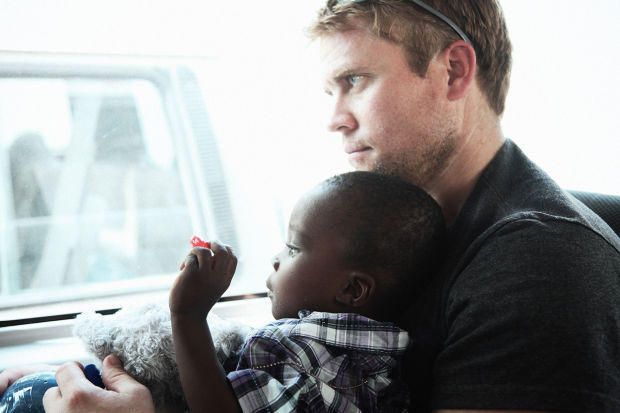
Tim Ballard sits with a child who he just rescued from a life of trafficking.
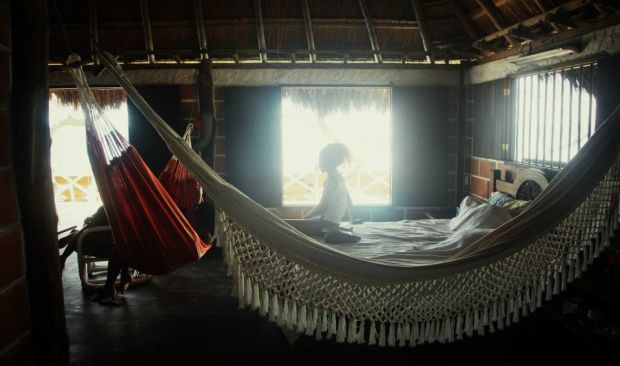
A girl sits in her room, waiting for what she thinks will be another sex party. Little does she know, she's about to be freed.
UTAH COUNTY – He walked away in shackles as he had time and time again. But on this occasion, something was different.
Government officials informed the children who were just rescued the men they saw as monsters were actually their liberators. They clamored to the window to catch a glimpse of the men who freed them from a life of slavery, and eventually their ecstasy overpowered them and they burst from the room to thank their guardian angels.
“They came to us, and just started screaming in joy and clapping,” he said. “It’s emancipation. It’s liberation.”
Tim Ballard is the founder of Operation Underground Railroad (OUR), a nonprofit organization fighting to end human trafficking across the world. But their method is different than most NPOs. As opposed to asking for money and then funding research or funding other organizations, OUR uses the money they receive for operations and stings in other countries that bring criminals and sex traffickers down. Ballard’s line of work is dedicated to saving children’s lives from oppression, and so far, he and his organization liberated the lives of 250 children around the world.
The founding
Ballard went to Brigham Young University before he worked for several years undercover for the government. But after running operations for more than a decade, and seeing how many individuals he couldn’t get to, he wanted a change.
“I thought there’s got to be a way to take these tolls and serve all the children who need it,” Ballard said. “I had the idea to leave the government and create this organization.”
Ballard left his government job and founded OUR in 2013 as a way to provide swift response to troubling situations.
Jerry Gowen, COO for Operation Underground Railroad, used to be roommates with Ballard while attending BYU and was approached by him soon after the organization’s founding. After Gowen and his wife thought carefully on the matter, they said it felt like a perfect fit.
“I knew I needed to drop what I was doing and help the organization,” Gowen said.
Gowen said he now focuses mostly on the technological aspect of the organization.
The Jump
The first raid happened soon after OUR’s founding.
“We pose as traffickers,” Gowen said. “In a lot of cases, it’s rich wealthy businessmen who are the primary offenders here.”
Gowen said when they meet the offenders and conduct a “deal” it’s chilling to see there aren’t many observable characteristics that set them apart from traffickers.
“These don’t look like bad guys, they look like you and me,” he said.
While conducting these stings or “jumps,” Ballard or other jump team members work first with local government in countries such as the Dominican Republic or Colombia to coordinate the sting and ensure the offenders will be arrested. Often times, stings are conducted right inside the United States. Elizabeth Smart, a member of the board of governors, even participated in a raid in southern California, the same region she was held in when she was abducted as a child.
Once they board the plane for their destination, it’s time to work. They put on the mask of a monster and act as traffickers would act. They enter the country incognito, they leave the country incognito.
“It’s very surreal,” Ballard said. “I live here in Utah where my kids are safe. And 24 hours later, I enter a place where kids the same age as my kids are being sold and are being raped.”
When they meet with the offenders, there isn’t a noticeable difference between the jump team members and the traffickers themselves.
“They’re using words that we use to sell a car or a computer. They talk about them as objects of lust or an object to be sold, and I have to pretend to enjoy that,” Ballard said. “I have to be a monster.”
They exchange money with the traffickers, “buy” the children, and then within seconds, local authorities arrest everyone, including the jump team members. Ballard said this is mostly so criminals don’t know how they were found. It’s another check that provides a level of safety for the jump team.
The children are then moved to a facility to be processed into rehabilitation or other services and the jump team is escorted away, in handcuffs, appearing as villains to the children whose lives they just saved.
Ballard said it’s difficult to walk away knowing the children, who should see them as heroes, look upon them in disgust. However, he knows they’ll have a better life thanks to them.
“I can never understand what they’re going through, but the minute you see these kids and you see what they’re going through, there’s a weight on you,” he said. “It feels like the heaviest burden is just lifted from your shoulders. And the burden is really on these children, not on us. I feel like I feel their burden lifting.”
But for the first time ever, Ballard once got to see the fruits of his work first-hand. As stated before, Colombian government officials told the liberated children that some of the villains were actually their heroes. They rushed gleefully to thank them, and applaud them for their selfless act of rescue.
“A lot of my jump team guys, they were just in tears,” Ballard said, humbled to watch former Marines and ex-CIA operatives break down and cry.
Rehabilitation
Following the victims’ liberation, the hardest battle begins.
Ed Smart, rehab and prevention program director and Elizabeth Smart’s father, works with victims and governments following raids to ensure these children don’t fall back into the same lives they’d just been pulled out of.
“It’s the hardest battle. Going out there and rescuing children gives them an opportunity,” Smart said. “But making that opportunity a future is really what we’re trying to do.”
Smart said in some cases, victims fight against the government and their liberators because they don’t remember a normal life.
“You talk with many who are trafficked, and it was never their direct choice to be trafficked,” he said. “And once they’re in there, many of them don’t see how life can change. They can’t find hope. They’re in a very, very bad place.”
But Smart added that no victim of trafficking ever thinks they’ll end up in such a cruel condition. And once they escape, a feeling of self-doubt and deprecation can hang over them.
“Once a person is looked at as being a trafficked person … they aren’t looked at as a victim; they’re looked at as someone who deserved it,” he said. “They need help making their life a value. Re-empowering them is critical.”
These labels are commonly the biggest hurdles for victims to overcome, Smart said. Escaping a life of slavery is hard enough, escaping society’s judgmental apprehension shouldn’t be another battle.
“To me, one of the most important perceptions we need to clear up is that these people being trafficked are victims,” Smart said. “They’re absolutely victims and they do need help and they do need our love and support.”
Recent attention
The organization has been in the spotlight almost since its inception a little more than a year ago, but in recent months, the organization can’t seem to escape the limelight. Last October, Utah Attorney General Sean Reyes traveled to Colombia with OUR to participate in a sting; he acted as a bodyguard and Spanish-speaking translator. 54 children were freed during the operation.
During the Sundance Film Festival, a documentary focusing on OUR premiered entitled “The Abolitionists.” During the documentary, viewers are given a first-hand view of jump team members meeting with traffickers and are shown just how gruesome the trade is.
On Mar. 14, a benefit concert will be held at the UCCU Center on Utah Valley University Campus to promote the OUR foundation and its partnership with the Elizabeth Smart Foundation. Alfie Boe, renowned for his opera and stage career, will perform, and other special guests will be featured, such as Larry King. There, Ballard said they will also formally announce the merger of the two organizations, though the two have been operating together for some time.
“We are actually one organization. We’re keeping our separate names, but we’re one board,” Ballard said. “They loved that we are an action-oriented group. Elizabeth wanted to lend her name to a cause that liberates children.”
Never rest
In the brief time Gowen has worked with Ballard in the organization, he’s been nothing but amazed by the work done to prevent and altogether stop human trafficking.
“I’ve never come across an organization that’s so focused on action,” he said. “Our whole sole focus is to rescue victims.”
Ballard said as gratifying as it is to see a child walk away from their offender and into arms that care, he wants to see to it that the issue of trafficking is wiped out of existence.
“Our goal is complete eradication,” he said. “That’s what we want. The more people know about us, the more people share about us on social media, the more we shine a light on this. … That’s how people can get involved, spread the word.”
To donate to OUR and “become an abolitionist,” visit ourrescue.org.