Young mother’s suicide has lasting effects
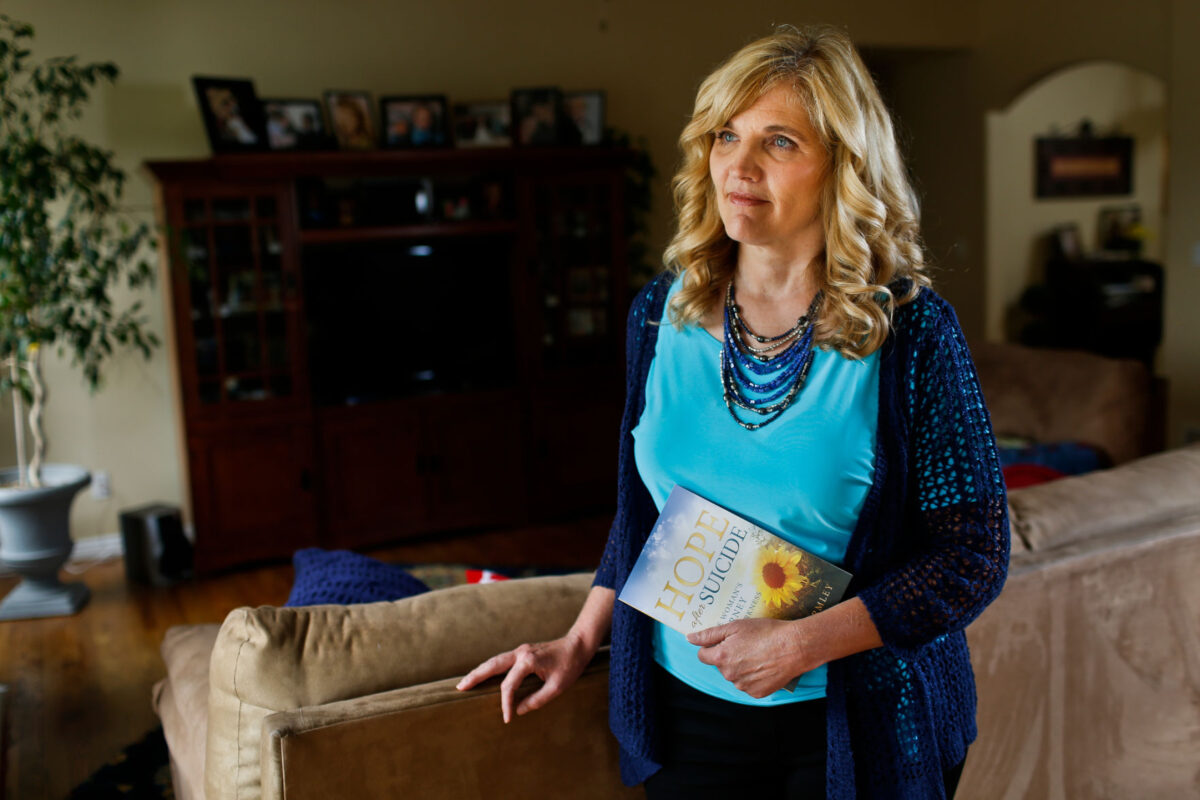
Wendy Parmley poses for a photo at her home in Orem on Friday, May 22, 2015. Parmley authored the book "Hope After Suicide: One Woman's Journey from Darkness to Light," which recounts her healing journey following her mother's suicide when Parmley was just 12 years old. SPENSER HEAPS, Daily Herald
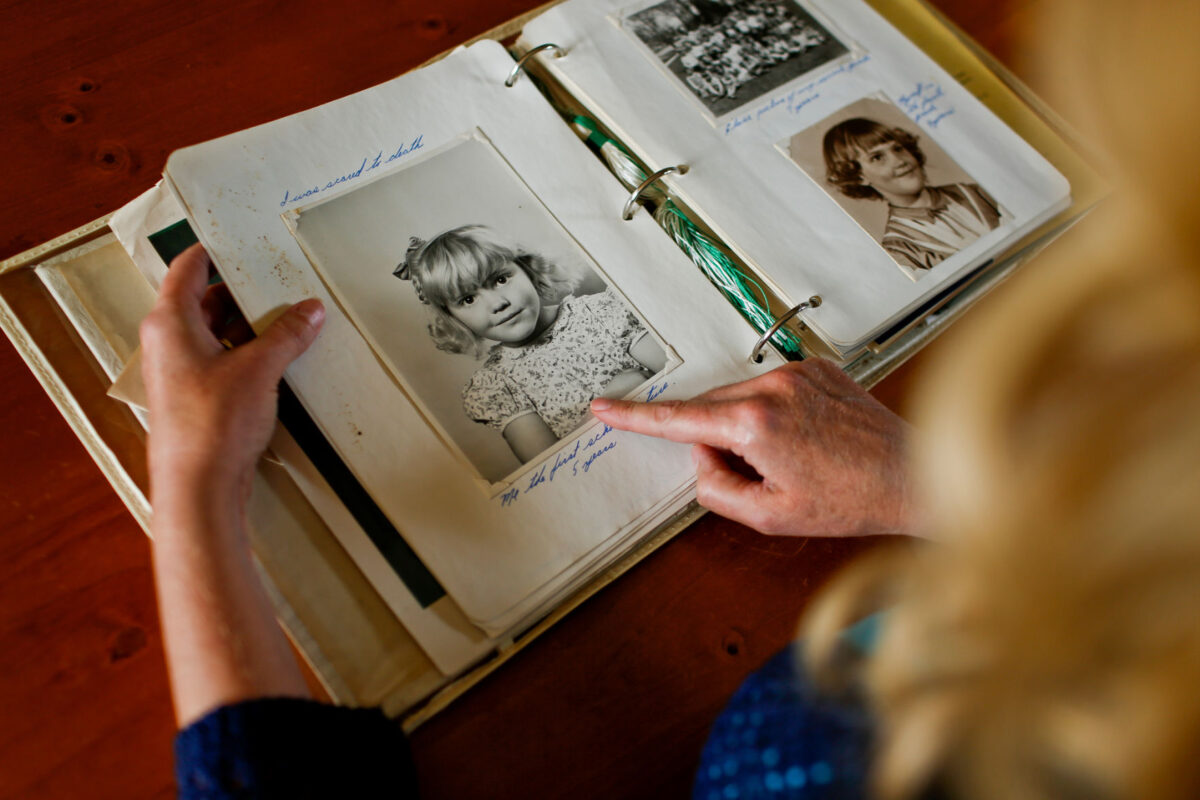
Wendy Parmley points to an old image of her mother while she poses for a photo at her home in Orem on Friday, May 22, 2015. Parmley authored the book "Hope After Suicide: One Woman's Journey from Darkness to Light," which recounts her healing journey following her mother's suicide when Parmley was just 12 years old. SPENSER HEAPS, Daily Herald
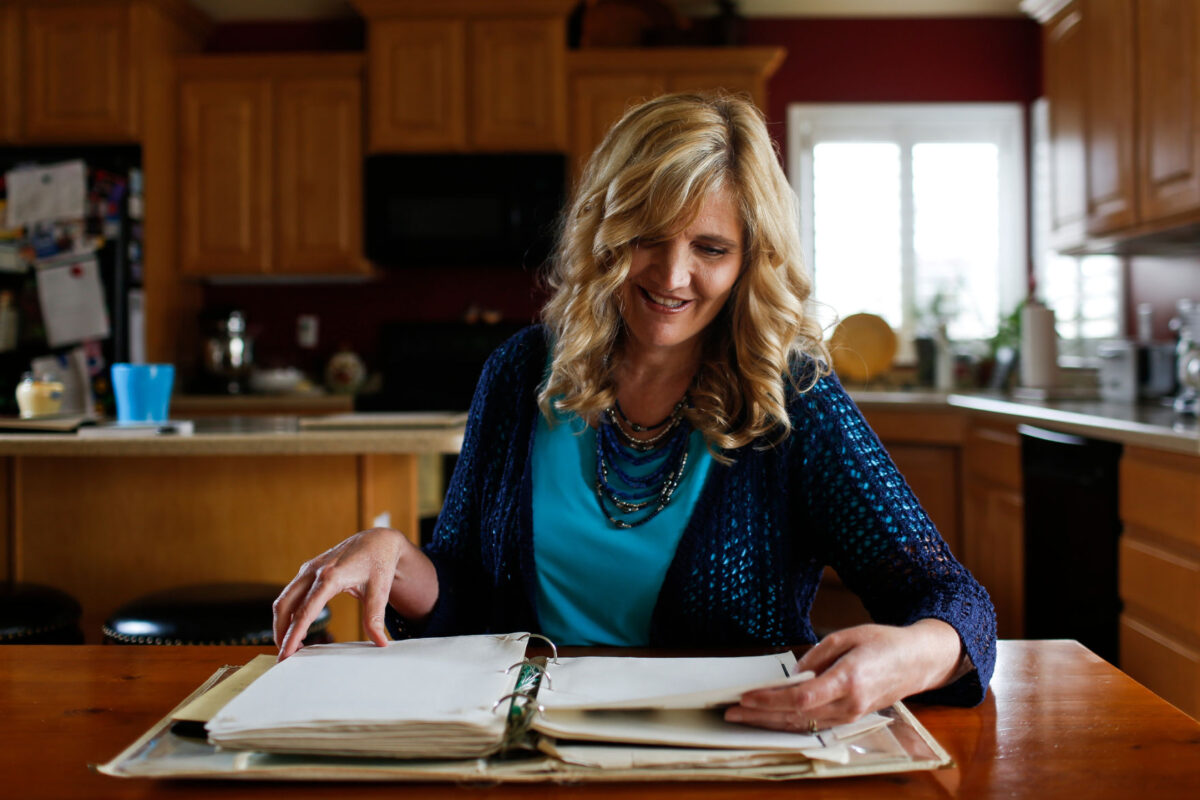
Wendy Parmley poses for a photo at her home in Orem on Friday, May 22, 2015. Parmley authored the book "Hope After Suicide: One Woman's Journey from Darkness to Light," which recounts her healing journey following her mother's suicide when Parmley was just 12 years old. SPENSER HEAPS, Daily Herald
PROVO – “Wendy — don’t let anybody go in the bathroom.”
So began the day that is seared into Wendy Parmley’s memory, even now, 40 years later.
She was 12 years old at the time, and awoke hearing her dad screaming.
“My dad seemed to me to be crazy,” she said. “His eyes had fear and terror. He was pacing back and forth.”
He had just discovered his wife had taken her own life in the family’s bathroom.
“It was a horrific memory my dad has had to carry his whole life,” she said.
Linda (not her real name) was barely 31. She and her husband, Walt, had five children. Wendy was the oldest at 12. She had a 10-year-old brother, Cary; a 7-year-old sister, Marie; a 4-year-old-brother, Drew; and a 1-year-old sister, Annie. The family lived in Provo.
Linda had a passion for life.
“Mom was a tiny, vivacious, beautiful woman,” Parmley said. “She had a positive outlook and was kind of perfectionistic. She kept the house immaculate.”
But things had changed. The family did not realize how deep that change was, however.
Linda had suffered a cardiac arrest about six months before she took her life.
“She became despondent and had no energy,” Parmley said, looking back. “She saw how beautiful it was on the other side. I remember her talking to an aunt of mine. ‘I know where I am going,’ she told her. ‘I am not afraid to die.”
Although there were signs the family can recognize now, there were also indications Linda was fine. She even laid out the clothes for her baby to wear that morning.
Linda’s bishop in The Church of Jesus Christ of Latter-day Saints shared thoughts about her at his address at her funeral. He later gave a copy of those remarks to the family.
“As Linda’s bishop, friend, and neighbor, I have come to appreciate her many beautiful qualities,” he wrote. “I think of her sparkle and her zest for living. She was full of life, and her enthusiasm and bubbling personality positively affected all in her presence.
“She was active and athletic and loved to go to their mountain home to enjoy its warmth, its serenity, its inspiration for family closeness, and its natural beauty.”
Sometimes the signals the family got from Linda were mixed.
At a Family Home Evening gathering two weeks prior to the event, she shared with others the importance and need to have and express love. However, she was somewhat distant and not really part of the group, Parmley said.
After Linda’s death, Parmley became immediately immersed in new roles, some of which were not necessarily age appropriate.
“My dad had me go through her clothes,” she said. “I was 12 years old and smelling her scent. I just sort of buried it all.”
In her recent book, “Hope after Suicide: One Woman’s Journey from Darkness to Light,” Parmley described putting on her “glass face” or a frozen smile to reflect a peaceful state she did not feel. Her dad relied on her to carry many tasks in the family, including cleaning out her mother’s clothing and helping to select her headstone.
“One evening, Dad asked me to help with the dishes,” she wrote. “I’d had enough of dishes and diapers and dirt. I didn’t want to clean one more thing! I hated cleaning; I hated the house; I hated life; I hated death; and I hated Dad.
“I finally burst. After holding in so much pain — after cleaning and babysitting and keeping kids quiet at church and cooking and pushing Annie in her buggy and picking out headstones — after crying alone at the cemetery — I exploded. I yelled and stomped and screamed and stormed.”
As her dad immersed himself in his business, Parmley immersed herself in school and friends, along with other activities.
Things took another drastic turn when Walt decided to remarry.
“I had this new person in my life,” Parmley said. “She wasn’t equipped to take care of five little kids.”
And so it began.
“We need a mom, I tried to tell myself,” she wrote. “But this lady was cold and scary to me.
“And she wasn’t my mom. She couldn’t bake bread or can fruit or plant gardens or comfort the sick. She couldn’t even clean. Her house was a disastrous mess according to the twelve-year-old standards taught to me by my perfectionist mom. There were papers and books and old, dark furniture everywhere in that old witch’s house, which had a creaky door and peeling paint and cobwebs up above the old, faded wallpaper. She caught my dad with one of those webs, I’m sure.
“But she wouldn’t catch me. She was scary.”
It took until Parmley was an adult before the two were able to establish any kind of closeness.
The experiences of losing her mother and having suicide attempts from others close to her had long-lasting effects.
“It made me very afraid of losing my kids or husband to suicide,” she said.
Nevertheless, she had made other changes that have been positive.
“The pieces can’t ever get picked up and put back together the same way, but you can have a new heart and empathize with others,” she said. “That experience changes you forever. There is an awful lot of good that can come from tragedy.”
She gave advice for others who may contact a survivor of a family member’s suicide.
“It is so important to reach out with love and not judge those who have suffered loss,” she said. “Don’t have a timeline how long grief lasts. Ask about wonderful memories they still carry. Be sensitive about holidays and birthdays. Don’t walk on the other side of the street because you don’t know what to say.”
And for those who are dealing with their own loss:
“I am a strong supporter of therapy,” she said. “Seek mental health treatment. It saves lives.”
Local News

Can a progressive beat Ben McAdams? That’s the big question in Utah Democrats’ 1st District primary

Utah County clerk candidate Corey Astill discusses campaign with Daily Herald