Less is more with freeway billboards

An AdoptUSKids billboard stands along Interstate 15 on Tuesday, March 13, 2018, in Utah County. Isaac Hale, Daily Herald
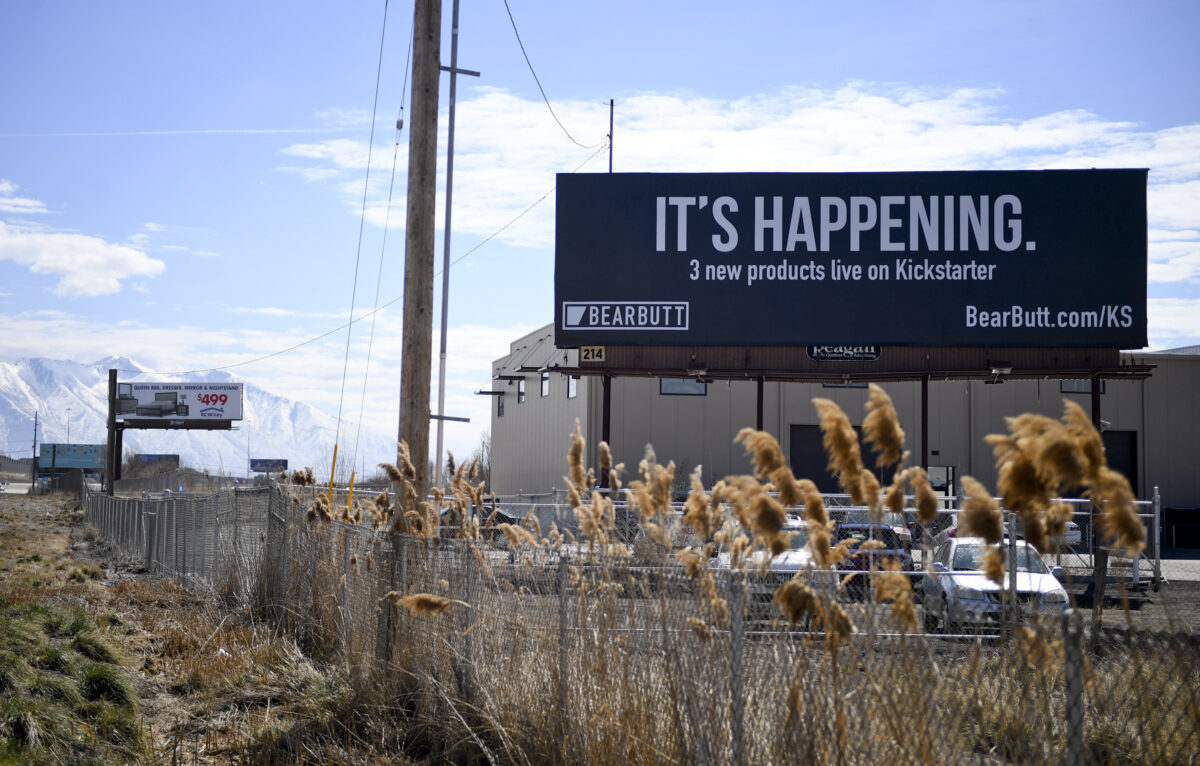
A Bear Butt billboard stands along Interstate 15 on Tuesday, March 13, 2018, in Utah County. Isaac Hale, Daily Herald
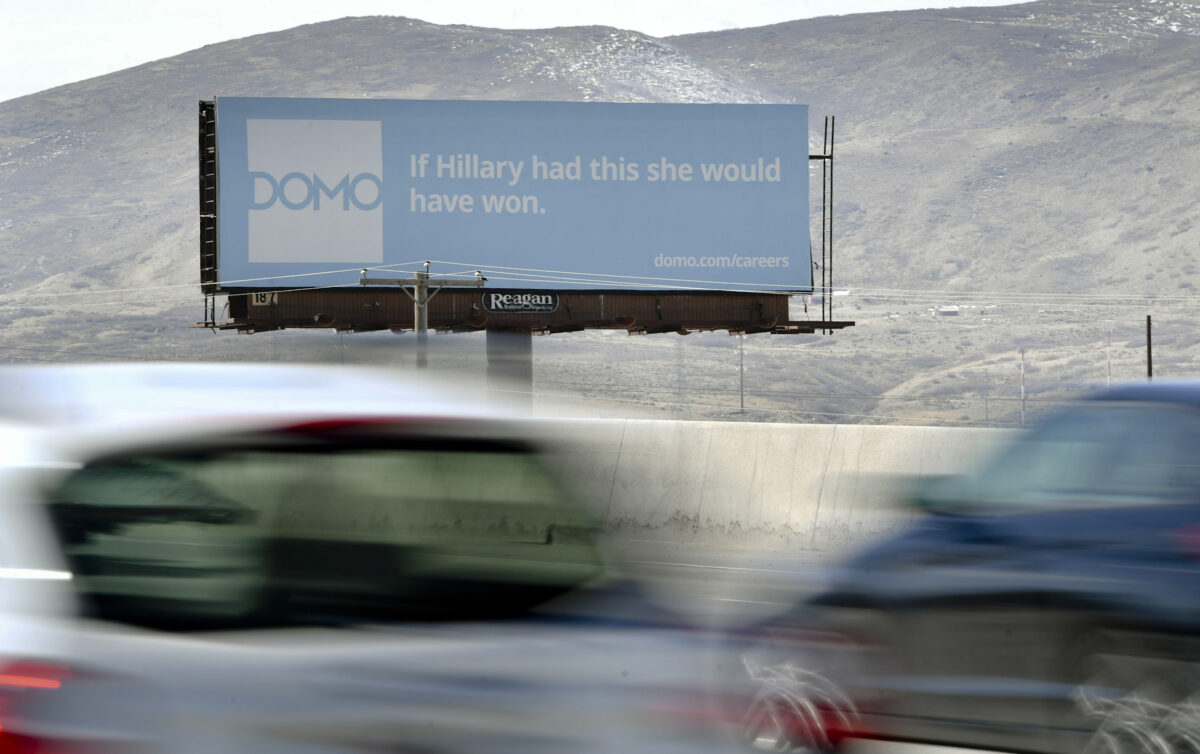
A Domo billboard stands along Interstate 15 as traffic flows by Tuesday, March 13, 2018, at Point of the Mountain. Isaac Hale, Daily Herald

A Communie billboard stands along Interstate 15 on Tuesday, March 13, 2018, in Utah County. Isaac Hale, Daily Herald
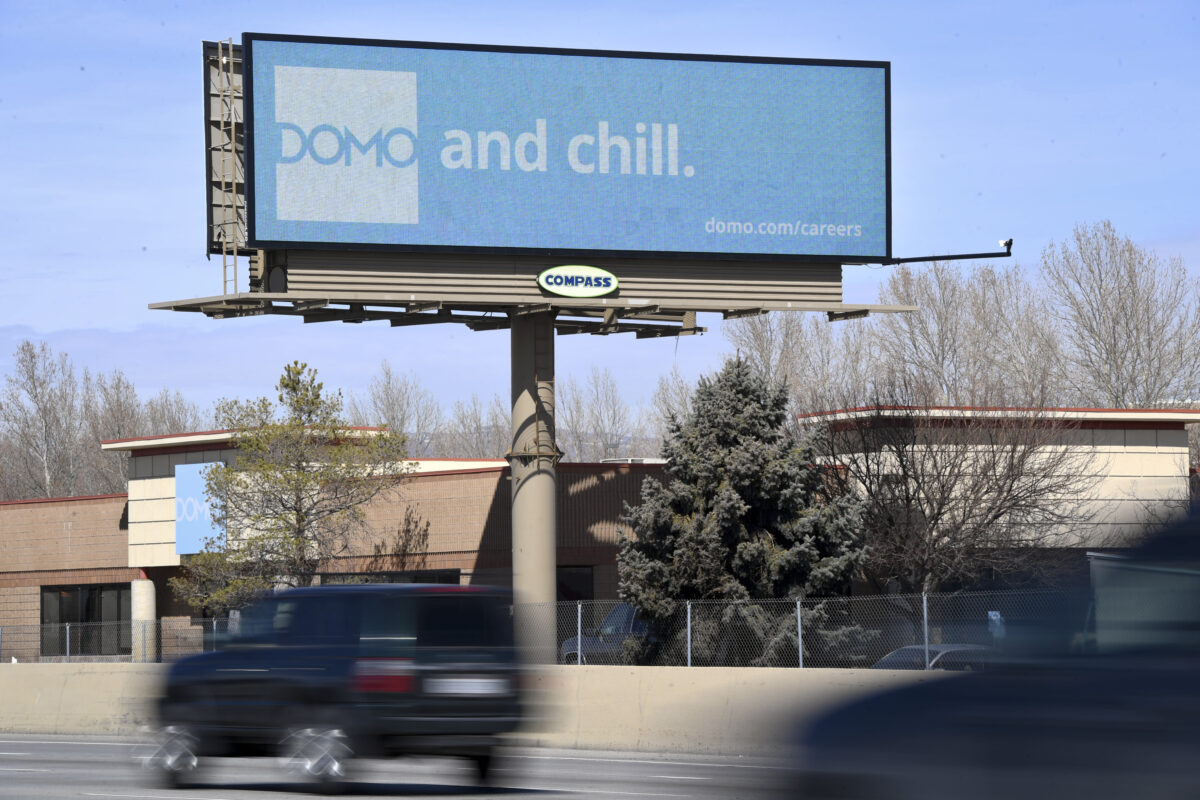
A Domo billboard stands along Interstate 15 as traffic flows by Tuesday, March 13, 2018, in Utah County. Isaac Hale, Daily Herald
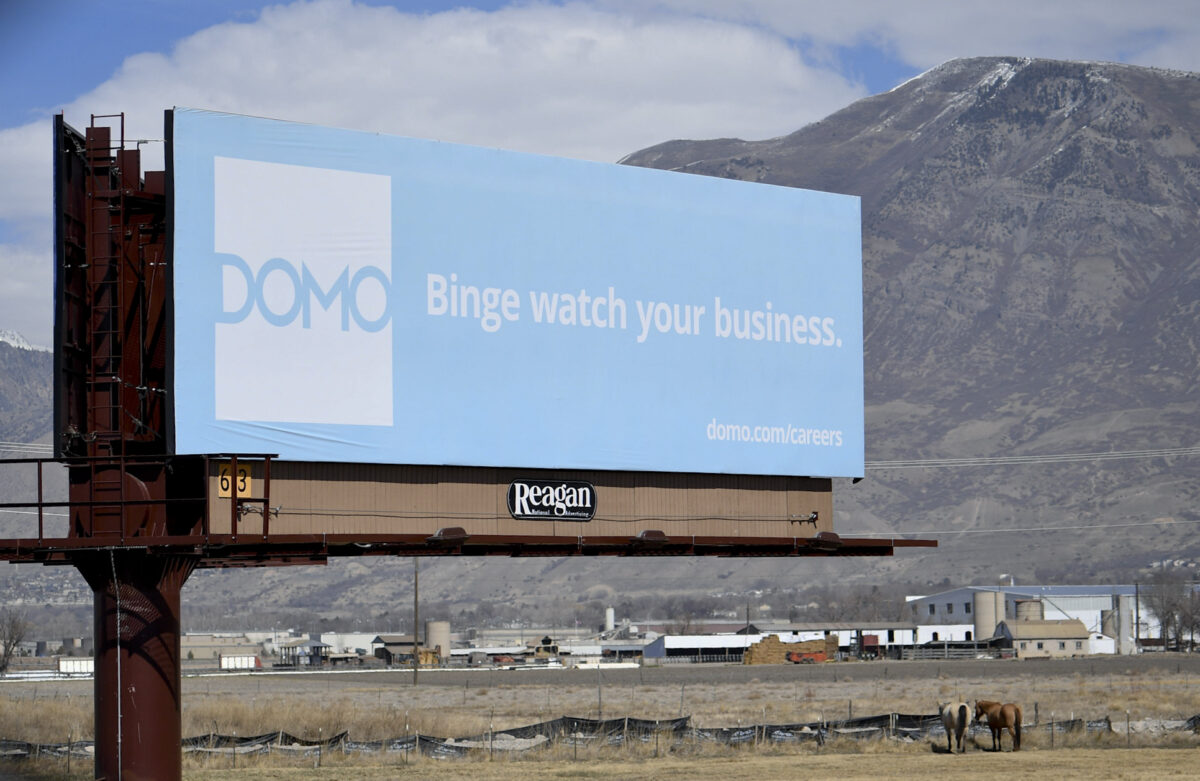
A Domo billboard stands along Interstate 15 on Tuesday, March 13, 2018, in Utah County. Isaac Hale, Daily Herald
Less is more when it comes to billboard advertising.
Freeway billboards line Interstate 15 in Utah County, vying for visual space with freeway exit signs, office and industrial buildings that line the speedway and views of the distant mountain ranges. Utah County has its share of memorable billboards and utterly forgettable ones.
From Entrata’s “Our software brings all the boys to the yard,” and the Ad Council’s “Texting and driving makes good people look bad,” to Domo’s picture of a female deer and a mustache, some billboards can quickly sink a message into our collective consciousness.
Josh James, founder and CEO of Domo, said they advertise on billboards along I-15 mostly to draw in prospective employees.
“Domo’s billboards are designed to spark curiosity and conversation. If they get people talking or wondering about what we do at Domo, that’s a good thing,” he said via email. “Since we are targeting potential employees, most of the inside joke billboards come from Utah culture. (‘Cocoa is for Closers,’ ‘The Real Asian Superfruit,’ ‘The Bluer Boutique,’ etc.).”
Paul Dishman, executive director at the Utah Valley University Vivint SMARTLab, said Domo billboards are a good example of effective freeway advertising because they always feature the same color scheme, style and format.
Dishman and fellow researchers at the SMARTLab recently studied how effective billboard advertising is for drivers and passengers traveling along the freeway. Their findings can help those who use the billboards to advertise their company or service.
According to SMARTLab data, designers should, at most, apply the rule of threes — giving viewers only three pieces of information at a time — to their billboard campaigns.
“That rule may even be moving to a rule of 2.5 or two,” Dishman said.
Dishman explained that test subjects simulated driving a stretch of I-15 from State Route 92 to University Parkway. The subjects were asked to pretend they were either a driver or passenger in each simulation, and they watched a video of the drive while SMARTLab eye-tracking technology recorded what they saw and how long they saw it.
According to the Outdoor Advertising Association of America, the average viewing time of a freeway billboard is eight seconds. The SMARTLab study found that along this particular stretch of roadway, the average viewing time is only 0.85 seconds. The study showed that within a three-minute timespan, typical viewers have 500 fixations — meaning their eyes pause on that many spots. Viewers’ eyes are constantly moving, looking at the road, the cars in front and to the side of them, freeway exit or direction signs, buildings passing by, billboards, etc.
Dishman said they found three different viewing styles in tracking viewer eyes. One group, which he called the scanners, focused primarily on the road in front of them, with their eyes tracking left to right. Dishman said this type of driver is virtually blind to billboard advertising. The next group, which he called the daisies, watch the road, but circle around it, viewing billboards and other sights in a circular pattern anchored back to the road. The final group was chaotic — their eyes bounced from one thing to another all over their field of vision, with no discernible pattern.
The study found in a typical six-minute drive, only 8.79 percent of that time is spent on billboards, and is effective only for those who are “daisy” or “chaotic” viewers. While that might be a too-short and disheartening amount of time for those paying for freeway advertising, the study found some good news.
There’s a reason more and more digital billboards are lining I-15: they get about 75 percent more views than static billboards. Viewers spent an average of 1.47 seconds on digital billboards, and 0.73 seconds on static billboards. Those billboards that lined the right side of the road versus the left also had higher viewing times.
“The most effective billboards are those that use bright colors, are simple, and are reminder ads — that’s where billboards really shine,” Dishman said. A reminder ad typically just reminds viewers about a business or its products. “People don’t drive looking for info on billboards — it’s just what catches their attention.”
Local News

Around Utah: Flags in Utah to fly at half-staff for Memorial Day

Building toward self-reliance: Community Action readying transitional housing apartments; receives donation from UCAR