BYU’s animation program has created a pipeline to Pixar
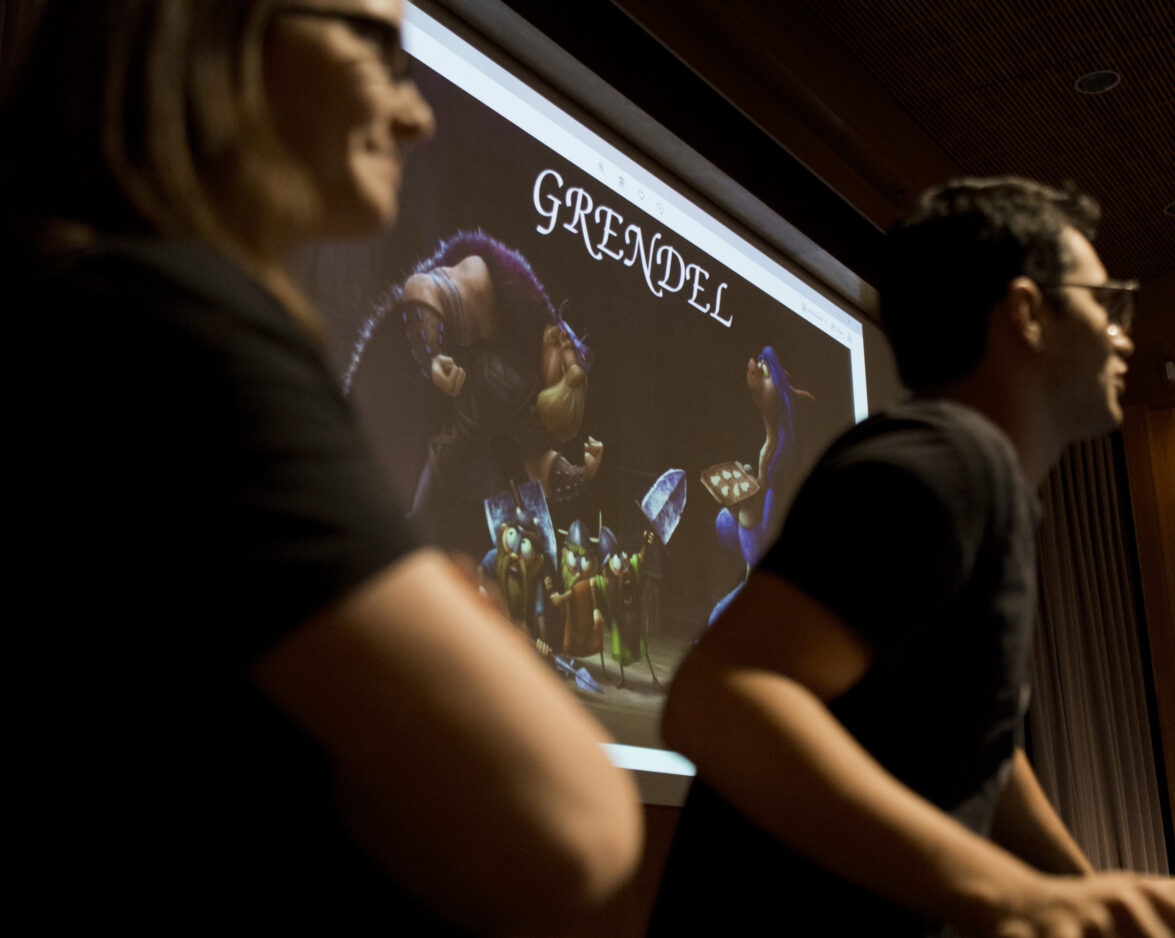
Austin Rodriguez, right, producer of "Grendel", and Kalee McCollaum, left, director of "Grendel", explain the process of creating the animated short film before the showing of "Grendel" in the Reynolds Auditorium on Wednesday, Nov. 7, 2018, in Provo.
Kalee McCollaum, director of "Grendel", explains the process of creating the animated short film before the showing of "Grendel" in the Reynolds Auditorium on Wednesday, Nov. 7, 2018, in Provo.
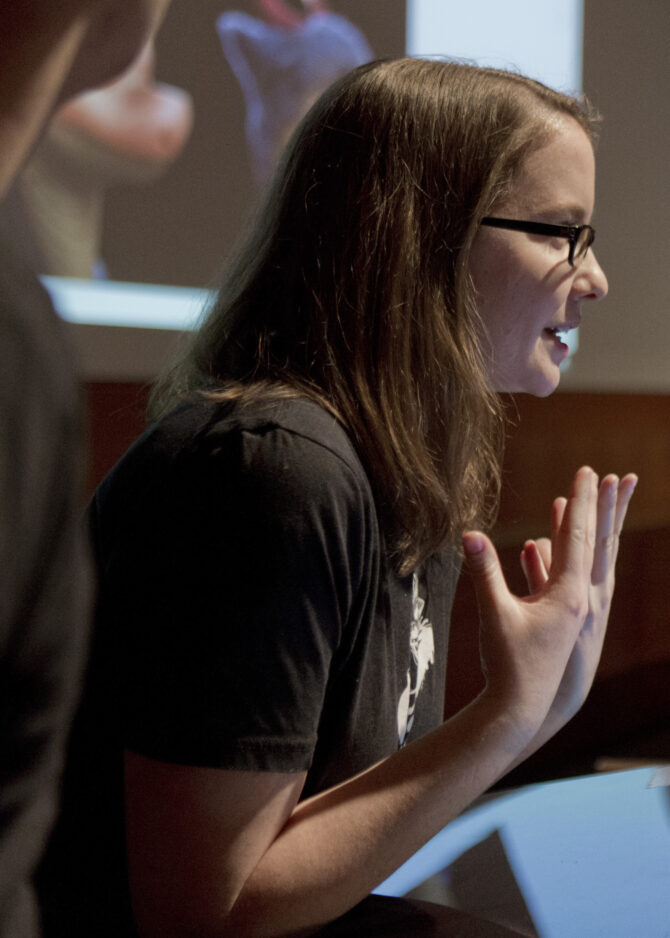
Kalee McCollaum, director of "Grendel", explains the process of creating the animated short film before the showing of "Grendel" in the Reynolds Auditorium on Wednesday, Nov. 7, 2018, in Provo.

Austin Rodriguez, producer of Grendel, watches "Grendel" during the showing in the Reynolds Auditorium on Wednesday, Nov. 7, 2018, in Provo.
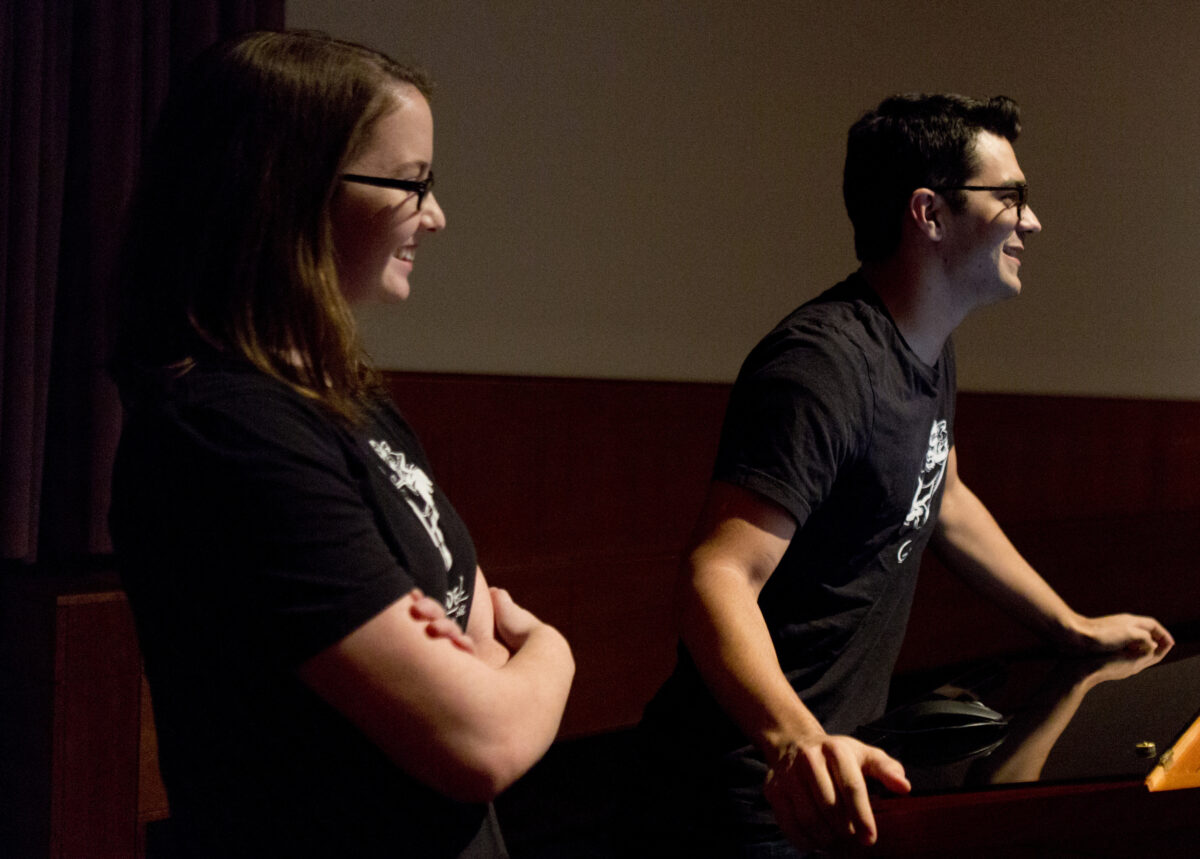
Austin Rodriguez, right, producer of "Grendel", and Kalee McCollaum, left, director of "Grendel", explain the process of creating the animated short film before the showing of "Grendel" in the Reynolds Auditorium on Wednesday, Nov. 7, 2018, in Provo.
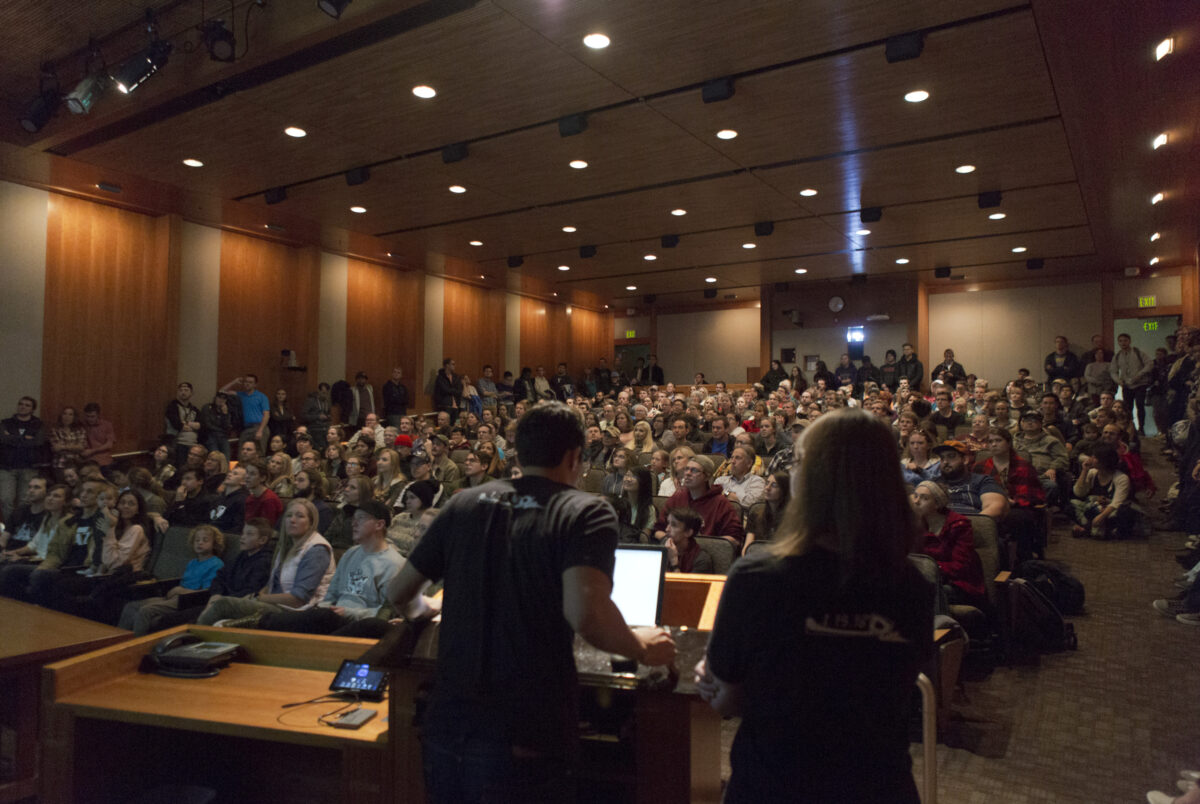
Austin Rodriguez, left, producer of "Grendel", and Kalee McCollaum, right, director of "Grendel", welcome the attendees of the showing of "Grendel" in the Reynolds Auditorium on Wednesday, Nov. 7, 2018, in Provo.
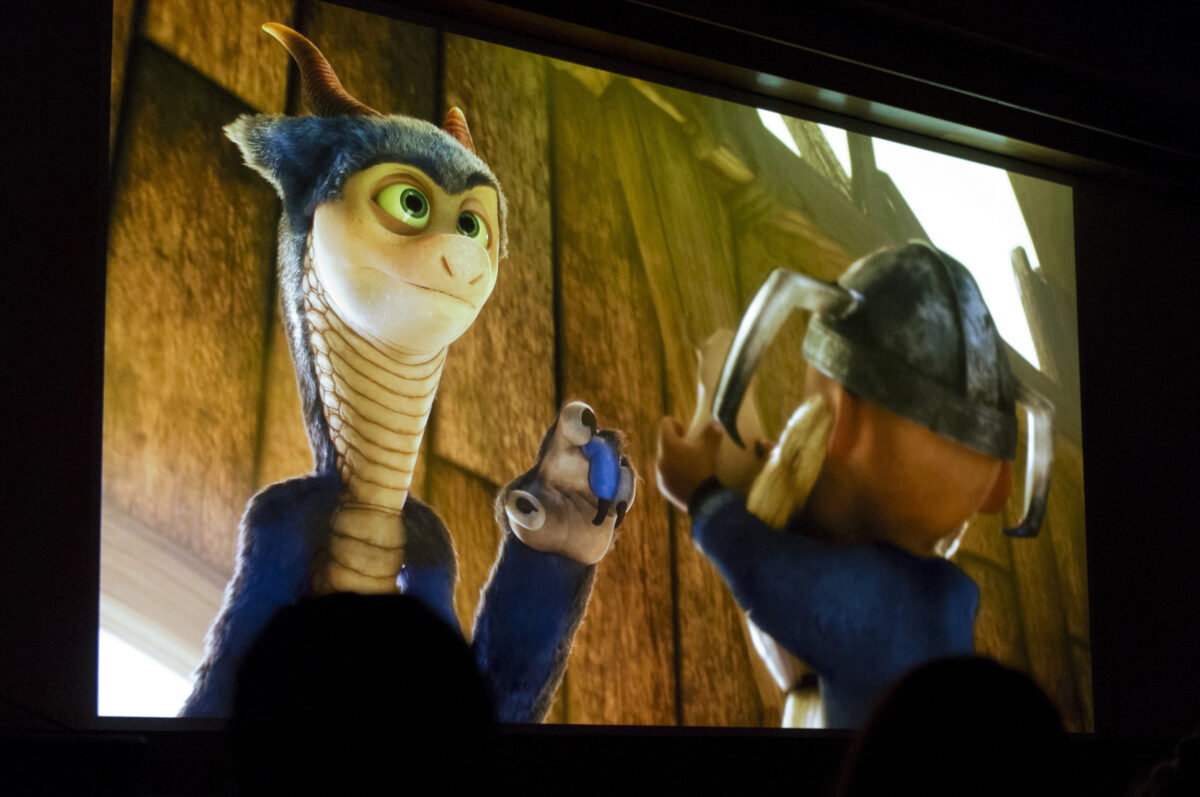
Viewers watch the animated short film "Grendel" in the Reynolds Auditorium on Wednesday, Nov. 7, 2018, in Provo.
The walls of the James E. Talmage Math Sciences/Computer Building is a who’s who of the last two decades in animation. Posters hang for everything from “Up,” to “Coco” and “Frozen,” each poster containing a cluster of signatures. A towering statue of Po, the eponymous panda from the Kung Fu Panda franchise, poses in a lobby, ready to fight any evil kung fu masters.
What the Brigham Young University Center for Animation is known for depends on which studio you ask. DreamWorks Animation has dubbed BYU “texture university.” Sony Pictures Animation knows them for their riggers. Blue Sky Studios, the company behind the Ice Age franchise, knows them for their storytelling.
BYU’s animation program touts 40 alumni at Dreamworks and 15 at Pixar. And of Pixar’s nine internship spots every summer, out of 1,200 applicants, BYU almost always has at least one student in a slot.
In its 18 years, BYU has created a training ground for studios.
“There is a direct pipeline, it is open,” said Kelly Loosli, a professor and the program’s co-creator.
First frames
Its story starts with Pixar.
The BYU Center for Animation’s founders sat down with studio executives and recruiters while developing curriculum to discover what studios wanted, but weren’t getting from students who came from other programs.
One of those was Ed Catmull, a co-founder of Pixar, who told BYU that Pixar wasn’t seeing students who knew how to work collaboratively. Artists tend to be independent — which isn’t a comfortable fit for a collaborative industry where artists must adjust their artistic style to match the project they’re working on.
Catmull told them the industry gets people who are super technical, or pure artists, but nothing in the middle. The BYU team left the meeting with the drive to create a “technical artist,” or students who can both draw and code.
“That’s definitely our reputation,” said Brent Adams, a co-founder and director for the BYU Center for Animation. “The studios will look here looking for smart artists who know how to work collaboratively.”
The idea was to create an educational experience where students could pursue what they’re passionate about.
“We had a program with no reputation, no recruiters, no mentors,” Adams said.
Early on, they had to recruit. But as more alumni enter the industry and climb through its ranks, and as the program continues to add awards for its short films and video games under its belt, it doesn’t anymore.
Loosli attributes the program’s success to its beginnings, when the team had hardly any money in the program and were therefore unmonitored. He hated the idea of traditional education, so they framed the program to be more about mentorship than a professor dictating to students.
It’s built to mimic the industry, including twice-weekly critiques on what students have done and what needs to be improved. The idea is to give the students access to tools, let them make their own film and then step aside.
A competitive industry
Members of The Church of Jesus Christ of Latter-day Saints have had a longtime love affair with animated media, translating to plenty of interest in the animation program at the church-owned university.
Typically, between 60 to 75 students apply, with a couple dozen accepted for the fine arts and computer science sides to the program.
Loosli said some interest for BYU students for animation comes because animated projects tend to be uplifting and safe — the movies their parents let them watch growing up. They’re also seeing an emergence of anime fans, and computer science students in particular are attracted in the video game industry.
It’s not an easy industry. Competition is high and the jobs aren’t high paying — especially compared to other jobs in computer science — and the cities where the jobs are located are expensive.
That doesn’t stop the students.
“Artists tend to be weirdos anyway and they’re not pursuing the safest things because they want to do something they’re passionate about,” Loosli said.
He estimates that between 80 to 92 percent of the program’s students are placed in jobs in the animation industry at graduation. The ones who don’t get jobs immediately typically have changed their emphasis part way through their education and weren’t as competitive as others at graduation, but get a job a year or two later. Others go into different fields, and the program has alumni both in law and medical school.
The students who enter the program have eclectic interests. Austin Rodriguez, a senior in the program who did an internship at Pixar two summers ago, originally enrolled at BYU with the intention of becoming a lawyer before stumbling into animation.
“This, for me, this was never the plan,” Rodriguez said.
He hopes to return to Pixar to work on films.
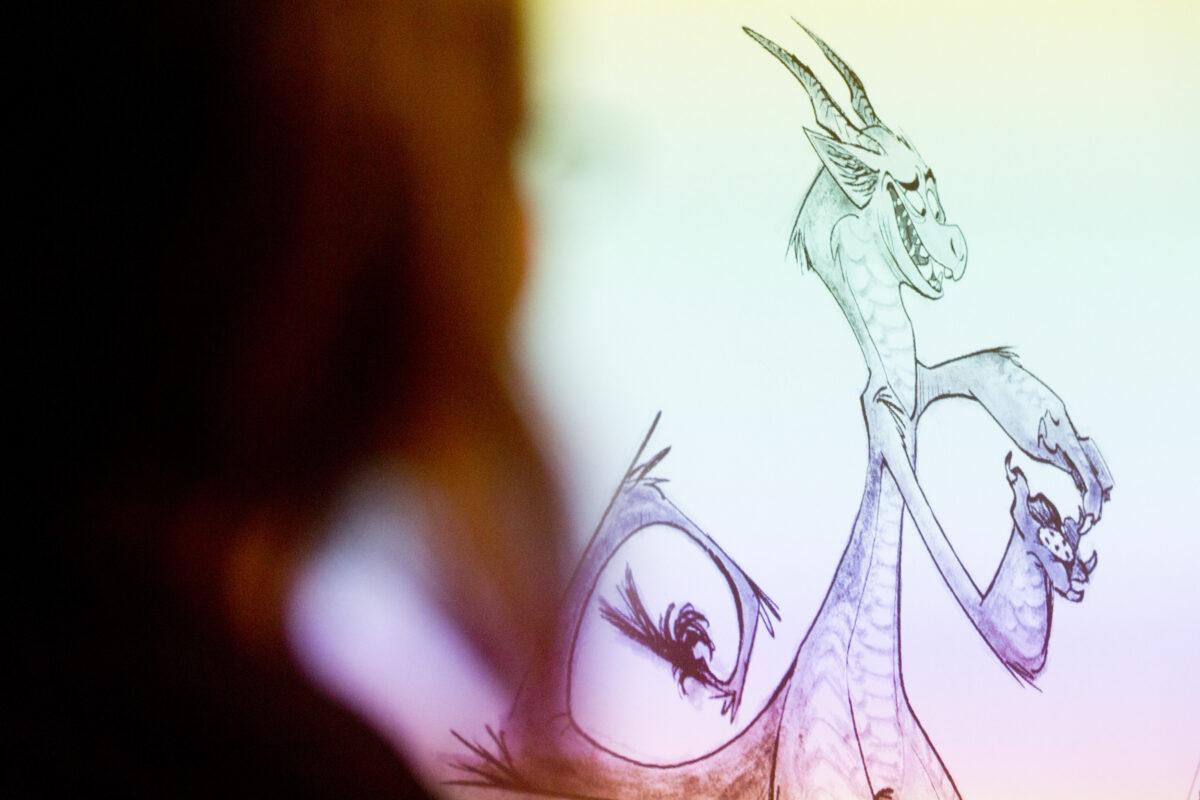
Rodriguez fell in love with the storytelling aspect of animation. He was the producer of the student short film “Grendel,” a twist on Beowulf.
“Everything you see on the screen is built by us, designed by us,” he said.
That includes the 24 images students create for every second of the film.
BYU brings in industry experts who critique the students’ work, providing an extra incentive for students.
“They do a good job at getting us noticed,” Rodriguez said. “They say, ‘we are going to make sure someone is going to look at you. It’s up to you what to do when they do.'”
Mentors
The program has had mentors come in from Google, a handful a year from Pixar and others from DreamWorks and Sony. Students have video conferenced with Genndy Tartakovsky, the director of “Hotel Transylvania,” and have interacted with Chris Buck, the co-director of “Frozen” and “Tarzan.”
The program’s success has led to an onslaught of mentors. Too many, actually.
“Early on, we didn’t have many mentors from industry, and now we tell mentors not to come,” Adams said.
The students’ success started to undermine them. Recruiters, knowing they could call Adams and Loosli for recommendations, said they weren’t going to come to campus. One recruited four texture artists from a single call without stepping foot on campus for a year. The program wanted to keep those relationships, and for recruiters to continue coming.
Adams tells the story of one student, who was pulled on the third day of a three-week training with Sony to work with character setup because Sony knew the student was from BYU and already had the needed skills. One student received three job offers within three days. Another was the head of cloth on “Coco.”
If a studio calls asking for a recommendation of a student for a job and they don’t have someone with the skills, Loosli and Adams won’t recommend anyone. They said it’s better to keep the relationship with the studio than to recommend a student who isn’t a proper fit.
The faculty’s mentor relationship with students extends to looking at a student’s skills and interests and pushing them in that direction, but also means telling students when they don’t think they have the aptitude for specific aspects of animation, like character design.
“Part of what our job is is to give that honest, frank appraisal so they know that they have to sort of change direction or they have to work that much harder to be competitive,” Loosli said.
Defining success
After doing an internship at Pixar over the summer, Kris Molinari hopes to be a the top of Pixar’s list for its next opening.
“It’s the dream,” Molinari said.
Molinari originally entered BYU to pursue physics and math. He took a drawing class, fell in love with it and buckled down to become accepted to the animation program.
He considers working on projects a playground, and with professors taking a step back to let students work, he said he can really play.
“You spend a lot of time figuring things out on your own,” Molinari said.
But despite numerous College Television Awards (nicknamed “Student Emmys”) from the Academy of Television Arts and Science Foundation, Student Academy Awards, films that have been played at the Cannes Film Festival and snagging the top prize at this year at E3’s College Game Competition, Loosli said he doesn’t think the students’ films are good. They’re student films, after all, he explained.
“Our goal isn’t to beat like CalArts or SCAD or even Ringling, some of these premier art schools, our goal is to get to the Academy Awards and be up against Pixar for the best short film,” Loosli said.
Loosli admits it’s unlikely. The students at BYU are juggling their coursework with collaborating on their senior films, compared to Pixar, which Adams said budgets $1.5 million for a five-minute short film, and has 25 people working full-time on it for 18 months.
In the end, Loosli said the program’s focus is on the students’ skills more than the projects they create.
“We are always going to sacrifice the film to make a better student,” Loosli said.