BYU Column: BYU Passover Seder models centuries old Jewish tradition
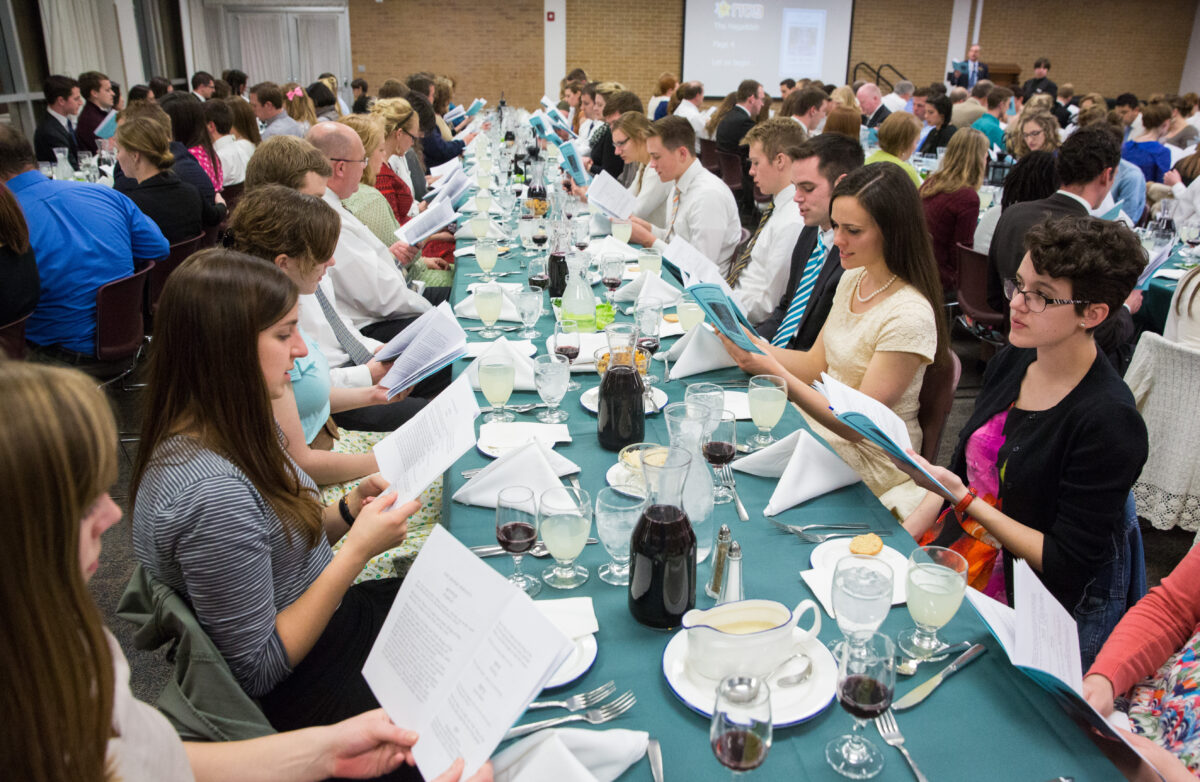
BYU Passover Seder Service BYU Professor Jeff Chadwick leads the BYU Passover Seder Service. The BYU Passover Seder service includes the biblical unleavened bread and bitter herbs, and featured other festival foods and traditions of the Passover, all in a specially catered meal.
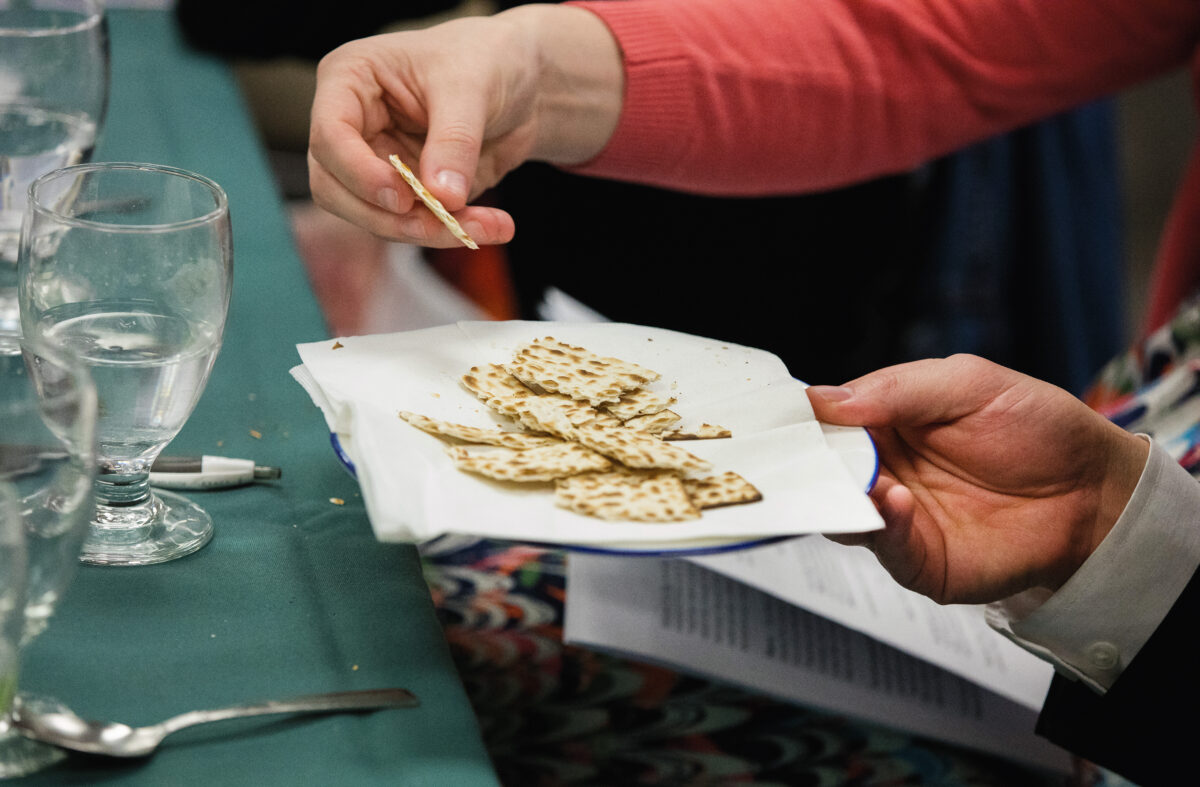
BYU Professor Jeff Chadwick leads the BYU Passover Seder Service. The BYU Passover Seder service includes the biblical unleavened bread and bitter herbs, and featured other festival foods and traditions of the Passover, all in a specially catered meal.
Brigham Young University will hold its annual model Passover services on three Friday evenings in March. The BYU Passover Seder, sponsored by the university’s College of Religious Education, will be held on Friday March 15, 22, and 29, at 6 p.m. each evening, in the Wilkinson Student Center, room 3228. The host of the program and service is Dr. Jeffrey Chadwick, Religious Education professor (Jewish Studies) and Jerusalem Center professor at BYU.
The BYU Passover Seder is actually referred to as a “model Seder” – one involving the traditional Jewish Passover meal and program, but held on a night other than the actual Jewish Passover, which occurs in 2019 on Friday, April 19. The purpose of a model Seder is to teach about the history, meaning and procedure of the Jewish Passover. The BYU Passover Seder is one of the largest model Seder programs in the United States, hosting more than 700 participants annually. In recent years, Dr. Chadwick’s program and services have been featured in international media, including the Times of Israel.
“We conduct our model Seder according to authentic Jewish tradition,” Chadwick said, “including a multi-course Passover meal, and a program of selections from the traditional Passover “Haggadah.” We feature all the ritual foods of Passover, including the Biblical bitter herbs and unleavened bread, known in Hebrew as matza. Many people in Utah have heard of Passover, but have little opportunity to learn about it, and less to participate in it. The BYU Passover aims to educate our own students, and also the interested public, about the rich heritage of this Jewish festival.”
While some local Christian congregations occasionally attempt to conduct a New Testament-style Passover, replicating events of Jesus’ Last Supper, that is not the approach of the BYU Passover Seder.
“Our model Seder proceeds according to centuries-old Jewish tradition,” Chadwick explained, “reaching back as far as two thousand years, when the Jewish temple still stood in Jerusalem.”
A few minutes are taken, separate from the Seder program, to explain how Passover fits into the New Testament narrative and the life of Jesus. But it is clearly explained that those connections are not part of the Jewish festival and tradition.
“We make no attempt to Christianize the BYU Passover,” Chadwick said, “it is presented as authentically Jewish as possible.”
The program lasts about three hours in a large banquet hall seating some 240 people. While the BYU Passover Seder is primarily intended for students at the university, there is also a good deal of participation from the general public as well. Tickets are on sale now for the three scheduled nights in March, and may be purchased only online at the BYU Passover website – http://religion.byu.edu/passover. The cost per person is $30 for the general public. A description of the program, along with frequently asked questions and answers, also appear on the web page.
Community
BYU: New research finds all major AI models ignore faith, religion in responses
A new multi-university academic consortium led by Brigham Young University has found AI models have significant ...
Scaling timber: Arborists participate in the Utah Tree Climbing Competition in Payson