Festival Flashback: Rodeo highlights three weeks of Fiesta Days in Spanish Fork

Bareback rider Bau Mayo goes out the gates in competition Tuesday at the Fiesta Days Rodeo in Spanish Fork. 07/24/01 Photo by Kevin Lee

A group of Meadowlark First Ward children hold approximately 40 flags in a show of patriotism at the Spanish Fork Fiesta Days Parade on Saturday, July 24, 1999. Photo by Robert Johnson.
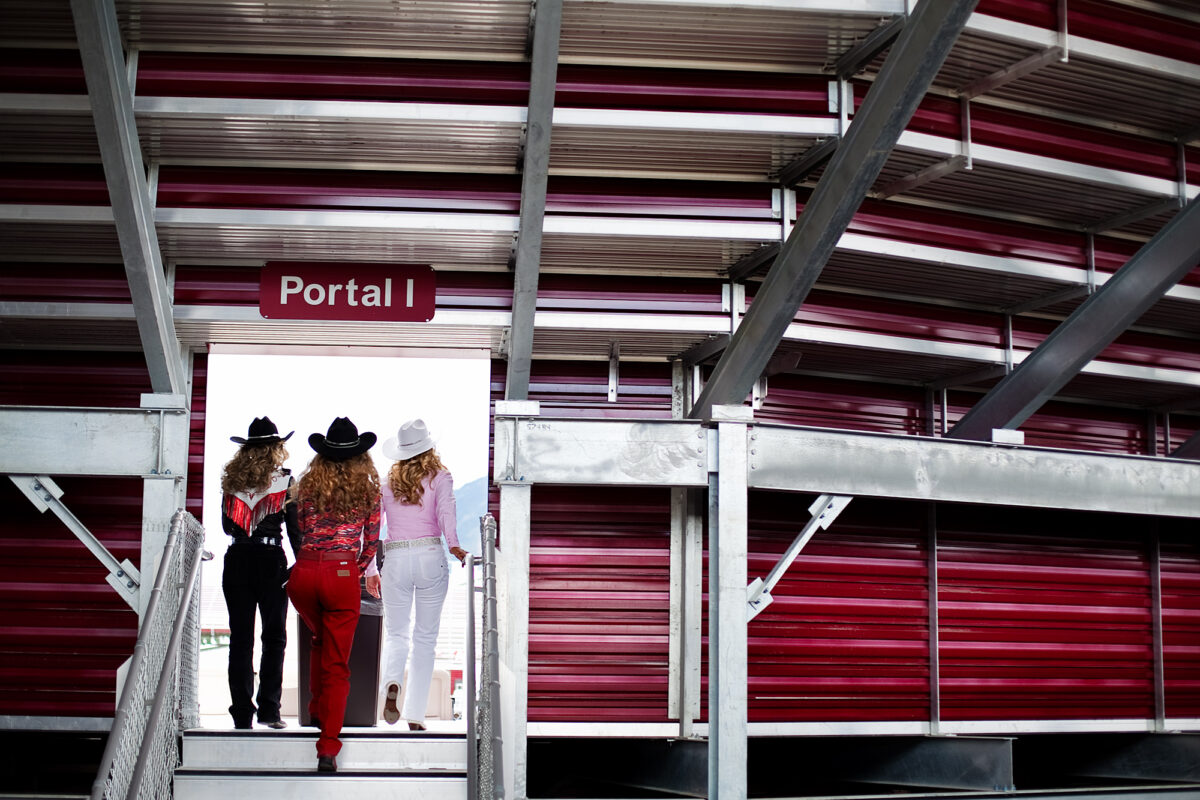
From left, Whitney Clift, Fiesta Days Rodeo queen, Autumn Young, first attendant, and Audrey Penrod, second attendant, take their first steps inside the new Spanish Fork rodeo arena after a ribbon-cutting ceremony Thursday, July 19, 2012. MARK JOHNSTON/Daily Herald

The parade route in Spanish Fork's Fiesta Days Parade included giant inflatable characters, above, as the town came out to celebrate Pioneer Day. Monday, July 24, 2000. Photo by Kevin Lee.
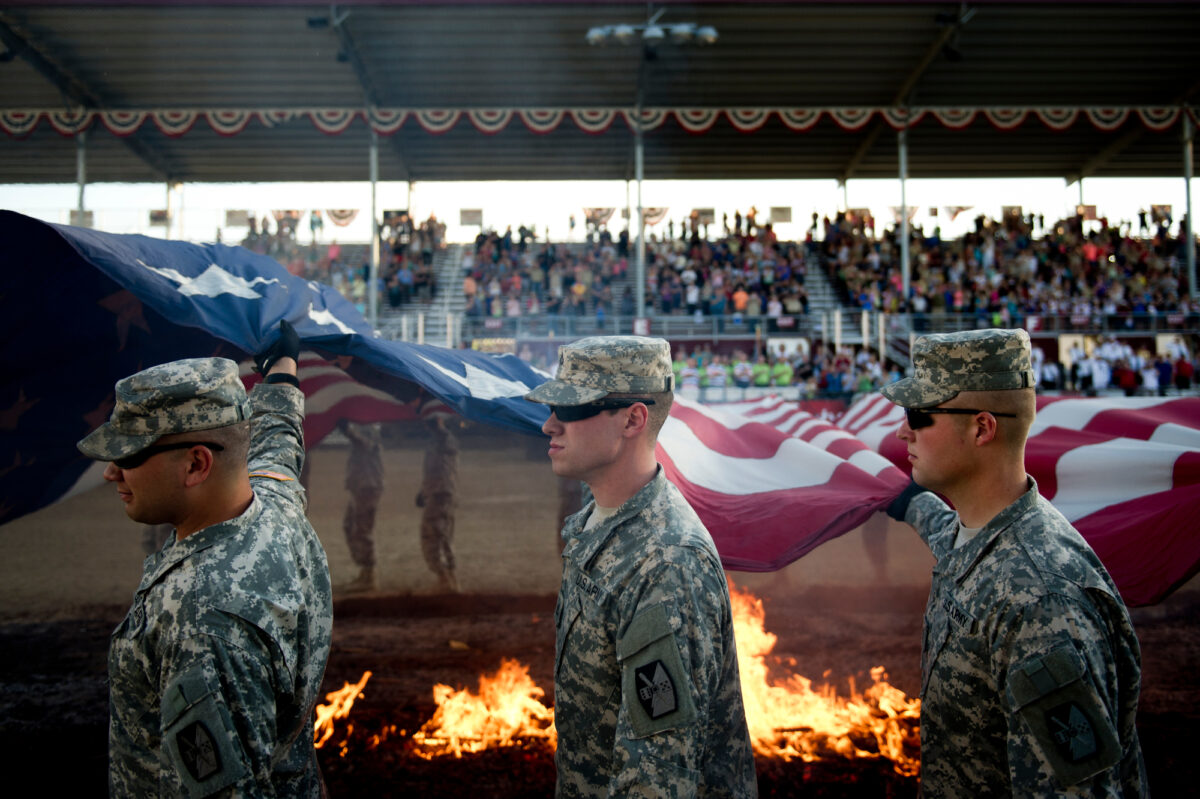
Members of the 145th Charlie Battery of the U.S. Army, from Spanish Fork, carry an enormous U.S flag over a fire during the flag retirement ceremony at Spanish Fork Rodeo Grounds on Wednesday, July 15, 2015. Spanish Fork's Fiesta Days was kicked off with the event that properly retired over 1,300 flags from the community, making it reportedly the largest ceremony of its type in the country. GRANT HINDSLEY, Daily Herald
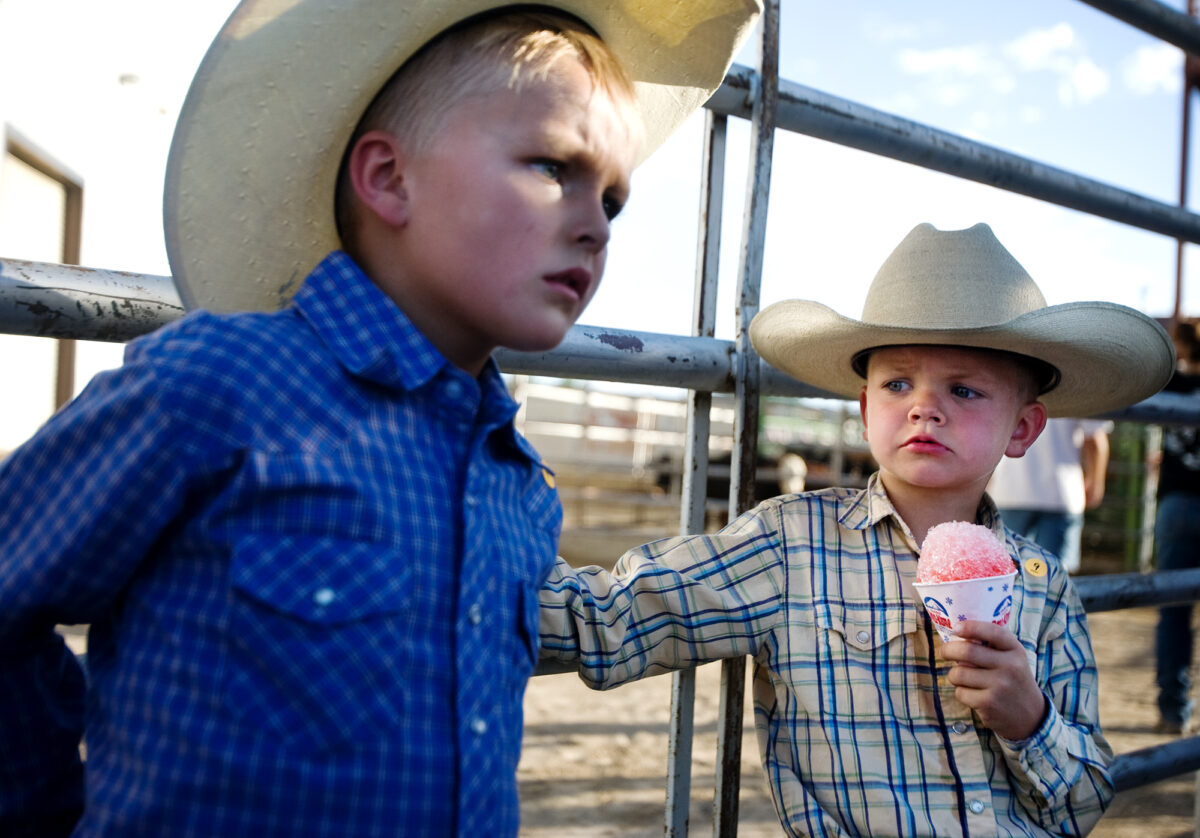
Brendyn Shepherd, right, 5, of Salem, enjoys a snow cone while eyeing his competition, Kade Argyle, 6, of Spanish Fork, before their mutton bustin' ride at the Spanish Fork Fiesta Days Rodeo in Spanish Fork Wednesday, July 22, 2009. MARK JOHNSTON/Daily Herald

A crowd of children attempt to catch candy during the Fiesta Days Grand Parade Wednesday, July 24, 2013, in Spanish Fork. The parade featured residents from many surrounding towns with a number of different floats, performances and giveaways. ALEX GOODLETT/Daily Herald
Editor’s Note: The Festival Flashback series continues to take a look at the historical aspects of Utah County city celebrations. While the majority of celebrations have been canceled this summer due to the COVID-19 pandemic, Fiesta Days in Spanish Fork is currently underway with its storied rodeo and some other scaled-back events.
You can’t think about Spanish Fork’s Fiesta Days without thinking rodeo. This year marks the 78th year the rodeo has been in Spanish Fork.
Fiesta Days has grown over the years to become almost a three-week extravaganza of celebrations, sporting competitions and flag-waving patriotism.
Fiesta Days Rodeo
But it’s the rodeo, sanctioned by the Professional Rodeo Cowboys Association, which is the granddaddy show stopper.
While a good portion of the Fiesta Days’ yearly events have been canceled due to the COVID-19 pandemic. The rodeo goes on with a week of nightly competitions ending with the finale on Friday.
When it comes to planning, the Fiesta Days Committee always works a year in advance. When one year of events ends, the next month begins planning for the following year.
“We have gotten out of control a bit,” said Karen Bradford, assistant director of Parks and Recreation and a member of the Fiesta Days Committee.
When it comes to the rodeo, keeping it going is a big deal.
“We sell 8,500 seats a night and are usually sold out nearly every night of the five nights,” Bradford said. “This year we’ve cut the seats to 6,000.”
Those attending the rodeo will see cowboys and cowgirls compete in classic rodeo events: Bareback Riding, Steer Wrestling, Team Roping, Saddle Bronc Riding, Tie-Down Roping, Women’s Barrel Racing, and of course — Bull Riding. If you arrive early you can start your night off right with the famous Mutton Bustin’ and pre-show entertainment.
In order to maintain the mandates from Gov. Gary Herbert and the state and county health departments, Bradford said the committee has had to find an extra 300 volunteers to keep things sanitized, to hand out water and bandanas.
“We used to put water in ice barrels for people to grab, but we can’t do that this year,” Bradford said.
Fiesta events
Bradford said there have been some positives during this down year.
For instance, while the City Theater couldn’t pull together for its annual summer show, the city’s youth theater had already prepared nine months for its production of “Frozen Jr.” They were shut down by COVID-19 just a few days before opening night.
“This year the Youth Theater will be performing during Fiesta Days,” Bradford said. “They have temperature checks each day and wear masks off stage.”
Bradford said the youth are excited to fill in on this big request and get to do their show.
“Our council feels really strong it’s a party we throw for the city,” Bradford said. “The thing that’s great about Spanish Fork is the way they come together.”
No one is quite sure how long the rest of Fiesta Days’ events have been going. Bradford said it was here when she was a little girl and that’s all she has ever heard of or known.
It appears from the history books there has always been something to do with cattle, after the turn of the 20th century.
The first annual Utah County Livestock Show was held on the City Square in April of 1925, according to city history. This show has since become the Utah Junior Livestock Show. Fans, buyers and exhibitors come from all areas of the state.
A remarkable history
Spanish Fork’s history is much more than livestock and cowboys.
While the Founding Fathers were reveling in their recent signing of the Declaration of Independence and preparing for the great surge of the American Revolution, two Franciscan Friars and explorers were leaving their mark in what is now Spanish Fork.
Silvestre Velez de Escalante and Francisco Atanasio de Dominguez passed through the Spanish Fork Area on a quest to find a more direct route from Santa Fe, New Mexico, to Monterey, California. They encamped at what would become Spanish Fork on Sept. 23, 1776.
According to history reported on a city website, Spanish Fork was a pretty popular place with trappers, pioneers and the like.
Several years after Escalante and Dominquez passed by the area, the name “Spanish Fork” appeared on John C. Fremont’s map of the area published in 1845.
This was two years before the Mormon pioneers settled in Utah.
“In all likelihood, the name “Spanish Fork” was derived from the fact that the route of the Taos trappers during the early part of the 1800s followed the (Spanish Fork) canyon and the river,” the city history said.
The area was populated by the Ute Indian Tribe, but no permanent villages were there because of the nomadic nature of the Utes.
A man by the name of Enoch Reece built the first home in Spanish Fork in 1850. He laid claim to about 400 acres 2 miles west of what is now the city boundaries.
The city history records say he was soon followed by a Charles Ferguson and George Sevey and 200 head of cattle.
A few families settled along the river in 1850-51. By the end of 1852 there were more than 100 families living along the river. In 1854 a fort was built and in January 1855 Spanish Fork was incorporated as a city.
“Soon after incorporation, the first Icelandic immigrants settled between 1855 and 1860,” the city history said. “These Icelandic pioneers established the first permanent Icelandic settlement in the United States.”
The city continues to celebrate the yearly Icelandic Days in honor of those first settling families.
It didn’t take too many more years for the population to reach nearly 1,500 residents, mostly consisting of Irish, English, Scottish, Welsh and Scandinavian immigrants.
“The first commercial industry was a sawmill which began operation in 1858,” the city history reports. “One year later the first flour mill opened its doors for business. The business group known as the Spanish Fork Mercantile was opened on February 11, 1883; the association was similar in function to the modern day Chamber of Commerce.”
From there the city burgeoned and built its first schoolhouse in 1862. With the introduction of electricity, Spanish Fork built a light and power system in 1909.
In 1919, the Strawberry Valley Reclamation Project came online and allowed for the cultivation of thousands of acres and also provided the city with a stable supply of water, according to city history.
Today, Spanish Fork boasts its own government television station, is host to the county rodeo grounds and one of its favorite sites is the ornate Hari Krishna Temple.
The Krisha Temple hosts the annual Holi Festival introducing Spring. Thanks to exuberant Brigham Young University and Utah Valley University students, it touts one of the largest throwing of the spring colors and Holi celebrations in the United States, according to the Krishna Temple accounts.
Check out the list of Fiesta Days events and information on the city’s website at http://spanishfork.org. You also may call the Parks & Recreation Office at (801) 804-4600.
Local News
Timpanogos School District to consider launching study to evaluate school closures, consolidations

Charges filed against juvenile suspect in deaths of mother, half-brother in Saratoga Springs