BYU Column: Concern, convenience are the predictors of COVID-19 compliance amongst college students
As vaccines roll out and the number of new COVID-19 cases decrease in the state of Utah, many are hopeful for a day when masks aren’t required and social interaction replaces social distancing.
In the meantime, the Centers for Disease Control encourages all citizens to continue practicing caution and follow guidelines while that day approaches.
Interested in how to motivate students to continue taking precautionary measures to stop the spread of COVID-19 in the community, the Brigham Young University College of Life Sciences initiated a project to identify the driving influencers.
Expanding the study to include college students across the country, the research team was able to compare the attitudes and behaviors of Utah Valley students to those nationwide. The team surveyed more than 600 students from BYU and UVU and more than 600 college students from campuses across the nation to assess compliance with COVID-19 precautionary behaviors.
They found that Utah Valley students’ motivating factors and behaviors differed from the average college student in America.
“Interestingly, concern about the severity of COVID-19’s impact and feelings of inconvenience were the only significant predictors for Utah Valley students’ compliance with social distancing, small groups, and mask-wearing guidelines,” lead author Spencer Shumway said. “Students with greater concern for the virus took precautions more often than students who did not find the virus alarming, and students who found mask-wearing inconvenient were likewise less compliant.”
In contrast, the study identified three significant contributors to COVID-19 guideline compliance amongst undergraduate students nationwide.
In addition to having a high level of concern about the severity of the virus, those who have a higher rate of news exposure and identify as religious are more compliant with public health guidelines. This is not the case with the Utah Valley students surveyed.
When comparing the populations of those who took the survey, researchers observed that Utah Valley students are less politically conservative, more religious, more trusting in science, less constitutionalist, and generally less concerned about the pandemic than the other 600 students surveyed.
Utah Valley students were also younger than most other university students and more likely to wear a mask indoors when required, although less likely to wear a mask in indoor situations when masks are not required or in groups outdoors.
“Our team hopes to use these findings to better inform the approaches we take when trying to encourage compliance with precautionary measures in order to slow the spread of this pandemic,” biology professor Jamie Jensen said. “Using data to guide our decisions helps us to more accurately address the issue at hand. We are currently working on designing these data-driven interventions.”
Professor Jensen was the senior researcher with a student team consisting of Spencer G. Shumway from the Department of Chemistry and Biochemistry; Jonas D. Hopper, Daniel G. Ferguson, Gabriella Hubble, and David Patterson from the Department of Biology; and Ethan R. Tolman from the Department of Plant and Wildlife Sciences.
Community
BYU: New research finds all major AI models ignore faith, religion in responses
A new multi-university academic consortium led by Brigham Young University has found AI models have significant ...
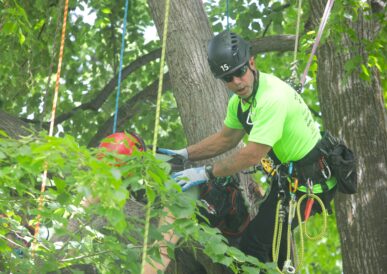
Scaling timber: Arborists participate in the Utah Tree Climbing Competition in Payson