Stepping up: Utah-based organization involved in relief efforts after Nepal flooding
-
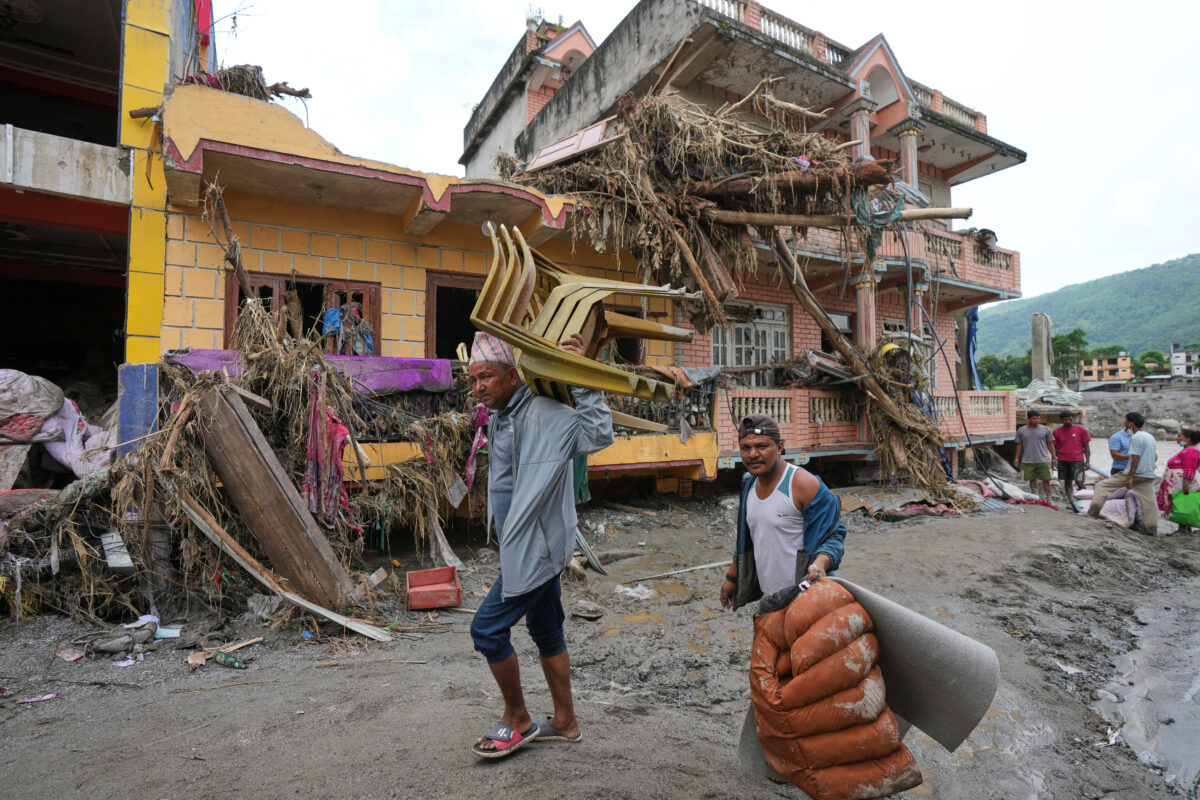
- Residents leave with belongings salvaged from their damaged homes filled with mud and debris in Devighat, in Nepal’s Nuwakot district, Saturday, Aug. 29, 2026, following the Aug. 26 flash floods.
-
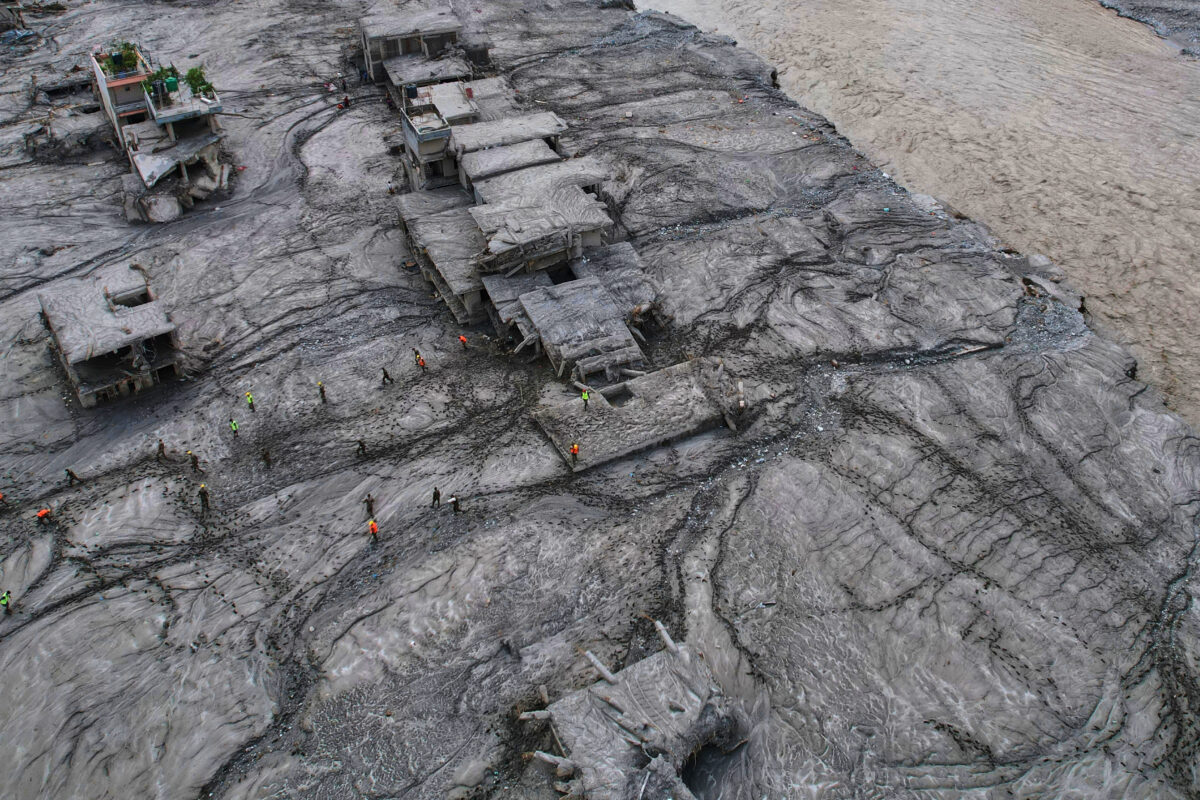
- A drone view shows rescue workers inspect the area and damaged structures following recent flash flooding along the Trishuli River in the Devighat area of Nuwakot district, Nepal, Saturday, Aug. 29, 2026.
A Utah-based organization is playing a role in disaster relief efforts for Nepal after flooding killed hundreds and left towns devastated last week.
The Global EnviroHealth Initiative, founded by Utah native Spencer Crocker, is on two committees established by the Nepali government’s central disaster relief platform: a healthcare committee and a water systems committee.
Dr. Bernhard Fassl, a Utah resident and GEI’s chief science adviser, said the organization is working with an in-country implementation partner in Nepal to coordinate relief efforts in areas such as Uttargaya Rural Municipality in Rasuwa district, which has faced tremendous infrastructure losses.
“Administrative buildings gone, hospitals gone,” Fassl told the Daily Herald. “We are now aware of six to seven government health clinics that provide primary care services that are gone. The water purification plant is gone.”
He said many people survived the floods because they live on the steep slopes away from the river, but that they are now cut off from the world without essential services.
“There’s no road, no way to get there,” Fassl said. “The only way to get there is you have to hike over a 15,000-foot pass from a different valley, and it takes you 10 days to get there. So it’s either helicopter or hiking for 10 days.”
GEI, which receives funds from Crocker’s family charity organization, the Crocker Catalyst Foundation, is asking for support for relief efforts from the Utah County community. Crock said 100% of donations will go to Nepal.
In the short term, GEI will be providing newborn and maternal survival kits, containers people can collect purified water in and a chlorine source for remaining water tanks, according to Fassl.
For more permanent support, he said GEI and other members of the water systems committee plan to rebuild water purification plants in the region. On the healthcare side, they’re looking at building around 50 health clinics.
Crocker said rebuilding health posts would cost $15,000 to $25,000, updating health posts would cost around $4,000, and water purification systems would cost around $80,000 to $120,000.
“We’re easily looking at a $5 million project,” Crocker said.
Added Fassl: “We’re definitely not going to be the only ones carrying that load, but because we’re pretty decent at it, I think we will definitely have a seat at the table and make a sizable contribution to those rebuilding efforts.”
The project marks the latest effort in what Crocker considers a successful partnership with Fassl in building GEI.
Crocker is a member of a family known for its philanthropy in the state, providing grants to several local institutions such as Brigham Young University and University of Utah Health through the Crocker Catalyst Foundation.
The foundation is also involved in a number of global initiatives. Crocker said that on an annual basis, hundreds of charities come to the Crocker Catalyst Foundation and the Sorenson Legacy Foundation, and they determine which ones sound legitimate. He said they’ve lost money in the past donating to projects that didn’t come to fruition.
But five years ago, Crocker said he found a more reliable way to pursue global health projects, when he teamed up with Dr. Fassl, a pediatrician who has been involved in global health for several years. Crocker said Fassl is an expert at collecting baseline data to confirm a need, building the right team and carrying out the project.
As an operating foundation, Crocker said GEI is required to oversee and personally manage around 70% to 80% of its donated funds, meaning the majority of projects are carried out by GEI without giving grants to other organizations.
“And since working with Bernhard — and I’m not exaggerating — I can’t think of a project that hasn’t gone well,” Crocker said. “Whereas before Bernhard, it was almost like flipping a coin.”
GEI is already established in Nepal, where it has helped install water systems. Coordination on the relief efforts will run through an in-country project director and an in-country implementation partner, according to Fassl. Through them, GEI will hire the professionals needed to get their relief efforts completed.
“We have a plan. We’re working with the government. We’re not going to waste a single penny,” Crocker said. “100% goes to the people, and Bernhard really knows what he’s doing, right? If you want a large impact with as little money as possible, he’s the guy to do it.”
Those interested in donating to GEI’s cause can do so at geiglob.org/donate, or send a check to 2825 E. Cottonwood Pkwy STE 330 Cottonwood Heights, UT 84124.
Local News
Community Action Services says it needs immediate support to keep doors open

Woman arrested after ‘a disturbance’ at Utah County Planning Commission meeting, sheriff’s office says