HABs havoc: UVU-run barge continues fight against algal blooms at Utah Lake
UVU-run barge continues fight against algal blooms at Utah Lake
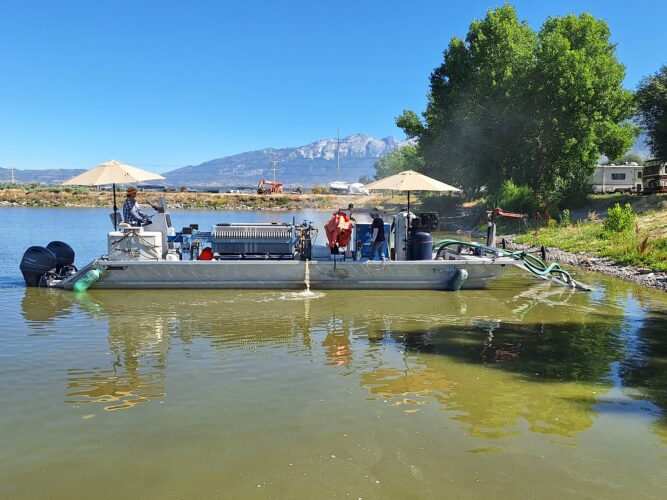
Courtesy Utah Valley University
Utah Valley University's algal barge cleans the water Utah Lake near Lindon marina in 2026.As algae blooms returned to Utah Lake this month, with advisory warnings placed around the lake warning individuals not to enter the water, efforts continue by one local group to clean the water.
For the fifth consecutive summer, a Utah Valley University team is operating a patented floating filtration barge created to clean the water at the source of algae blooms.
The 27,000-pound, 34-foot-long and 10-foot-wide barge is operated by chemistry professor Kevin Shurtleff and a group of students from May through August, five days a week. The machine vacuums the algae from the lake, pumps it through a cellulose plate and frame filter that removes the algae and returns clean water.
The barge can pump approximately 400 gallons of water per minute, removing roughly 60% of the algae in a single pass.
“We have been able to prevent HABs (harmful algal blooms) where we are spot cleaning. We try to keep the blooms down where people recreate: marinas, beaches and parks,” Shurtleff said in a news release.
The project requires roughly $40,000 to maintain equipment, pay operators and cover overhead costs, according to the university. The project was funded by the Utah Lake Authority this year, but the funding is not guaranteed in the future, UVU said.
Project organizers seek to expand the fleet of boats, which costs more than $260,000 each, and are open to licensing their patent technology to others.
“Unfortunately, when we aren’t able to get to an area for a while, we do start to see HAB warnings for that area,” Shurtleff said. “That’s exactly why expanding this effort matters — the more ground we can cover, the more of the lake we can keep safe for families, visitors, and wildlife.”
These efforts come months after the Utah Lake Authority launched the “HABs Happen” campaign intended to change the narrative around harmful algal blooms and promote what is being done to reduce the issue.
Lake leaders said harmful algal blooms, which are caused by cyanobacteria, are most common when it is hot outside, and are a health risk but should be considered less of an emergency and more of a seasonal problem.
“We had harmful algal blooms last year. We’ll have harmful algal blooms this year and next year and so on in the future,” ULA Director Luke Peterson said in April. “So instead, we need to treat them like seasonal challenges, like wildfires and flash floods and avalanches. Those are all things that you just need to know before you go.”
Other ways authorities are reducing HABs is through a Phragmites removal program and commercial carp removal.
Lake leaders said the best way to track the lake forecast is to visit the Division of Water Quality’s website at habs.utah.gov.