Assuming responsibility: New MTECH President Kirt Michaelis outlines college’s priorities
-
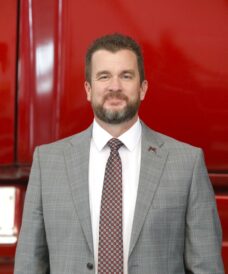
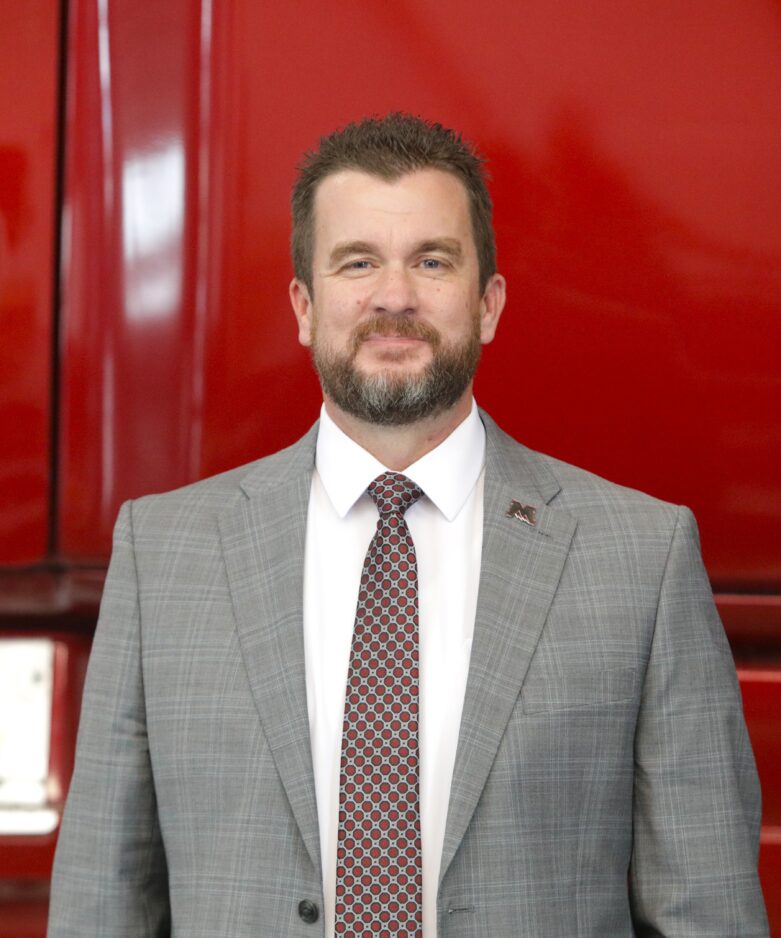
- New MTECH President Kirt Michaelis is pictured Friday, Nov. 13, 2026, in Lehi.
-
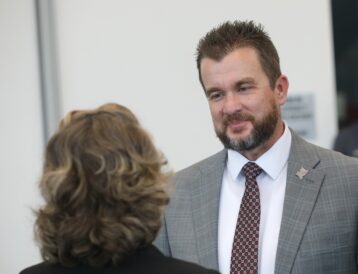
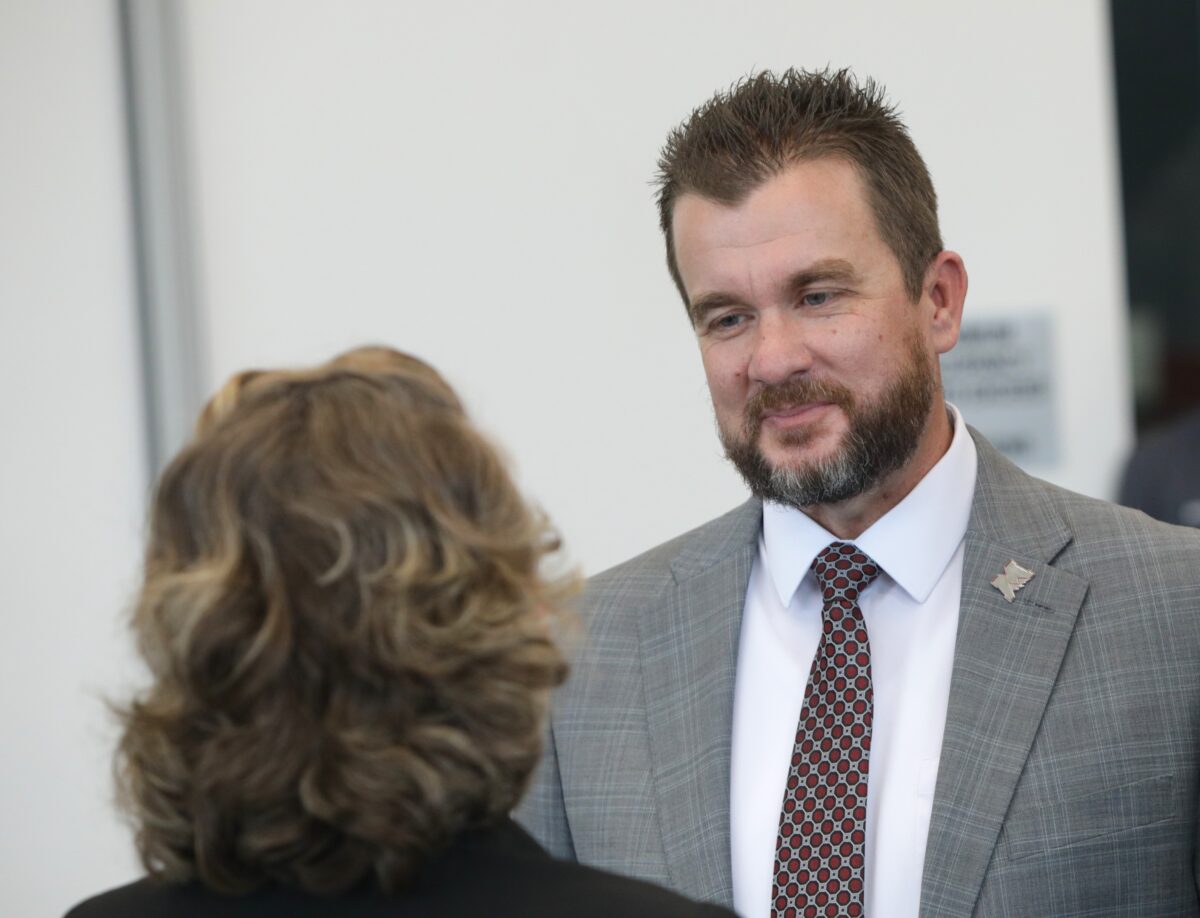
- New MTECH President Kirt Michaelis is pictured Friday, Nov. 13, 2026, in Lehi.
-
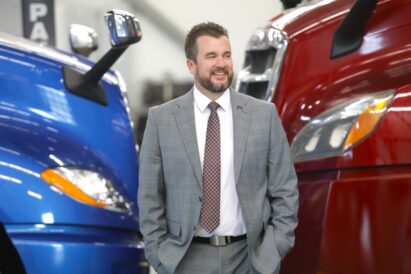
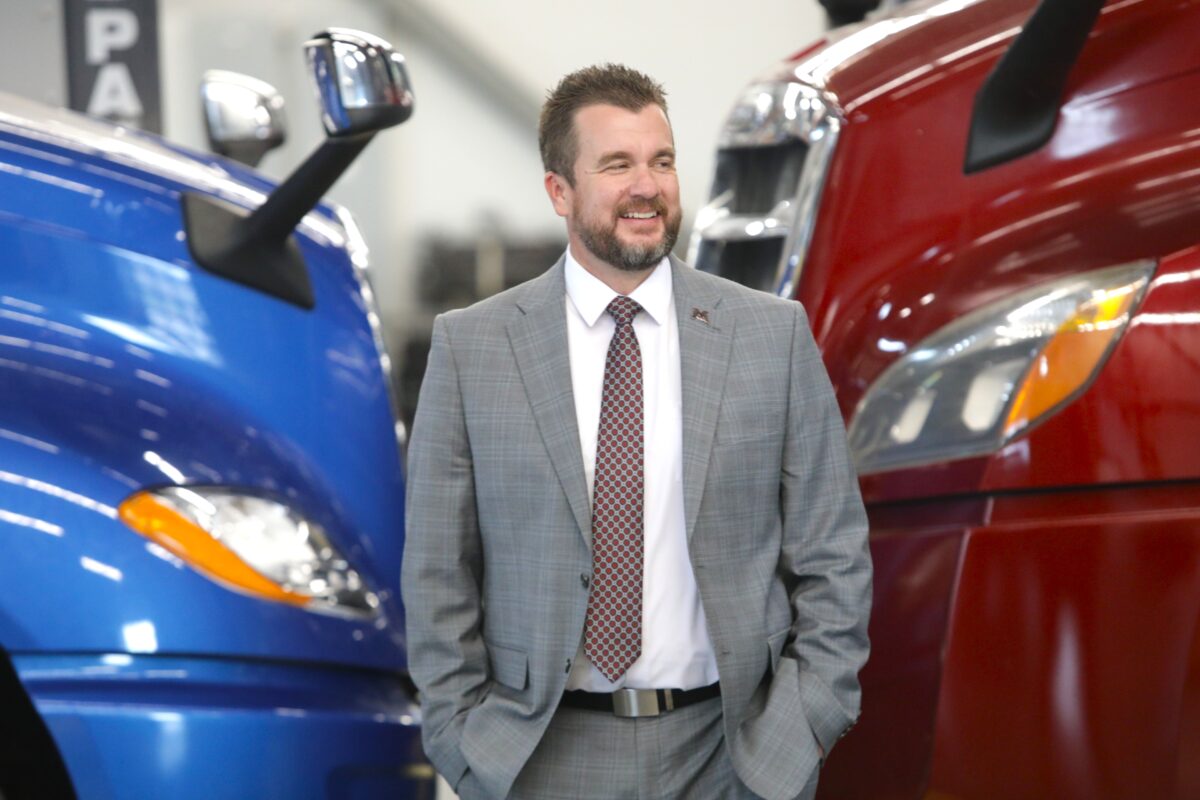
- New MTECH President Kirt Michaelis is pictured Friday, Nov. 13, 2026, in Lehi.
-
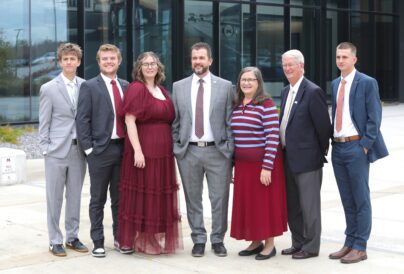
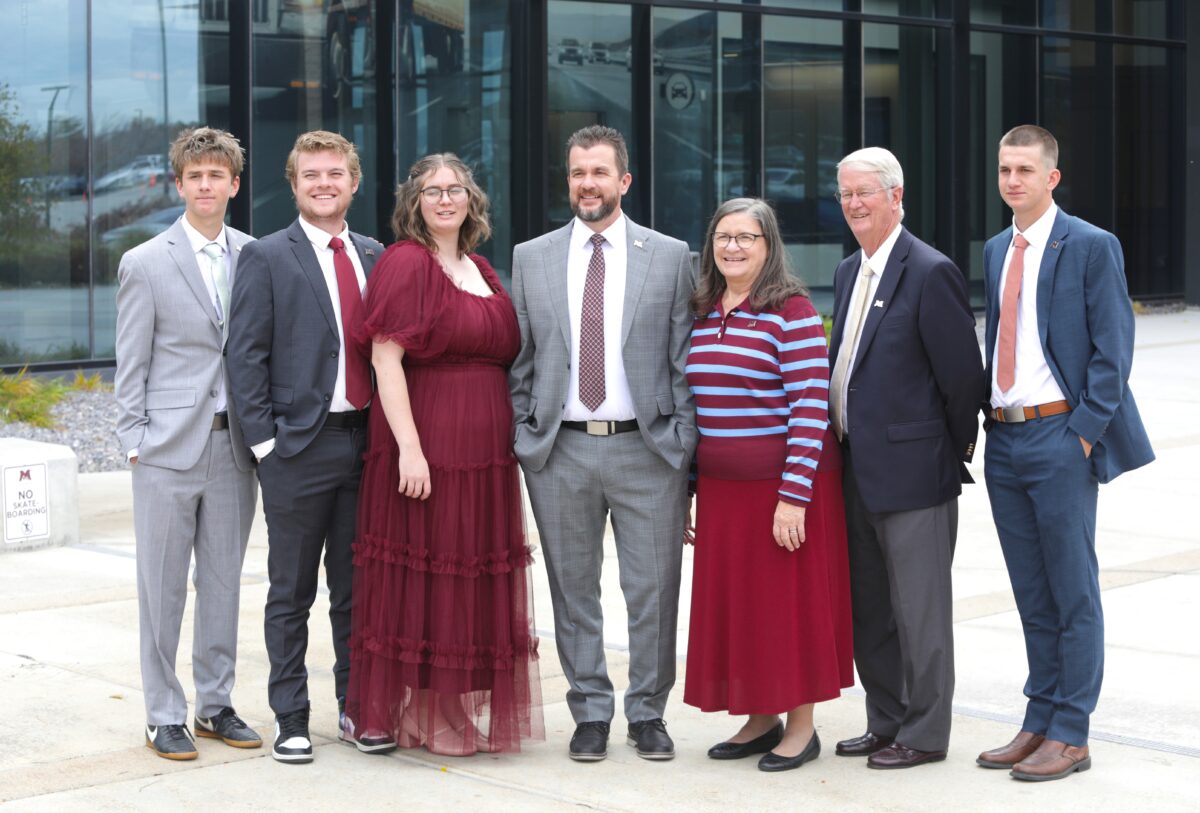
- New MTECH President Kirt Michaelis is pictured with his family Friday, Nov. 13, 2026, in Lehi.
Facing an evolving workforce and rapid population growth in Utah County, the Utah Board of Higher Education selected a president for Mountainland Technical College who may know the school better than anyone.
After 18 years of serving as MTECH’s vice president of administrative services, Kirt Michaelis was announced Friday in Lehi as the school’s newest leader, replacing President Clay Christensen following his 20-year stint.
When Michaelis first joined the college’s staff in 2004, it had a different name, Mountainland Applied Technology College, and no place to call its own, leasing space from then-Utah Valley State College. Through his position on the school’s executive group and strategic planning team, Michaelis has helped facilitate the expansion of MTECH to a school with more than 500,000 square feet of space at campuses across Utah County and in Heber.
Amid the growth, he has not lost sight of the institution’s primary objective: finding employment for its students.
“When you get to see that change in a student’s life, you’re like, I want to see that over and over again,” Michaelis said in an interview with the Daily Herald. “So it’s what most of us have stayed here (for). So it’s pretty overwhelming to think that now I have the responsibility to make sure that continues.”
This year, MTECH reported an 89% job placement rate. Michaelis described connections to the professional world as a formula for success.
He said each program has its own employer advisory committee, an assembly of professionals in their respective industries who oversee the students’ programs and ensure the curriculum is preparing students for the workforce.
When industries evolve, the school leans on these committees for guidance. With the AI boom, for instance, Michaelis said advisory committees in an IT program have suggested doing less web development, instead shifting the focus to training students on how to utilize AI.
“When we talk about our 89% placement rate, that has nothing to do with me as a president. It has everything to do with our faculty and staff listening to those groups,” he said. “That’s really the only way in my mind that we can be successful is to continue to rely on those partners that are willing to come in and spend time with us and figure out what we need to do differently,” he said.
Another key is accessibility. Michaelis said a goal of MTECH is to take its campus to where the students are, giving them a chance to fit school into their other responsibilities. And students are in more and more places with Utah County seeing an influx of 101,257 residents since 2020, according to the Kem C. Gardner Policy Institute.
MTECH has campuses in Lehi, Orem and Provo, opened a new campus in Payson in 2025 and opened another in Heber this year. In May, the Lake Mountain School District acquired 100 acres of land in Eagle Mountain for a new high school and future MTECH and UVU facilites.
Growth conversations are ever-evolving. On Friday morning, prior to his appointment, Michaelis spoke with Eagle Mountain Mayor Jared Gray and UVU President Jon Anderson about working through that partnership.
“It’s a process to go through that. But I do think we’ll have a campus there sooner than later,” he said.
Being a growing college comes with a cost. MTECH’s budget has grown from $25.8 million in 2021 to $68.3 million in 2026, for a compound annual growth rate of 21.47%. Approximately half of its 2026 budget, $34.6 million, comes from state funding, and $3.25 million comes from tuition. This year, MTECH proposed a 10% tuition increase and the USHE approved a 4.17% increase.
In return, MTECH places students into the workforce, contrubuting to the state economy. The college said that in 2024, its 2,553 graduates had an estimated economic impact of $264,081 each.
Michaelis said it is critical that programs remain affordable for students and said that going forward, any tuition increases would be incremental to allow the college to keep up with inflation.
“If we’re looking at the true cost to students, hopefully we’re not exceeding tuition quicker than tuition is being increased on a needed basis because of inflation,” he said.
MTECH will work to find “other efficiencies” so it doesn’t have to charge students more, Michaelis said. He said the college hopes to find additional scholarships to help students with the greatest need.
In 2027, MTECH will also request additional funding from the Legislature to expand its capacity because there are appoximately 100 students on the wait list across its different programs, according to Michaelis.
“If we can have additional funding to add more faculty, we now have physical space that we can expand our programs into and be able to serve more of those students,” he said.
One specific program with a big waitlist is for an electrical apprenticeship, an industry he said needs a larger workforce.
“If we can expand that program, not only do we serve those students, but we also serve those employers that need the students,” he said. “And so, our hope is that the Legislature will have enough funding to be able to help us with that problem this year. But as an institution, we also need to look at things we can do internally to find greater efficiency, to be able to serve a few more students here and there.”
As Michaelis leads the school and its ambitions to teach more students in 38 different programs, he hopes to do so while not losing sight of the main priority, the individual student.
“I think it’s critical that all of our faculty and staff have that connection to students,” he said. “There are roles that do it naturally. If you’re a faculty member, you’re going to have that natural connection with students. But if you’re an administrator or a staff member, we need to schedule time to be in those classrooms and to interact with those students, because that’s when you really get the why we do this. And if you’re having a struggle with your motivation to be part of the MTech community, being disconnected from students is what’s going to cause that. And so if you can find that real connection, it makes a huge difference.”