The ‘wild west stage:’ The Atlantic reporter counsels UVU students on the dangers of the rising betting industry
The Atlantic reporter counsels UVU students on the dangers of the rising betting industry
-
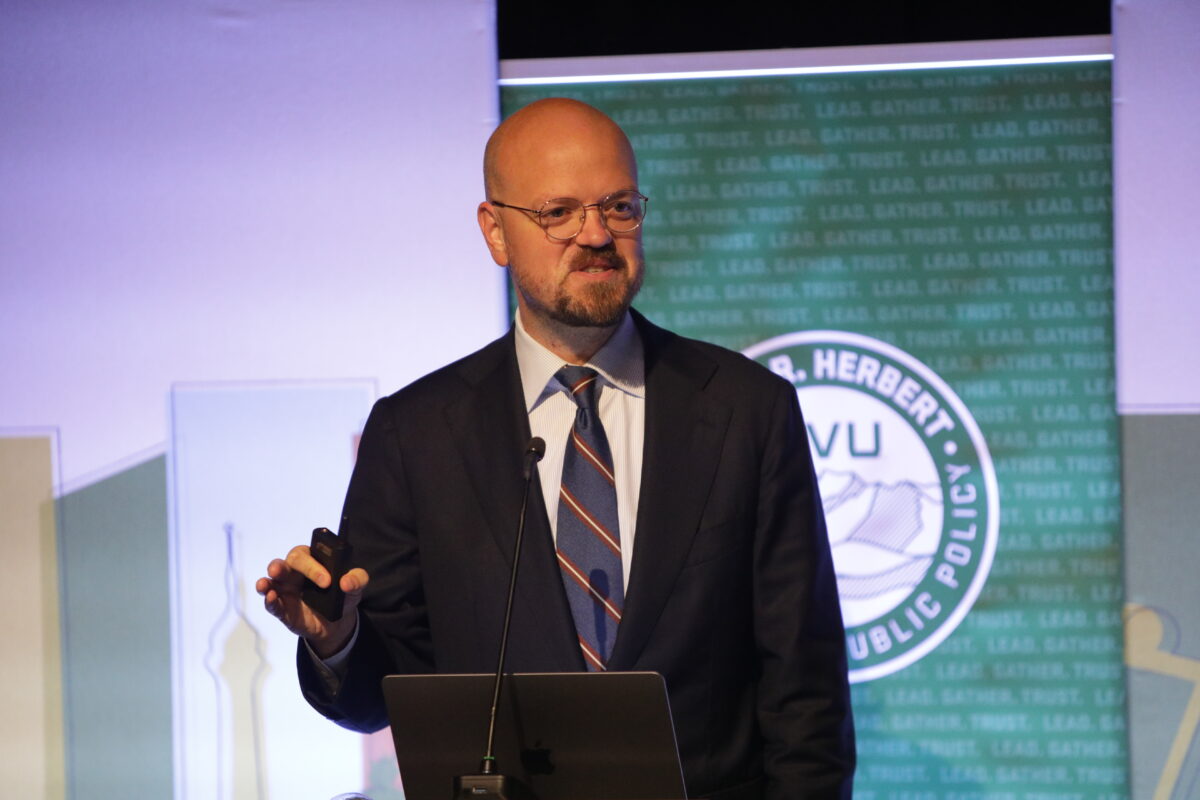
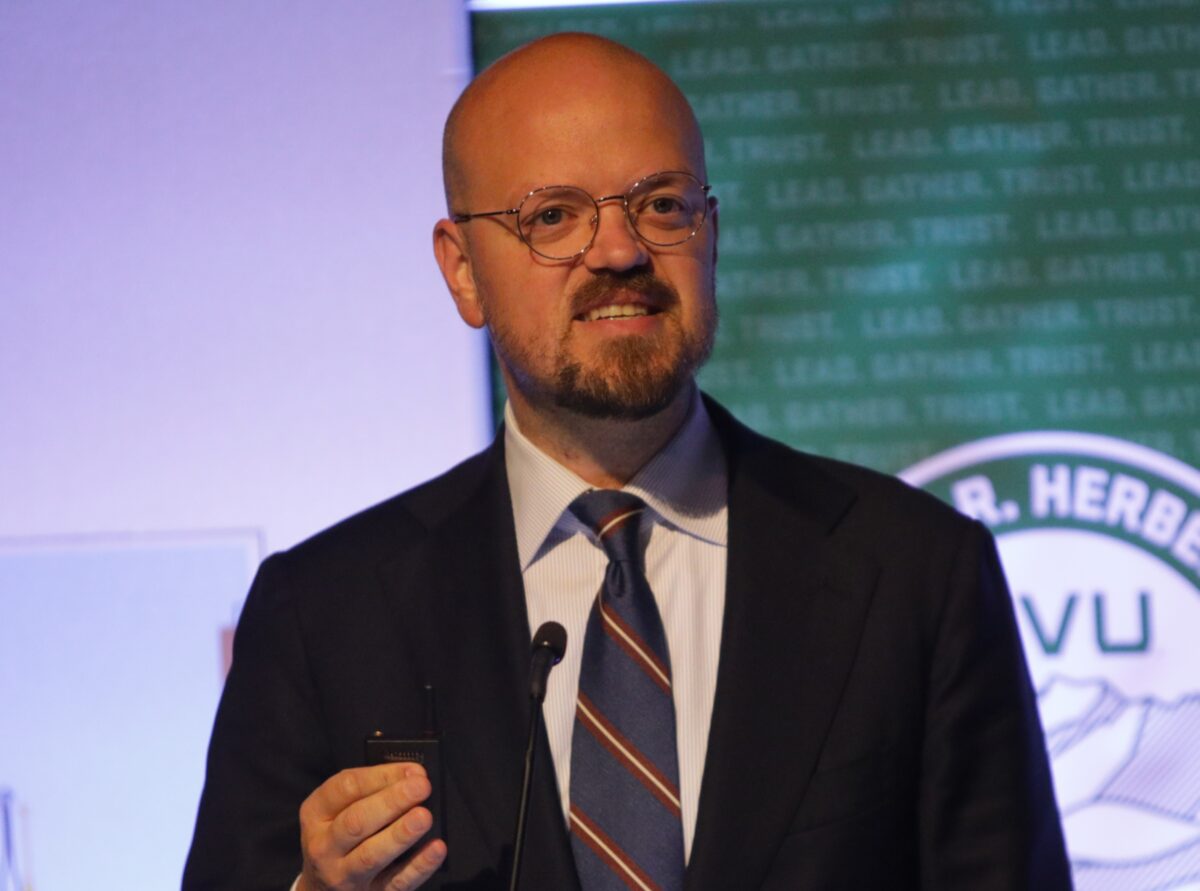
- The Atlantic reporter McKay Coppins speaks about sports betting Thursday, Sept. 24, 2026, at Utah Valley University. in Orem.
-

- The Atlantic reporter McKay Coppins speaks about sports betting Thursday, Sept. 24, 2026, at Utah Valley University. in Orem.
-
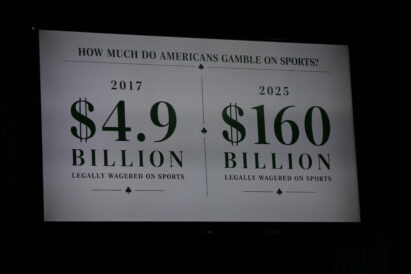
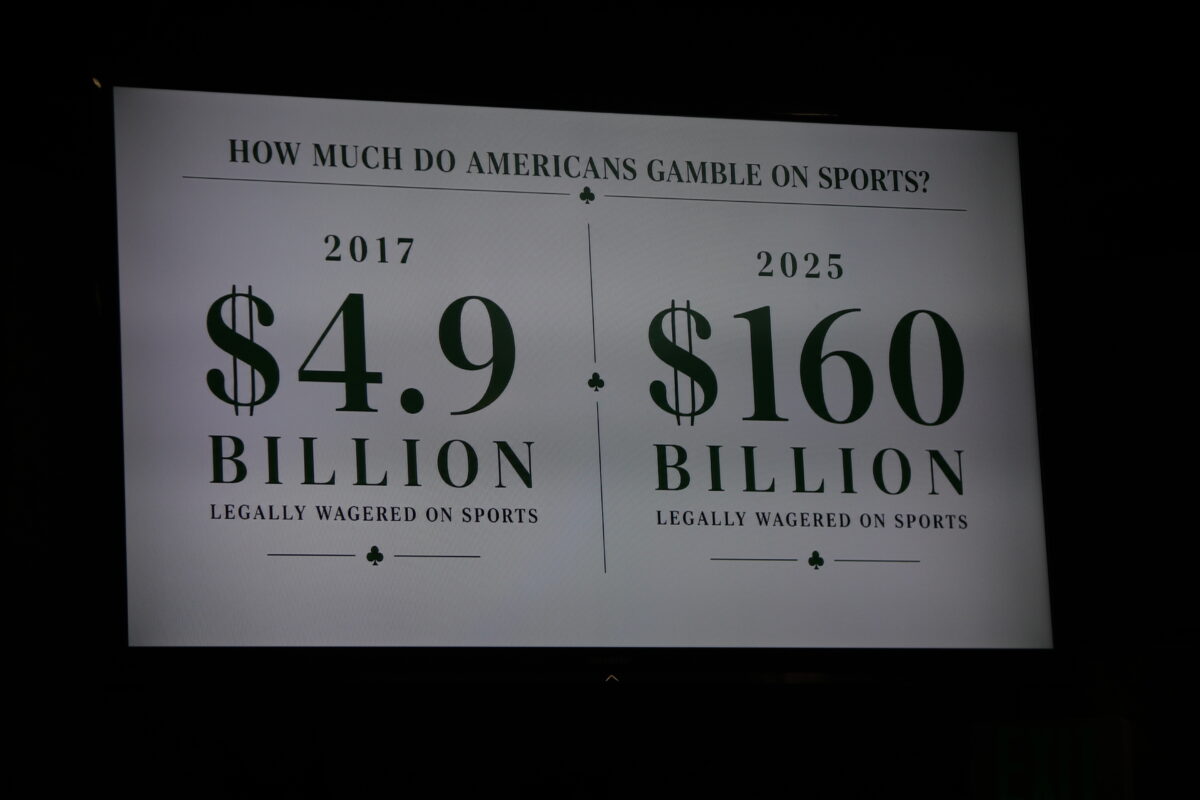
- Data on the sports betting industry is shown Thursday, Sept. 24, 2026, at Utah Valley University in Orem.
The Supreme Court’s lifting of a federal ban on sports betting in 2018 launched an unprecedented rise of the gambling industry in the United States.
In 2017, Americans legally wagered approximately $4.9 billion on sports. Last year, with sports betting legalized in 39 states and accessible at the touch of a smartphone, that figure ballooned to at least $160 billion. Professional sports leagues and sports media companies are inundated with gambling and prediction market sponsors.
This data, cited by Brigham Young University alum and The Atlantic staff writer McKay Coppins, signals what he considers the “Casinofication of America” — a transformation of a highly addictive practice that will impact millions of people.
Speaking at a Utah Valley University forum Thursday in Orem, Coppins said studies found half of American men ages 18 to 49 have gambled on their phones, and that virtually everyone who gambles on sports will lose money in the long run.
“We have an entire generation of young men who are coming of age in this environment where we’re kind of in this wild west stage of the industry,” Coppins said. “My hope is that it will be regulated, it will be reined in, but we still have to deal with the fact that millions of young men got hooked on these apps before there was very much regulation.”
Last year, to identify the realities of sports betting, Coppins underwent a journalistic study where his employer gave him $10,000 to bet with during the NFL season. Whatever he lost was covered by the company; if he won he and his employer would split the profits 50-50.
The Washington, D.C.-based journalist is on a tour of Utah colleges this week to share the results of his personal study, which consumed him in a way he did not expect. His findings, which offer a first-hand account of the dangers of gambling, were published in the Atlantic in January and shared with college students up and down the Wasatch Front this week.
“All the data that we have suggests that young men are the most vulnerable demographic when it comes to this gambling boom that America is going through,” Coppins told the Daily Herald. “And so I think that it’s really important that as this industry is targeting young men and young people, that they receive some information and some counter messaging, frankly, about the risks associated, about how they’re getting ripped off. I just felt like college campuses were the natural place to do this.”
After receiving advice from his bishop to “be careful,” Coppins started his study last September. He soon found it fun to have an artificial rooting interest in a game he otherwise wouldn’t pay attention to, and early winnings had him thinking of all the things he could spend his extra money on.
Over the course of the season, his sports betting habits devolved into a vice that found him checking DraftKings at church, hiding out in the pantry to look at bets and forcing his attention to multiple screens every Sunday and away from his children. He bet higher and higher figures, and stopped making a detailed record of the bets he was placing.
“While my daughter practiced for a church choir concert, I was outside the chapel chewing on my fingernails as I watched a Chiefs vs. Chargers game,” Coppins said. “There’s actually a term the gamblers use to describe this emotional state that I was in. I didn’t learn it until later. They call it being on tilt. In my frenzied quest to win back the money that I had lost, I was making increasingly irrational decisions.”
His experiment concluded with the Super Bowl, where, after losing thousands of dollars, Coppins chose to put everything on the 2-1 underdogs, the Patriots, in hopes that he would win big and come out ahead. The Patriots lost, and he ultimately lost $9,891 of the $10,000 his employer gave him.
The next morning, with the experiment over, he still found the urge to gamble. So he went online and put himself on Virginia’s self-exclusion form that blocks sportsbooks from taking his bets for five years.
“I knew how the trick worked, and I still wanted to keep gambling,” Coppins said. “I had always told people that I didn’t have an addictive personality, and for most of my life, I believed that it was just something I thought was true about myself. But eventually, I had to consider the possibility that I had simply constructed a life with strong enough guardrails that I never had to test the premise. Once those guardrails disappeared, maybe I wasn’t as different as everyone else.”
Coppins said 3%-5% of gamblers become fully addicted, though that figure may be low. He said one fallacy about gambling is that most people know it can be risky, yet are convinced that they personally are somehow going to get a different result.
A BYU Wheatley study found 77% of people said betting is risky and that you can lose money. Yet, when asked how they would perform if they gambled for one hour, only 48% of people said they would lose money. Moreover, 49% of people said they bet to make money.
“We know the house wins, we just don’t think it will win against us,” Coppins said.
People may also not realize how much the odds are stacked against them, he added. When making a sports bet, Coppins said the book takes approximately 4.5% of every bet you make, meaning winning 50% isn’t enough to break even. In addition, he said the sportsbooks will limit how much you can bet if you’re a successful gambler, and that they have algorithms and data to ensure they don’t lose money.
His advice to the UVU students in attendance Thursday? Don’t be a sucker.
“If you’re going to gamble, you should understand the game that you’re playing. You’re not just betting against Georgia or Alabama or BYU,” he said. “You’re betting against companies with armies of statisticians and enormous quantities of behavioral data. You’re betting against software designed to remove every bit of friction between an impulse and a wager.”
Local News
The ‘wild west stage:’ The Atlantic reporter counsels UVU students on the dangers of the rising betting industry

Holiday glow: Provo City Council to allow holiday lights year-round, remove nightly curfew