Tales from Utah Valley: Celebrate Black History Month with books
-
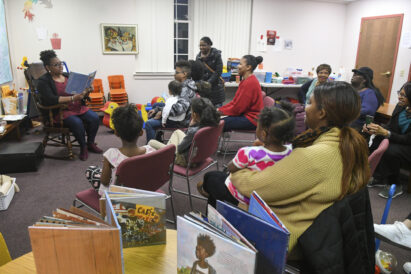
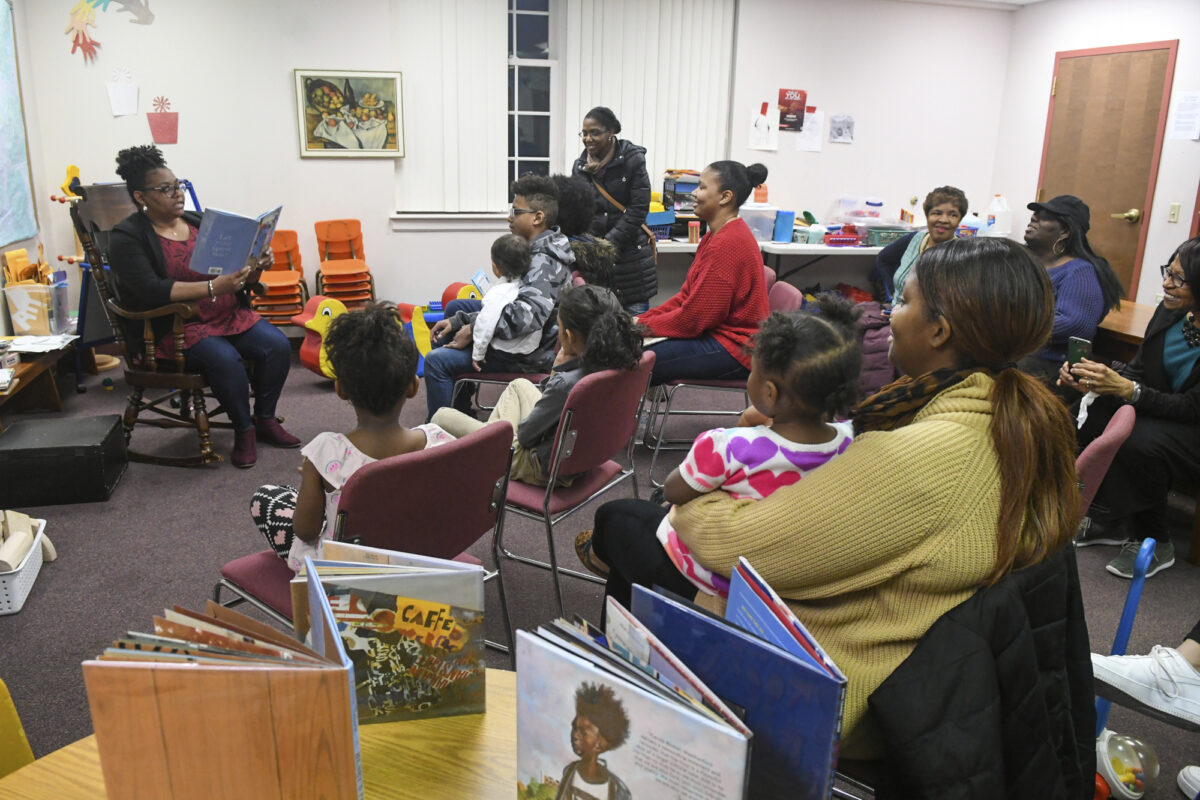
- Wanda Alexander, of Schuylkill Haven, Pa., reads “Wings,” by Christopher Myers during the annual Read-In-Chain in recognition of Black History Month in Julie’s Activity Room at the Pottsville Free Public Library in downtown Pottsville, Pa., on Feb. 27, 2020. The Read-In-Chain is a national event that takes place every February celebrating African-American literature. Rev. Gloria Alexander, of Pottsville, executive director of the Martin Luther King Family Enrichment Center introduced the authors and spoke about the event.
-
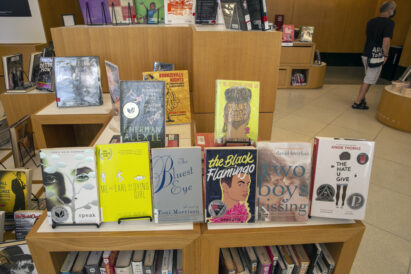
- Banned books are visible at the Central Library, a branch of the Brooklyn Public Library system, in New York City on July 7, 2022. The books are banned in several public schools and libraries in the U.S., but young people can read digital versions from anywhere through the library. The Brooklyn Public Library offers free membership to anyone in the U.S. aged 13 to 21 who wants to check out and read books digitally in response to the nationwide wave of book censorship and restrictions.
Jacqueline Dormer, Republican-Herald via AP
Wanda Alexander, of Schuylkill Haven, Pa., reads "Wings," by Christopher Myers during the annual Read-In-Chain in recognition of Black History Month in Julie's Activity Room at the Pottsville Free Public Library in downtown Pottsville, Pa., on Feb. 27, 2020. The Read-In-Chain is a national event that takes place every February celebrating African-American literature. Rev. Gloria Alexander, of Pottsville, executive director of the Martin Luther King Family Enrichment Center introduced the authors and spoke about the event.
Reading a book is a way to experience something that we cannot experience firsthand, to learn about someone who has had a different life than we have. While we can’t travel back in time, we can read about history and experience through story what we cannot experience ourselves. Stories have been used throughout time to teach lessons and enlighten minds. They can also be a perfect way to ignite important discussions, especially with children. This month – Black History Month – is the perfect time to sit down with a good book.
An online search will result in many book recommendations for Black History Month. Many of these are children’s books and even if we’re not children, we can still enjoy them and learn from them. These are a few of my favorites.
Every time I read “Ron’s Big Mission” by Rose Blue and Corinne J. Naden to young children, they are shocked to learn that young Ron McNair was not allowed to check out books from his public library in South Carolina in the 1950s simply because of his race. In 1959, McNair, who later becomes an astronaut and died during the launch of the Space Shuttle Challenger, refuses to leave the library without checking out books.
Children listening to the story are rooting for him as we learn what happens next. Thoughtful discussions arise naturally about fairness, kindness and the resolve to always be fair and kind themselves.
How could children or adults not want to save Henry “Box” Brown from a life of slavery when reading “Henry’s Freedom Box” by Ellen Levine? While reading this story, we learn that Mr. Brown endured terrible hardships, including losing his wife and children when they are sold. Later, he escapes slavery in a unique and exciting way. Readers are drawn in to the story and wish they could have been the ones to help him in his quest for freedom. Children always ask, “Is this story true?” Yes.
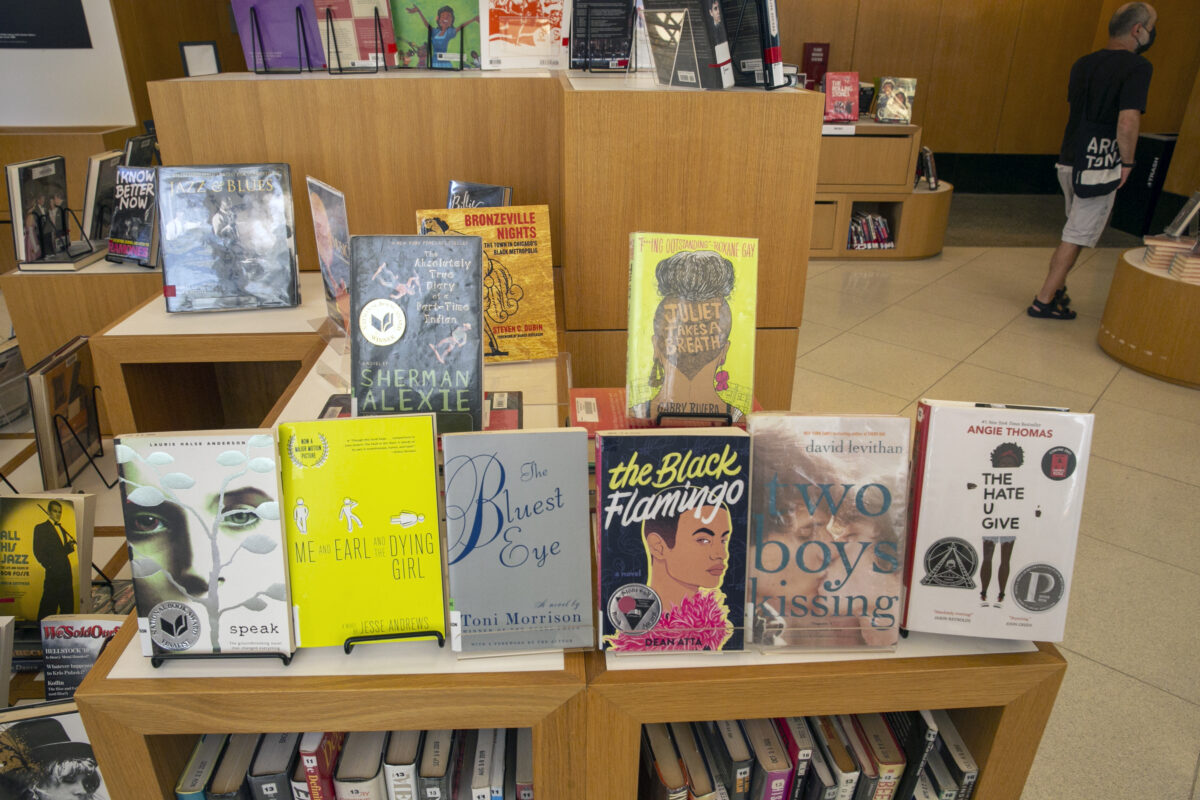
Ted Shaffrey, Associated Press
Banned books are visible at the Central Library, a branch of the Brooklyn Public Library system, in New York City on July 7, 2022. The books are banned in several public schools and libraries in the U.S., but young people can read digital versions from anywhere through the library. The Brooklyn Public Library offers free membership to anyone in the U.S. aged 13 to 21 who wants to check out and read books digitally in response to the nationwide wave of book censorship and restrictions.
Anything by Jacqueline Woodson is worth reading and “Brown Girl Dreaming” is no exception. In this young adult book, Woodson tells of her life entirely in verse, which makes it engaging to read. Growing up in the 1960s and 1970s, Woodson didn’t always feel that she had a place in the world. If we look around, maybe there are people in our own communities who are feeling this way.
“Through My Eyes” by Ruby Bridges chronicles the story of a girl, Ruby, who became a pioneer in school integration at the young age of six years old in 1960. This story is told in her own words. While children today may not go through this same experience, they can still learn about resilience and bravery from the words of Ms. Bridges.
There are many great books about Harriet Tubman. “Moses: When Harriet Tubman Led Her People to Freedom” by Carole Boston Weatherford, tells the story in such a way that readers can somewhat experience and empathize with her terrible life as a slave and her bravery and fortitude in escaping and helping others to do the same.
“Martin’s Big Words: The Life of Martin Luther King, Jr.” by Doreen Rappaport, shows us how a young Martin Luther King, Jr. wanted to grow up to use big words, such as the ones he learned from his parents and in church, to make the world a better place. Readers will learn some of his most important words, which still inspire us today.
“Hate cannot drive out hate. Only love can do that.”
Community
BYU: New research finds all major AI models ignore faith, religion in responses
A new multi-university academic consortium led by Brigham Young University has found AI models have significant ...
Scaling timber: Arborists participate in the Utah Tree Climbing Competition in Payson