Chamber Chat: MAG is local clearinghouse for federal transportation dollars
Stacy Johnson, Daily Herald file photo
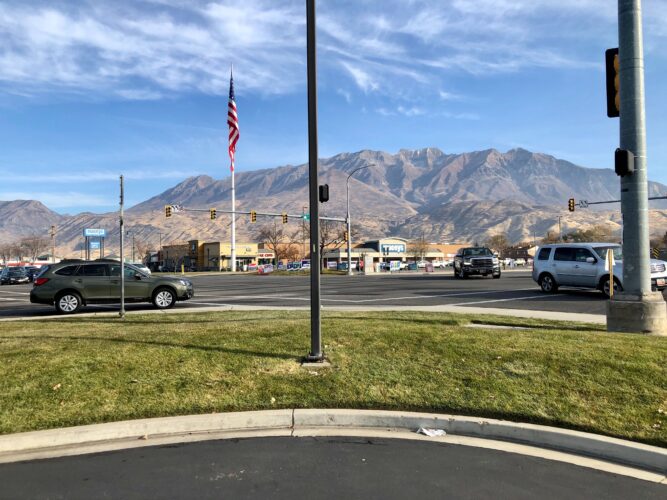
The intersection at 800 North and State Street in Orem is photographed on Monday, Nov. 4, 2019.As the current chair of the Utah Valley Chamber of Commerce’s Transportation and Infrastructure Committee, I would like to talk a little bit about how major regional transportation projects are funded.
Back in the 1960s, the federal government was concerned about coordination among the various federal agencies. For instance, the Department of Housing and Urban Development (HUD) would build a new housing project, and a few years later the Federal Highway Administration (FHWA) would tear down the new housing and build a new road.
So, in 1968, the federal government passed the Intergovernmental Cooperation Act. This act required federal agencies to work together on projects. It also required any states that received federal funds to establish a local clearing house made up of locally elected officials.
Additionally, Metropolitan Planning Organizations (MPOs) were introduced by the Federal-Aid Highway Act of 1962, which required the formation of an MPO for any urbanized area (UZA) with a population greater than 50,000. Federal funding for transportation projects and programs is channeled through this planning process.
Congress created MPOs in order to ensure that existing and future expenditures of governmental funds for transportation projects and programs are based on a continuing, cooperative and comprehensive (“3-C”) planning process. Statewide and metropolitan transportation planning processes are governed by federal law.
Why is this important to you? The Mountainland Association of Governments is the local clearinghouse for federal funds such as HUD or USDA funding. It is important to know that MAG is also the MPO for the Urbanized Area of Utah County. All federal transportation funds spent in Utah County must go through MAG.
The MPO board at MAG consists of every mayor of every city and town in Utah County as well as all three of the Utah County commissioners. There is also representation on the board from the Utah Transit Authority (UTA) and the Utah Department of Transportation (UDOT). Further, the MPO also allocates funding from four transportation sales taxes. Hundreds of millions of dollars in transportation funding are programmed by your mayors and county commissioners every year for transportation and transit projects.
Every four years, MAG makes a plan that looks out 20 to 30 years and tries to determine how many people will live in Utah Valley and where they will travel for work, school and other normal activities. (The average household in Utah Valley generates 10 to 15 trips per day.) They then look at which roads people will travel on and how they will travel, such as by car, bus, bike or walking.
MAG follows that up by determining which roads will be congested or which new roads need to be built. This plan must ensure there is enough money to build everything and that the air will be cleaner in the future than it is now.
On 800 North in Orem, for instance, it took 16 years from the time that MAG modelers and planners decided it needed to be widened until the day when the new road was finally completed. Someone born on the day the decision was made to rebuild would have received their driver’s license around the time the road was finally completed.
We have some roads that have taken more than 30 years to be built. This is a good thing because we want to make sure everyone has a voice on how the project should be built and we have selected the best options available with the least impact to neighbors and businesses.
Now that you know the process for selecting, funding and completing transportation projects, I ask that you participate in making the process better. Start by talking to your mayors and county commissioners. Also, attend a few of the Mountainland Metropolitan Planning Committee meetings. You can find about the meetings and watch the streaming of the meetings at http://mountainland.org. Public participation is the first key to having better government decisions.
Andrew Jackson is chair of the Utah Valley Chamber of Commerce Transportation & Infrastructure Committee and the former executive director of Mountainland Association of Governments. He is now employed at Horrocks Engineers in Pleasant Grove. He and his wife reside in Orem.