BYU: An art student’s homage to the de Jong Concert Hall
-
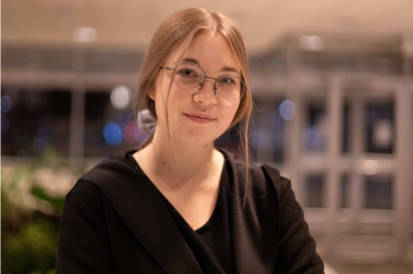
- Gabriella Warnick, creator of “Requiem for a Stage” at de Jong Concert Hall in the Harris Center for Fine Arts at Brigham Young University’s campus in Provo, is shown in this undated photo.
-
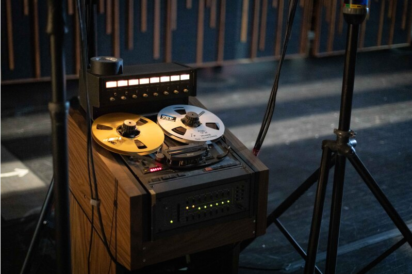
- A reel to reel recorder captures the entirety of “Requiem for a Stage” at de Jong Concert Hall.
-

- Gabriella Warnick, creator of “Requiem for a Stage” at de Jong Concert Hall in the Harris Center for Fine Arts at Brigham Young University’s campus in Provo, is shown in this undated photo.

Courtesy Emma Olson
Gabriella Warnick, creator of "Requiem for a Stage" at de Jong Concert Hall in the Harris Center for Fine Arts at Brigham Young University's campus in Provo, is shown in this undated photo.
As visitors walked through Gabriella Warnick’s “Requiem for a Stage” in the Harris Fine Arts Center’s de Jong Concert Hall at Brigham Young University, they stepped back into archival recordings of events — including historical and recent performances, rehearsals and even the sounds of the inaugural hymn sung at the building’s 1965 dedication.
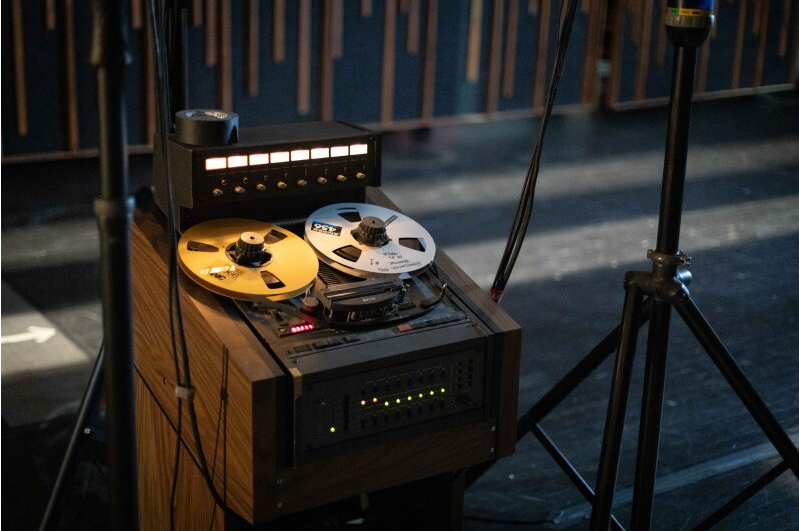
Warnick set up speakers around the concert hall so that, as visitors walked to various parts of the stage, they heard different segments of audio. As the audio played, the installation itself was being recorded on a reel-to-reel tape recorder capturing every live sound. Warnick created an immersive auditorial experience for visitors to the de Jong.
“My installation was about layering sounds past and present that were once at home in the de Jong,” Warnick said to describe her installation.
Warnick said most of her college career was spent in the de Jong and other stages around campus. When she first heard about the demolition of the Harris Fine Arts Center, she felt overwhelmingly sad. Yet, that sadness became a catalyst for her artistic endeavors to honor and remember the sounds of the de Jong.
Warnick described her exhibition, saying, “it was a way to hold all the memories together ranging from working backstage to attending performances.”
Courtesy Emma Olson
A reel to reel recorder captures the entirety of "Requiem for a Stage" at de Jong Concert Hall.
Warnick listened to hours of audio recordings to sort through those she felt really embodied the history of the de Jong. She spoke with professors and peers, and searched archives to locate and gather audio.
As an artist, Warnick’s main medium is audio, which pairs well with her minor in theatre. “I love how audio works to invoke certain ideas, memories and feelings,” she said.
Warnick didn’t want to only include polished performances in her installation. She looked for recordings that also captured her everyday experiences in the de Jong. Warnick described that as she listened to the audio, she realized there were certain things she wanted to capture and record herself.
“I recorded sounds that people don’t normally record for a show or an album, like walking up stairs. All of us can identify those sounds who have worked in this space,” Warnick said. “To invoke the past, I didn’t want to only reference it with sounds that are whole and complete, but I wanted to capture sounds that were mid-process or unfinished.
Some of Warnick’s favorite moments of audio include the sounds of people walking up and down stairs, conversations held backstage and orchestra warmups.

Courtesy Emma Olson
Gabriella Warnick, creator of "Requiem for a Stage" at de Jong Concert Hall in the Harris Center for Fine Arts at Brigham Young University's campus in Provo, is shown in this undated photo.
BYU alumni Tip and Paul Boxwell walked through Warnick’s exhibit. As father and son, they described that it was a special experience to remember the HFAC together.
Paul Boxwell sang in the Men’s Chorus from 1994 to 1996 while attending BYU; he said that the experience brought back memories of many successful concerts. “It’s been a long time but it’s nice to come back, see and remember the way things were back then,” Paul said.
“This has certainly made me feel nostalgic being here with my son,” said Tip Boxwell about his experience in the installation. “I think both of us are thinking about people and specific moments.”
Many visitors felt that the installation evoked meditative or cathartic experiences. Some visitors sat or laid on the stage to let the sound wash over them.
For Warnick, creating the exhibit provoked self-reflection. “This project felt like a perfect blend between my art practice and the work I do in theatre and music,” Warnick said. “Although my art practice isn’t picking up a violin or playing at a piano, the way I could remember moments at the HFAC and pay homage to the de Jong was through an artistic practice.”
Demolition of the HFAC began in February and the new Arts building is set to open in 2025. Warnick hopes to come back someday to experience the building replacing the HFAC.
“I am excited to see what students do in a few years coming back,” Warnick said. “I’ll have no memories at the new building, but students will be making their own.”
Community

‘This is your building:’ Lehi Civic Center opens for administrative, community use

Veteran’s Stories: Lehi’s Jim Slade helped when he could and saw tragedy in Vietnam