Everyday Strong: Give your kids room to succeed — or fail
Manuel Balce Ceneta, Associated Press
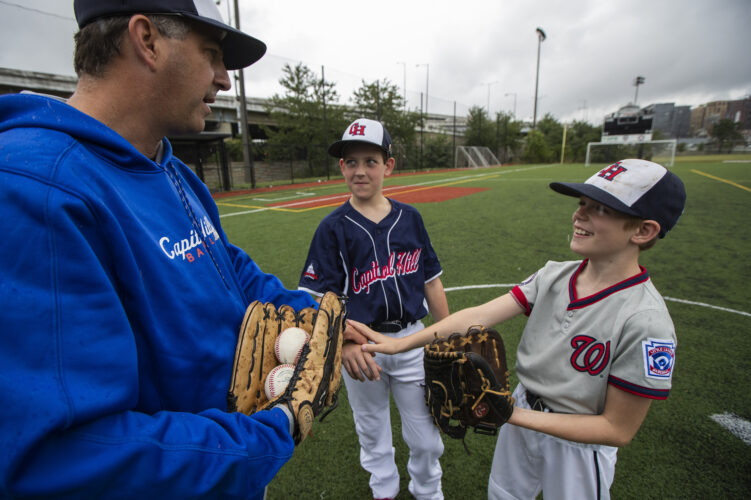
David Fox, from left, with his sons Dewey and Jimmy put their hands together as they wrap up practicing baseball at a nearby baseball field in northeast Washington, Friday, Aug. 23, 2019.How often do we tell our children that it is okay if they miss the free throw, lose the ball, or don’t stick the landing?
Not very often. We usually talk as if winning is the best option — and for some — the only option. But if we tell kids it is not okay to fail in a sport, what kind of implications does that have off the field?
The expectation that kids always excel in sports leaks into other areas of their lives. They will feel that they are expected to perform flawlessly in all areas of life. As a result, the child may avoid going to their parents for help when things do go wrong.
Of course, we want to celebrate with our children when things go right — those moments are great opportunities to connect with them. However, we don’t want to give the impression that we will only love them when they succeed.
Games, recitals and meets offer opportunities for parents to show their children that it is okay if they mess up sometimes — and they are safe to fail in other areas of life too.
We can show our children we love them no matter how they perform. This will help alleviate the stress they feel about doing well. In making mistakes, they are also “practicing” for future failures and how to respond with resilience.
It is okay if they miss the free throw, the pique, or don’t stick the landing. But we must pay attention to how we talk about it — it matters how we react when our child succeeds and when they fail.
Some parents may also wonder: at what point is quitting okay?
Quitting is a word with strong negative connotations. We equate it with giving up — losing all the benefits, not building resilience and not pushing through.
So where do we draw the line between giving our children the autonomy to decide when they are no longer interested and pushing through a challenge they face in their sport?
Well, we don’t want the child to quit the second something gets hard. Changing sports the first time they mention it is not wise.
It should be an in-depth conversation!
We must ask ourselves: What was the child looking for in that sport — a fun activity or a higher-level competition? They may simply be having fun because their friends are on the team and like the snack afterward.
Alternatively, they may be discouraged because they have more difficulty learning a particular skill than their peers. Parents can support them in working through this to get to the next level if they want to.
That said, if a child expresses they hate everything about the sport, it might not be the best activity for them. If they feel they achieved the goals they were aiming for, then quitting doesn’t have to have the negative feelings of failure we often assign to it. It is healthy to look back on a season — whatever the results — and see absolute success!
We must recognize parents’ significant role in building safe learning environments for kids. As parents, we need to make sure we are deliberate in choosing activities for them. Having a goal in mind will increase what children can get out of their activities.
In addition, we should make sure we are partnering with our children! We should avoid simply telling them their goals, but instead, listen to their input and learn about their internal motivation! Their sense of autonomy is valuable and will help them build resilience on and off the field.
United Way of Utah County is on a mission to help every child in our community feel safe, connected, and confident. You can listen to our latest podcast episode at anchor.fm/everydaystrong (or on Apple Podcast and Spotify). Learn more about us at everydaystrong.org.
Community

‘This is your building:’ Lehi Civic Center opens for administrative, community use

Veteran’s Stories: Lehi’s Jim Slade helped when he could and saw tragedy in Vietnam