Drones help manage mosquito populations in Utah County; residents encouraged to remain vigilant in disease protection
-

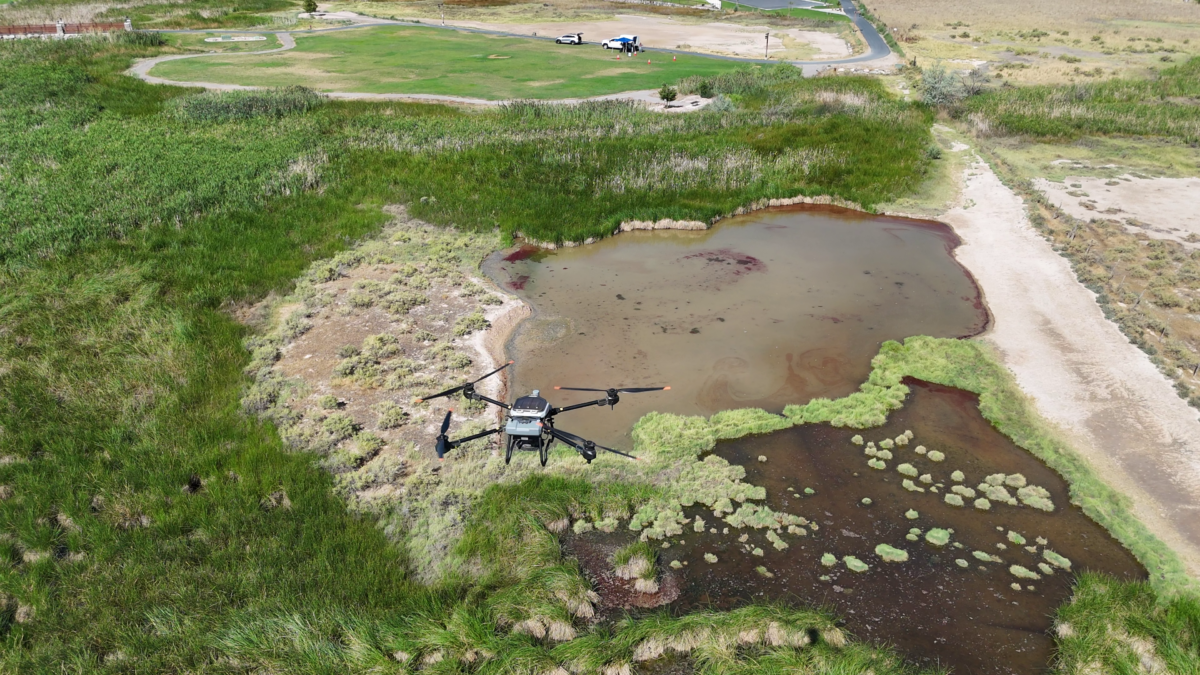
- A photo from August 2024 shows a drone used to distribute insecticide over a pool of standing water in Utah County.
-
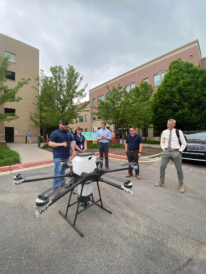
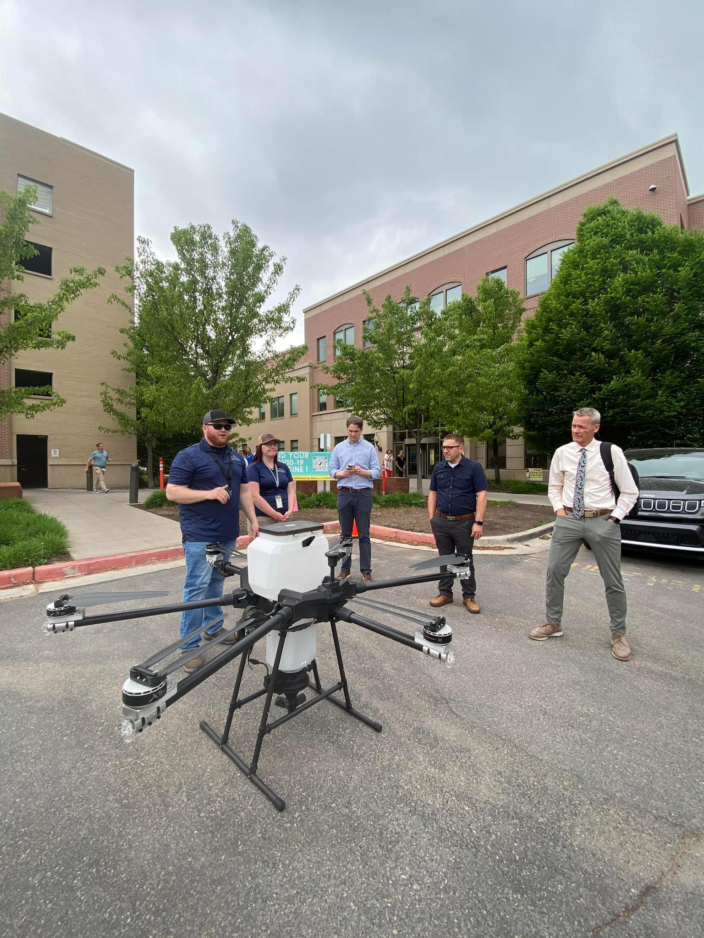
- Mosquito Abatement District drone pilot Jason Bird demonstrates the agency’s drone technology to a board of health members and other Utah County Health Department staff.
-
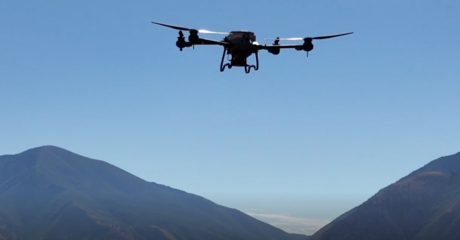
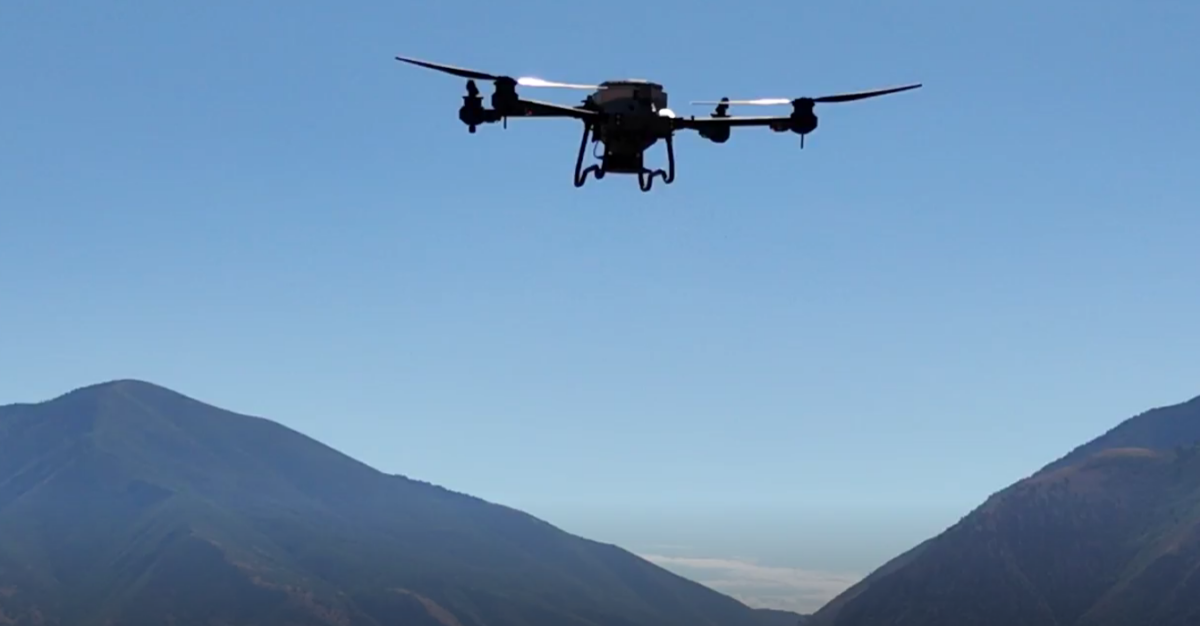
- A drone used for aerial treatment to prevent the growth of mosquitos flies over an area in Utah County.
Utah County mosquito abatement crews are using modern technology to their advantage in managing mosquito growth and preventing the spread of the insect’s dangerous diseases such as West Nile Virus.
The Utah County Mosquito Abatement District, or MAD, has begun aerial efforts to fight the bugs by using drones to treat mosquito larvae in breeding areas.
The devices are said to be 15 times faster than traditional spraying methods and allows field inspectors to treat more areas of standing water and wetlands, according to Dan Miller, director at the Utah County Mosquito Abatement District.
According to Miller, about 1,000 acres would be treated for larvae during a summer season before the drones. Now, it’s between 4,000 and 5,000 acres, he said.
The agency has eight seasonal field inspectors using the drones to treat standing water throughout the county to ensure comprehensive coverage.
Inspectors typically will treat smaller mosquito habitats by hand. For anything over an acre or areas that pose a difficulty in accessing, a drone is deployed, he explained.
The high-flying technology isn’t a new item in the agency’s toolbox. Miller said they started exploring options to make mosquito abatement more effective a few years ago. They initially worked with a company that offered a service to attack mosquito development via drones
“We had them do about 10 acres the very first time we found it really effective,” Miller said.
Instead of continuing to pay an outside service to use their drones, Utah County MAD decided to purchase several of its own in 2023.
Utah County MAD currently has three working drones for treatment and two for scouting standing water where the insects may be found.
Miller said the purchase of the resource was necessitated after recent high-water years, which led to higher demand to battle mosquito development.
With new equipment allowing for testing of mosquito pools and habitats at a much higher rate, the Utah County MAD field inspectors have been able to get ahead of the growing insect populations.
“Last year, we had an extremely high water year, and we trapped about 250,000 mosquitoes. This year we had an even higher water year, and I think we’re going to trap around 50,000 mosquitoes,” Miller said.
West Nile Virus
The state’s first reported human infection of West Nile Virus this year was reported by the Utah County Health Department on Aug. 22. Another case was deemed “probable,” but officials were unable to confirm if the individual indeed contracted West Nile before the illness turned fatal, according to Aislynn Tolman-Hill, health department public information officer.
According to the Utah Department of Health & Human Services’ arboviral surveillance report, one horse and four mosquito pools have tested positive for West Nile Virus in Utah County this year as of Sept. 7.
Miller says the seasonal operations of mosquito abatement are winding down as temperatures gradually cool, with trapping and consistent treatments set to end by the end of the month.
In the meantime, he encourages residents to stay protected from mosquito-borne viruses with preventative measures such as emptying standing water, trying to avoid being outdoors at dawn and dusk, wearing long sleeves and pants and by using insect repellent with DEET.
Miller also reassures community members of the safety and value the technology offers as the potential for mosquitoes with more potent diseases to migrate into the county grows.
“If they see the drone flying and treating (the water) then it’s absolutely safe. There’s nothing wrong with it,” Miller said. “They’re providing a great service for our community and helping us stay safe.”